PEDAGOGY | DHUN LEARNING SPACE, JAIPUR
Elements of space making
2021 - 2022
6
WEEKLY MODULES
1.5–18
AGE RANGE (YRS)
40+
HANDS-ON EXERCISES
How do you teach a child to read a building?
A prototype pilot curriculum that breaks the fundamentals of space and architecture into a series of activity-based, hands-on learning modules, trigger by trigger, through play, sight, sound and touch, culminating in children building with their own hands in mud.
"Architectural form is the point of contact between mass and space… all combine to inject a quality or spirit that articulates space."
EDMUND N. BACON · THE DESIGN OF CITIES, 1974
01 THE OBJECTIVE
Preparing children to be stakeholders in their own space
The objective at Dhun Learning Space was to prepare students to serve as intellectual stakeholders in a participatory planning exercise for the design of their future learning space and school. Instead of designing for the children, the project aimed to equip them with the vocabulary and tools necessary to participate in the design process.
Given the complexity of space and architecture, the primary challenge was to distil the fundamentals of space-making into a series of activity-based, hands-on modules. The approach was tailored to the students' demographic characteristics and their connection to the physical site of the workshops. The process was analogous to assembling a puzzle, with each module representing an essential piece.
PRINCIPLE 01
Learning through play
Each element is introduced through games, experiments, and hands-on activities, rather than through instruction alone. Students discover principles through active engagement and subsequently articulate them. Visual, auditory, and kinesthetics stimuli are integrated to reinforce learning.
Space remains constant, yet it is experienced and interpreted through perception and intangible qualities. When enclosed within a volume, individuals encounter form, airflow, scent, sound, and tactile sensations. Perception assigns value and definition to space, and these intangible elements collectively shape the sensorial experience.
The framework enables children to experience these elements directly, facilitating learning through play as well as visual, auditory, and kinesthetics methods. By engaging with familiar, everyday spaces, students develop a deeper connection to the transient qualities of their environment, thereby enhancing their learning.
PRINCIPLE 02
Rooted in the land
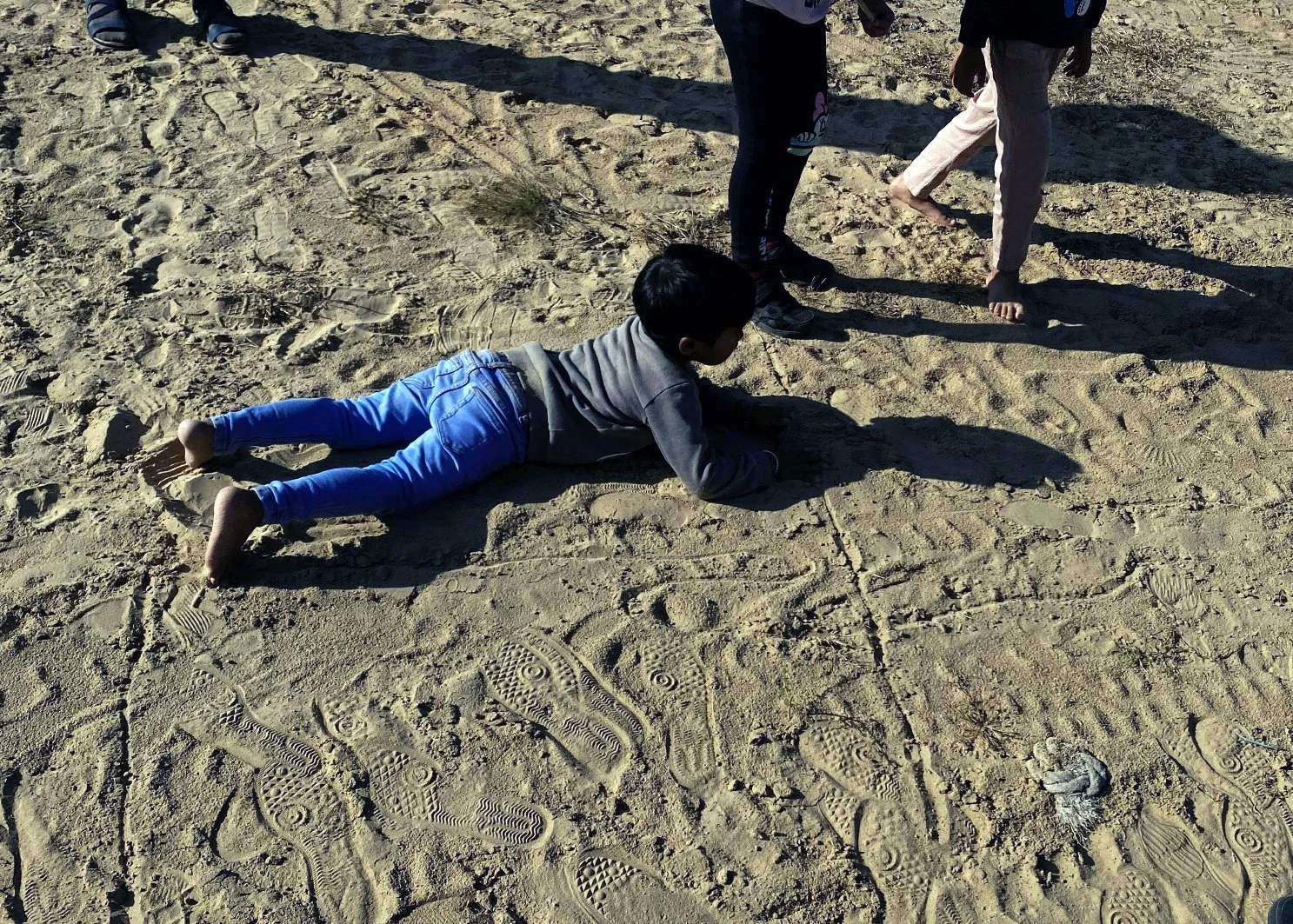
The curriculum is customised and grounded in the local environment familiar to the students. Activities are conducted in locations such as the football field, gardens, water bodies, and the Bhatta, allowing the site itself to serve as an instructional resource.
PRINCIPLE 03
Flexible & improvised
The exercises are intentionally flexible and not intended as exhaustive or fixed prototypes. The framework undergoes monthly review and was revised midway to accommodate two distinct age groups. Facilitators are encouraged to adapt, improvise, and incorporate their own expertise.
02 THE SIX-WEEK ARC
From the invisible to the built
The framework progresses methodically, starting with elements that have significant sensory impact but are often overlooked, such as wind, light, and shadow. Over successive weeks, students advance toward hands-on construction with mud. Each week is designed to foster awareness, curiosity, and practical skills.
WEEK ONE
Wind · Light · Shadow
Being sensitive to the ephemeral
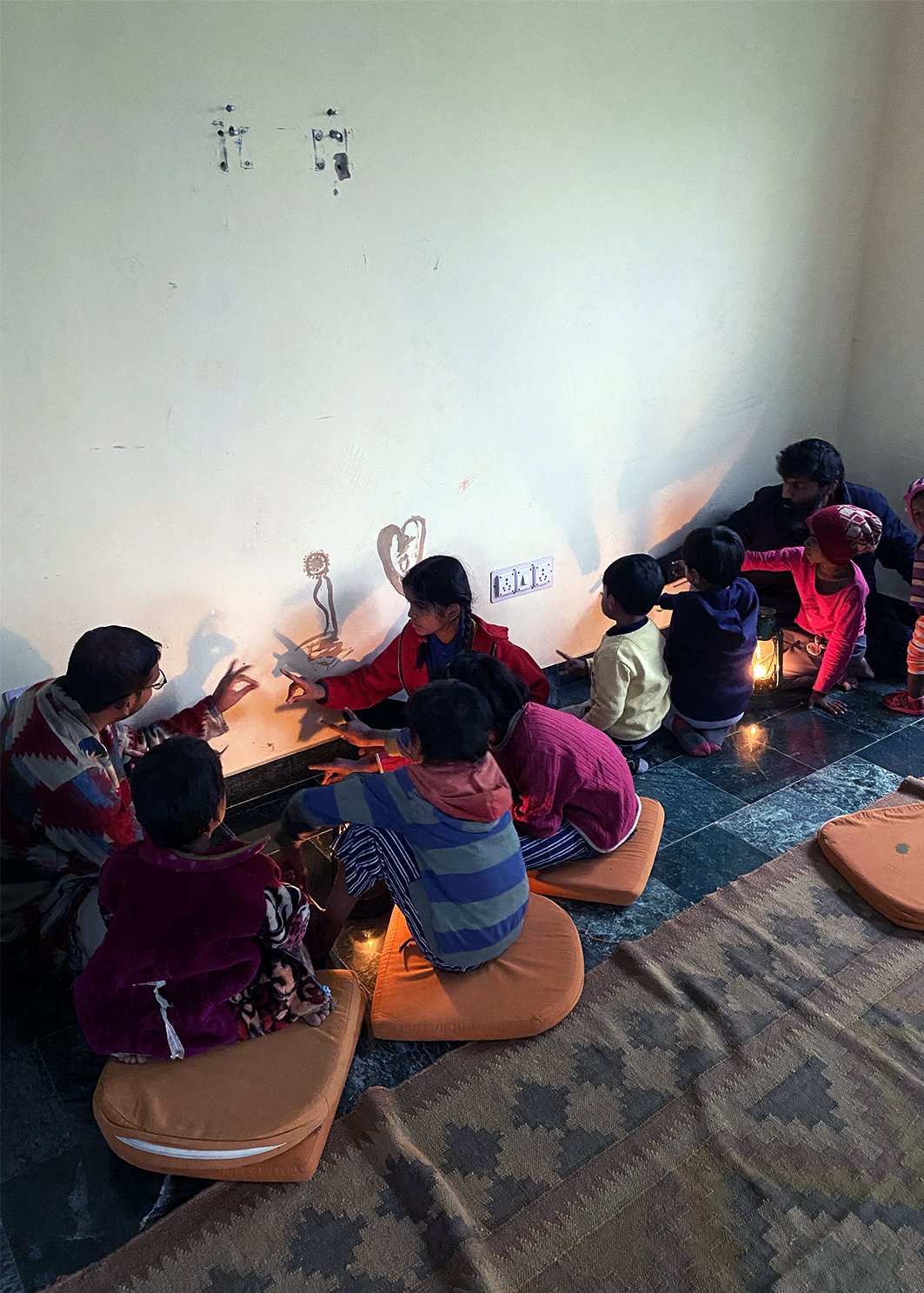
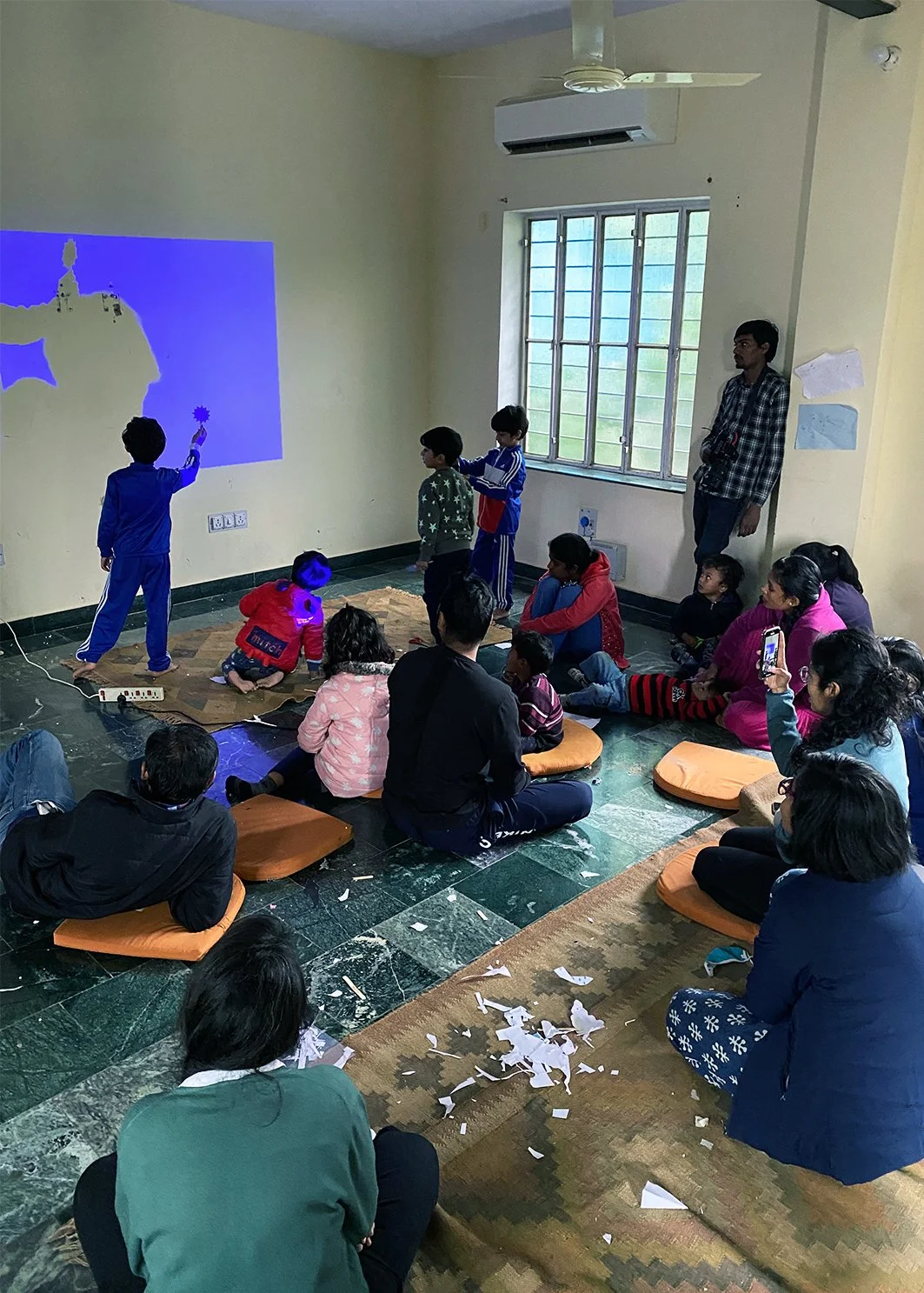
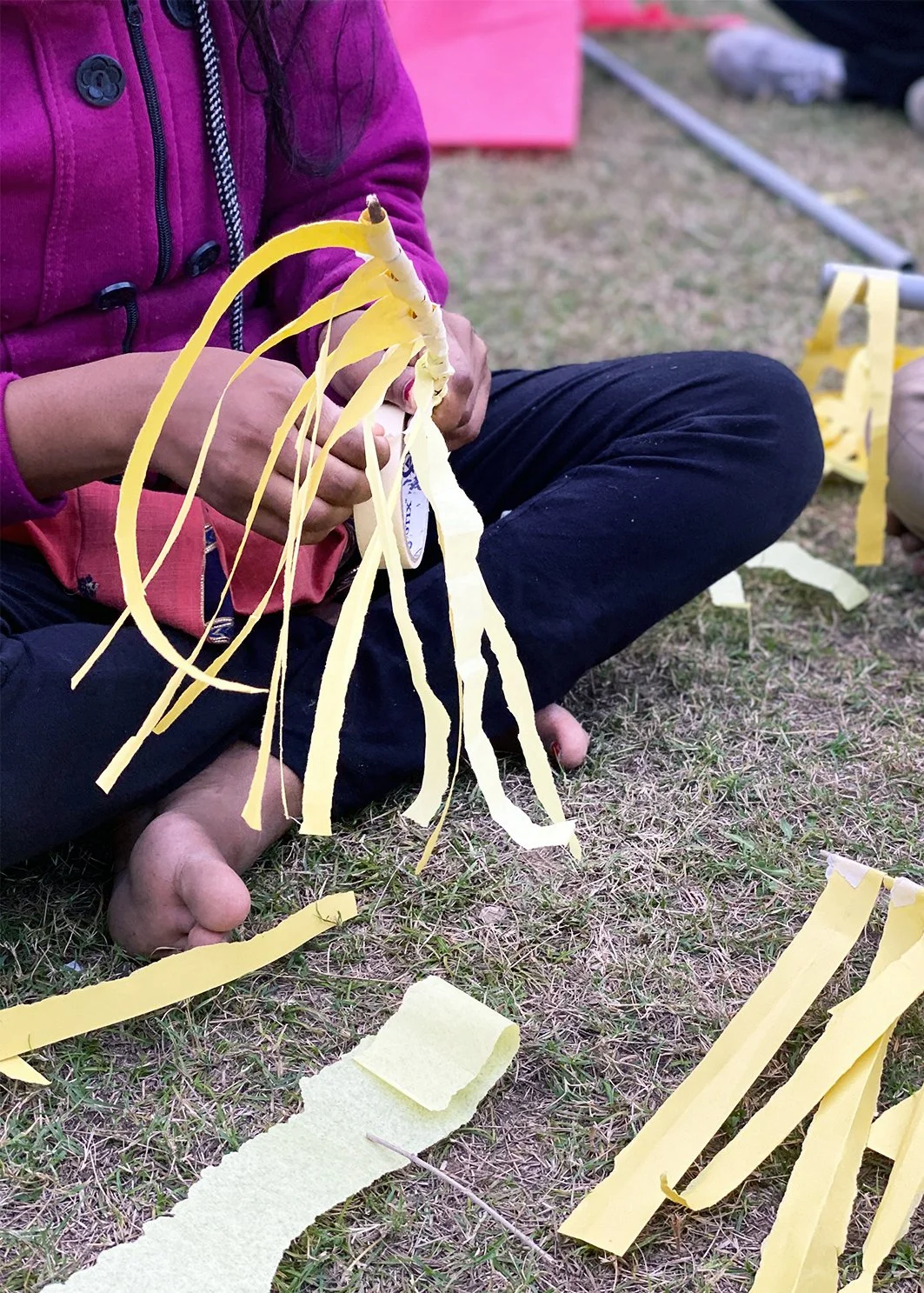
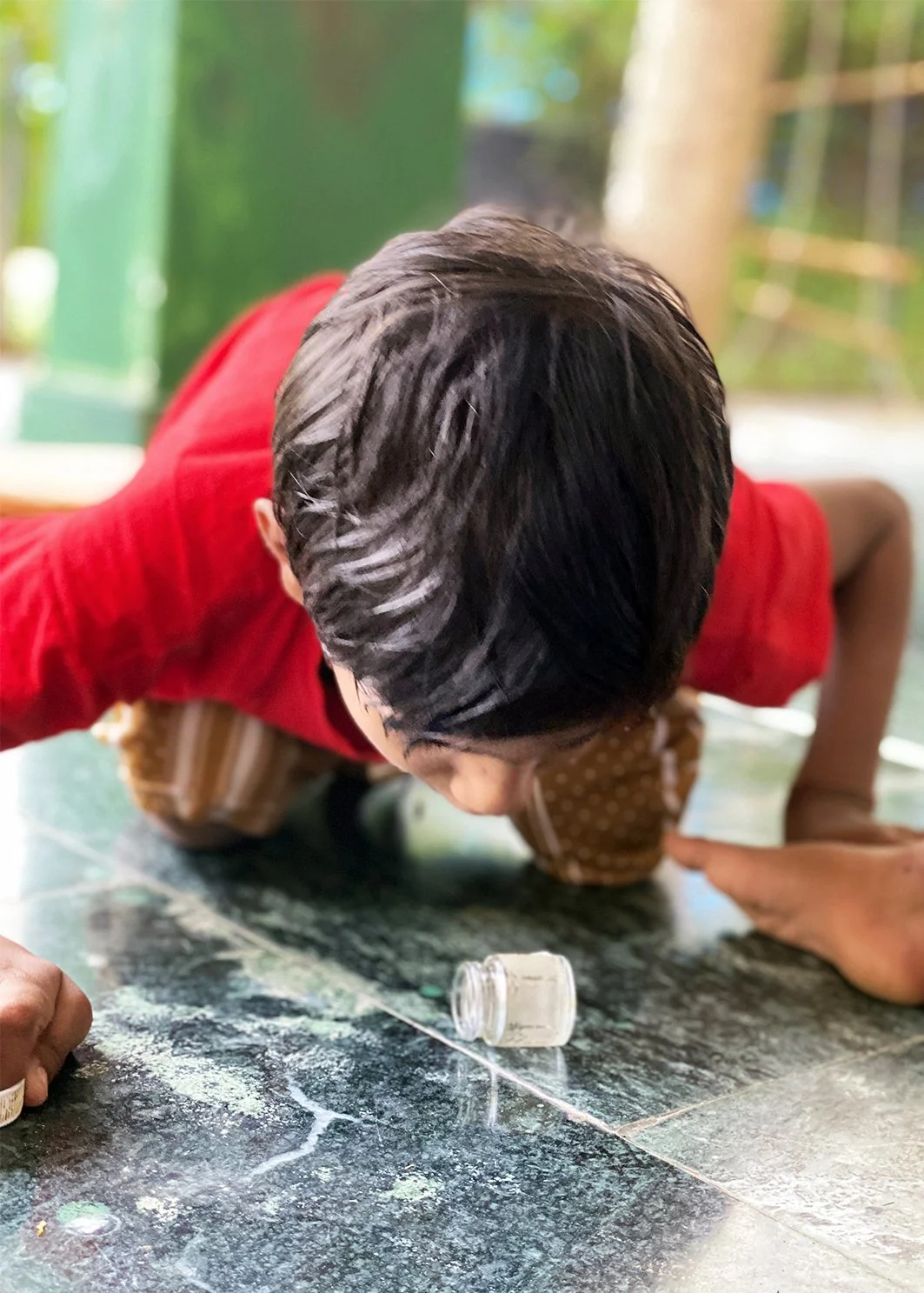
The curriculum emphasises elements with strong sensory impact that are frequently overlooked. Activities include observing temperature changes in wind through breath, constructing windsocks and pinwheels to determine wind direction, casting shadows through jaalis, tracking the movement of shadows throughout the day, and visiting Jawahar Kala Kendra to observe these phenomena in architectural practice.
Wind temperature | Windsock making | Shadow puppets | Jaali & light | JKK visit
WEEK TWO
Scale · Proportion · Shape · Colour
The building blocks of a space
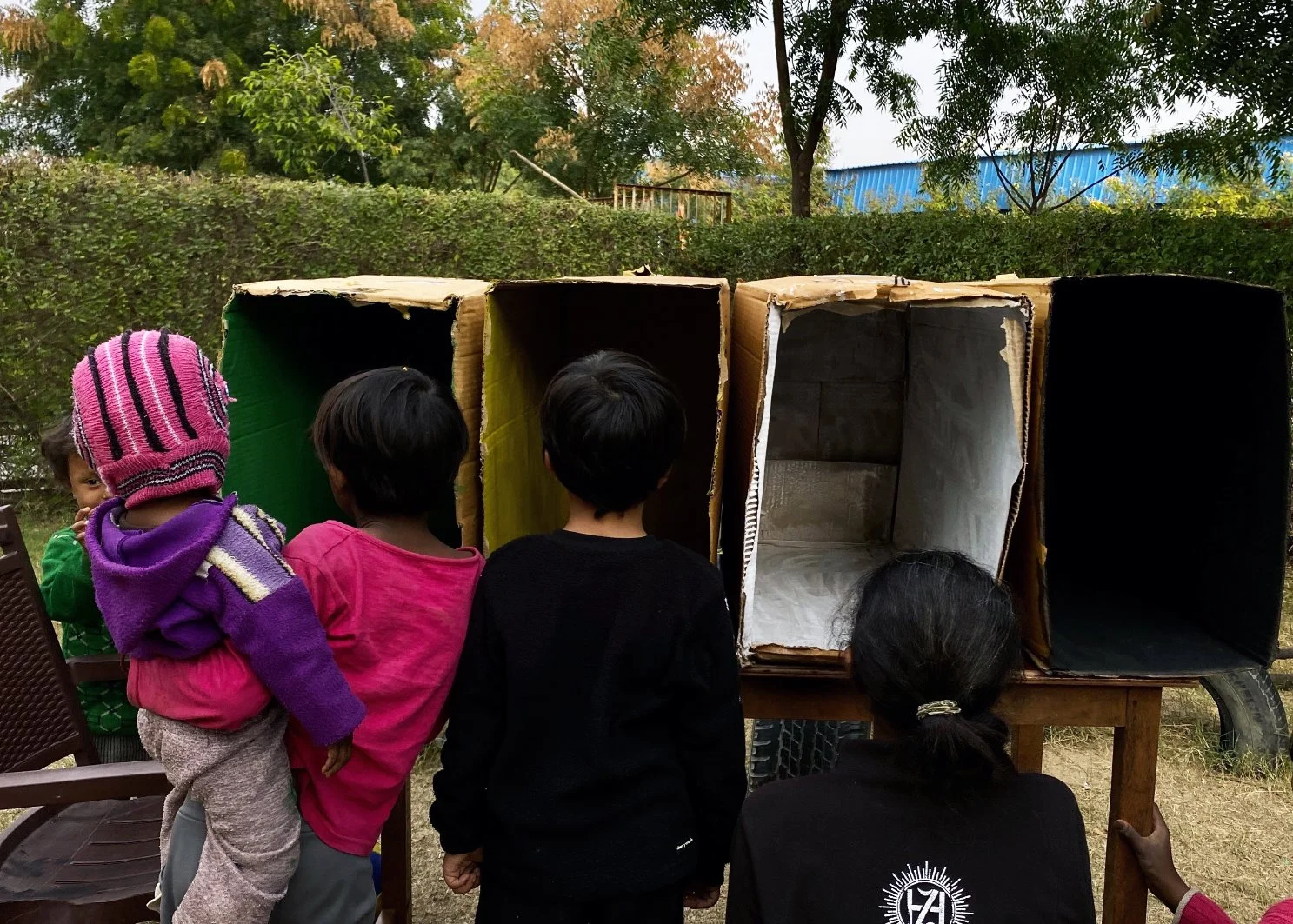
Students use their bodies as measuring tools, learning that arm-span approximates height and that seven footsteps correspond to a person's length. They measure the football field and learning room without conventional tools, fill buckets to understand volume, explore how colour influences emotion within painted boxes, and use tangrams to assemble simple shapes into complete figures.
Body as measure | Footstep measuring | Volume & proportion | Colour & emotion | Tangram shapes
WEEK THREE
Levels · Vision · Perspective
Seeing changes when you move
The curriculum explores how sight-lines and vistas change with variations in elevation within a space. Students participate in land-and-water games using tyres as terrain, stack tyres to experience repetition and changes in level, and record visual perspectives from different heights, such as a bird's-eye view and an ant's-eye view. The sequence culminates in constructing an amphitheatre from upcycled tyres and rammed mud.
Barf-paani / levels | Bird & worm's eye | Upcycled tyres | Tyre-&-mud amphitheatre
WEEK FOUR
Introduction to Mud
Reading a material with every sense
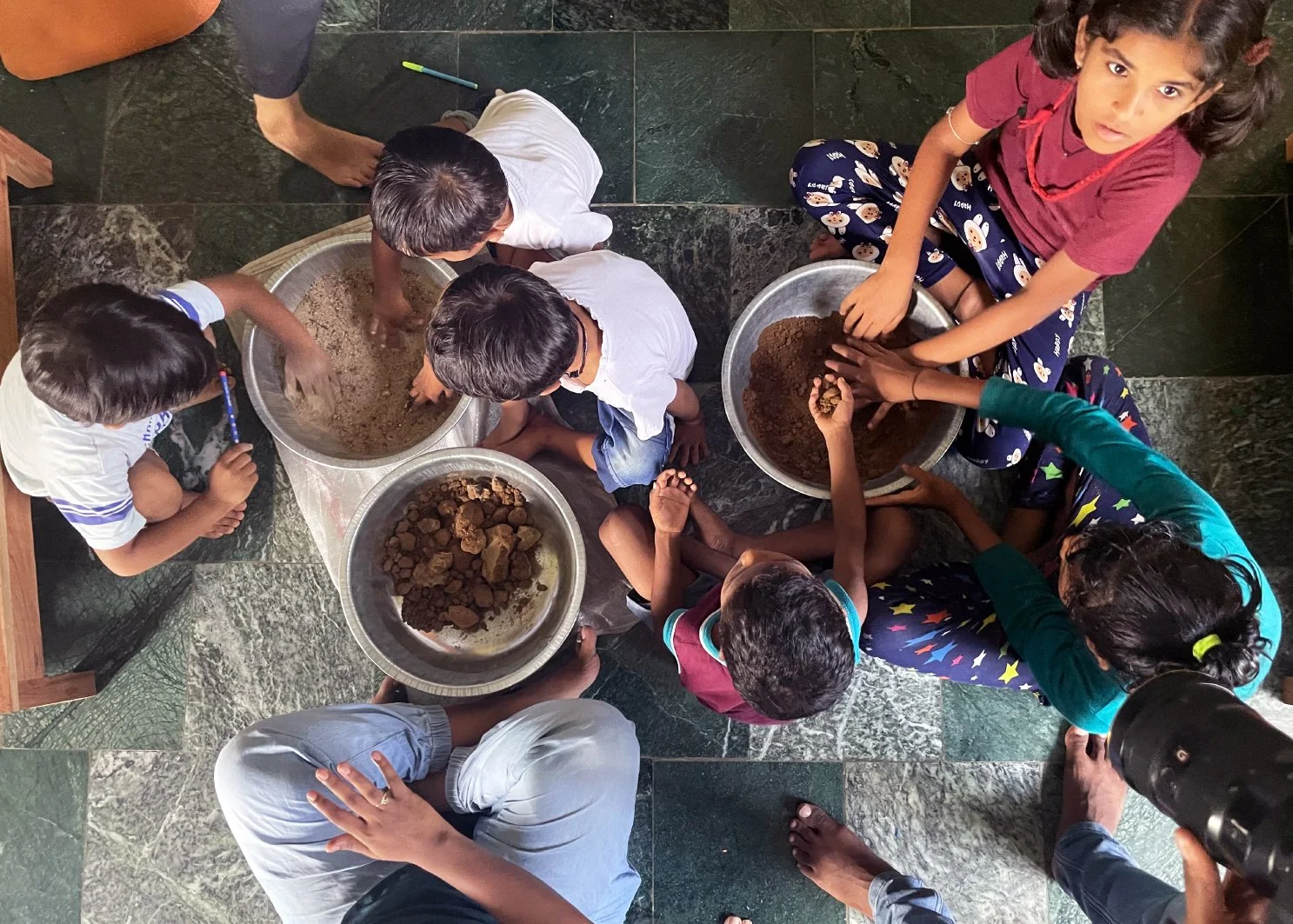
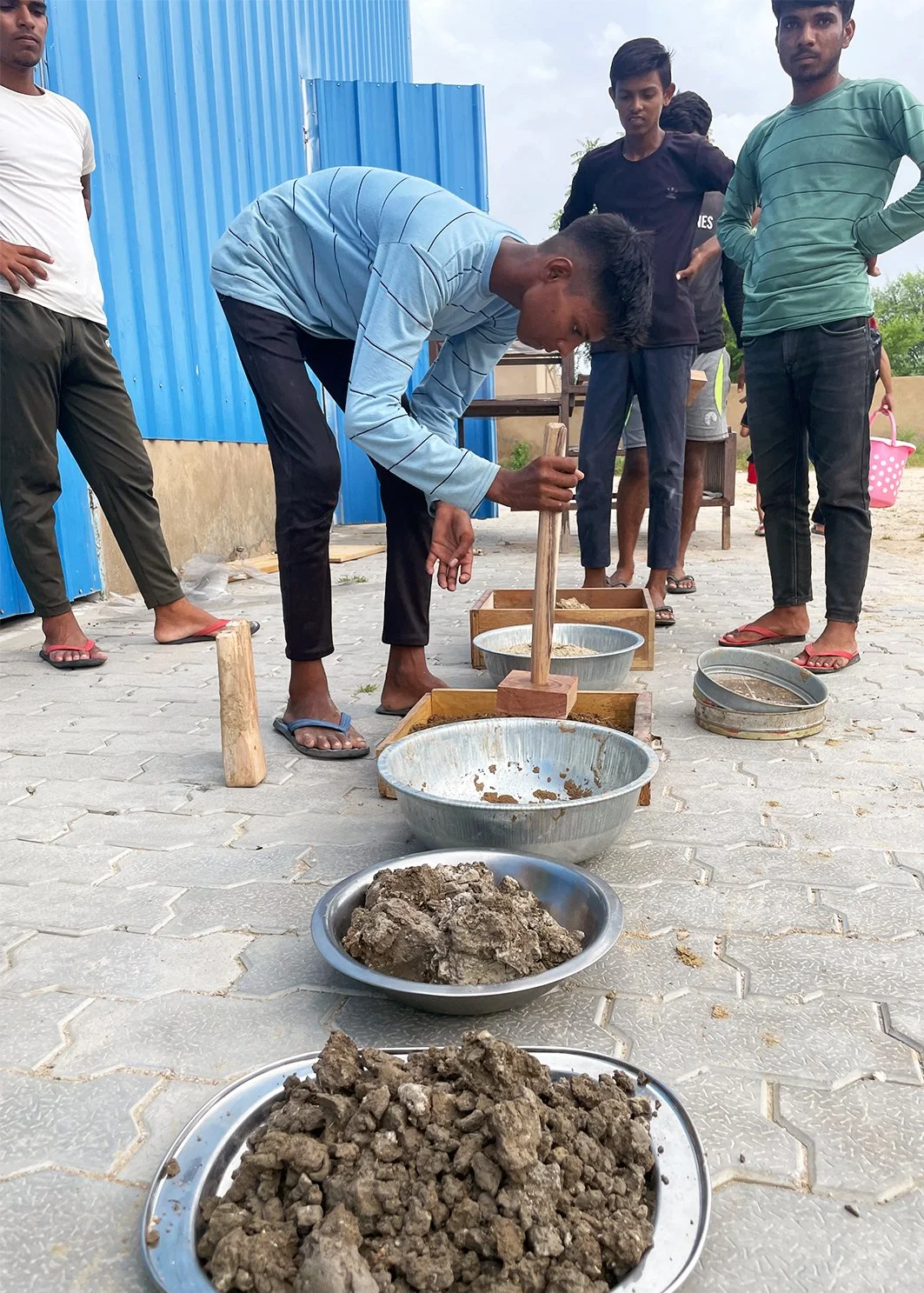
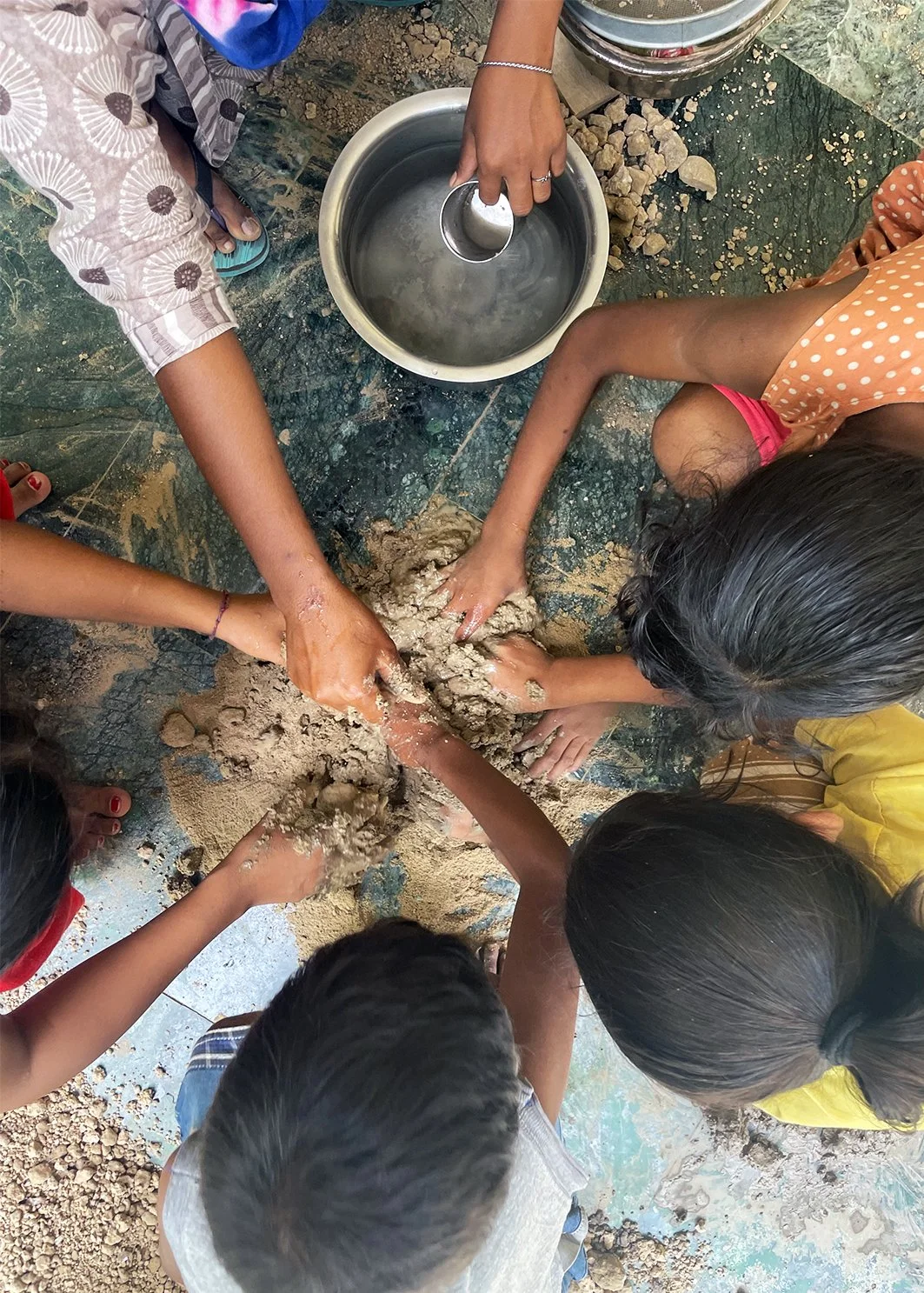
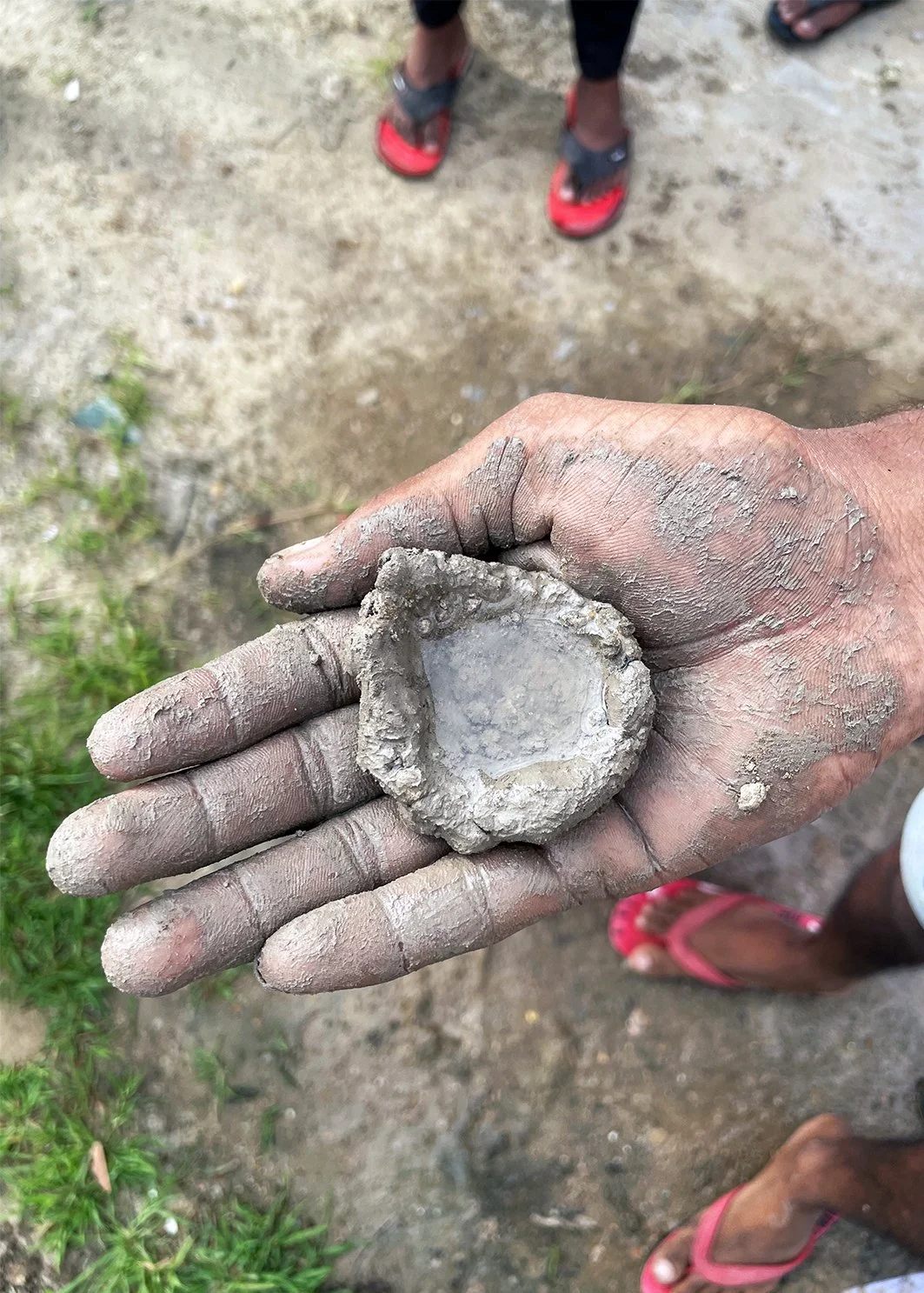
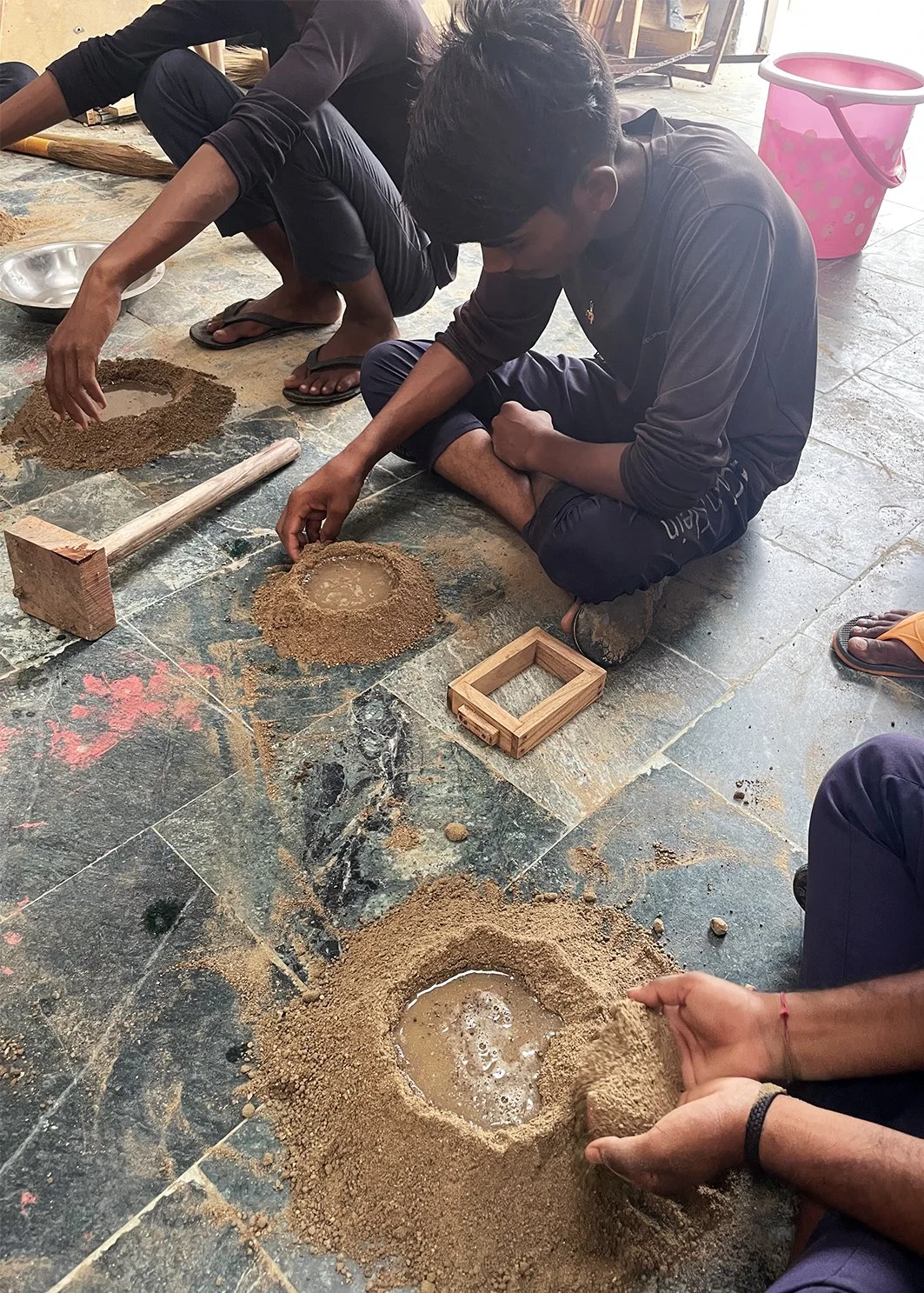
Mud is identified using both sensory and scientific cues, including visual inspection, touch, smell, crushing, rolling, and assessing water retention. Field tests such as the glove test, water-holding test, and bottle test are used to analyse mud composition. Older students learn about mud formation by crushing stone to simulate weathering and grade mud samples based on coarseness, plasticity, and clay content.
Sensory mud tests | Bottle test | Glove test | Stone crushing | Natural pigment prep
WEEK FIVE
Uses of Mud
From material to technique
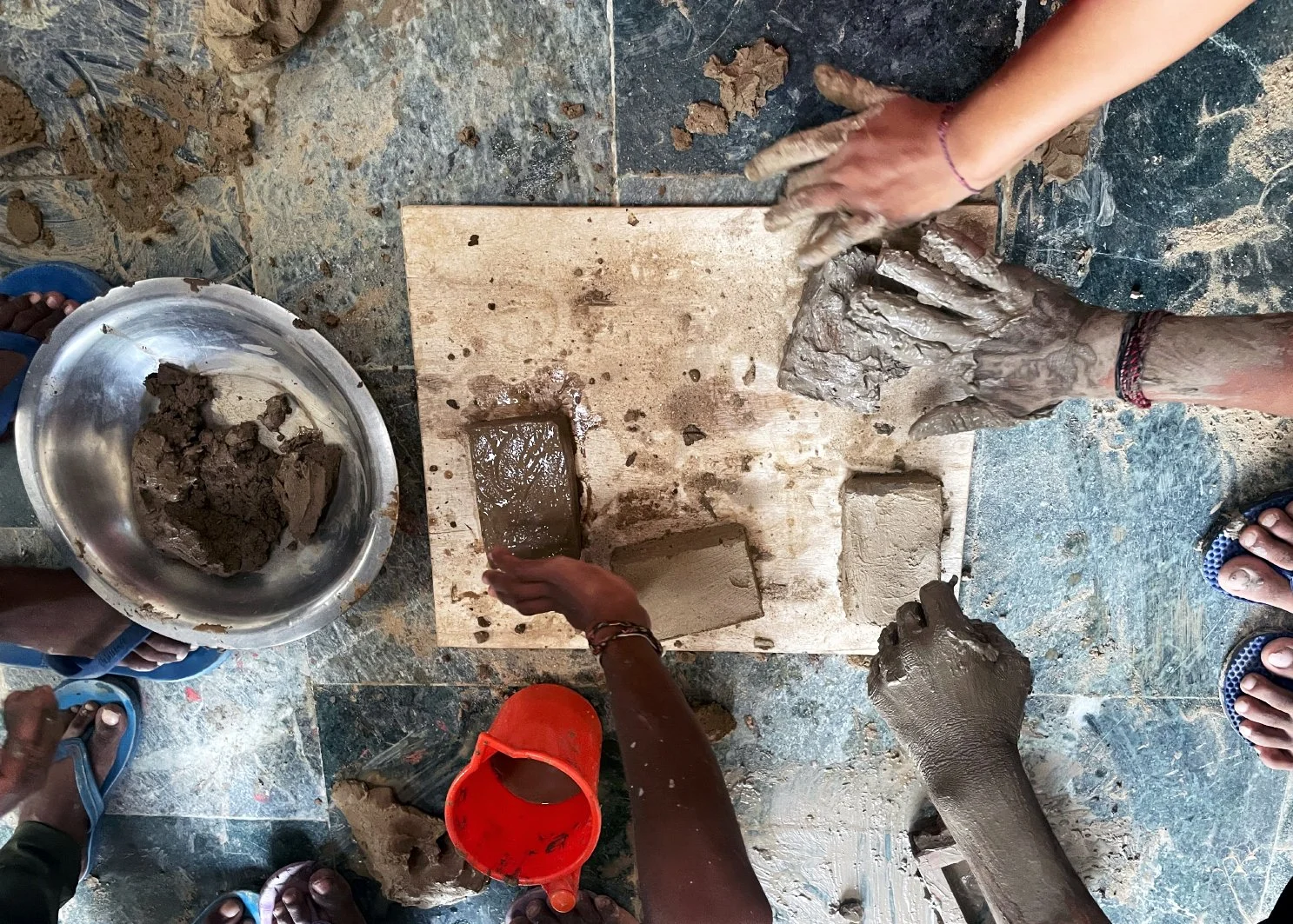
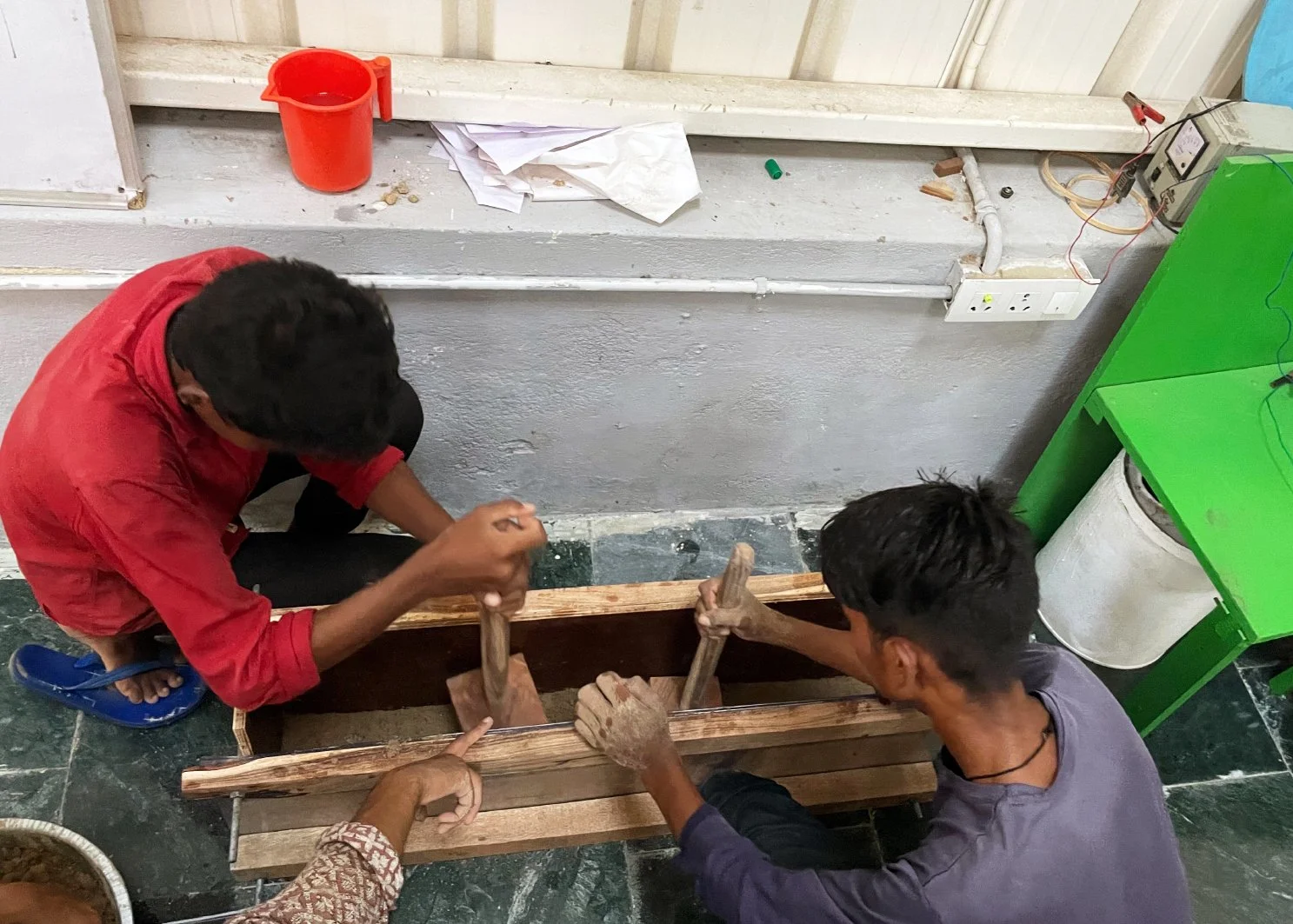
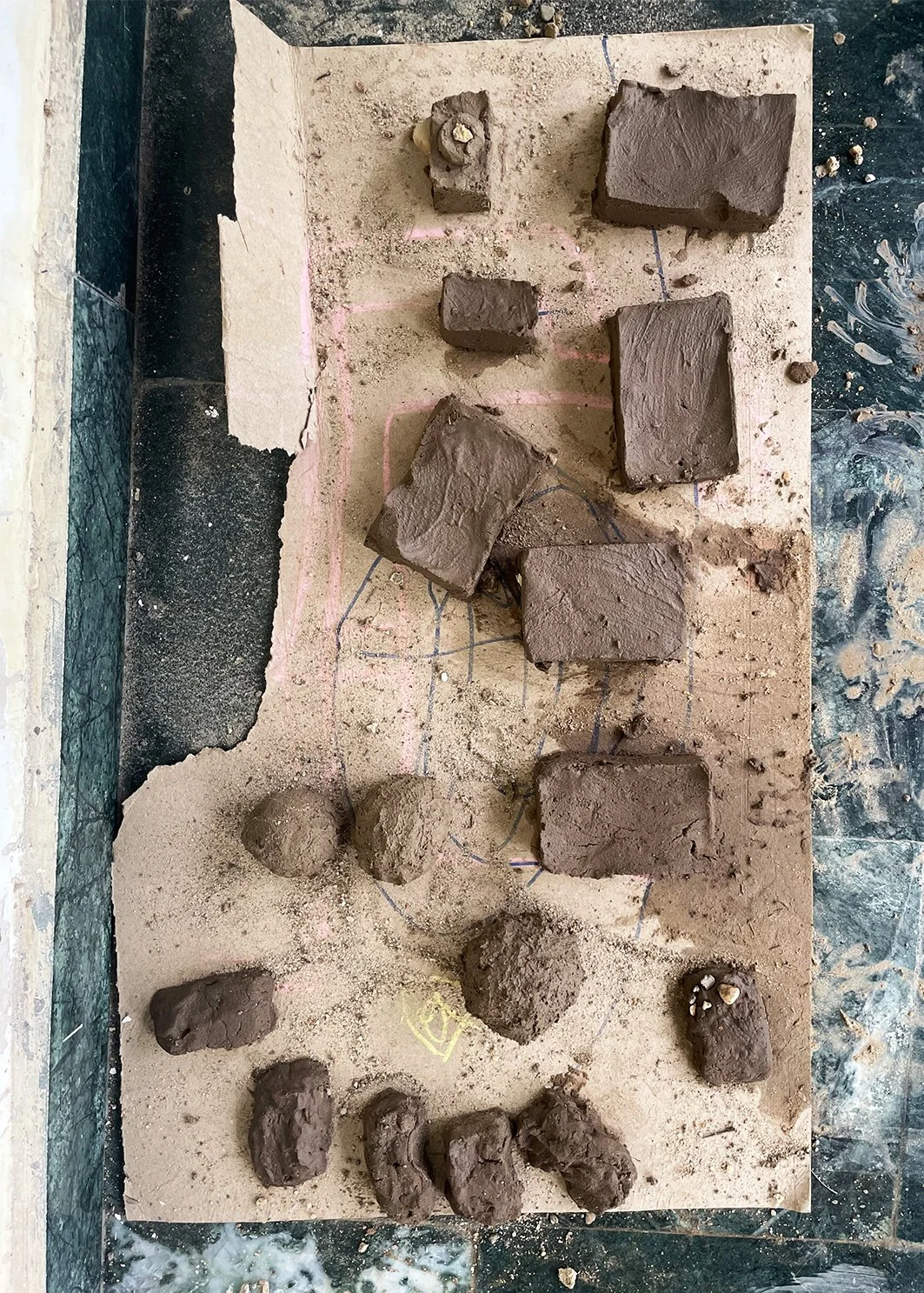
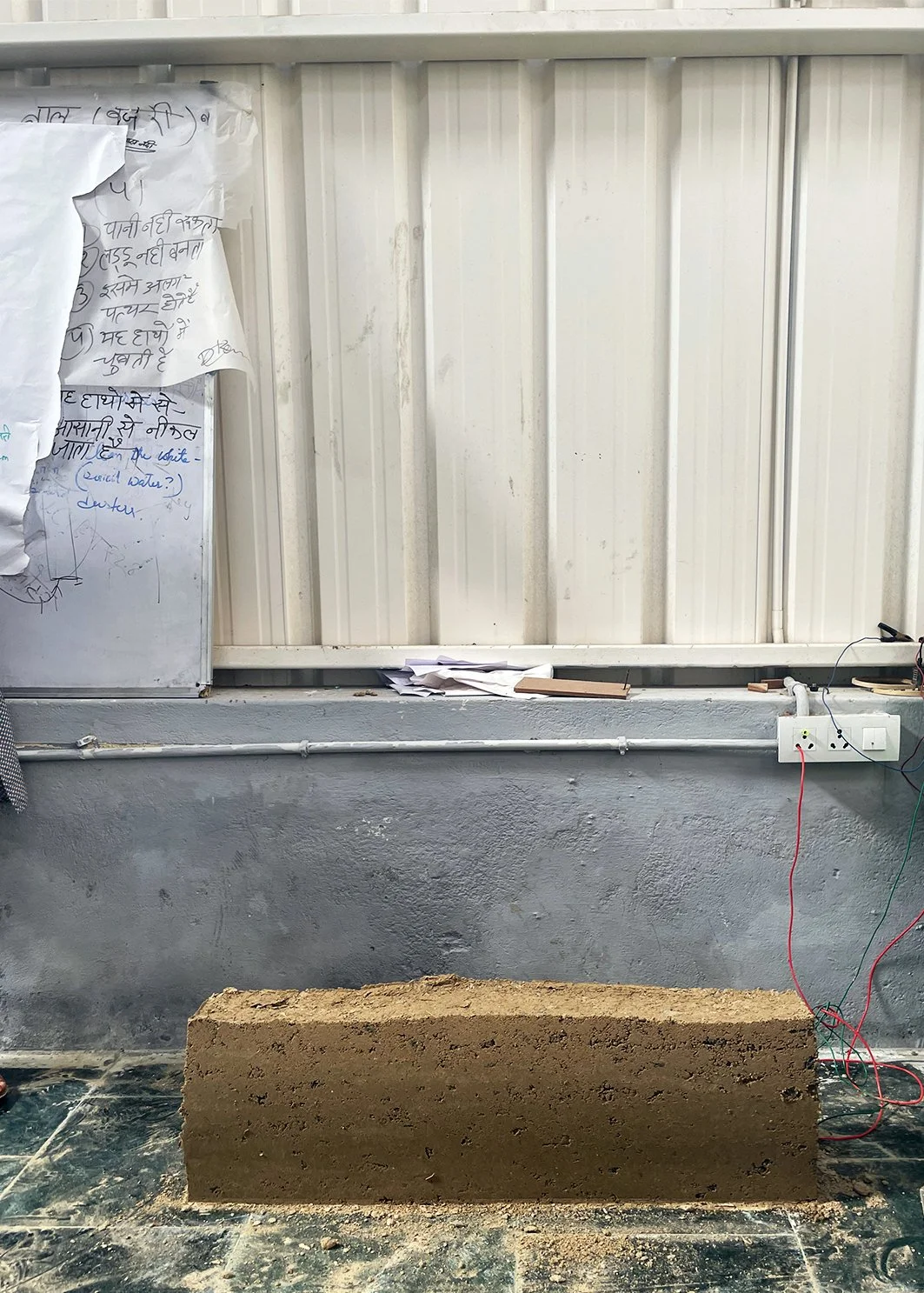
Students apply their understanding of materials by preparing mud mixtures, casting adobe bricks in moulds, sculpting, and creating natural earth paints from haldi, kumkum, charcoal, and gulaal bound with gum arabic. Structural techniques are introduced, including ramming earth cubes, constructing walls from stacked mud balls, and building full rammed-earth walls using formwork.
Adobe bricks | Natural earth paint | Rammed-earth cube | Mud-ball wall | The Architecture of Mud
WEEK SIX
Application & Culmination
Bringing it all together
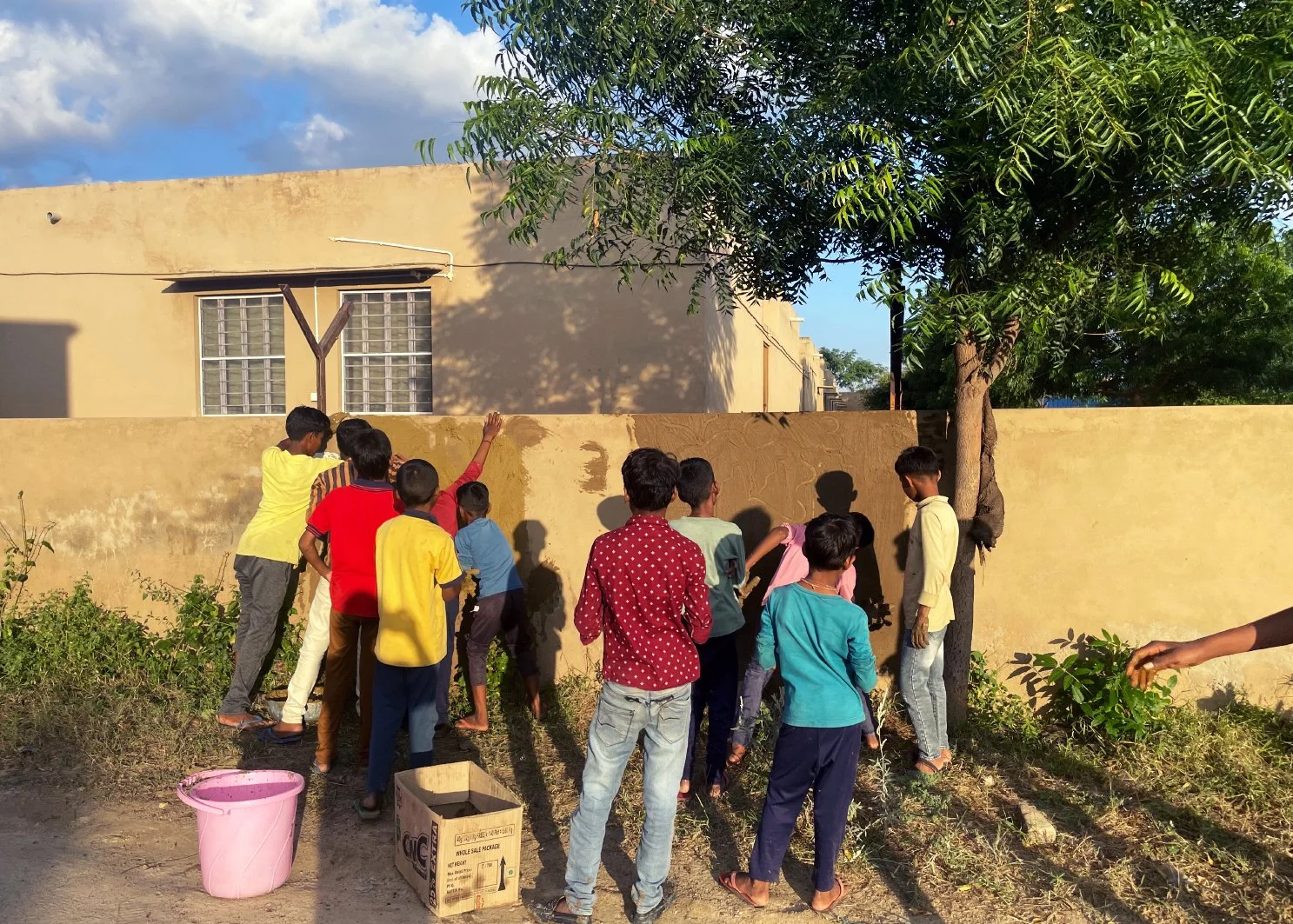
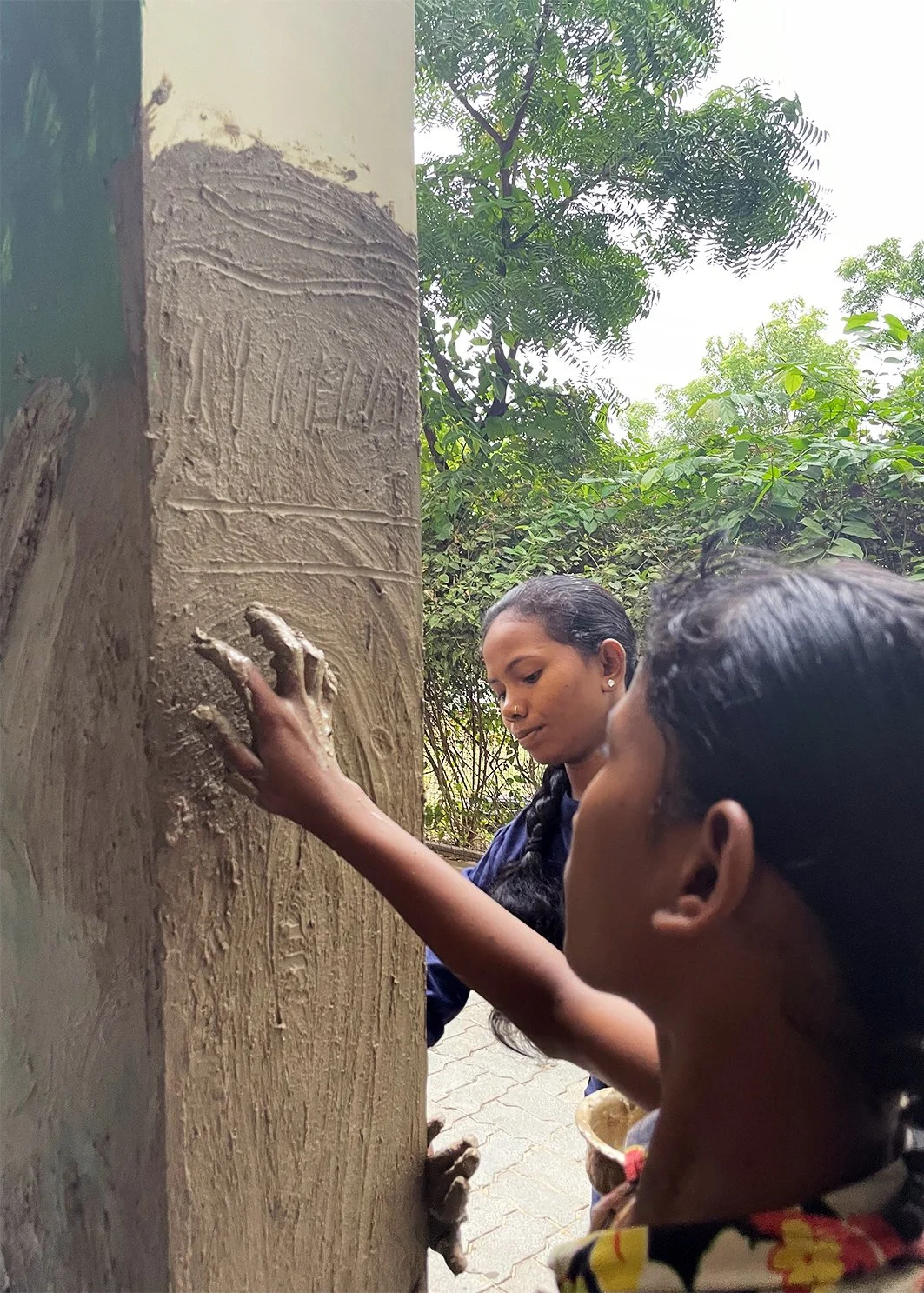
The curriculum introduces mud as both mortar (jodh) and plaster (lipai), guiding students in laying adobe bricks in courses, testing wall stability under simulated seismic conditions, and finishing walls with a wooden float. Cow dung is incorporated into plaster based on clay content. The program concludes with a comprehensive review, linking all concepts to the built environment.
Jodh (mortar) | Lipai (plaster) | Brick coursing | Seismic shake test | Culmination
03 TWO TRACKS, ONE LAND
Built for the learner, not the syllabus
The framework was designed for learners aged 1.5 to 18 years from diverse backgrounds. Initial workshops using a single-group approach encountered challenges with continuity and attention span. Consequently, the framework was revised to include two distinct age tracks, which enhanced the depth of each workshop. Facilitators were practising architects.
TRACK A - EARLY LEARNERS
Discovery through the senses
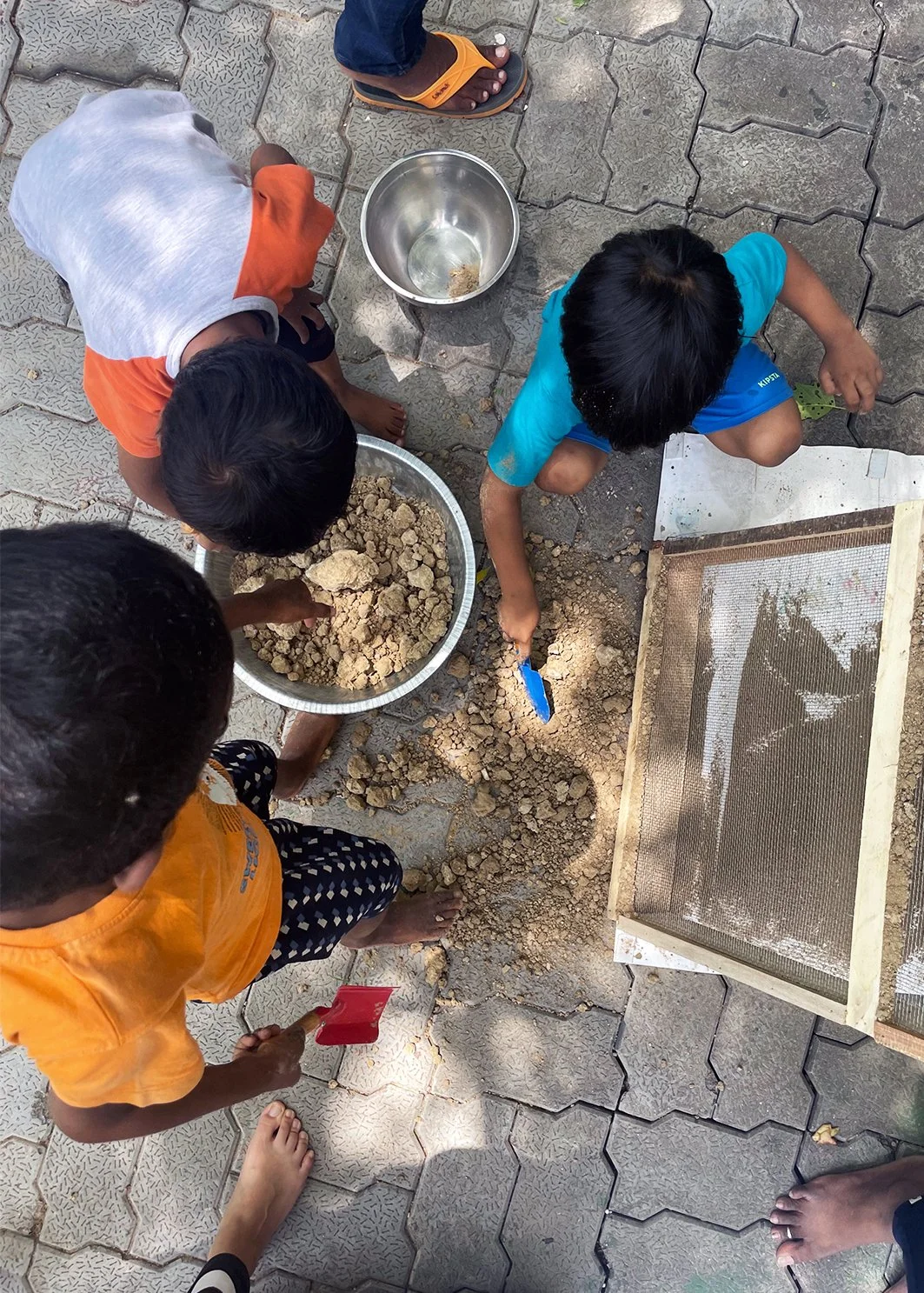
Younger students were primarily engaged by hands-on activities such as running with frills, tearing and assembling paper, sieving mud and identifying its particles, sculpting Ganpati figures from mud, and painting bricks. Initial fascination facilitated learning, with conceptual understanding developing through play.
TRACK B - TEENS & LATE TEENS
Reasoning through the science
Older students engaged in more advanced activities, such as calculating room dimensions using known heights and footstep counts, grading mud samples by clay content and plasticity, studying weathering and geological formation, casting rammed-earth walls in formwork, and testing brick walls for seismic response.
Observe
Students are encouraged to observe spatial dynamics, such as the distribution of shade and the direction of airflow.
Question
Each module begins with a discussion that prompts students to reflect on their sensory experiences and observations related to the topic.
Make
Students engage directly with materials through activities such as building, casting, painting, ramming, and plastering.
Reflect
Each activity is explicitly connected to the built environment in which students reside.
04 WHAT IT PRODUCED
A path of self-discovery
The overall experience was immersive and rooted in the land the children live on daily, allowing them to discover both themselves and the depth of knowledge their surroundings offer. Understanding space may be complex, but through this path they learn to observe, create, question, analyse, critique, feel and explore a self-discovery that equips them for the challenges of their own surroundings.
DELIVERABLE
A replicable framework
This documented six-module primer for teaching space-making to children includes discussion prompts, step-by-step activities, inventories, learning objectives, observations, and alternative exercises, and is designed for adaptation by any facilitator.
BUILT OUTCOME
Made by their own hands
The students' constructed works, including a tyre-and-mud amphitheatre, adobe bricks, rammed-earth walls, mud sculptures, and natural earth paints, represent their initial proficiency with vernacular building materials.
THE LARGER AIM
Stakeholders, not spectators
This program prepares a generation of young learners to participate as intellectual stakeholders in the design of their own school and to apply a nuanced understanding of space, materials, and land in future projects.