N-E INDIA | WINDOWS TO VERNACULAR x ACADEMY OF ARCHITECTURE
The North-East Project
2018
"Seven states: the same monsoon, the same bamboo, the same instinct to elevate dwellings above ground. Yet, each state diverges into its own architectural ingenuity."
(AR) Arunachal Pradesh Adi Pasi | Apatani tribes
(AS) Assam Mising tribe | Majuli Island
(MN) Manipur Meitei | Loktak Lake | Phumdis
(ML) Meghalaya Khasi | Garo | Jaintia tribes
(MZ) Mizoram Lushei | Ralte | Mizo tribes
(NL) Nagaland Angami | Ao | 14 Naga tribes
(TR) Tripura Reang | Tripuri tribes
01 SEVEN STATES, ONE STUDY
The seven states of North East India share a common ecological inheritance: abundant monsoon rainfall, forested hillscapes, the Brahmaputra and its tributaries, rich biodiversity and a deep pre-colonial relationship between the tribe and the land. Yet they are remarkably distinct in tribal structure, in settlement form, in the spiritual relationship to building, in how they handle the specific challenges of water, slope, flood and forest.
The central analytical approach of this study considers similarity and difference as equally important frameworks. While previous research often catalogued each state independently, this comparative analysis examines both shared characteristics and points of divergence, seeking to understand the underlying reasons. The findings reveal a vernacular intelligence that is both collective and highly localised.
"In the North East, bamboo is the shared body - and the distinct cultures are the distinct voices speaking through it."
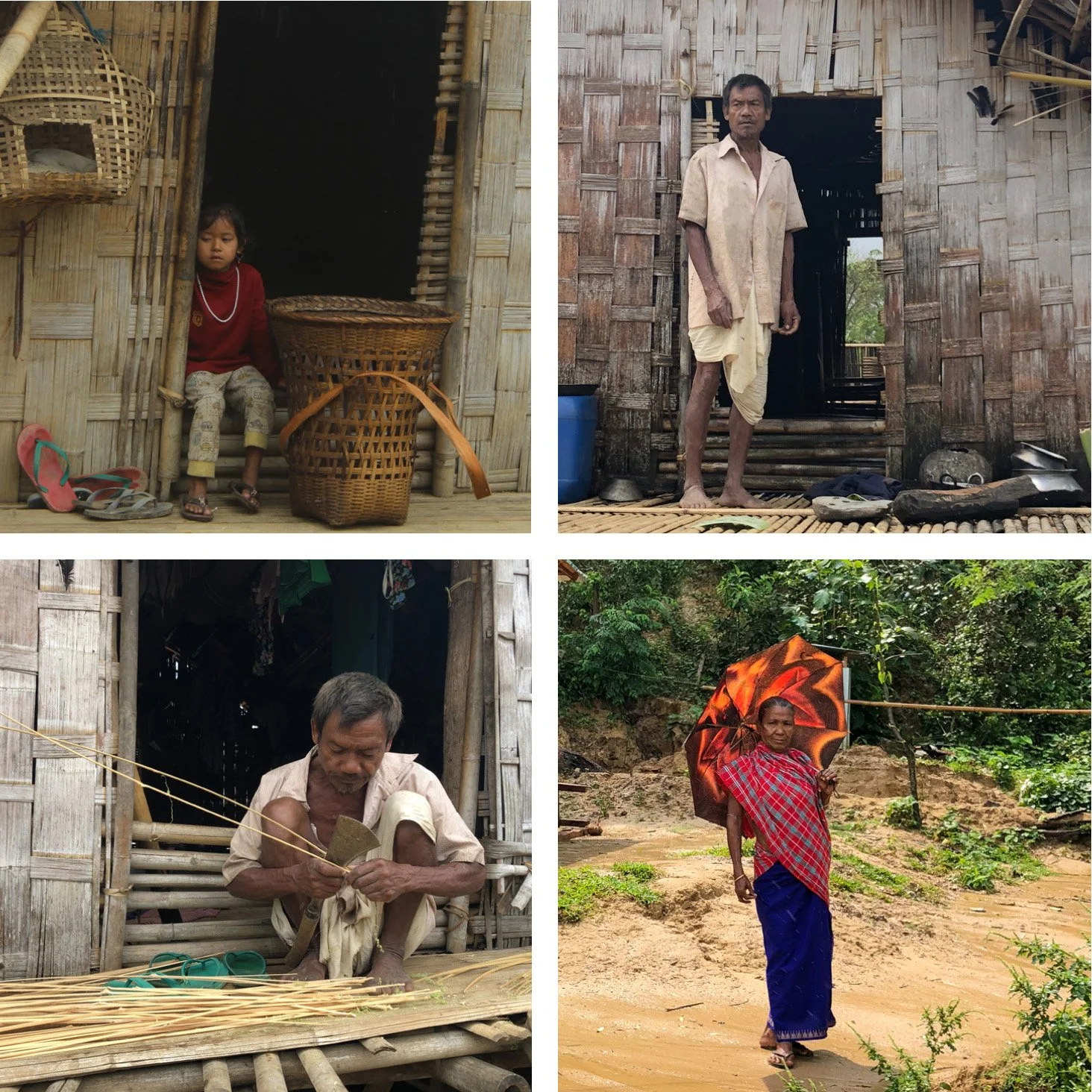
Each state was documented by research teams embedded within local villages. Activities included constructing models with local craftsmen in Arunachal, mapping the Loktak Lake phumdi communities in Manipur, tracing khul water channels in Meghalaya, and engaging with the Ao Naga community in Mokokchung. In this context, architectural knowledge is inseparable from community knowledge.
A principal finding is that bamboo is used in all seven states. Stilt construction is present in six, and the dormitory institution appears in five. Pre-construction rituals are observed in all seven. However, the material composition of walls, the rationale for using stilts, and the specific functions of dormitories vary significantly, revealing important state-level distinctions.
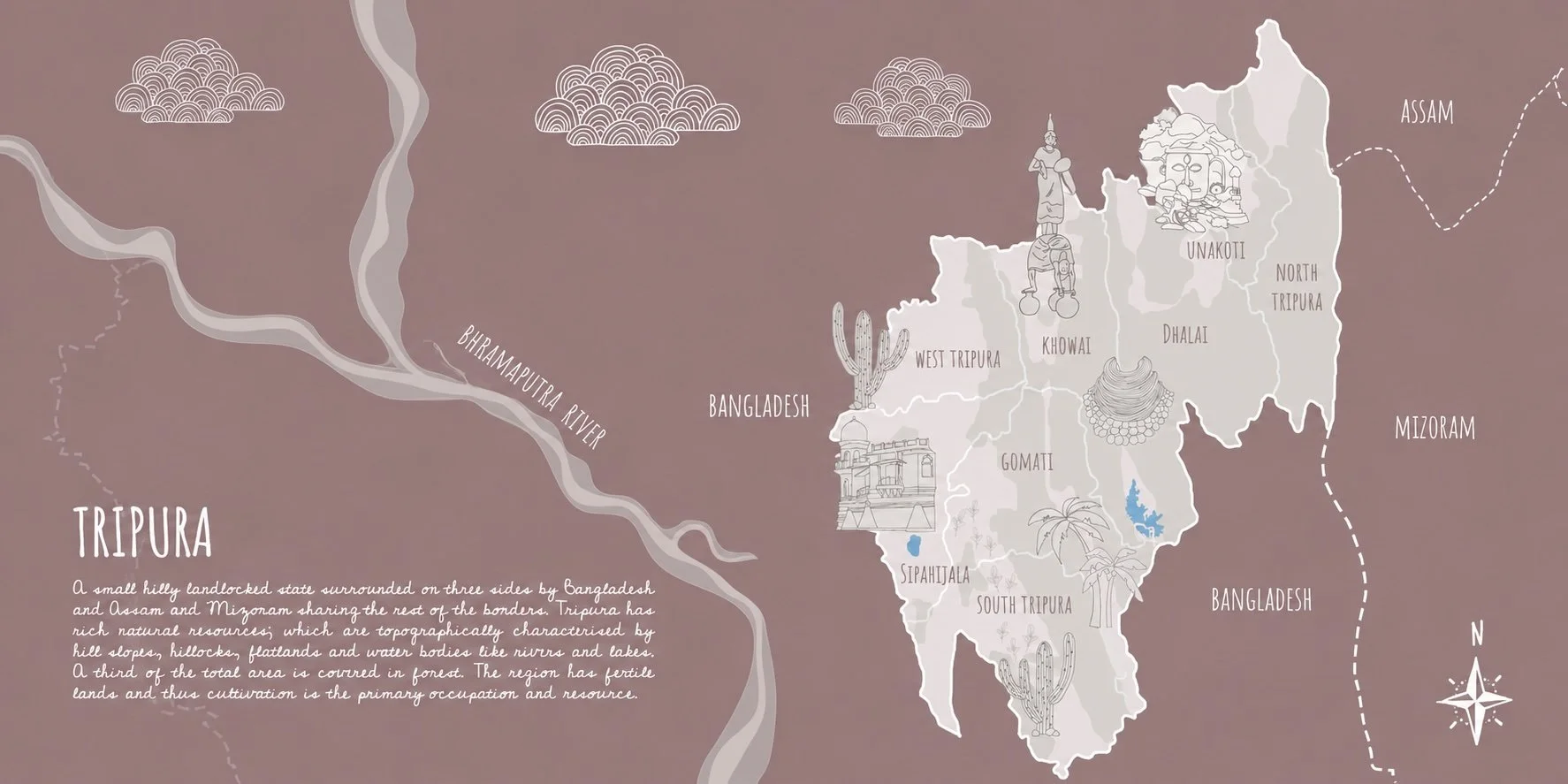
Tripura has a unique dual-material system: bamboo is used in the hills, while mud is predominant in the plains. This positions Tripura as an architectural transition between the bamboo-based traditions of the Northeast and the earthen construction practices further west. Meghalaya is the only matrilineal state, and Manipur is distinguished by its floating architecture, which is unique in global vernacular traditions.
02 SEVEN STATES - INDIVIDUAL PORTRAITS
Each state, each distinct voice
ARUNACHAL PRADESH
Land of Dawn-Lit Mountains
Adi Pasi · Apatani · Nyishi · Monpa
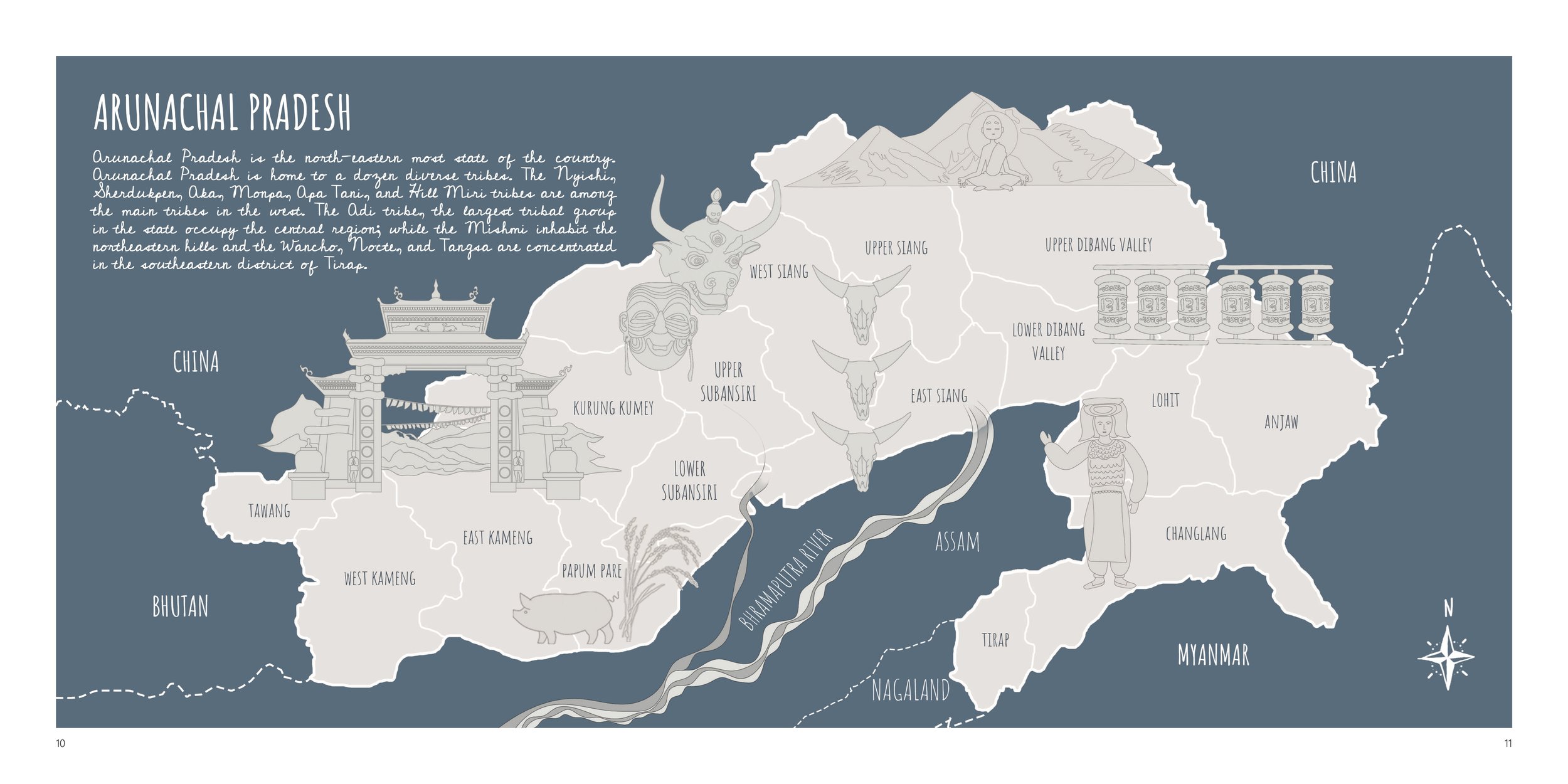
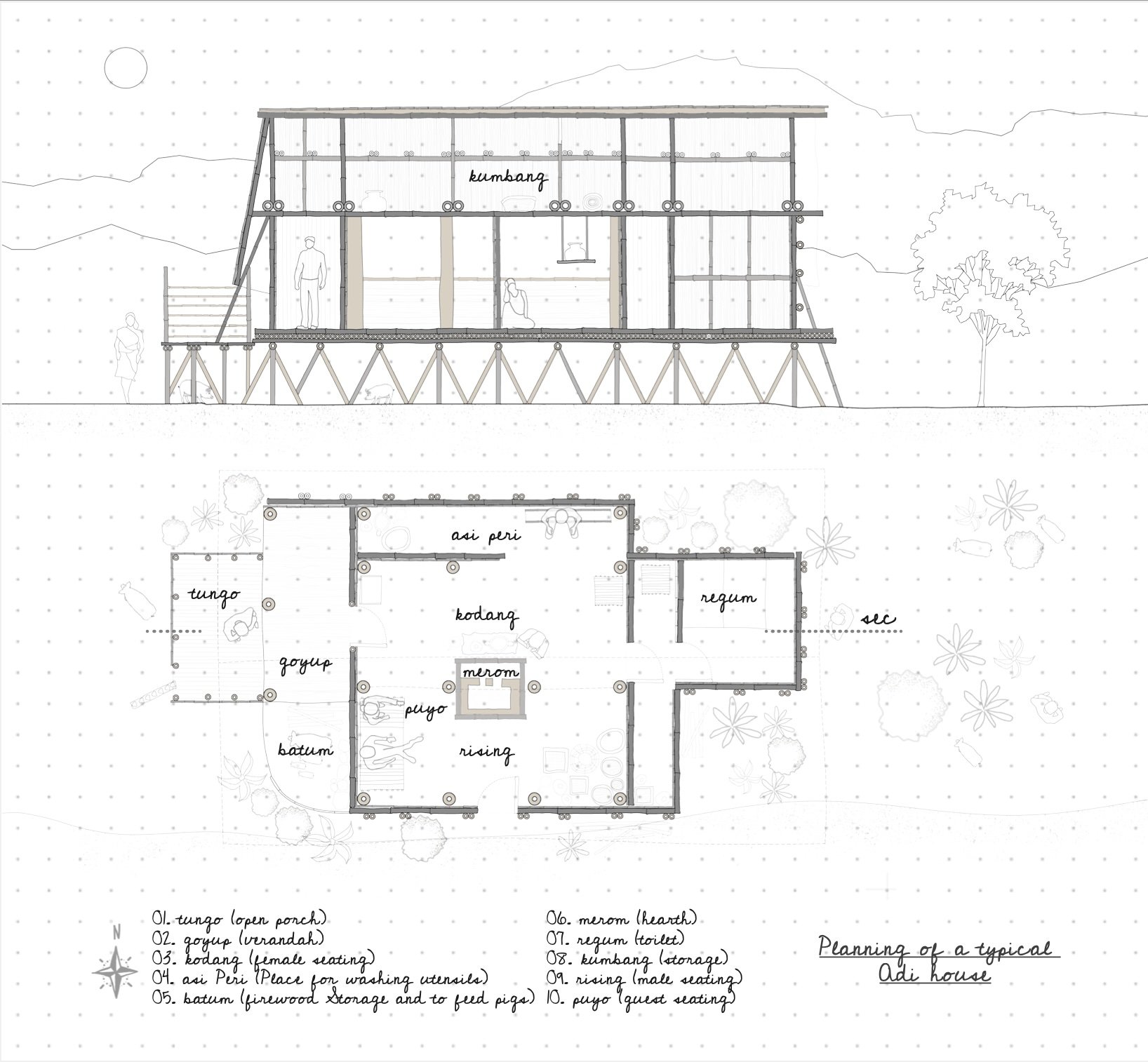
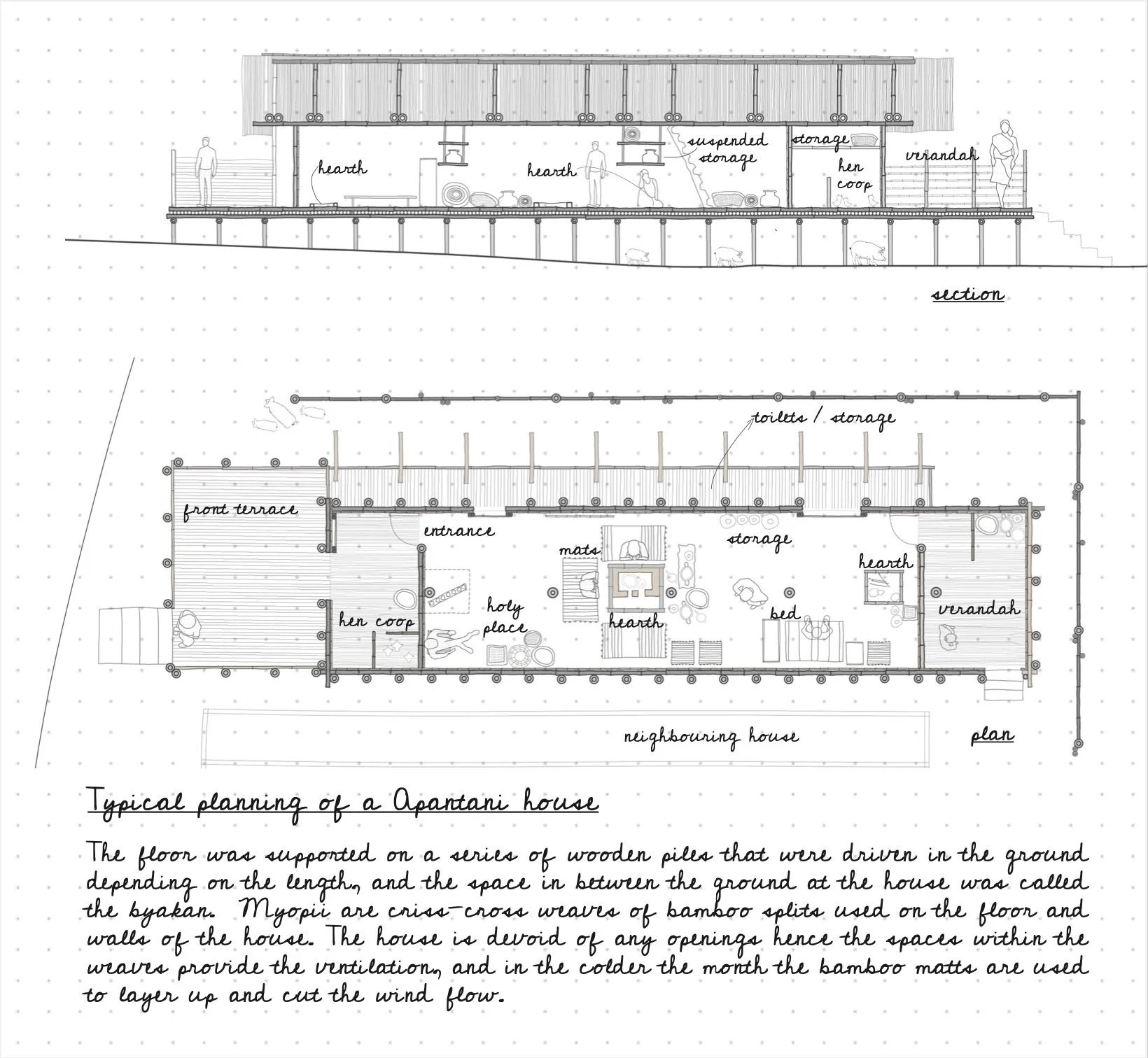
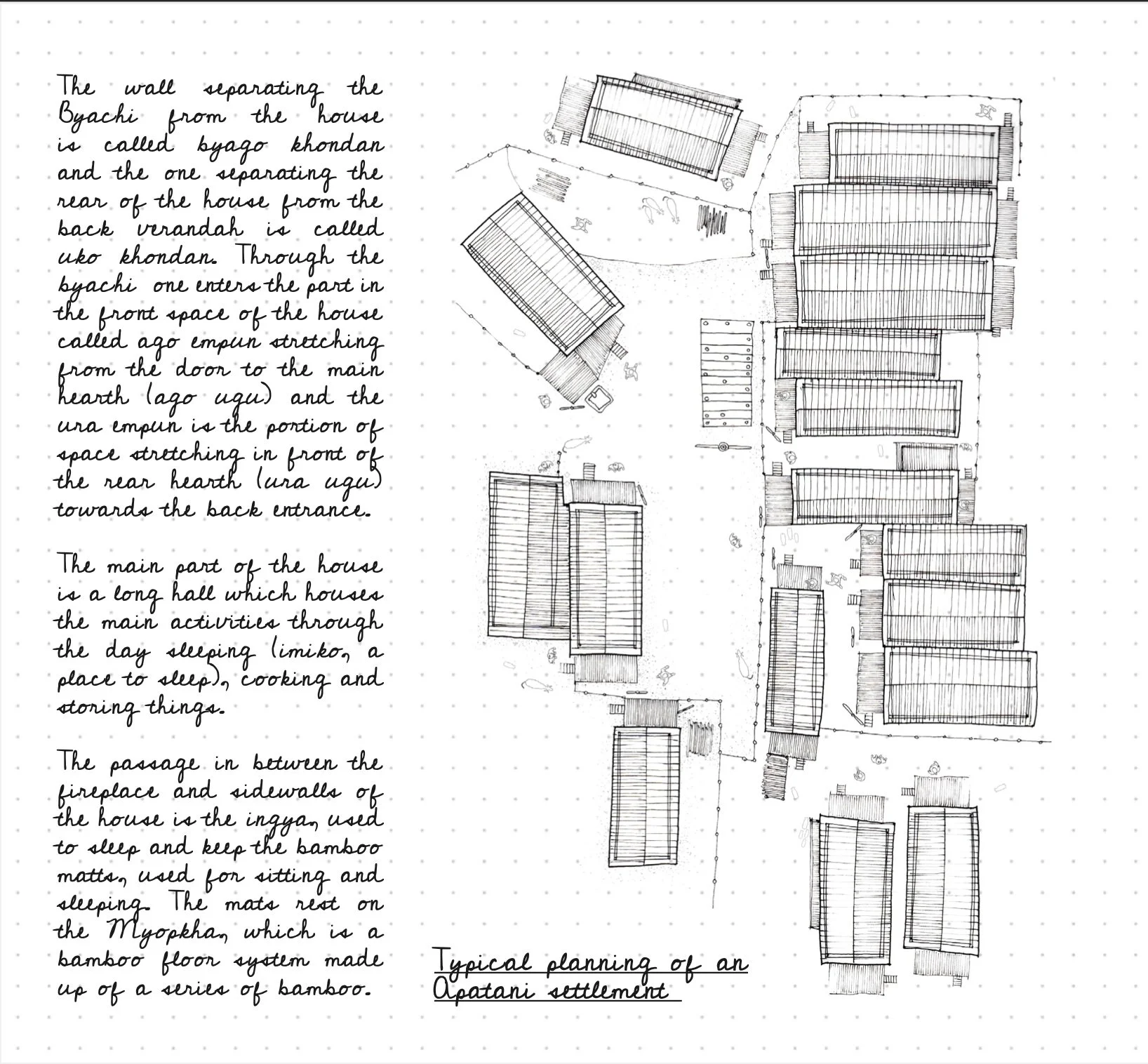
Home to 12+ diverse tribes in nine river systems, 100m to 4,600m elevation. The Adi Pasi house is raised on stilts, with a Tungo (open porch) leading to a Goyup (verandah). Merom (hearth) divides the house into Kodang (female) and Rising (male) zones. Construction is a community festival, the Ebor/Borne gathering with Ponung dance follows. Boys have the Moshup dormitory; some villages have the Raseng (female dormitory). Animist Donyi-Polo (Sun-Moon) religion.
Stilts - bamboo + timber | Moshup + Raseng (dormitories) | Rice grain ritual | Animist - Donyi-Polo
ASSAM
Gateway to the Northeast
Mising tribe · Majuli Island
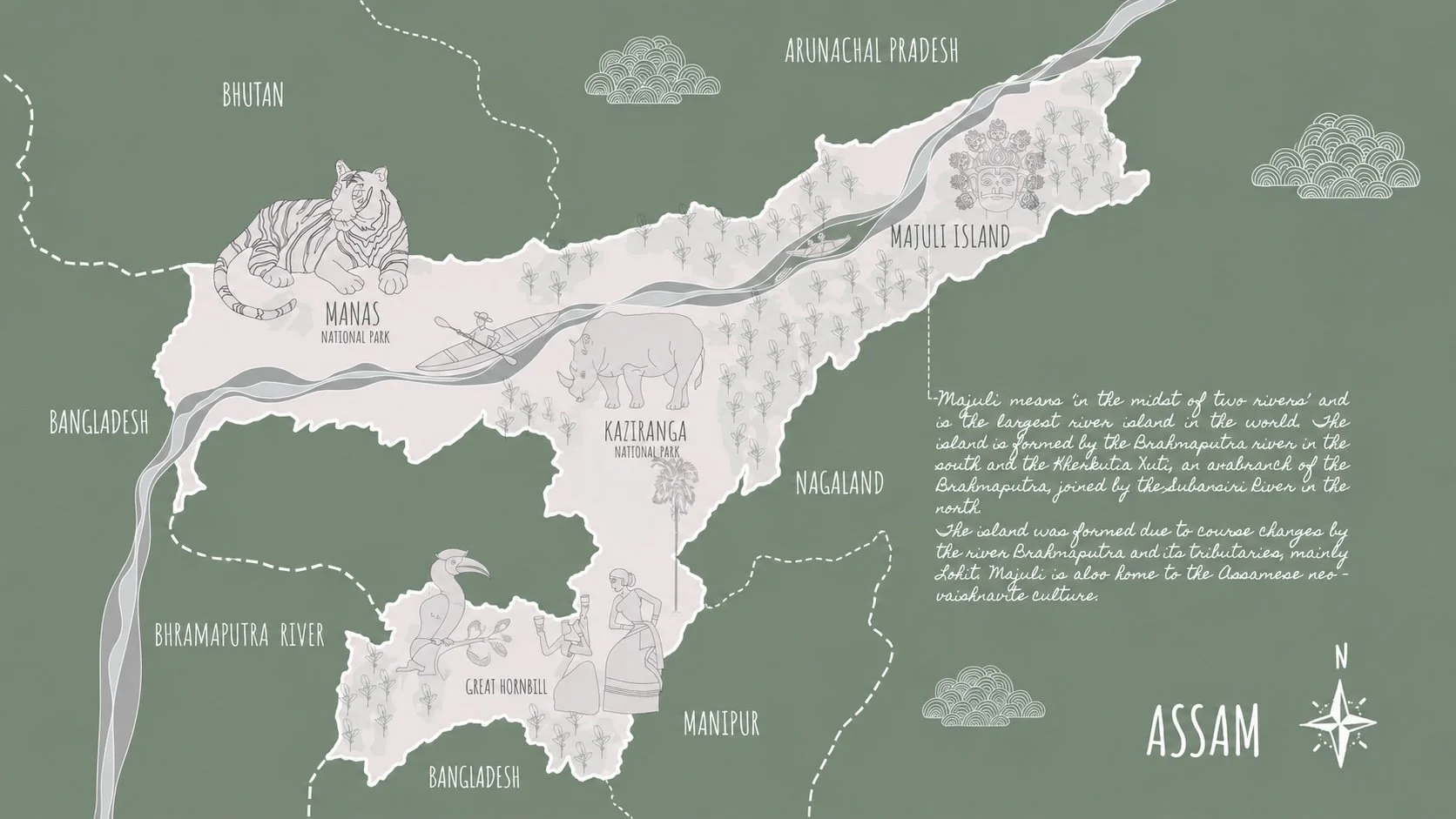
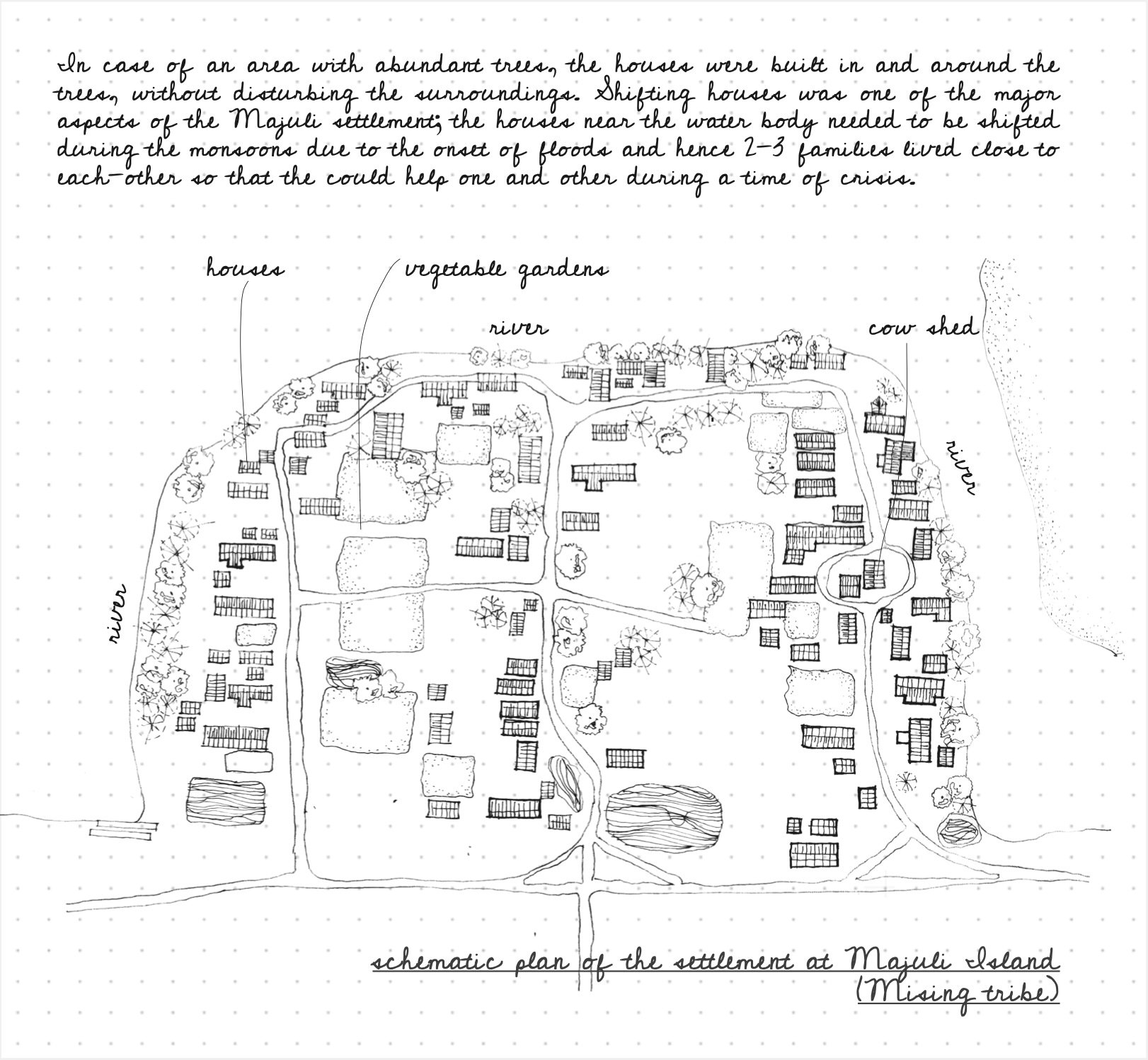
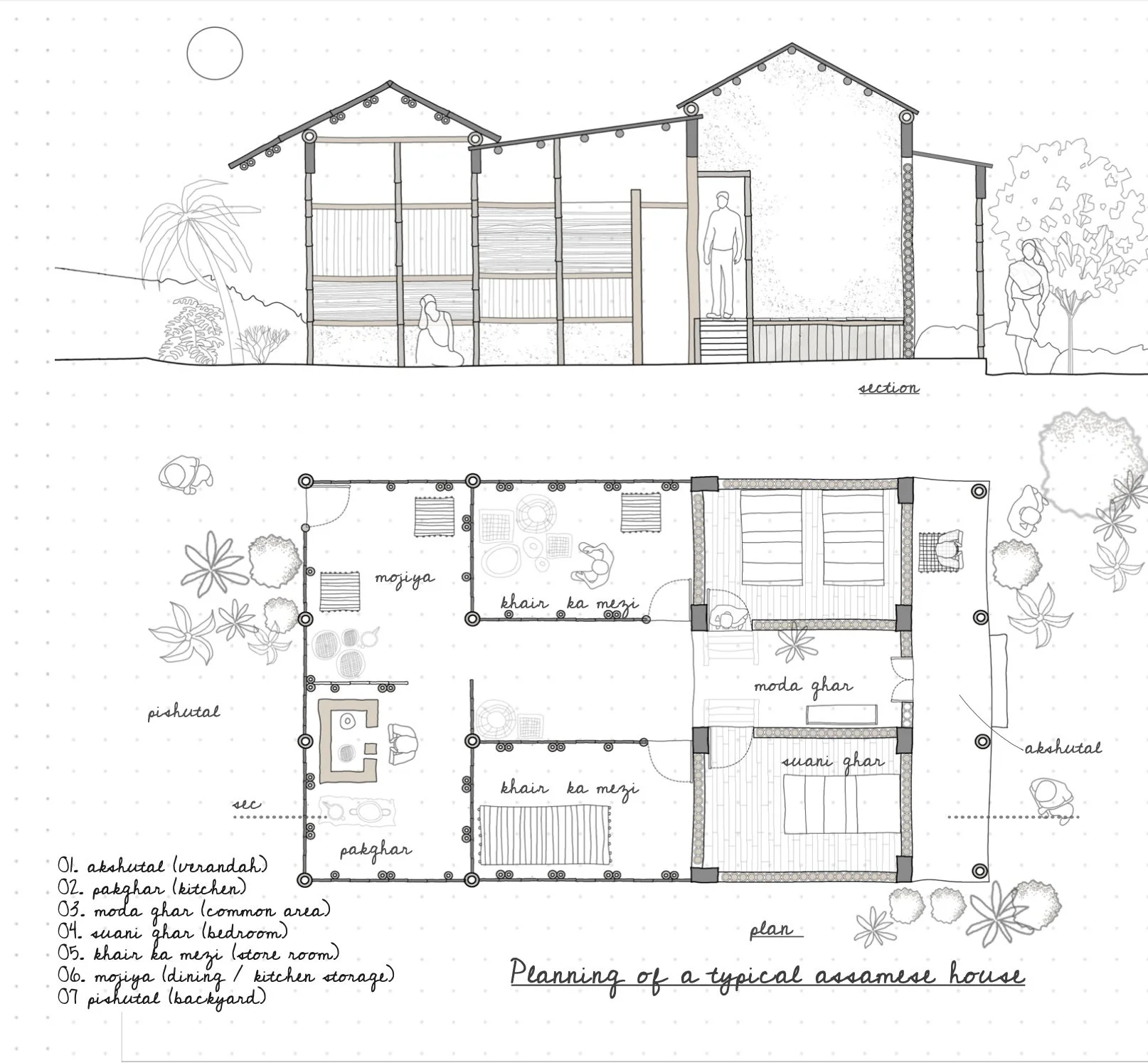
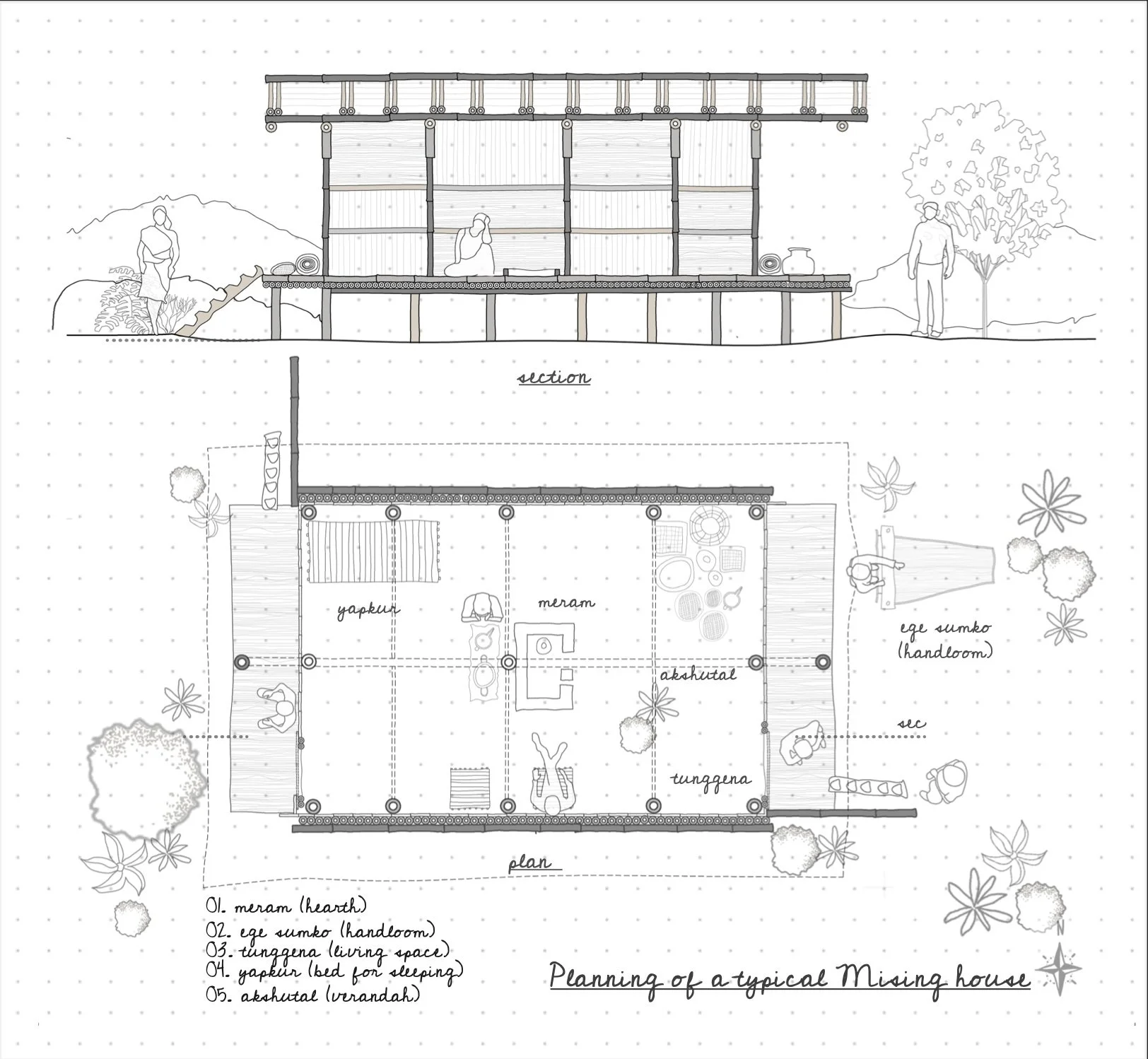
Majuli, the world's largest river island, is the centre. Houses raised on bamboo stilts, oriented to village roads so front stays in shade. Long-houses with several families, each with their own cooking fire (Meram). A single-log staircase leads to the open verandah. The platform below shelters livestock. Muga silk, Paat and Eri weaving. Mask-making (Mukhas), with a bamboo frame and mud-cow dung plaster, is an integral craft. Bi-annual Brahmaputra flooding shapes every construction decision.
Stilts - flood response | Long-houses · multi-family | Muga silk handloom | Boat-making craft
MANIPUR
The Floating Lake
Meitei · Phumdi communities · Loktak
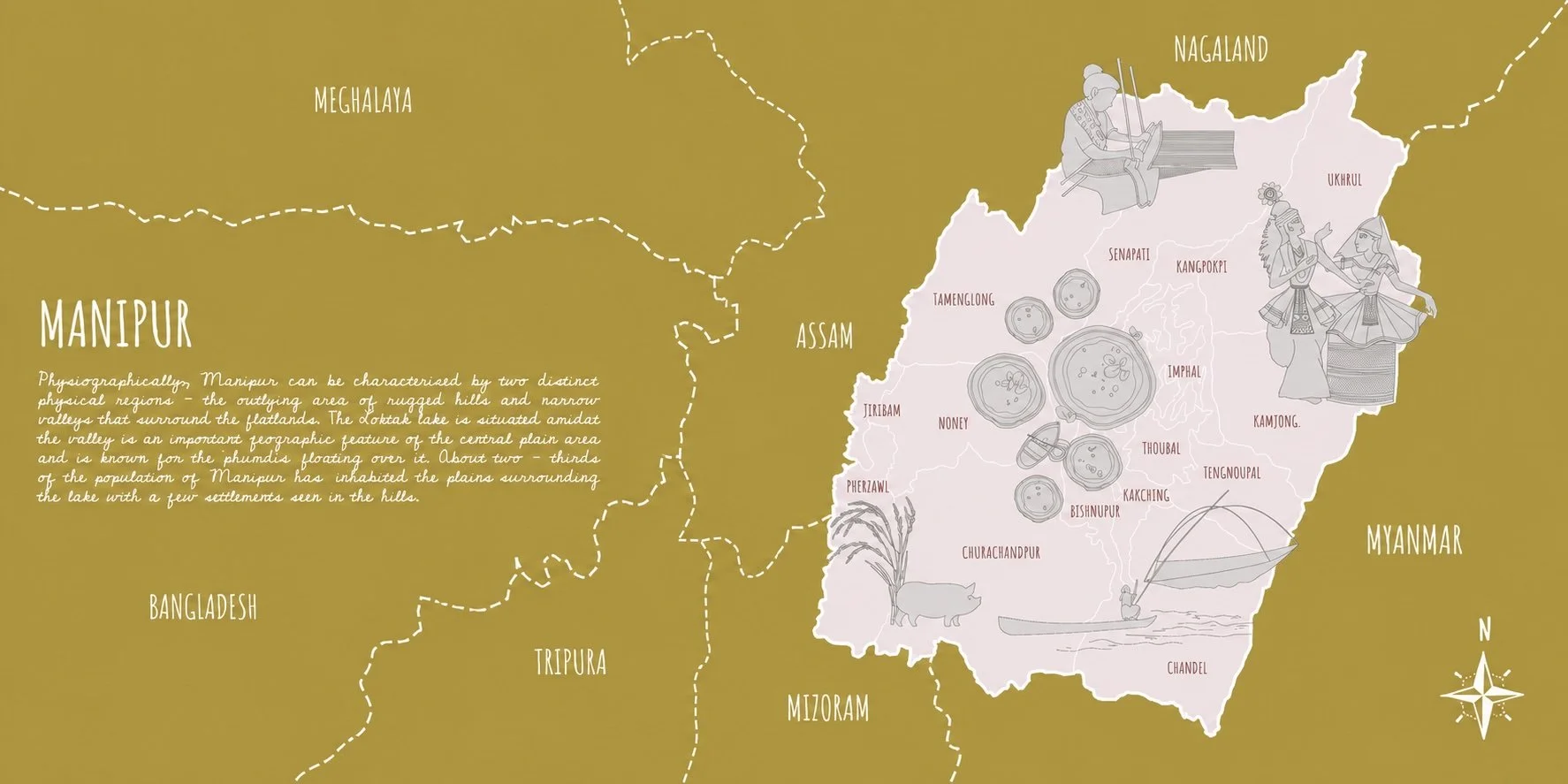
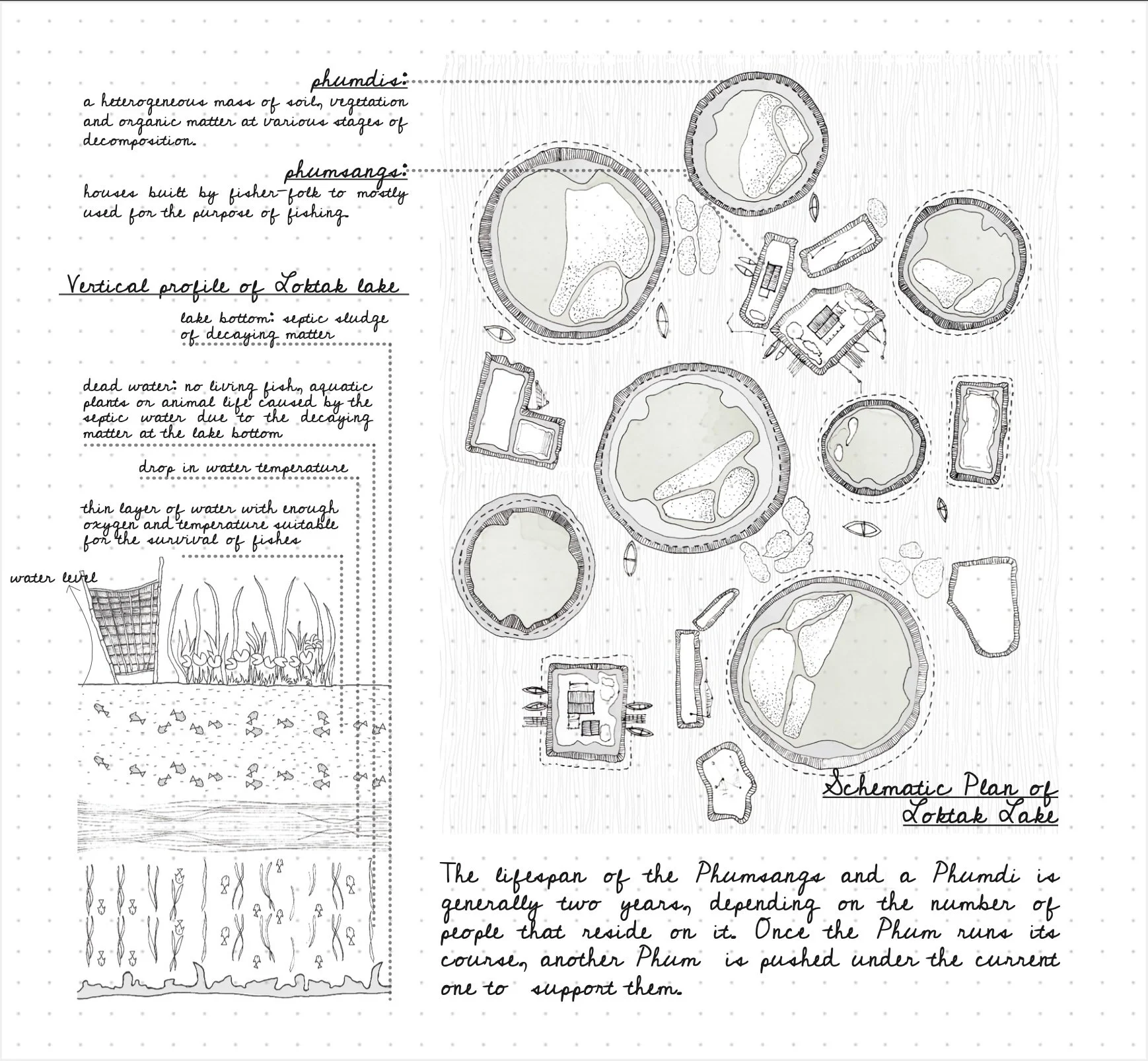
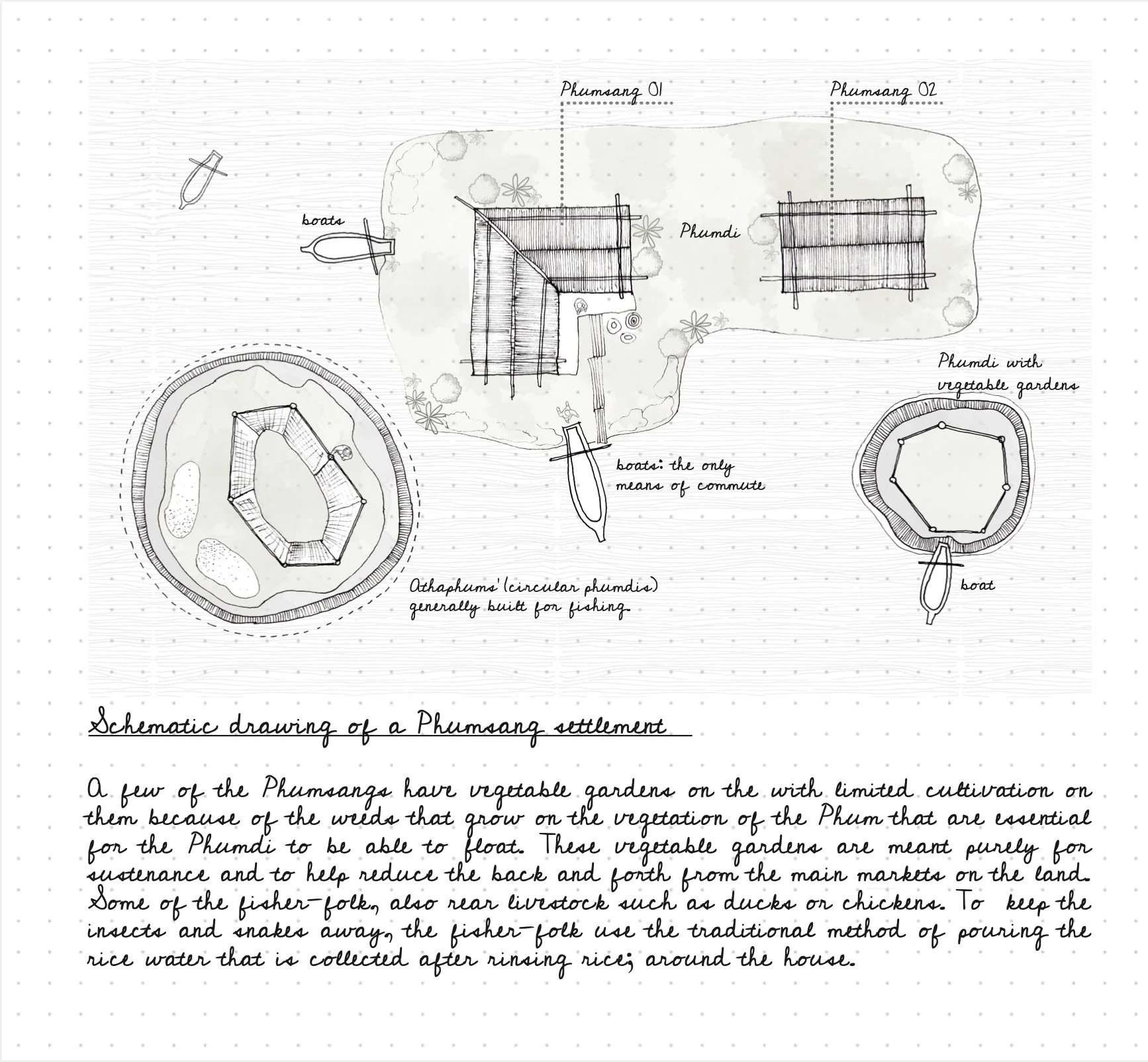
Unique globally: the only floating architecture. Loktak Lake's phumdis (heterogeneous soil-vegetation-organic mass) cover 50% of the lake. The phumsang (house on phumdi) is anchored to the ground with stones through the sangkha-namba community ritual. A platform of bamboo or wooden planks over the phumdi. Lifespan 2 years. Athaphums (circular phumdis) are man-made aquaculture. Meiteis in the valley follow Hinduism; hill tribes (Naga, Kuki) are animists. Classical Manipuri dance is central to social life.
Phumsang - floating house | Phumdi - biomass platform | Globally unique typology
MEGHALAYA
Abode of Clouds
Khasi · Garo · Jaintia tribes
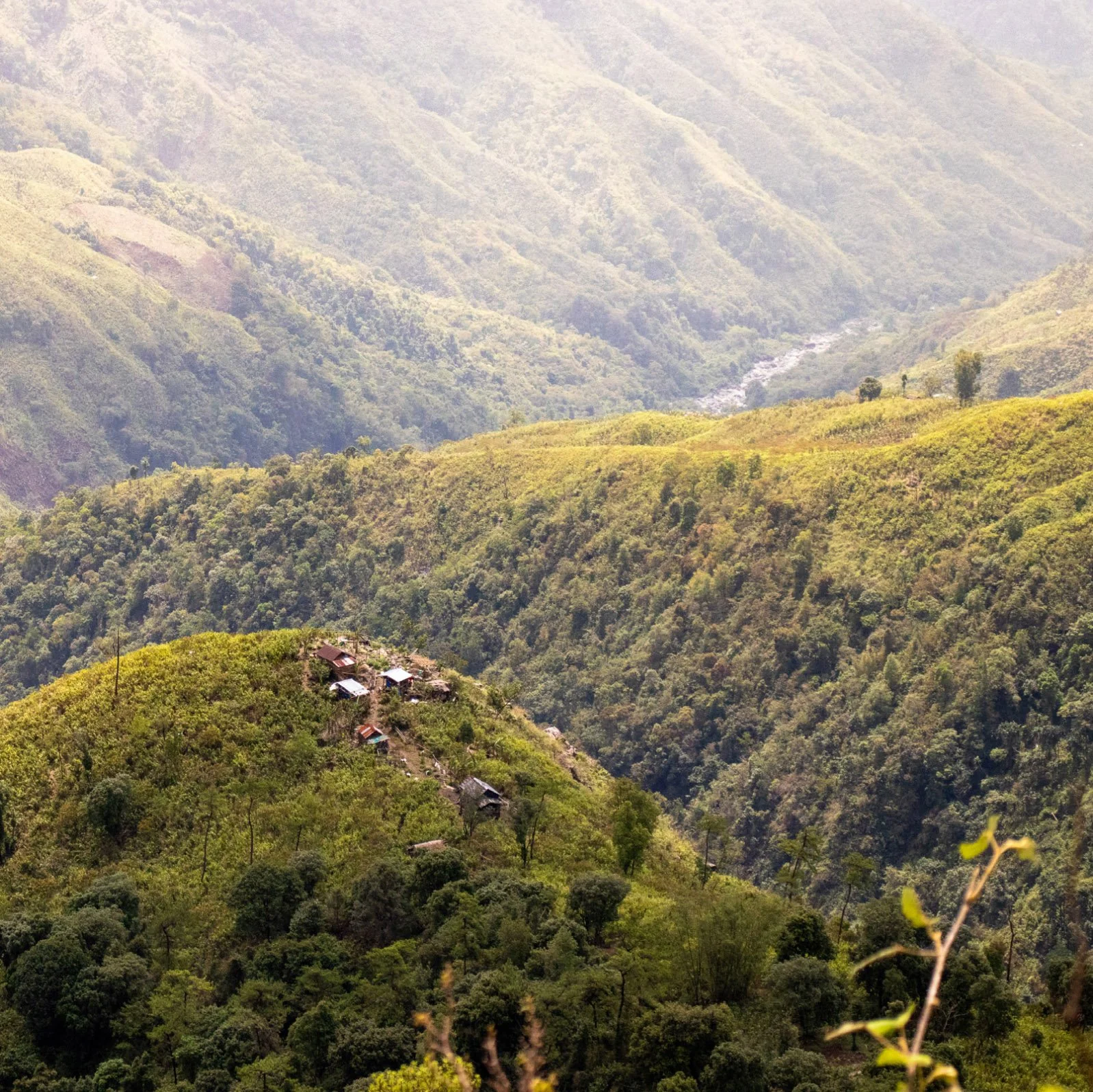
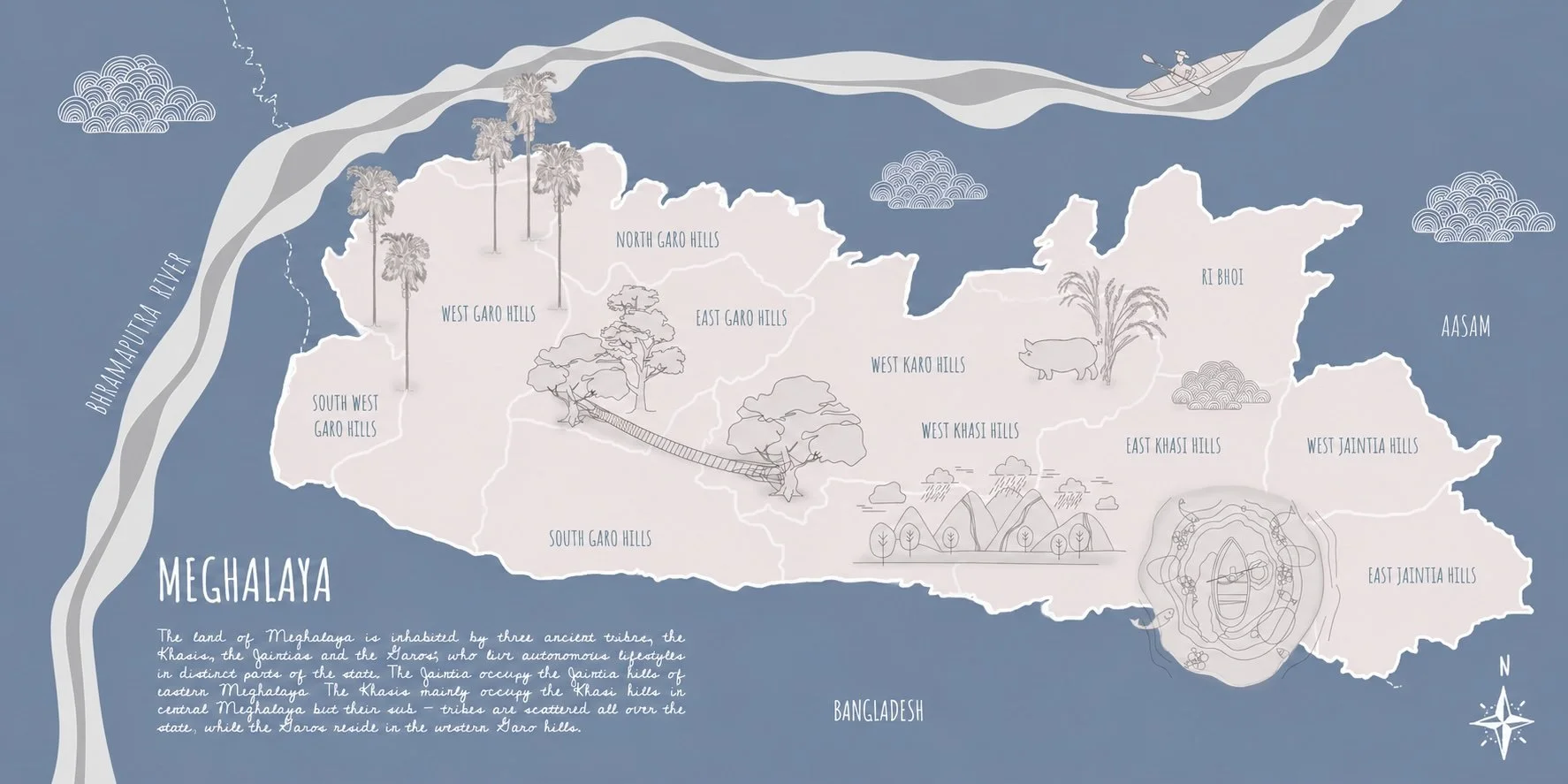
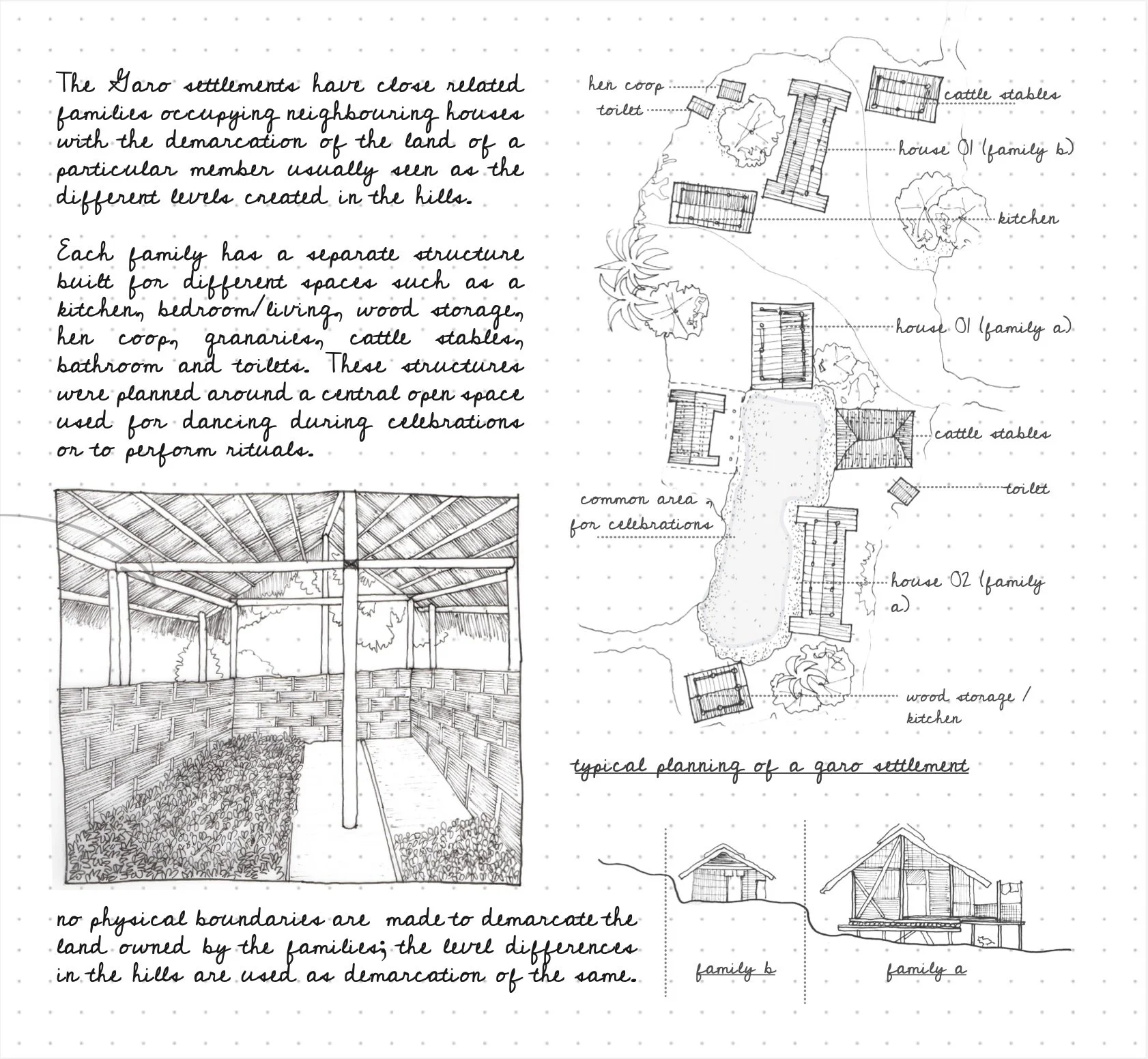
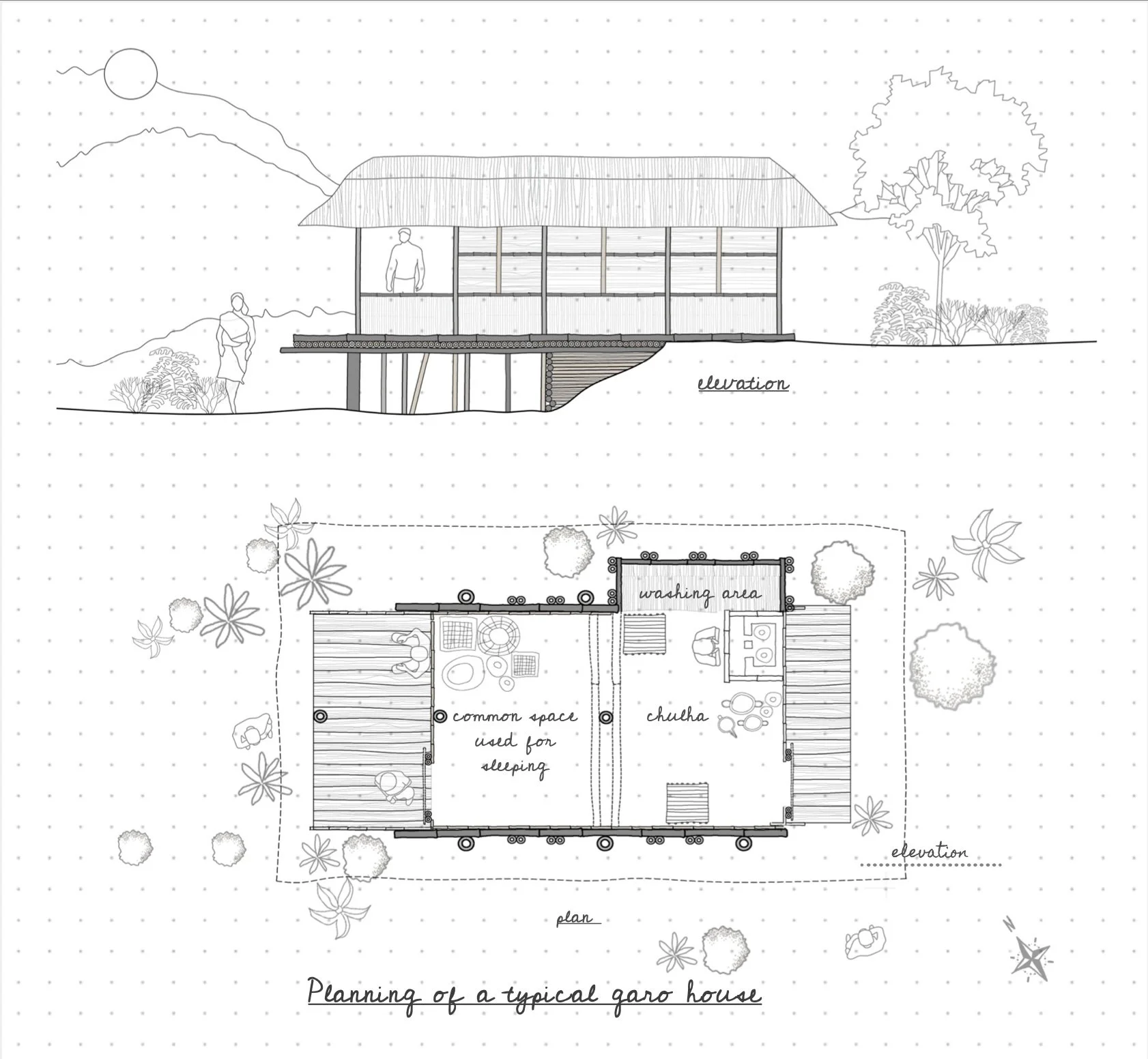
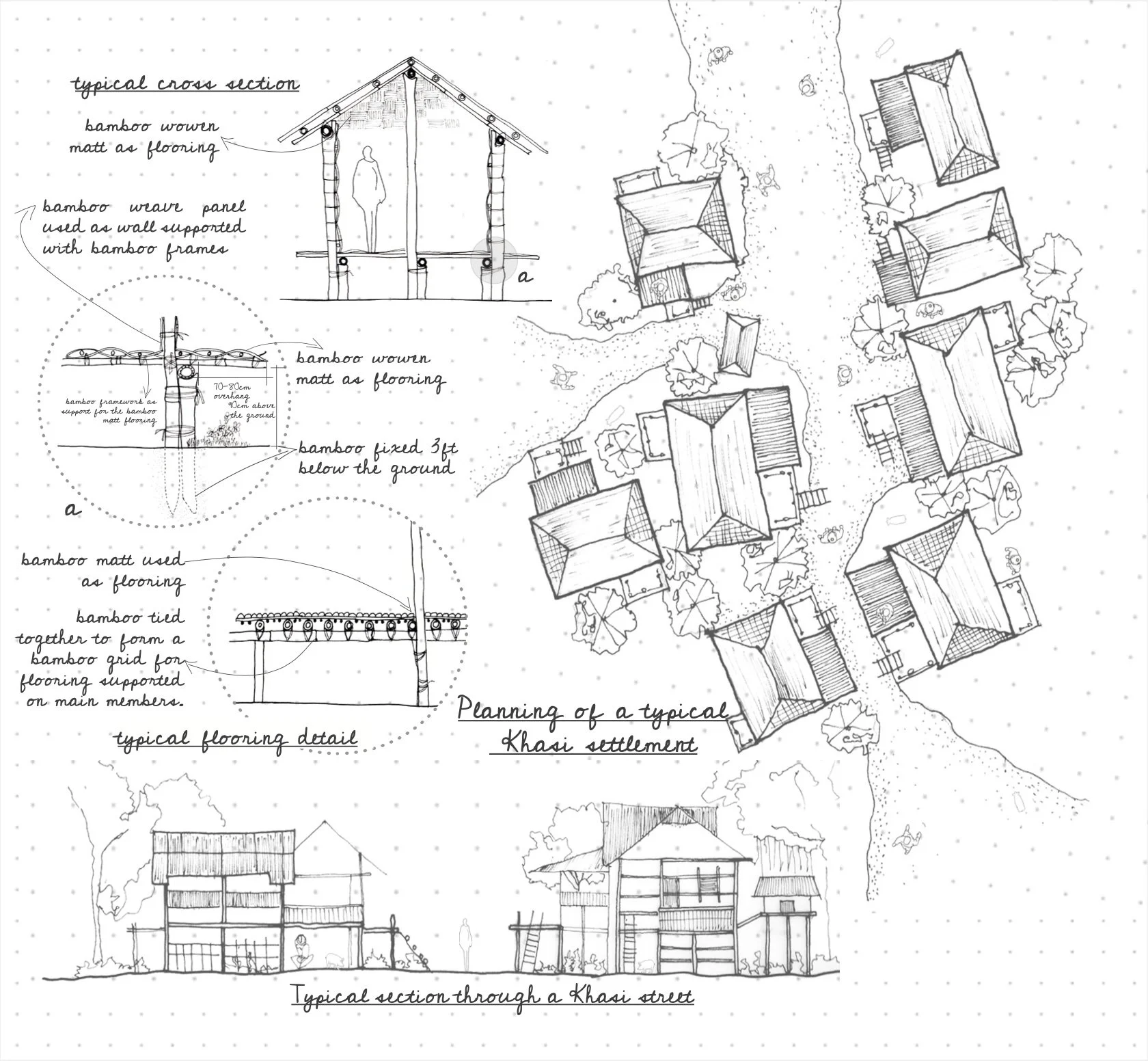
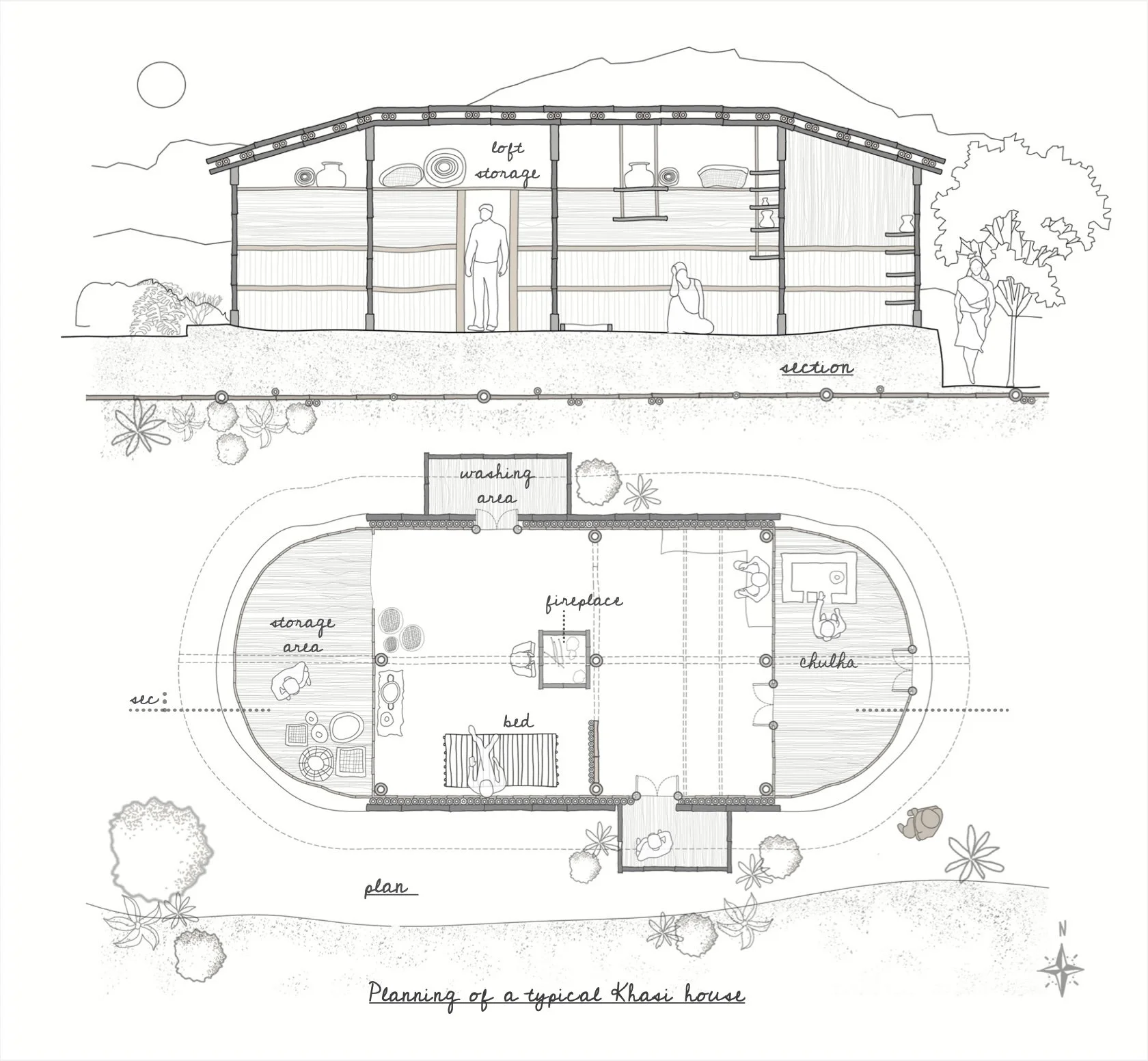
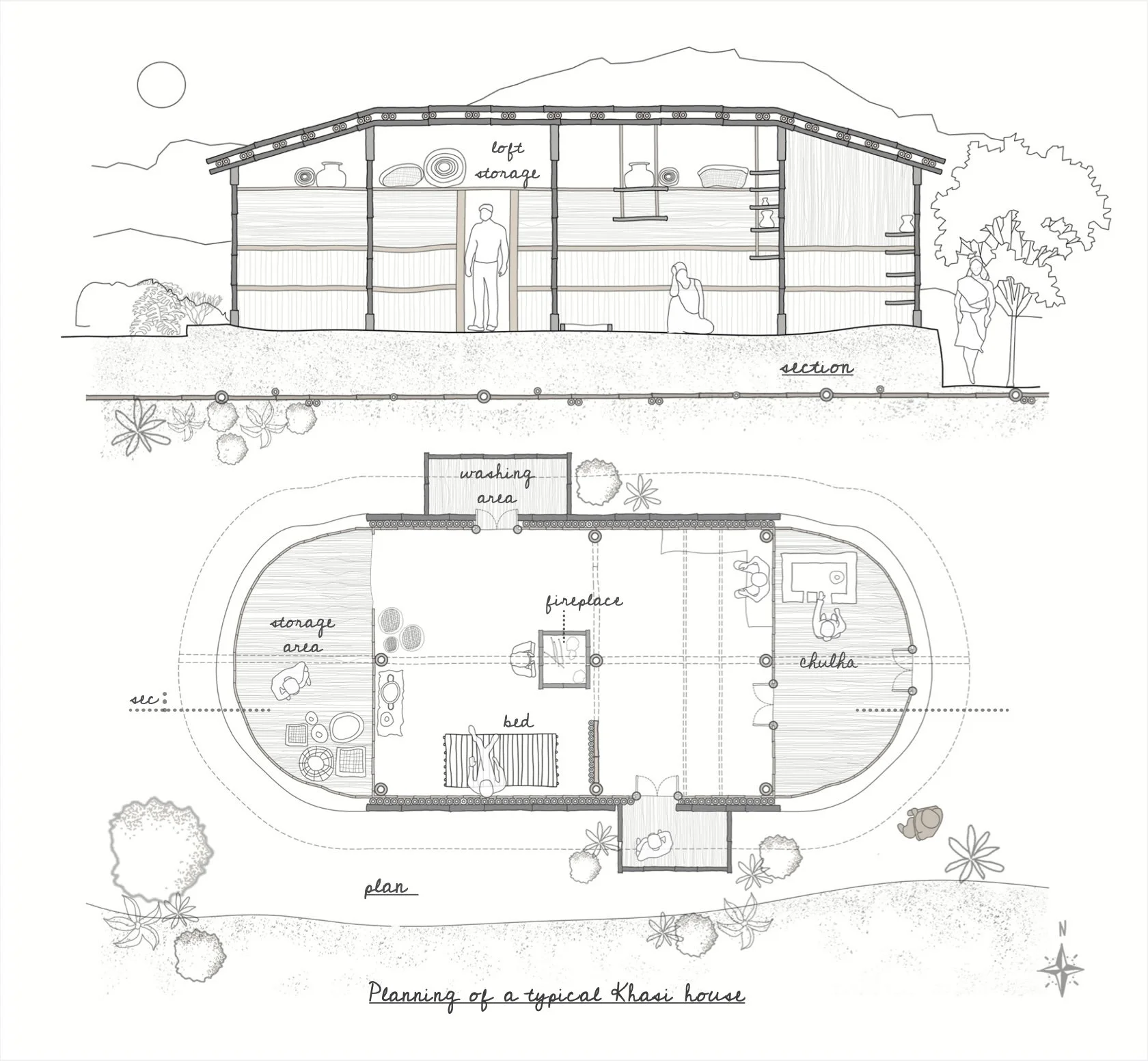
The wettest place on the planet. Three tribes in distinct zones: Khasi (central), Jaintia (eastern), Garo (western, Tibetan origin). In the only matrilineal state, the youngest daughter inherits property. Khasi house built on plinths, bamboo-woven mat flooring raised 90cm. The roof resembles an inverted boat. The Garo settlement has nok-panthe (boys' dormitory), kachari (open meeting house), and borang (tree houses as watchtowers). Pre-construction: egg or grain buried to ask Mei Ram-ew (Mother Nature) permission.
Matrilineal - only state in set | Plinth - not stilts | Inverted-boat roof | Egg/grain ritual
MIZORAM
Land of the Highlanders
Lushei · Ralte · Hmar · Paihte · Pawi
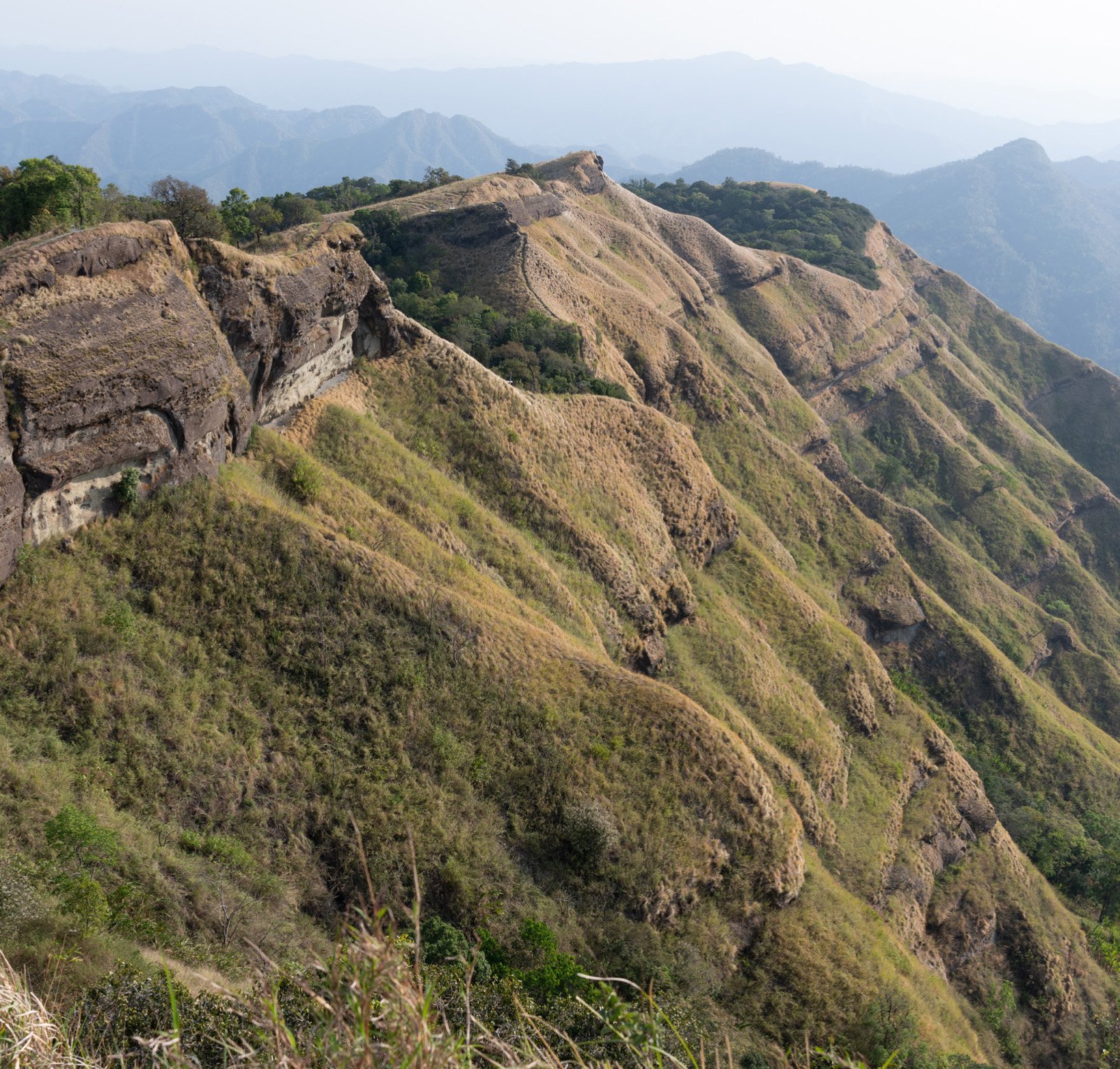
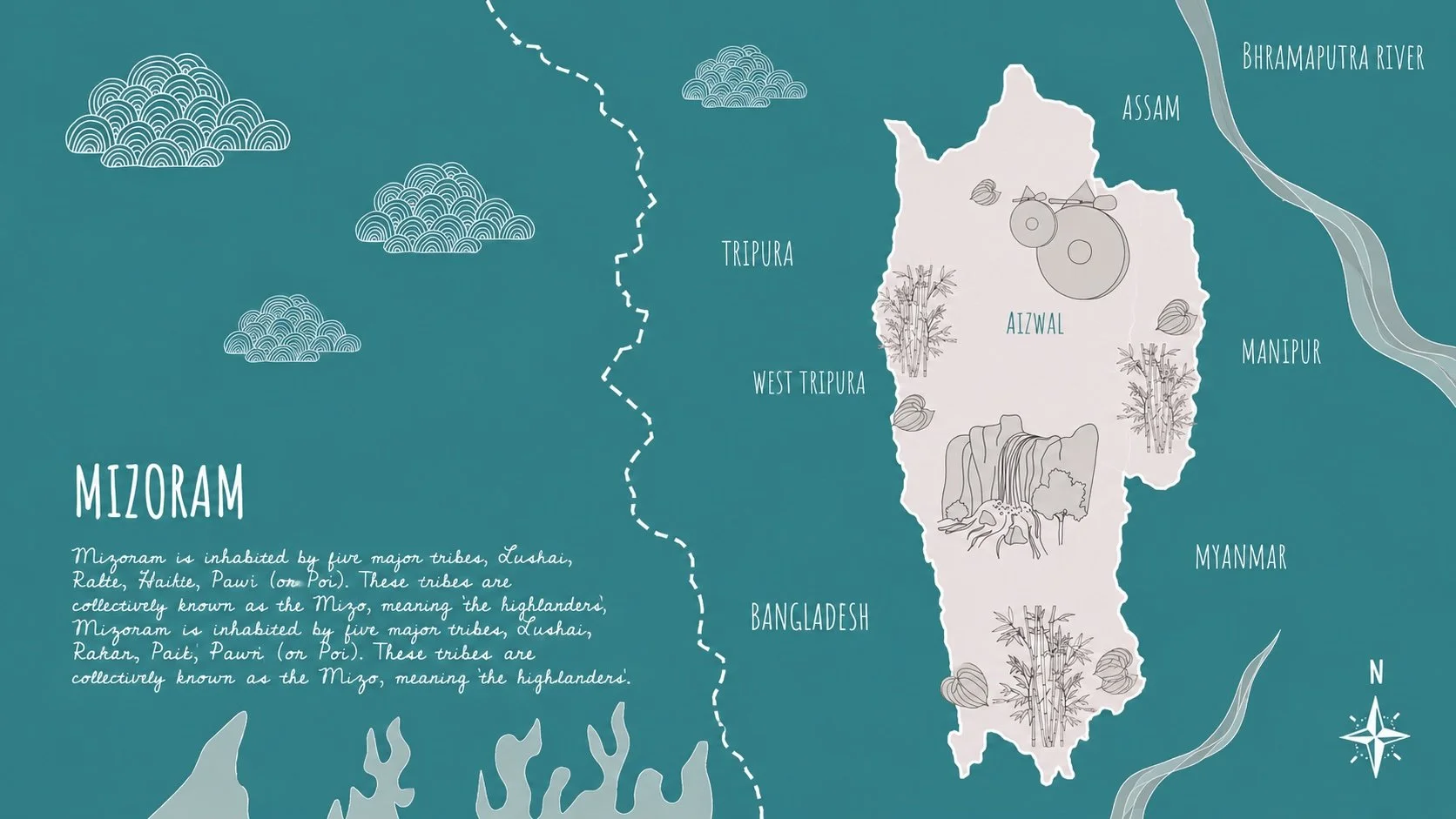
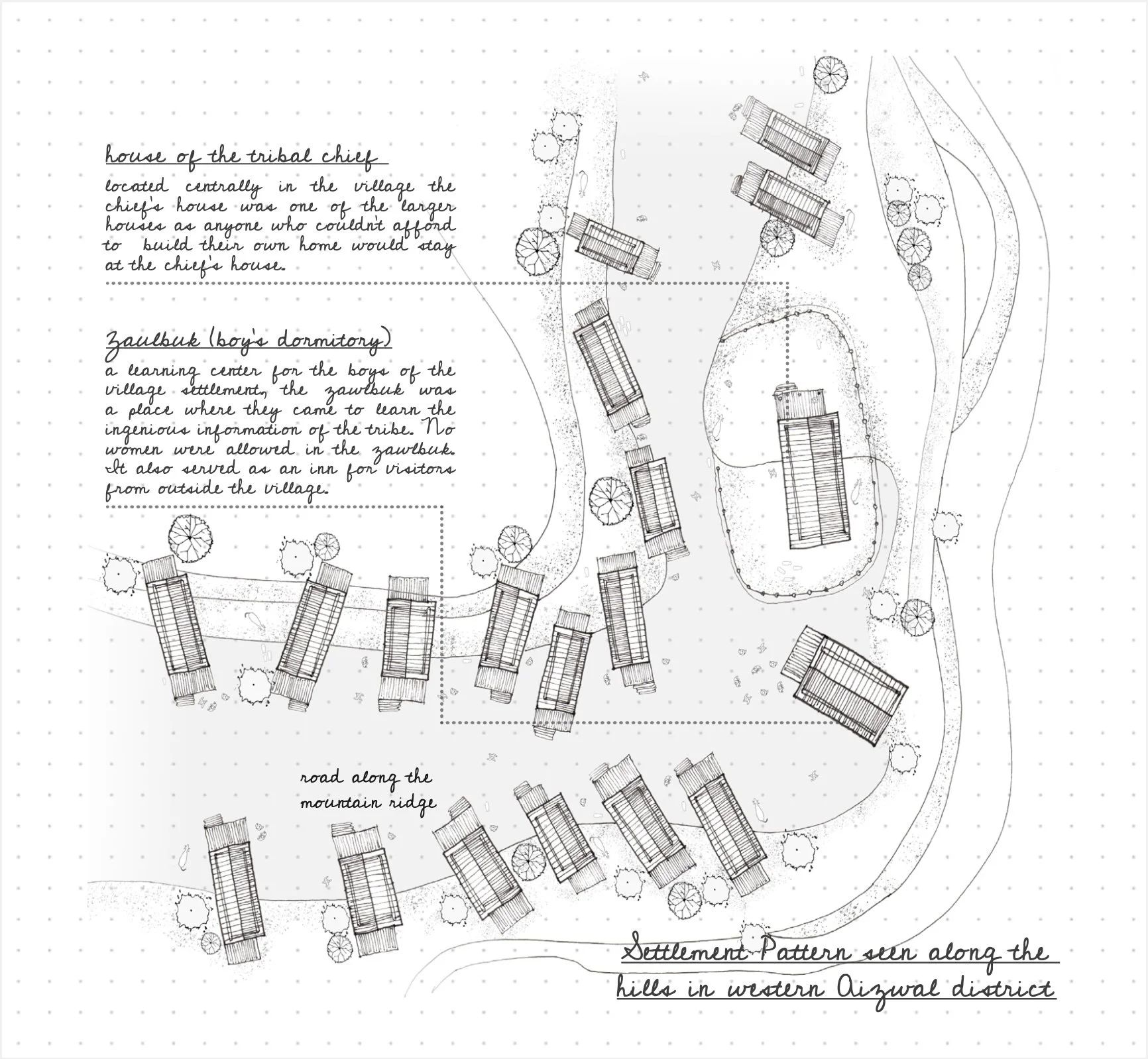
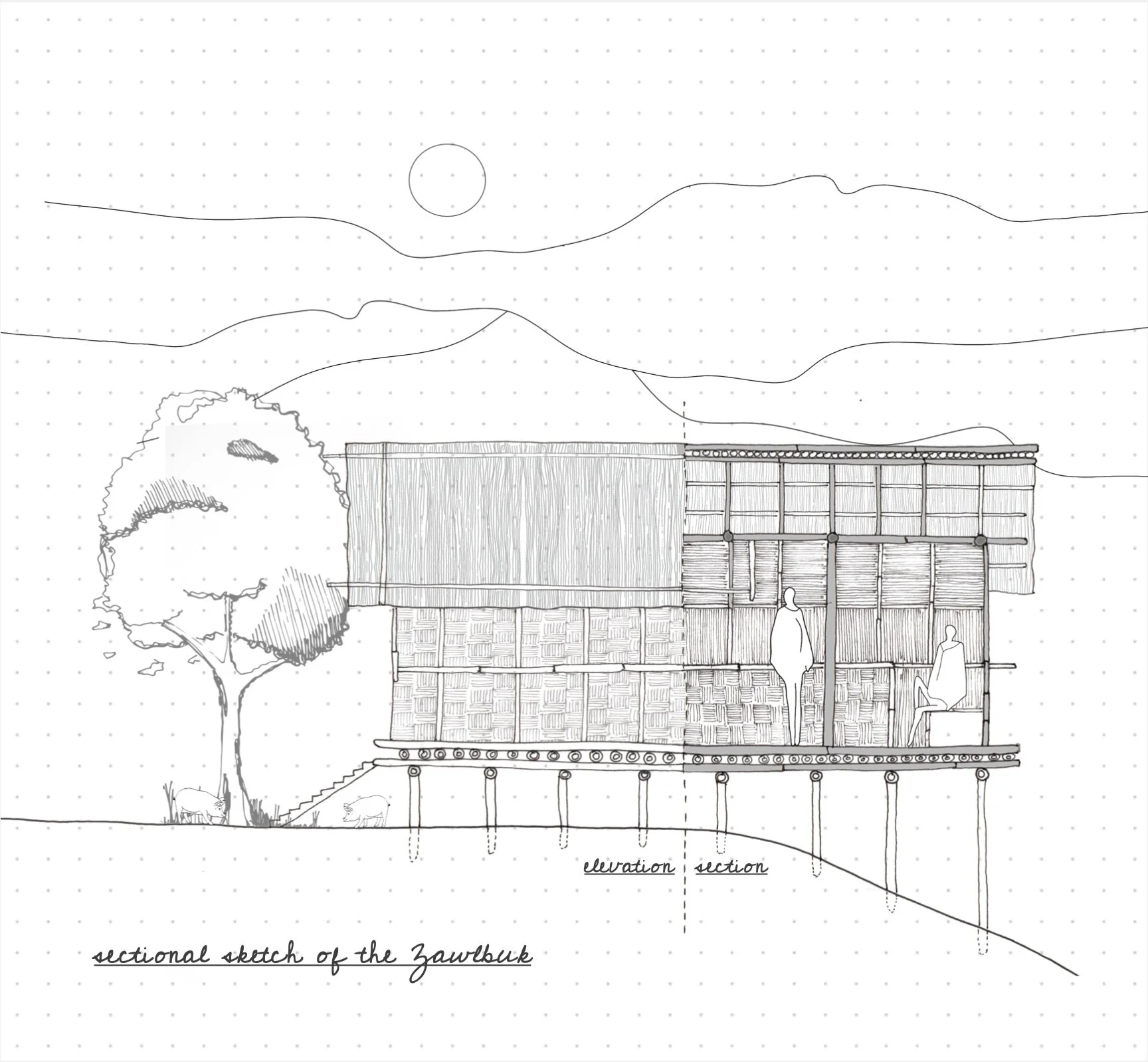
All settlements on hilltops or ridge spurs were part of a defence strategy against centuries of tribal warfare. Two rows of houses along a ridge, a road between. Chief's house (lal) and Zawlbuk (boys' dormitory) at the centre. Houses with no windows are believed to bring misfortune. Woven bamboo mat walls on a wooden framework; thatched roof. The house is divided into a front room, a central space with a closet partition, and a bamboo platform at the back. Jhum and terrace cultivation. Loin loom weaving by women only.
Zawlbuk (boys' dormitory) | No windows - misfortune belief | Chief's house at the centre
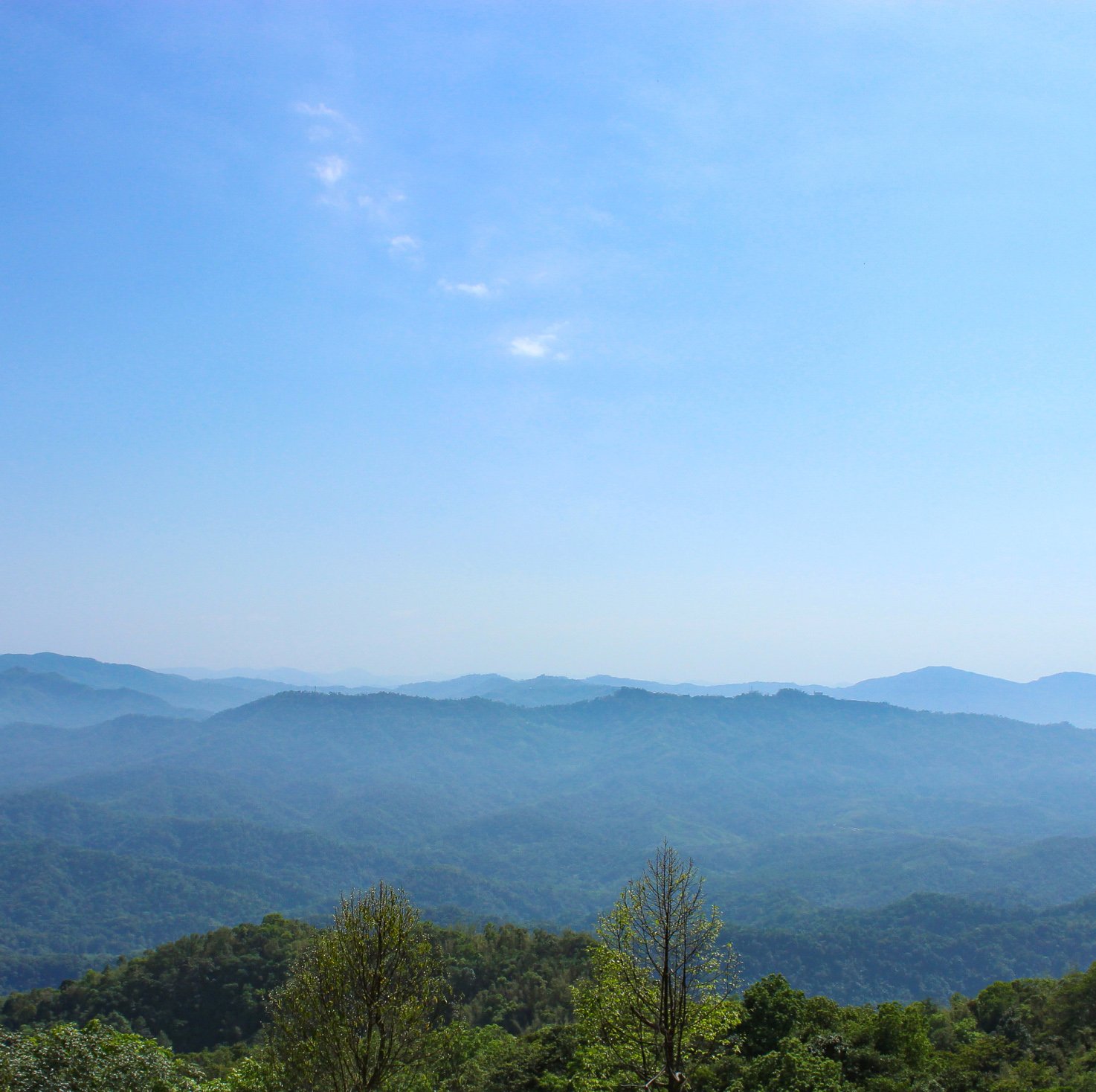
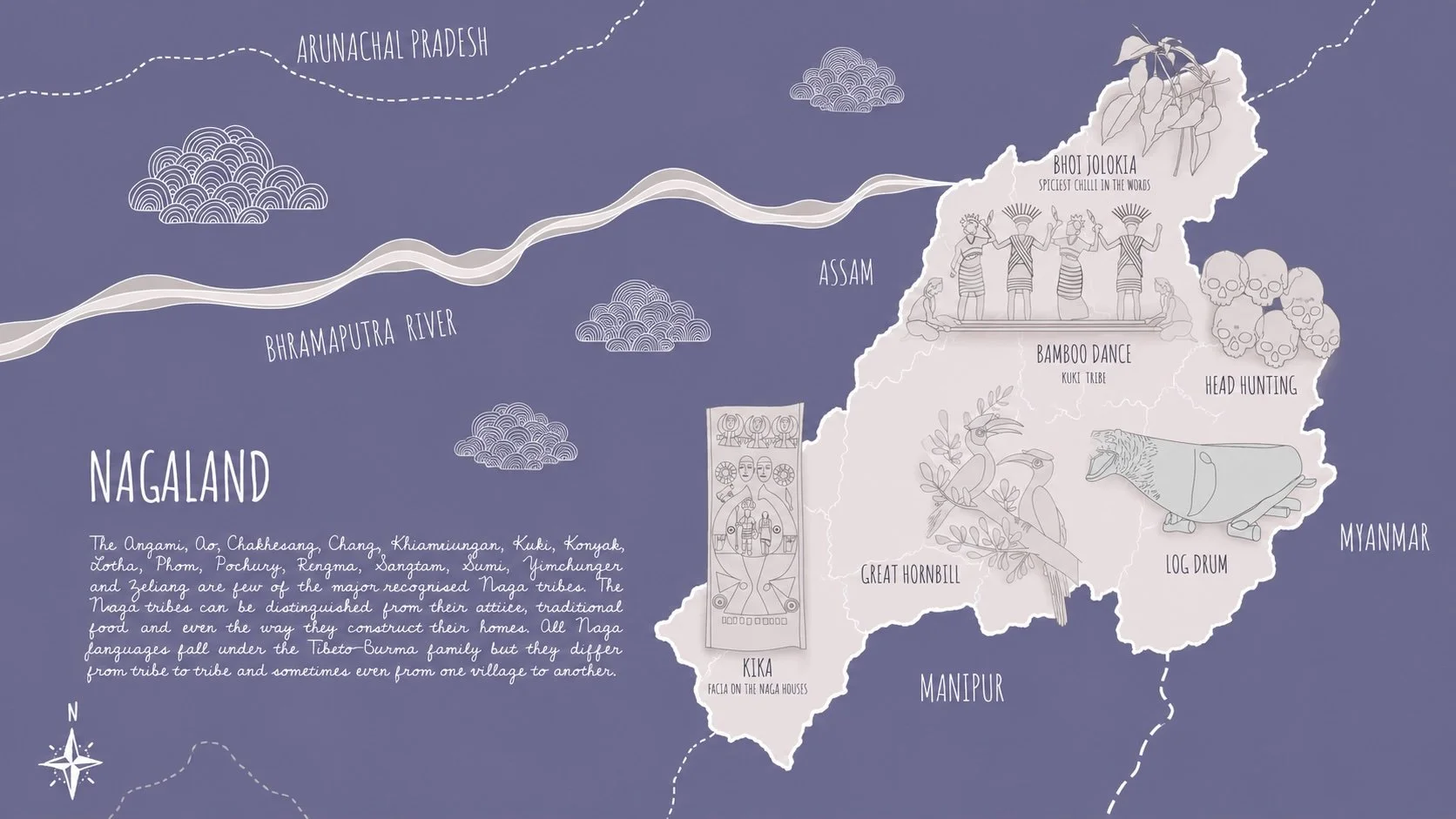
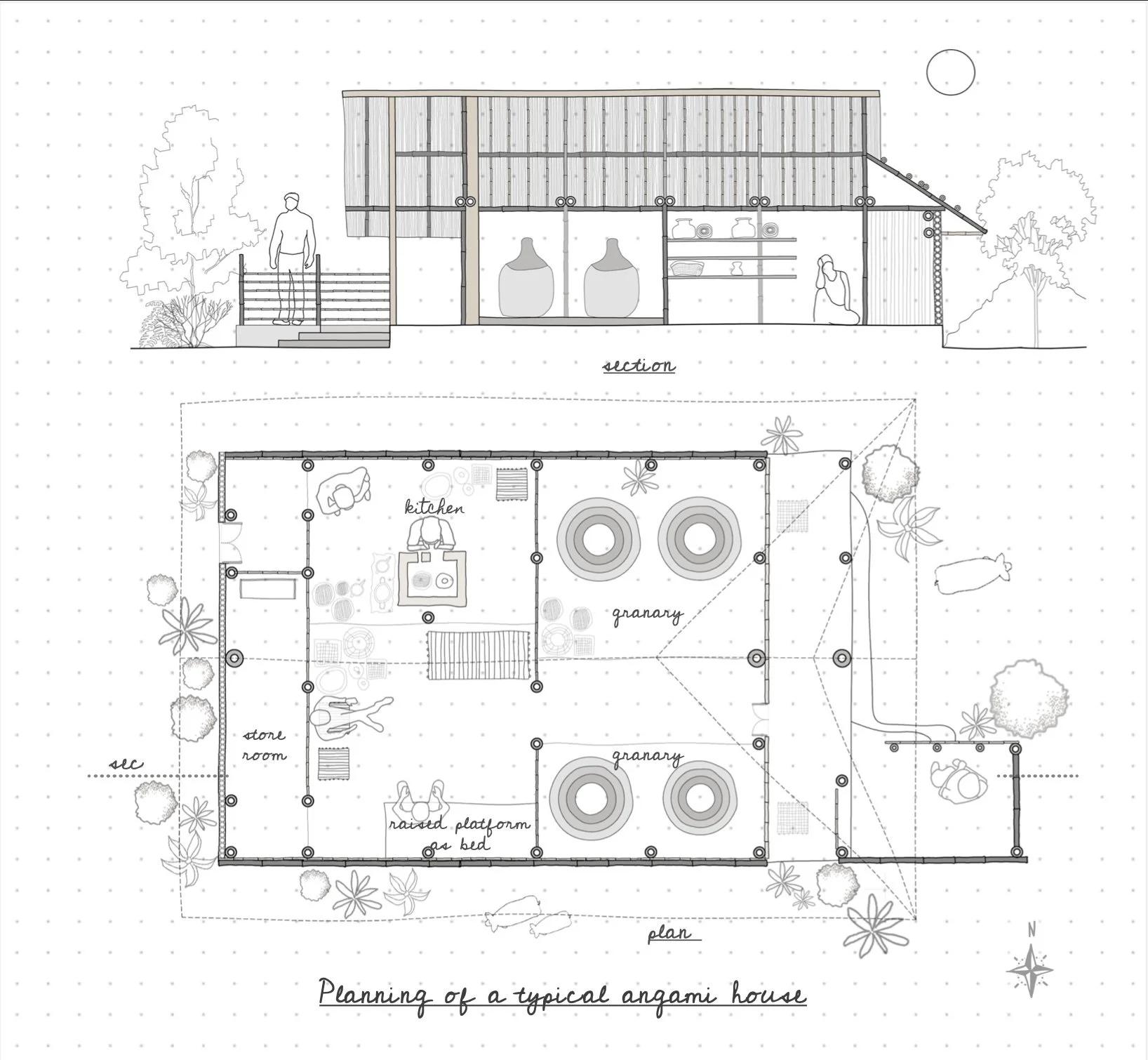
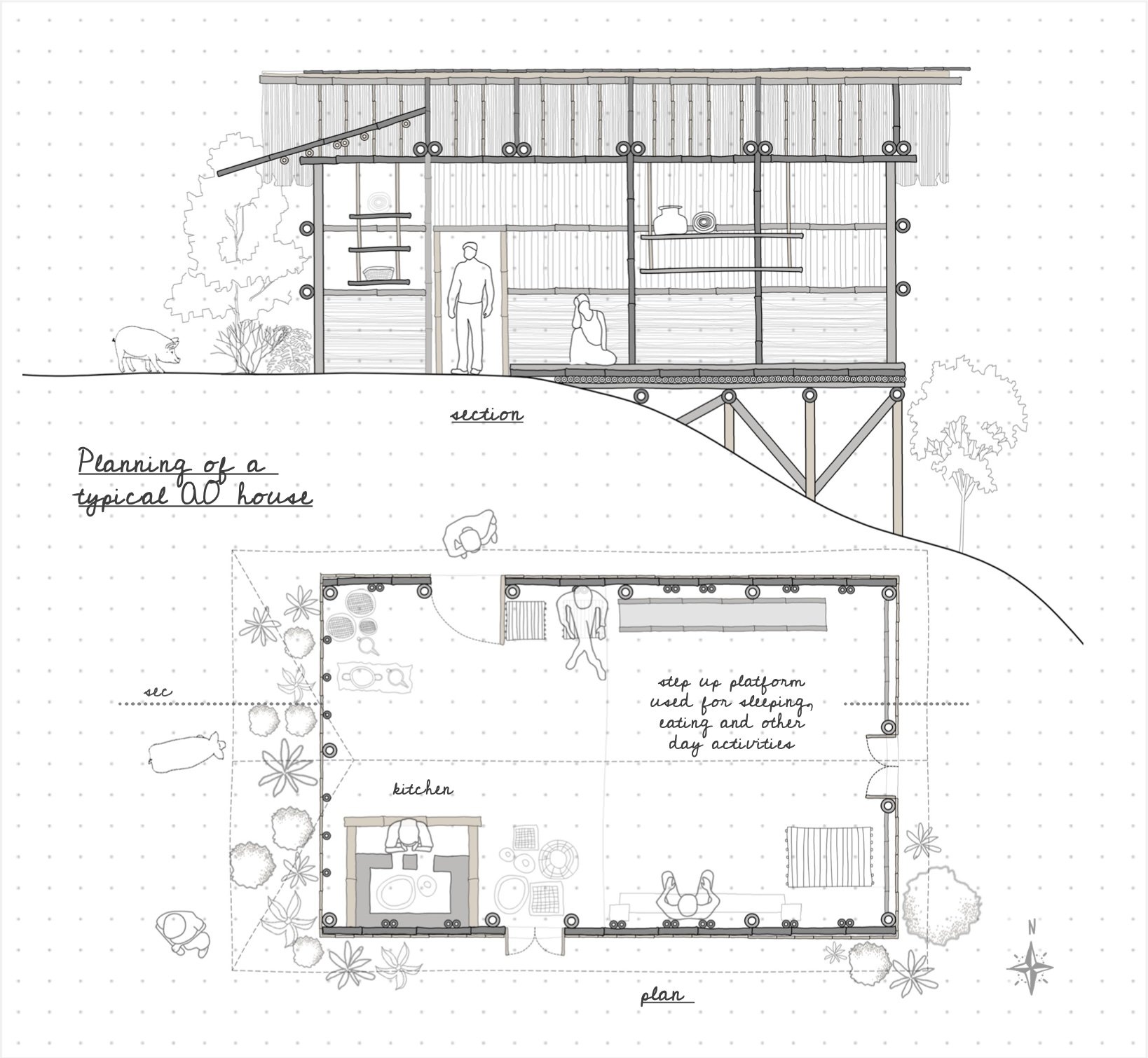
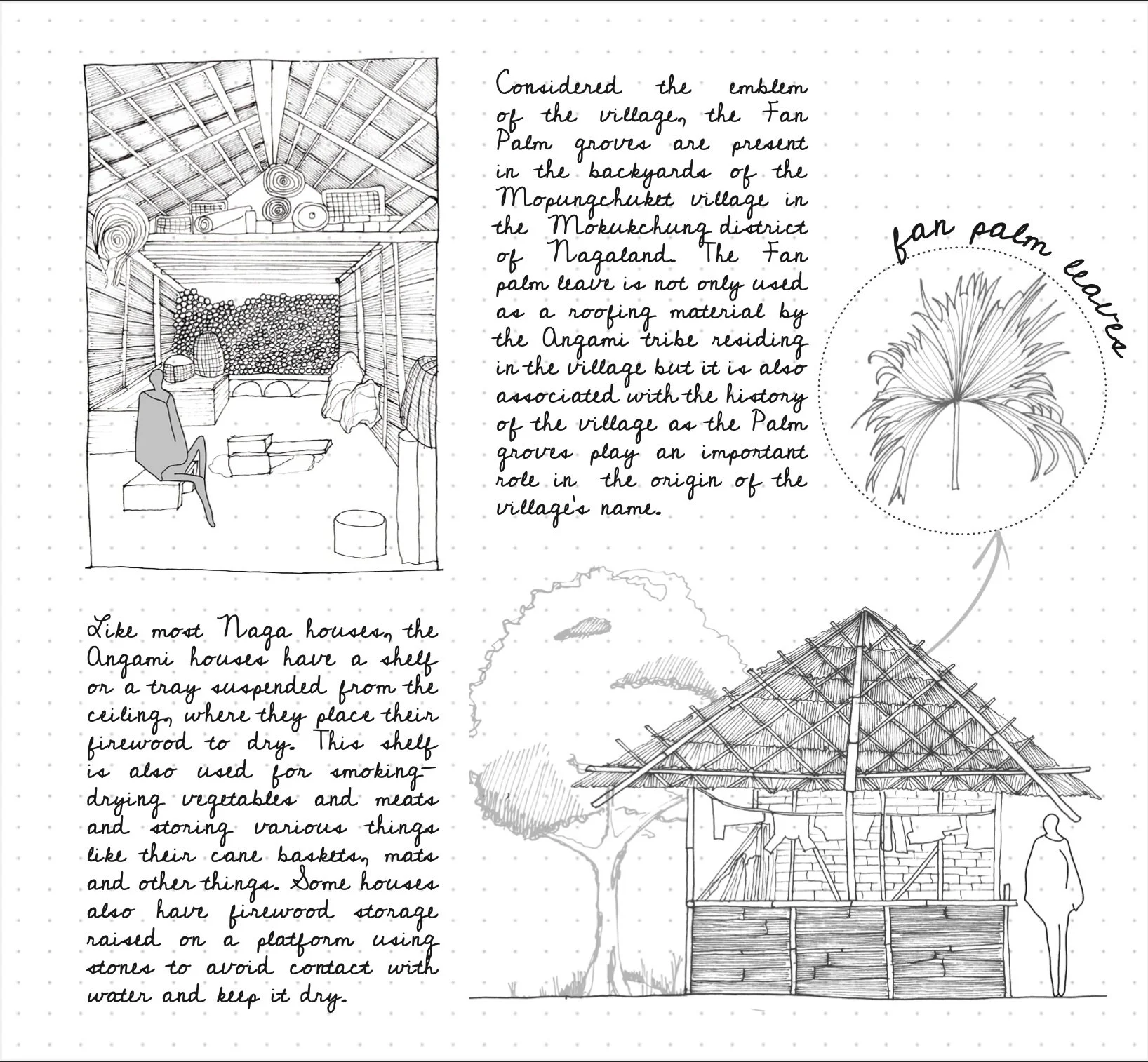
14+ Naga tribes, each with its own language, attire and construction identity. Angami build rectangular houses with thick thatch secured at the ridge with a decorative bamboo weave unique to each tribe. Cooking fire centrally located; bamboo grid on the roof holds meat and firewood. The Ao tribe has separate structures for cooking/living, sleeping, and storage arranged in an L-shape. Ao settlement has both Ariju (male) and Tsuki (female) dormitories. Log Drum is the village communication system. Mithun horns adorn all facades.
Ariju (male) + Tsuki (female) | Mithun horns on façade | Tribe-unique bamboo ridge weave
NAGALAND
The Naga Hills
Angami · Ao · 14+ Naga tribes
TRIPURA
Near the Waters
Reang · Tripuri tribes
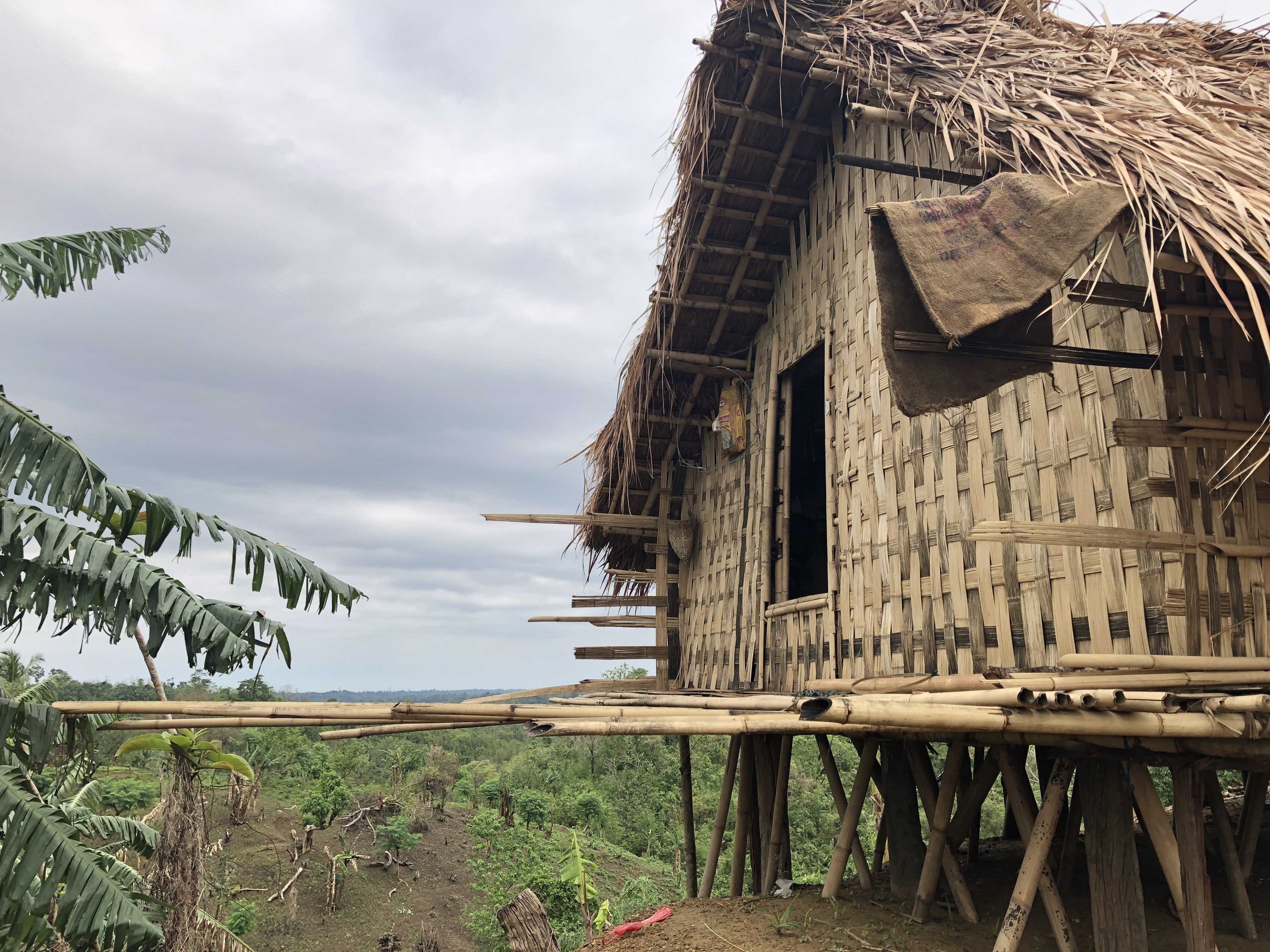
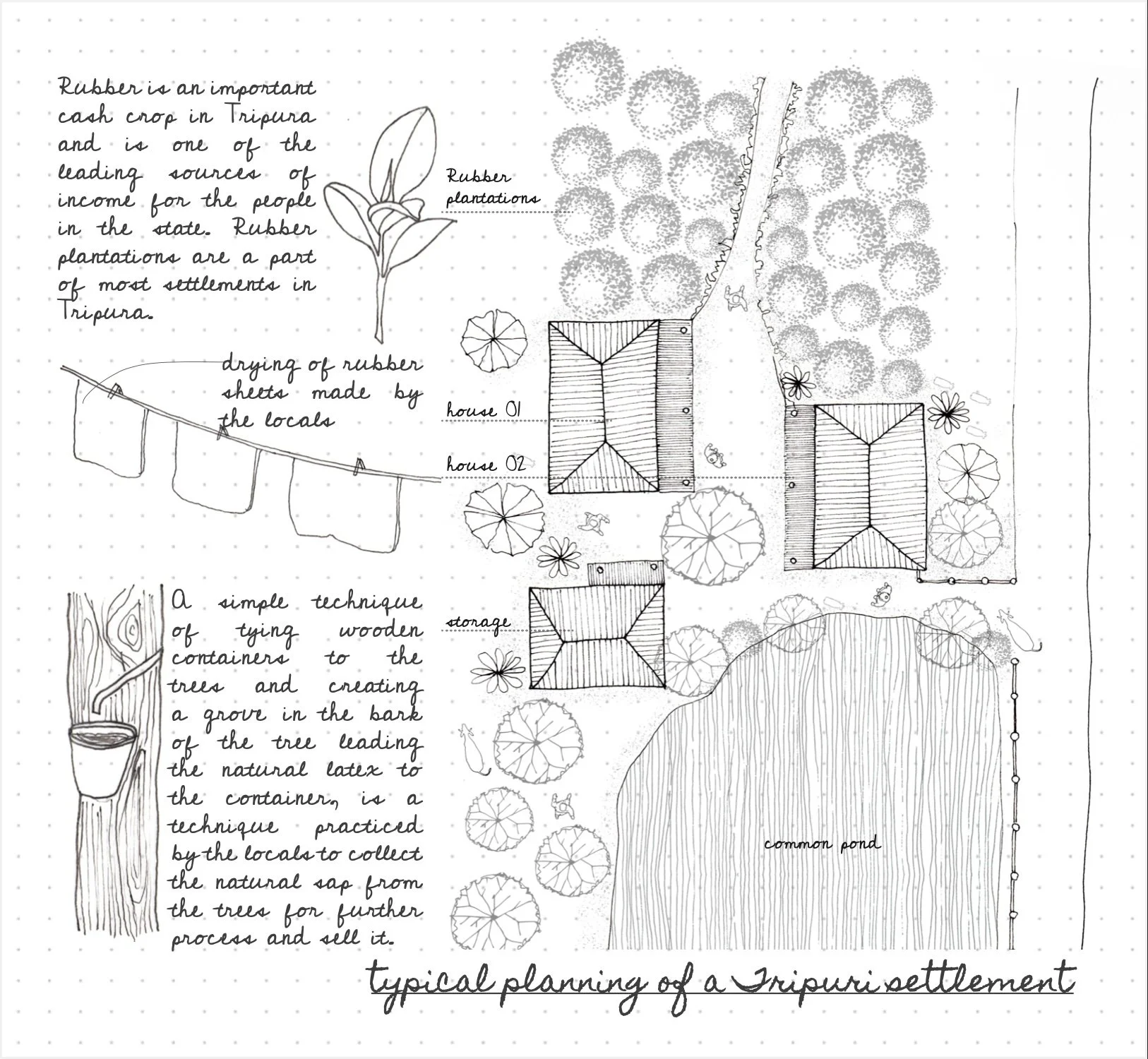
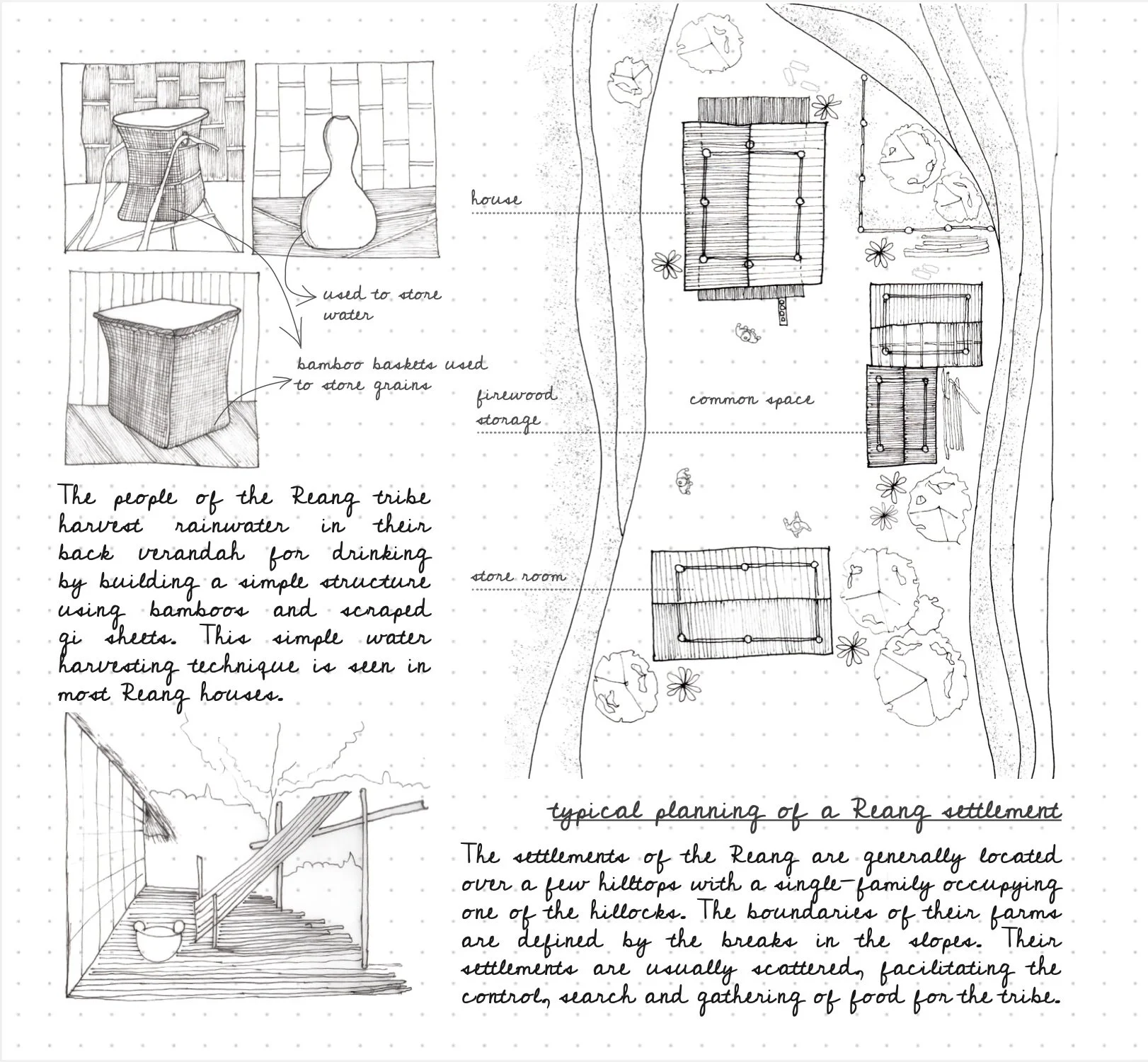
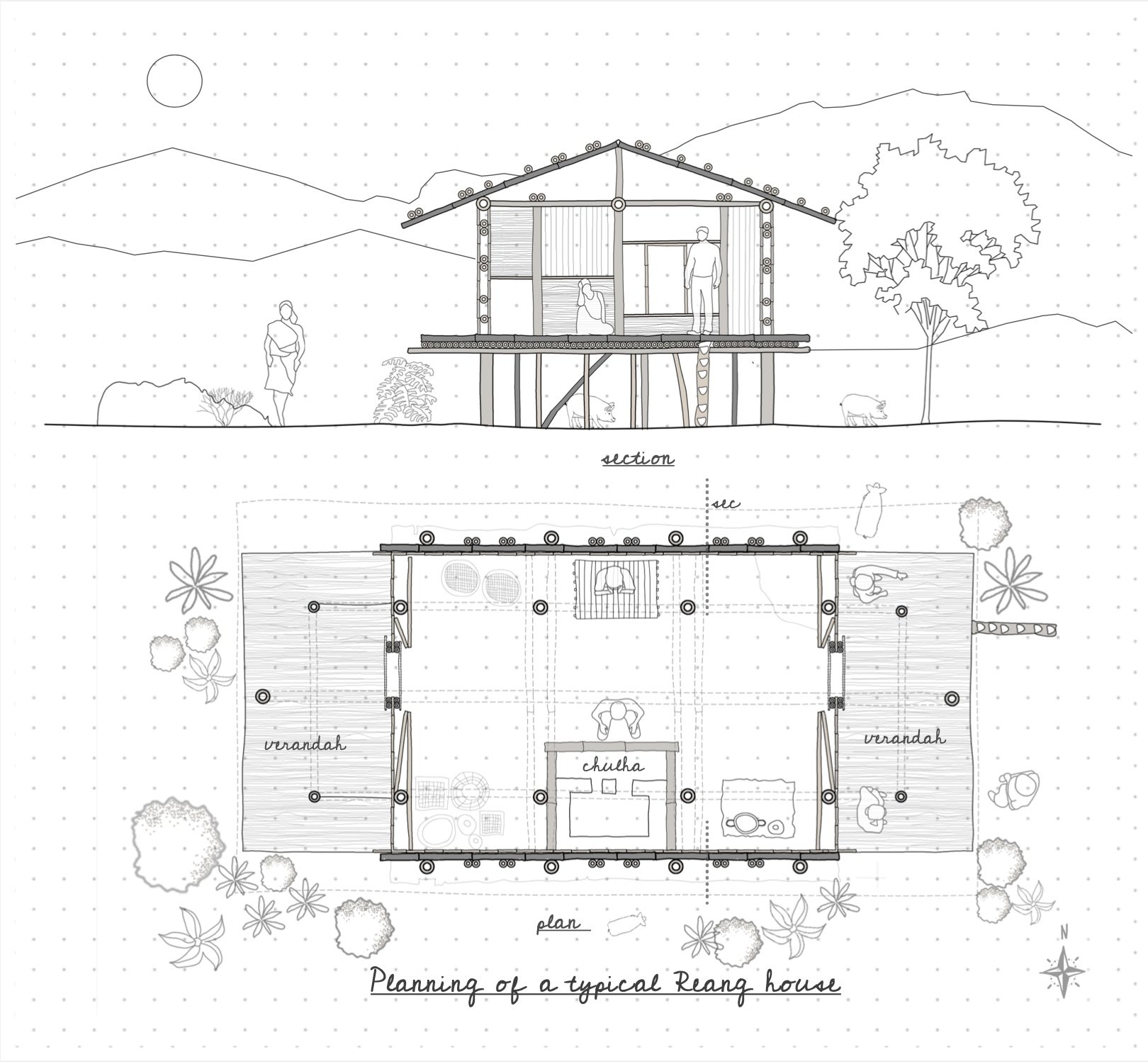
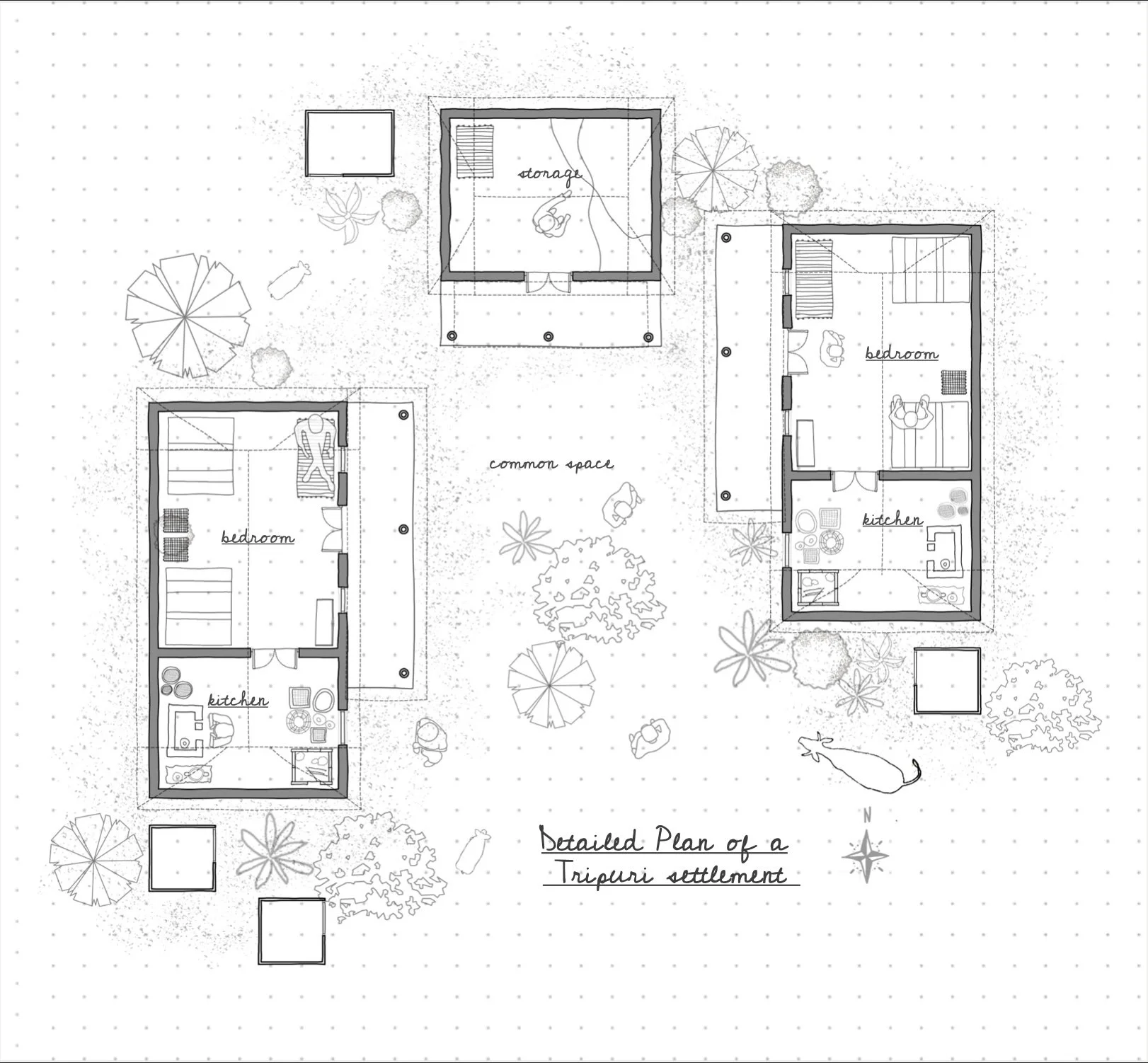
The hinge state, two distinct building systems in one territory: bamboo in hills (Reang, Tong-ghar raised houses) and mud in flatlands (Tripuri, compact courtyard compounds). Tong-ghar on bamboo stilts with a bamboo strip platform, a chan grass roof. Rainwater is harvested in the back verandah using a bamboo structure. Domestic animals are housed below. Tripuri plains houses use mud (1:1:2 sand/silt/clay, an almost ideal mix), thatched roofs, and mud blocks set 2-3 feet below ground. Rubber plantation is unique to this state, a cash crop not seen elsewhere in the study.
Dual system - bamboo + mud | Tong-ghar (bamboo stilt house) | Mud flatland house | Rubber plantation (unique)
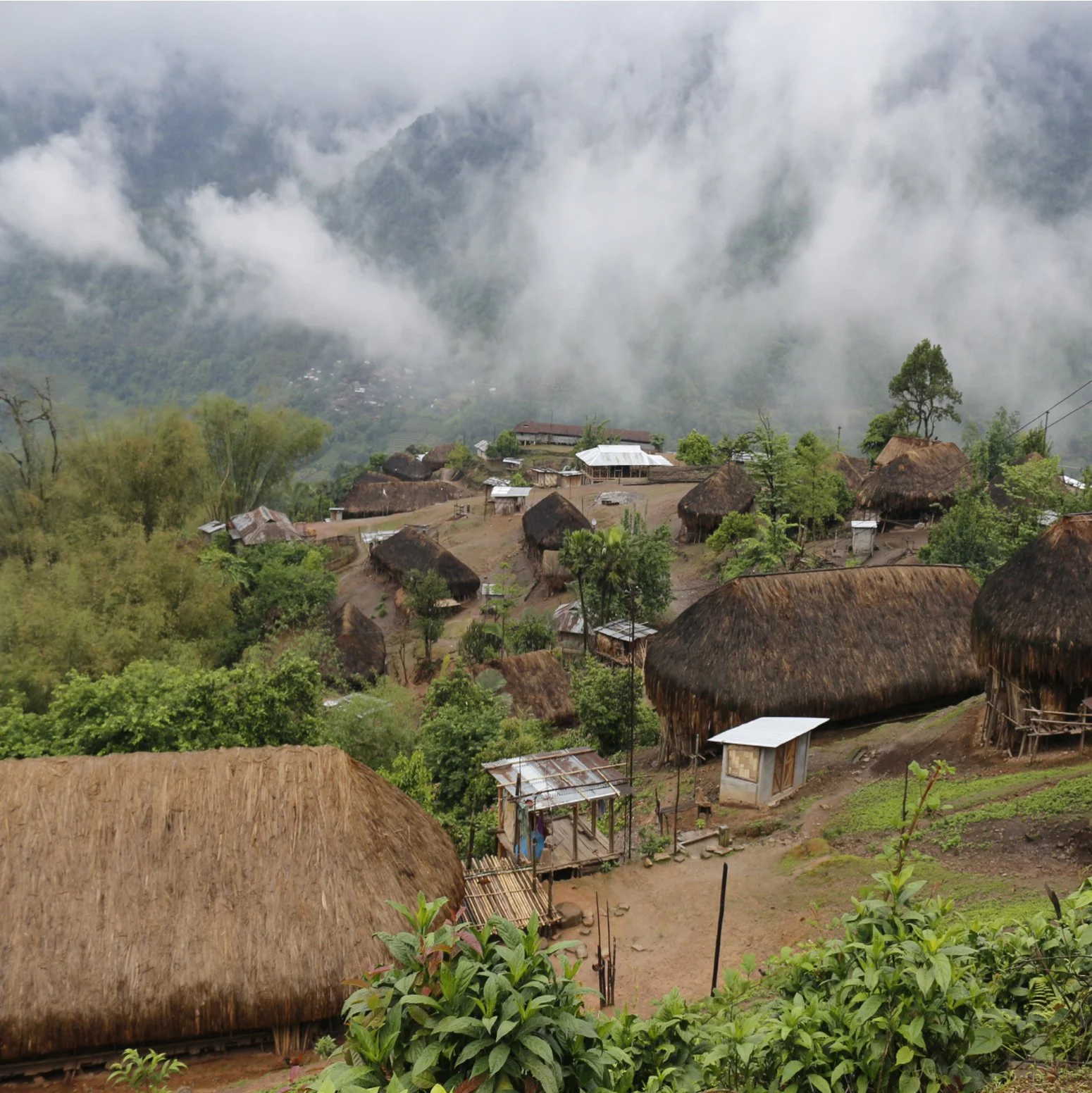
Arunachal Pradesh - Adi Pasi - Upper Siang
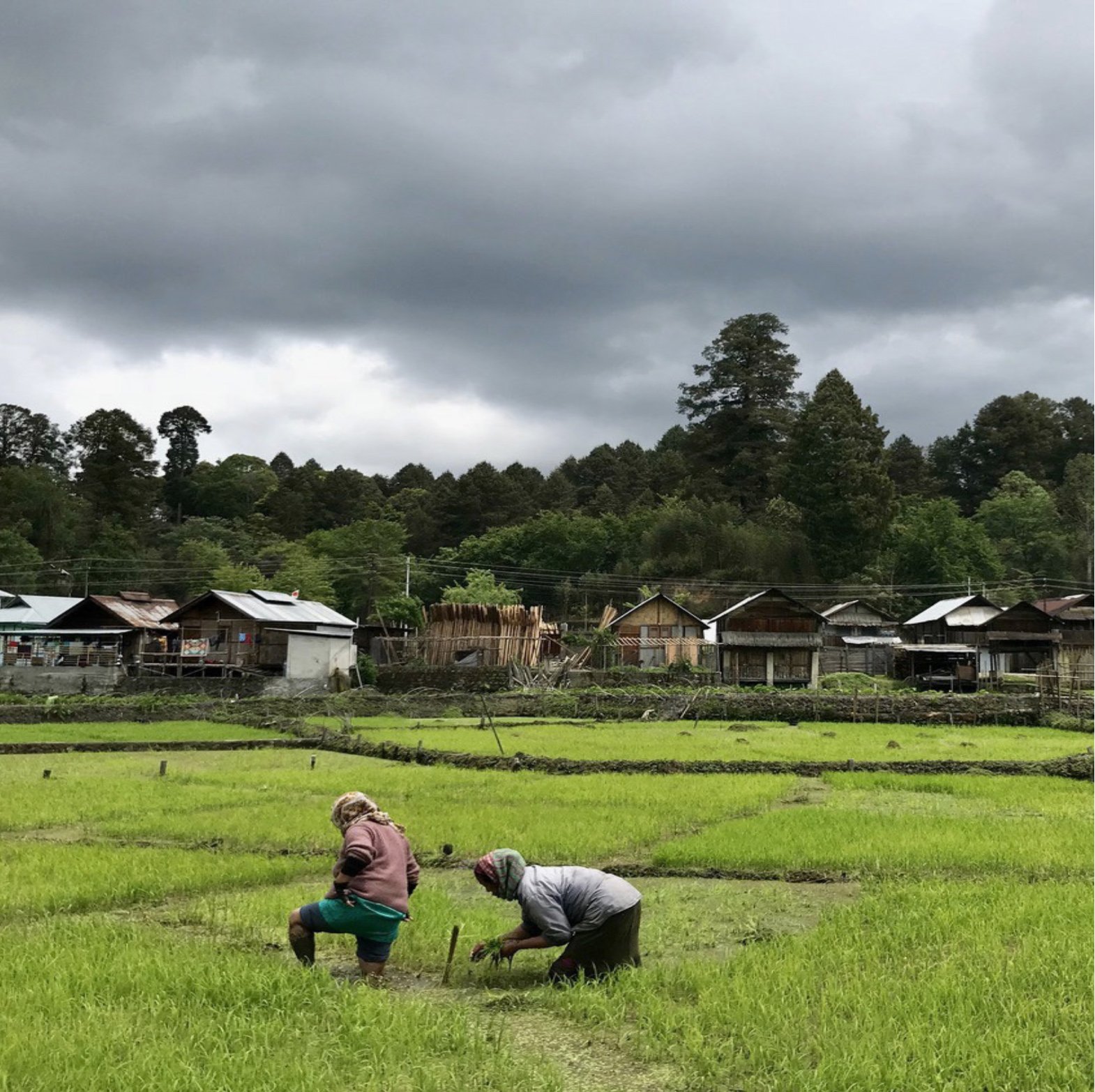
Arunachal Pradesh - Ziro Valley
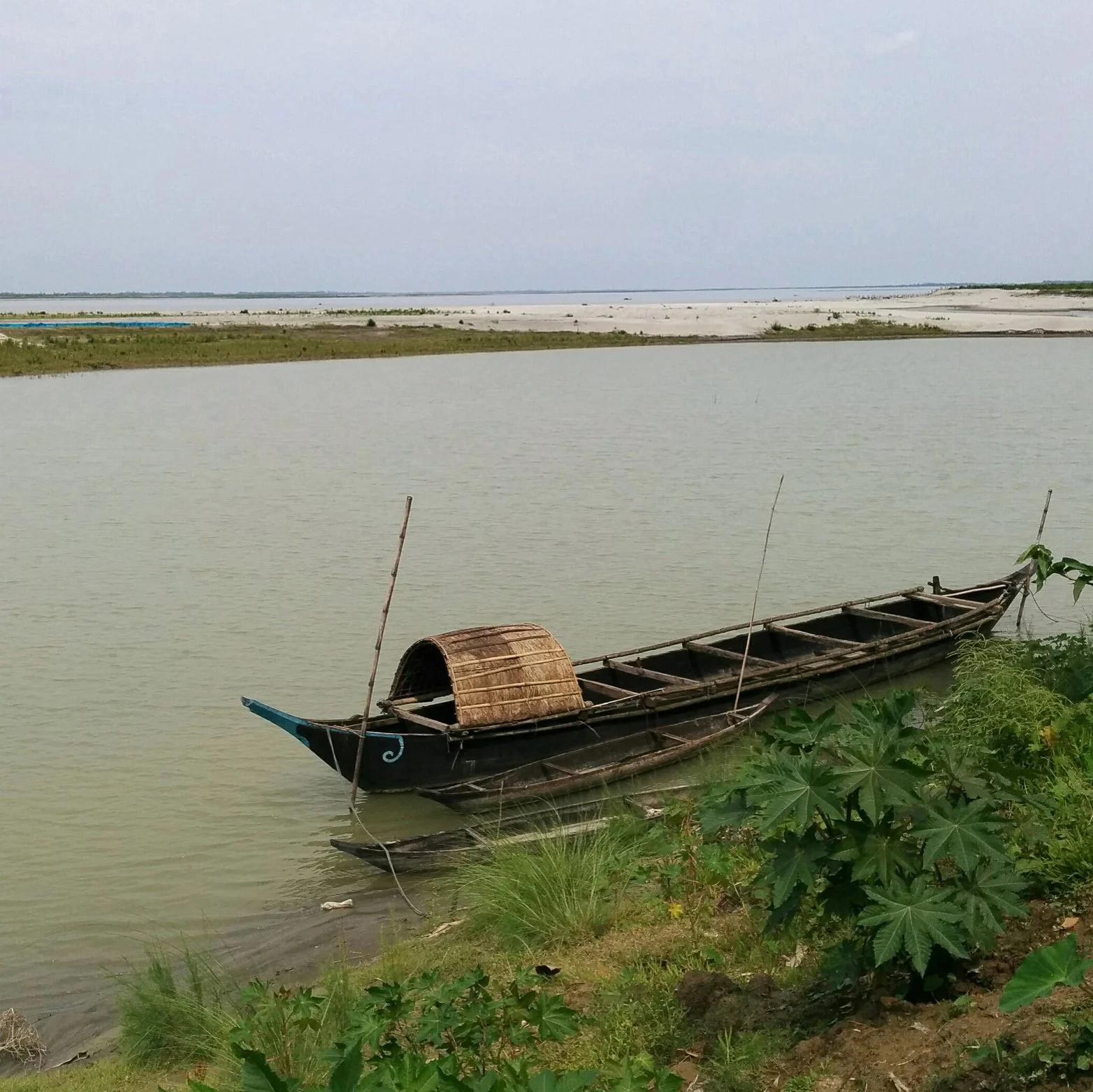
Assam - Pamua - North Lakimpur
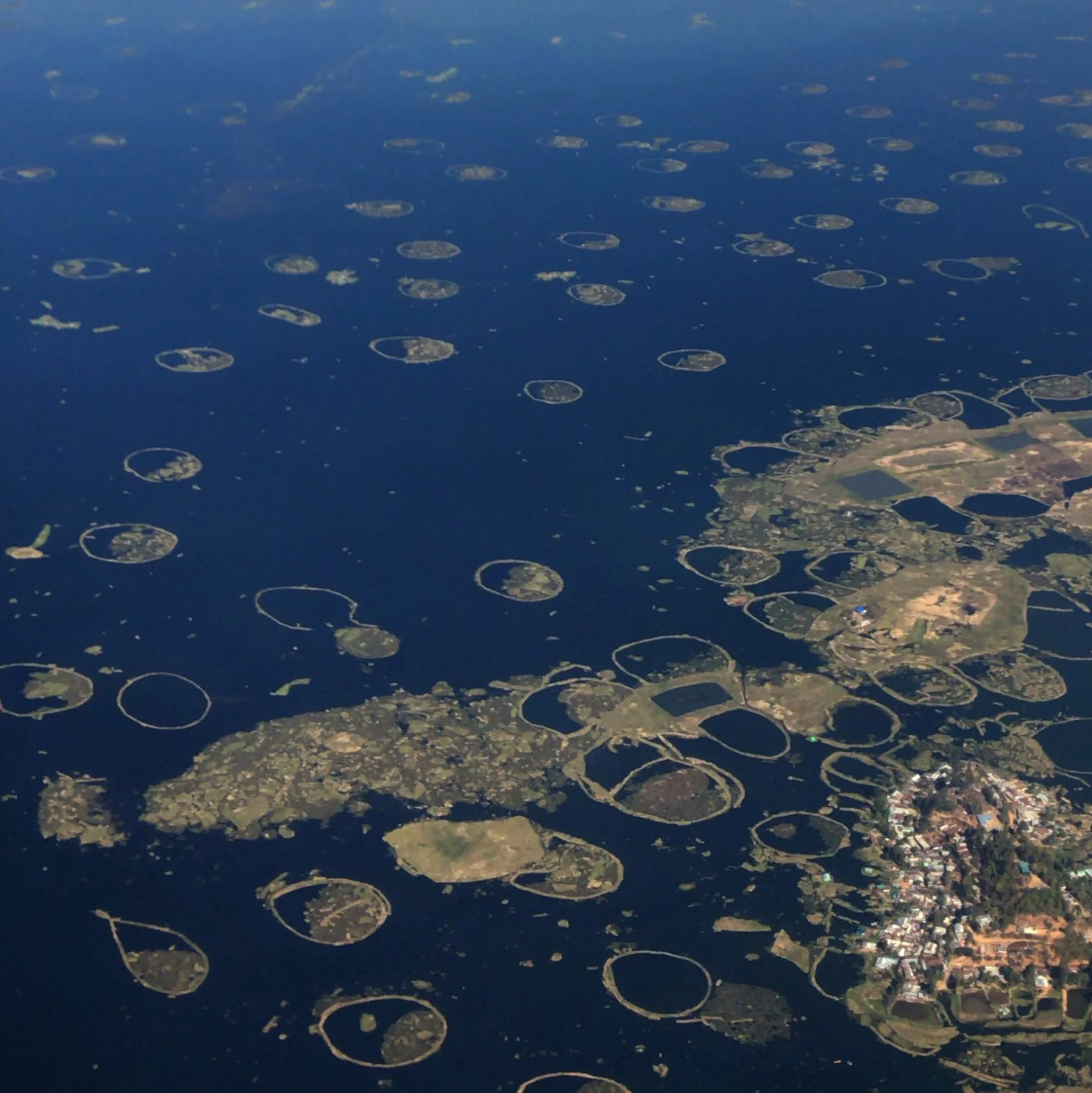
Manipur - Loktak Lake
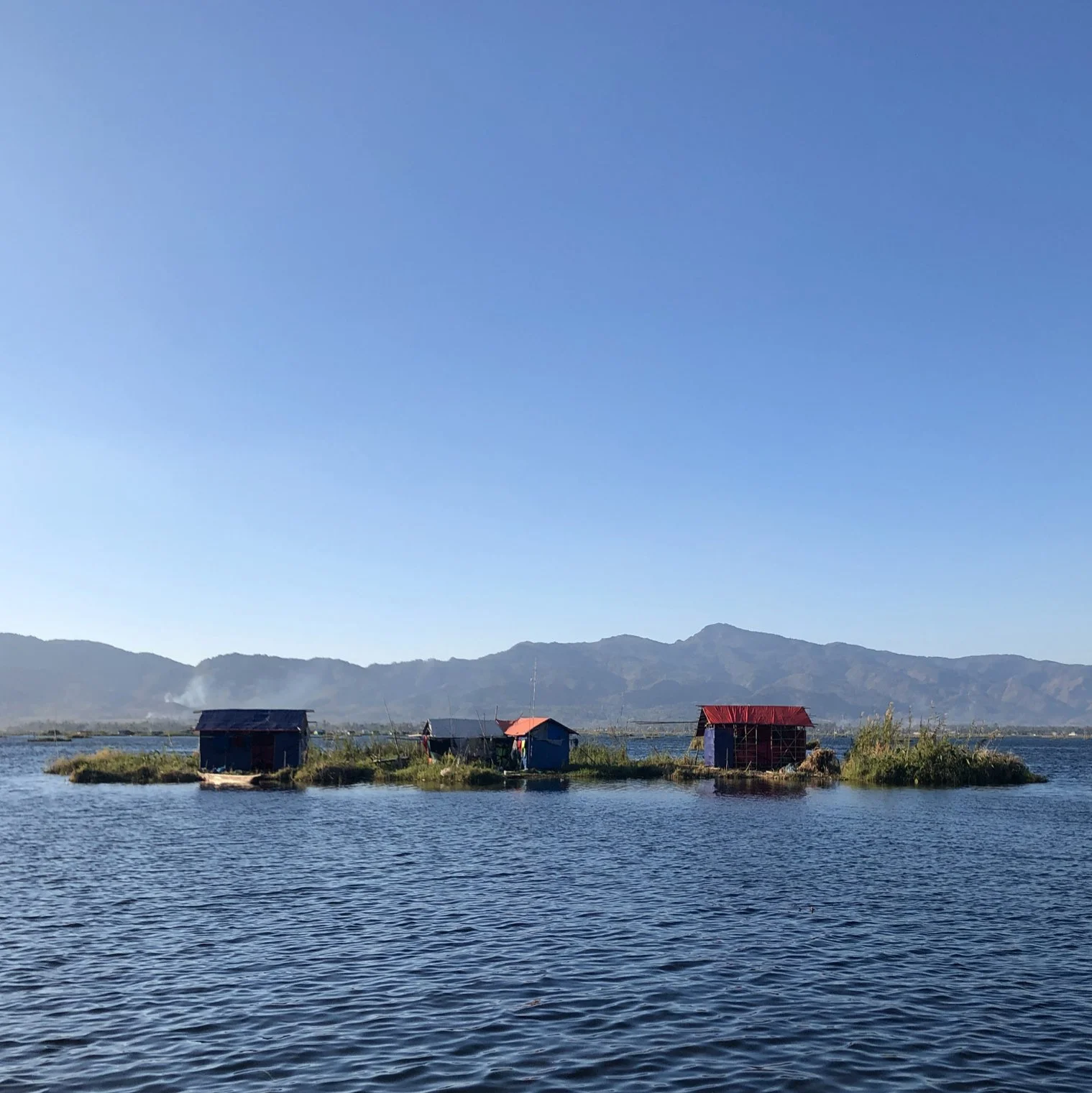
Manipur - Phumdis
Meghalaya - Khasi Hills
Mizoram - Zokhua Falkawn
Nagaland
Tripura - Teriamula
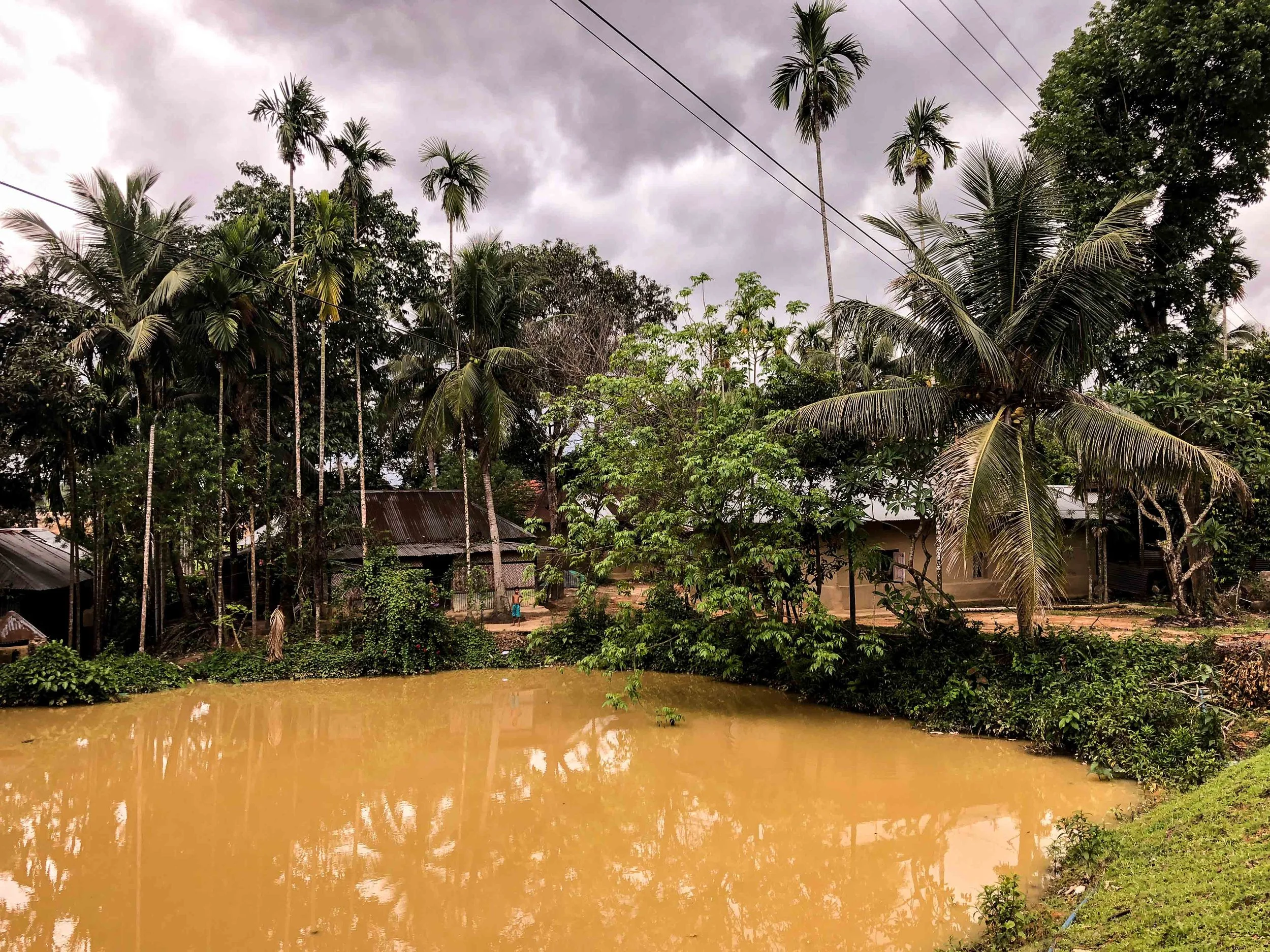
Tripura - Garjee
03 SIMILARITY & DIFFERENCE
What unites seven : what divides them
The analytical method employed in this study regards similarity and difference as complementary perspectives. Shared traits illuminate the region's underlying ecological logic, while divergences highlight the cultural and geographic specificity of each state's response to common environmental conditions.
SHARED ACROSS ALL SEVEN – CONVERGENCES
Bamboo - universal primary material
Used in structures, walls, floors and roofs in all 7 states. The defining material of the northeast vernacular. In some states, the entire house is bamboo; in Tripura's hills and Meghalaya, the structure may be timber, but bamboo boarding is still present.
Steep-pitched roofs for monsoon
Every state responds to heavy monsoon rainfall with steeply pitched roofs, varying in form (gabled, hipped, conical, inverted-boat), but universally designed to handle rapid runoff. The pitch is steeper in higher-rainfall zones.
Central hearth / cooking fire
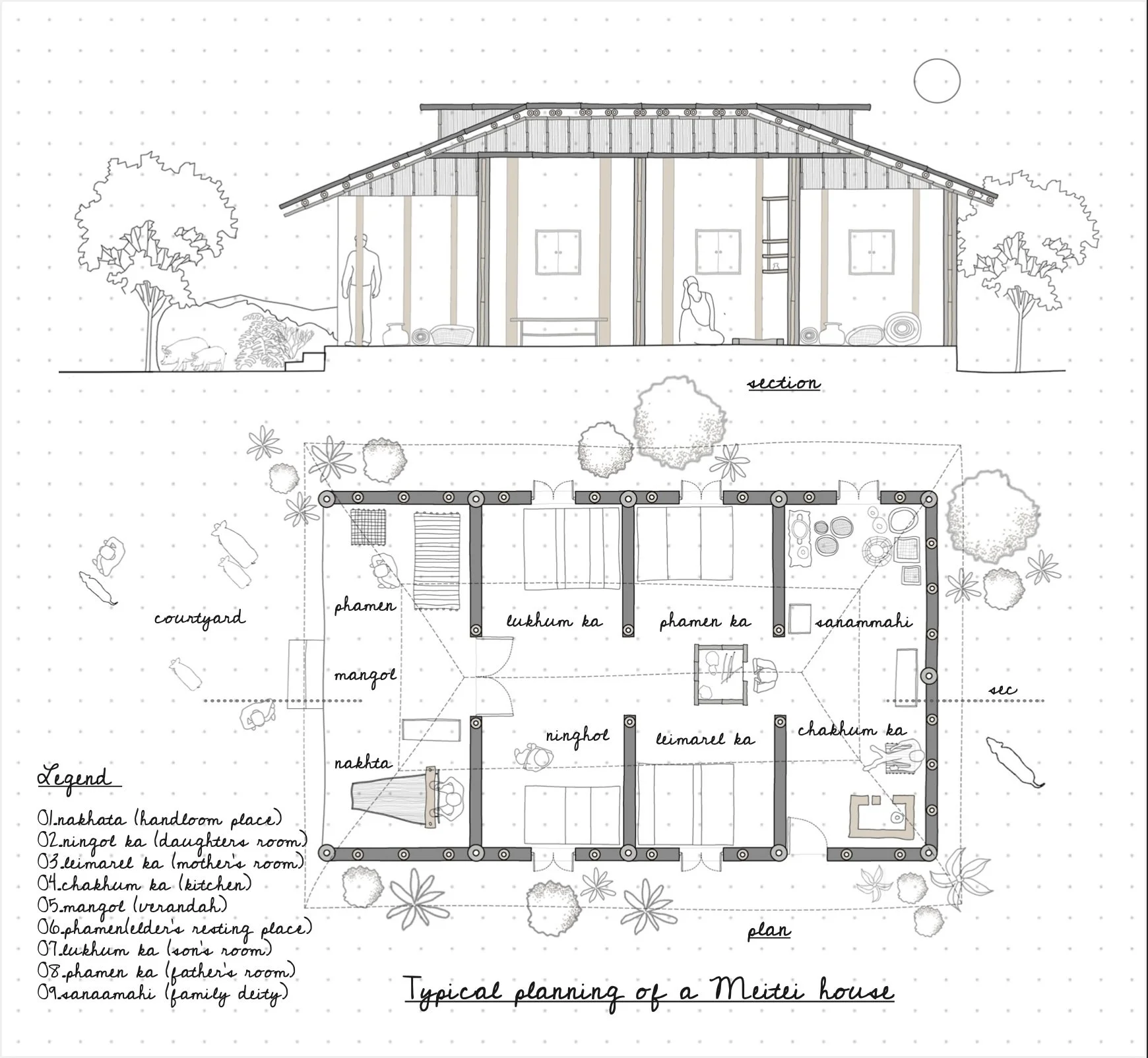
The fire is placed centrally or along one wall of the main living space in all 7 states. It is the thermal, social and symbolic centre of the house, not separated into a discrete kitchen room. Merom (AR), Meram (AS), Chulha (TR).
Agriculture as a primary occupation
All seven states are primarily agricultural. Rice is the staple crop. Jhum (shifting cultivation) is practised in at least 5 states. Terrace cultivation in steeper terrain (Meghalaya, Mizoram, Nagaland).
Handloom weaving by women
Practised by women in all 7 states on loin (backstrap) looms. The weave is as much an identity marker as it is a garment, with distinct patterns for each tribe.
Raised platform / stilt structure
Present in 6 of 7 states (all except Meghalaya, which uses plinths). Raises house above flood, animals, insects and rot. The space below shelters livestock.
Pre-construction ritual permission
All 7 states perform a ritual to seek permission from the land, the gods, or the spirits before construction begins. Rice grains, egg, ginger, and sacred leaves are the instruments of mediation.
Community construction event
House-building is a village-wide communal activity in all 7 states. Labour is exchanged, not paid. Women and men have specific roles. A celebration (feast, dance, rice beer) follows completion.
STATE-SPECIFIC DIVERGENCES - WHAT MAKES EACH UNIQUE
Phumsang (Manipur only) - floating architecture
No other state has a tradition of building houses on biomass floating islands (phumdis). The sangkha-namba anchoring ritual is unique. House lifespan is 2 years, a temporal architecture unlike any permanent built form elsewhere in this study.
Matrilineal only - Meghalaya
Of the seven states, Meghalaya is the only one in which property passes through the female line, with the youngest daughter inheriting the house. This directly shapes the house form and the spatial logic of inheritance.
Dual material - Tripura only
Tripura is the only state that documents two completely distinct vernacular building systems, bamboo (hills) and mud (flatlands). No other state in this set has this geographic/material split.
Egg ritual - Meghalaya only (Khasi)
The Khasi use either a grain or an egg; if it disappears after burial, permission is denied. The Adi of Arunachal use four unbroken rice grains in a Yogir leaf with ginger. No two states share the same ritual instrument.
No windows - Mizoram only
The Mizo house has no windows; windows are believed to bring misfortune. All light enters from doorways. Directly opposite to Arunachal's open-weave walls admitting abundant light. Same bamboo, opposite philosophies of opening.
Female dormitory - Nagaland + Arunachal only
Most states have male-only dormitories. Nagaland (Ao: Tsuki) and Arunachal (Adi: Raseng) are the only states with documented male AND female dormitory institutions.
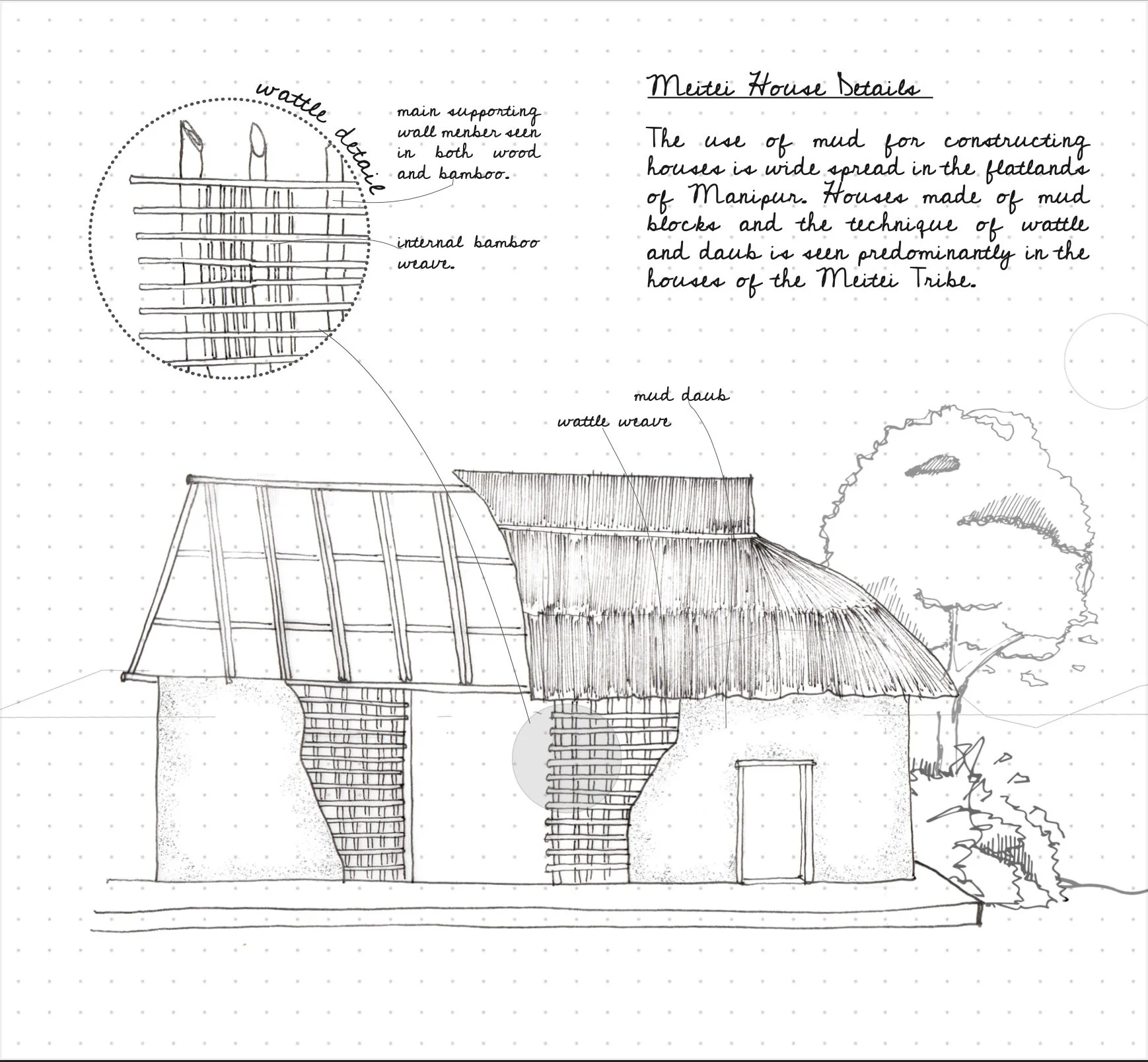
Mud walls - Tripura flatlands only
Tripuri plains houses use mud walls with an ideal 1:1:2 sand/silt/clay ratio, used raw. Mud construction does not appear in any other state in this study, making Tripura architecturally unique at its western edge.
Fan Palm roofing - Nagaland only
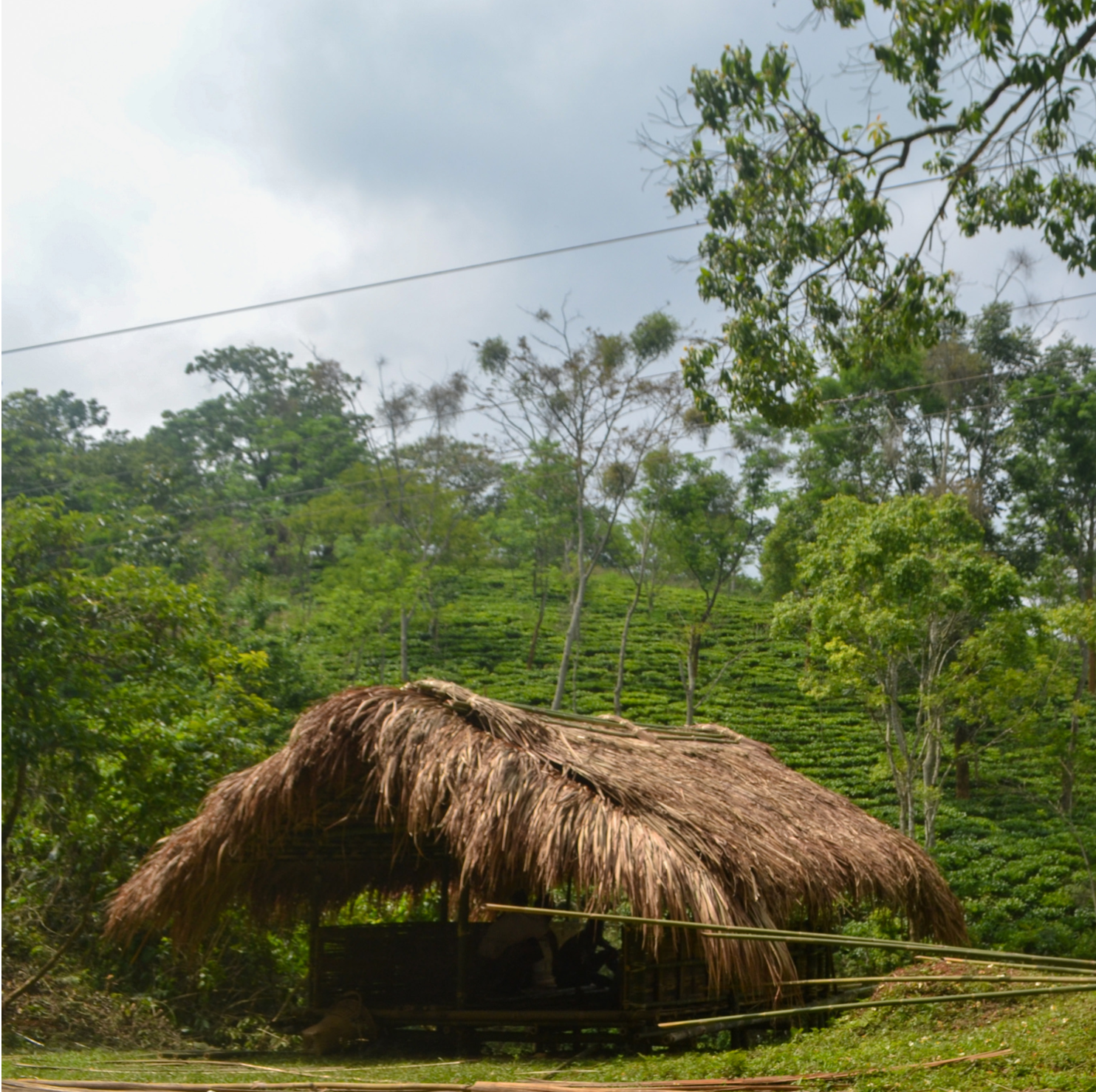
The Fan Palm groves of Mopungchuket serve as both a roofing material and a cultural emblem; they are inseparable from the village's identity. Unique to this Naga settlement.
04 MATERIAL - UNIVERSAL, CONVERGENT, UNIQUE
The same bamboo in seven different voices
UNIVERSAL - ALL 7 STATES
Bamboo
AR · AS · MN · ML · MZ · NL · TR (hills)
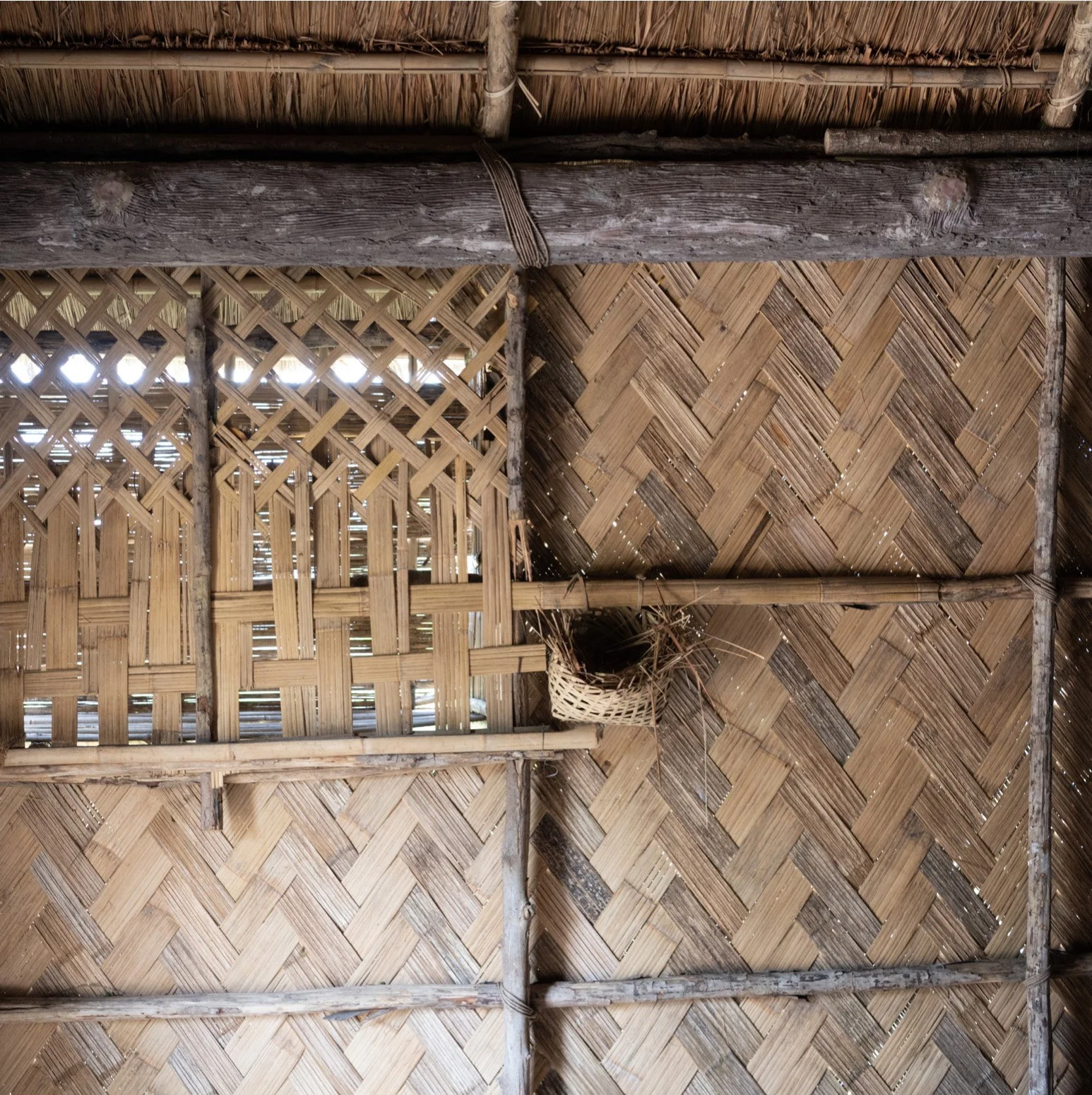
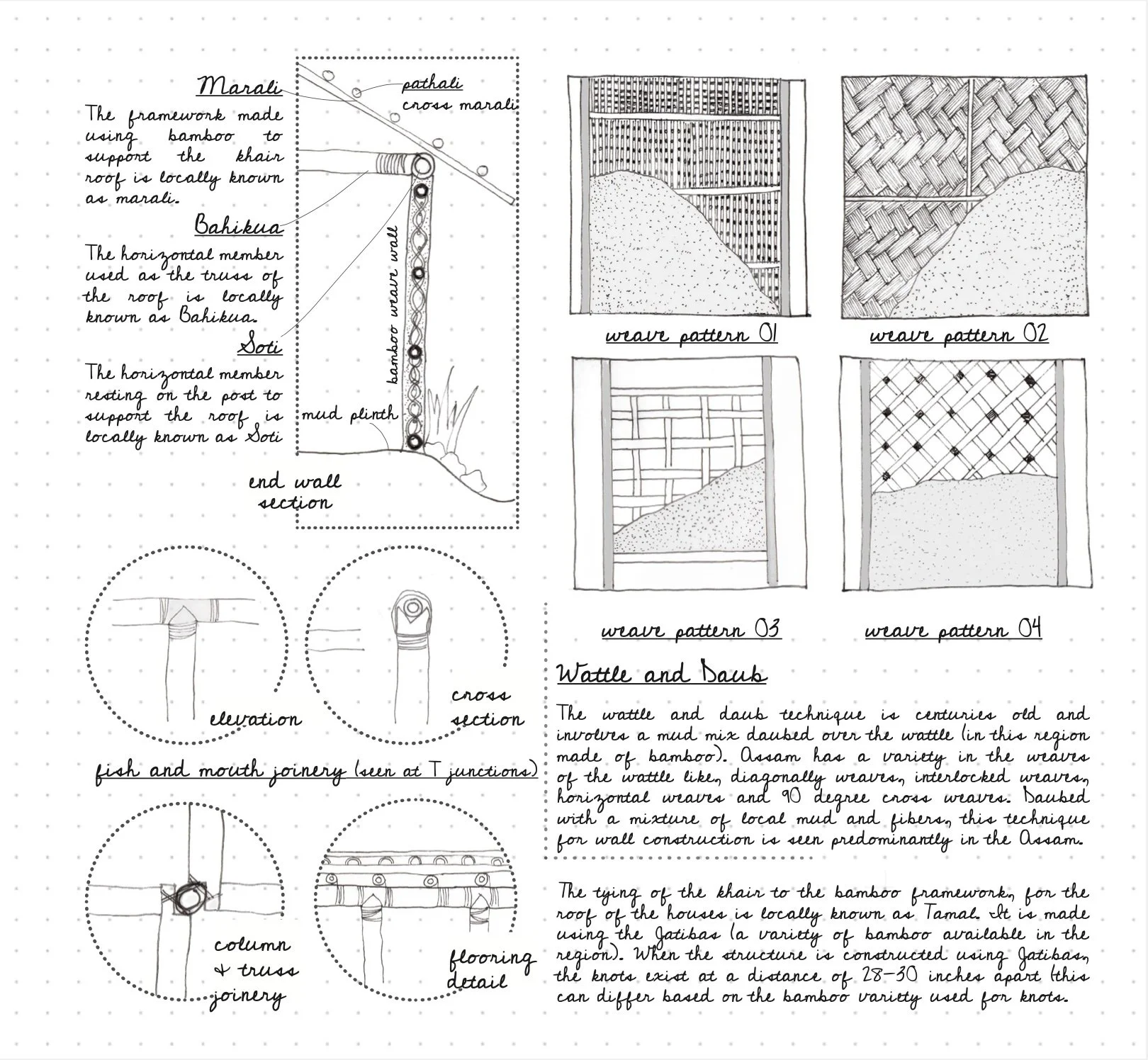
The defining materials of North East India's vernacular used as structure (stilts, posts), wall (woven mat, split board), floor (bamboo-strip platform), roof support and finishing (woven ridge detail). The species varies; the technique varies; the function never does.
Thatch / Leaf Roofing
AR · AS · MN · ML · MZ · NL · TR · different species
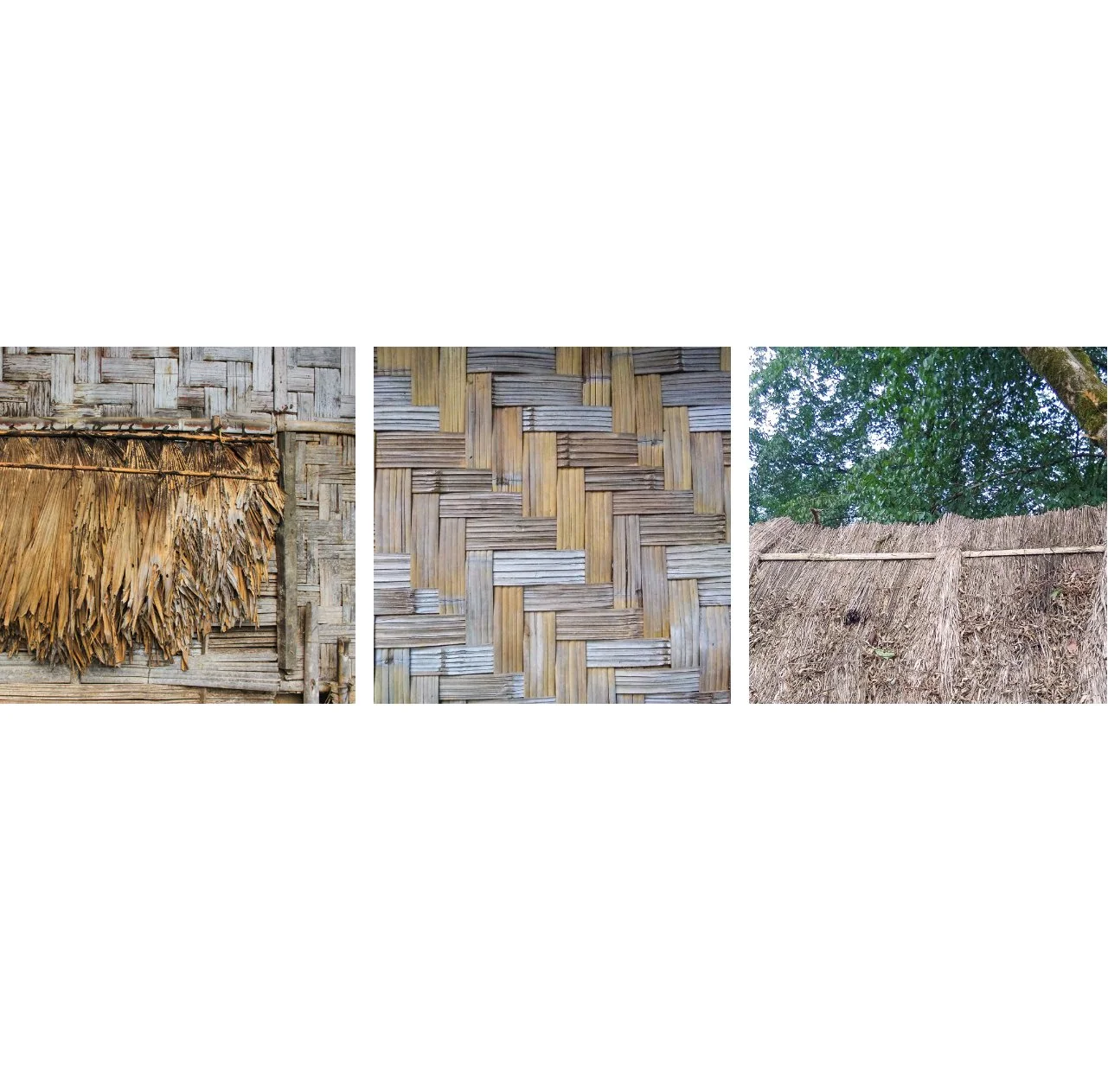
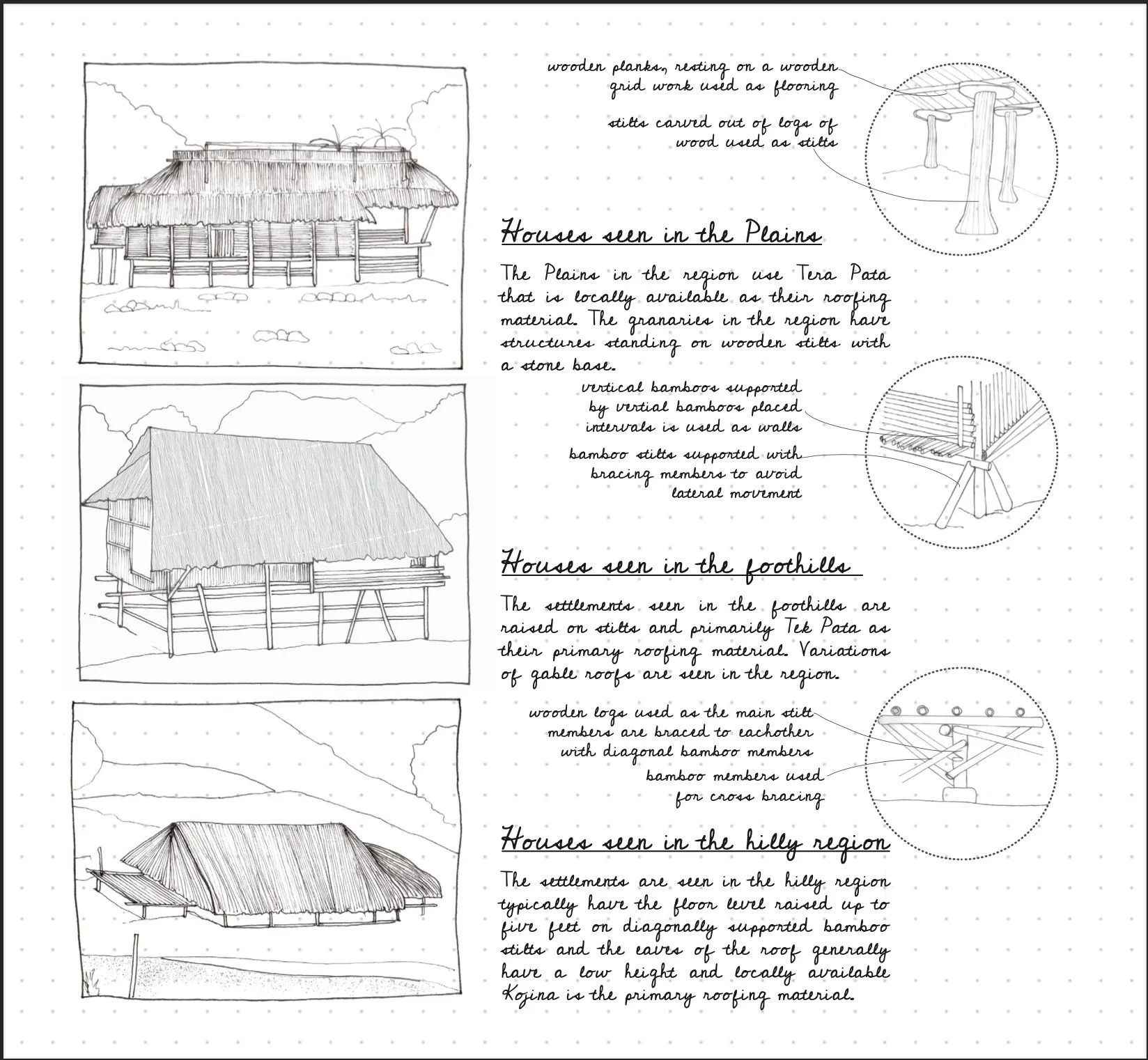
Thatching grass, palm leaves, and large tropical leaves are the primary roofing materials across all 7 states. The slope varies, steeper in higher-rainfall zones. Nagaland uses Fan Palm in Mopungchuket; Arunachal uses Kojina in hilly regions and Tek Pata in foothills; Tripura uses Chan grass.a
CONVERGENT - MULTIPLE STATES
Timber Posts
AR · AS · MZ · NL · TR
Where bamboo stilts are insufficient for the load, timber posts are used. The Mizing house of Assam uses a single log carved as a staircase, a signature material detail. Angami Naga and Ao structures use timber as primary structural members with bamboo for internal framing.
Woven Bamboo Matt Walls
AR · AS · ML · MZ · NL
Bamboo strips woven into panels are used as wall cladding in five states. The weaving patterns differ by tribe (Nagaland bamboo weave at the roof ridge is tribe-specific). In Meghalaya, the same woven mat forms the floor platform raised 90cm above ground. One material, multiple applications.
STATE-SPECIFIC INNOVATIONS
Phumdi (Manipur only)
MN - Loktak Lake exclusively
Heterogeneous mass of soil, vegetation and organic matter at various stages of decomposition. Covers 50% of Loktak Lake; 80% of the biomass is below water. Floats during rains, sinks in dry months for nutrient replenishment. Used as a foundation for phumsang houses, unique to world architecture.
Mud (1:1:2 mix) - Tripura plains
TR - flatlands only
The Tripuri plains have soil with an almost ideal 1 sand : 1 silt : 2 clay ratio, used directly for wall construction without stabilisation. Mud blocks dug 2-3 feet below ground, stacked raw. This is the only state in the study where earth is the primary wall material.
05 THE DORMITORY INSTITUTION
Where the tribe teaches itself
The dormitory, a dedicated sleeping and learning space for unmarried youth, appears in five of the seven states, and is one of the most revealing architectural institutions across the Northeast. It is simultaneously a spatial form, a pedagogical system and a social structure. The variations in who occupies it, what it teaches and what it looks like reveal the biggest cultural differences between states.
In all five states where it appears, the male dormitory serves three functions:
1 - a space where boys learn tribal traditions, duties and social norms,
2 - a defence post, boys watch for enemy approach, tiger or fire, and
3 - social institution regulating the transition from boyhood to adult tribal membership. Only Nagaland and Arunachal have female dormitories.
"The Zawlbuk was a place of learning and the storehouse of traditional knowledge and indigenous information."
- MIZORAM
"All boys between 12 and 14 would sleep at the dormitory until married. The Ariju also acts as a fortress, the boys would watch over the village."
- NAGALAND (AO TRIBE)
Arunachal · Adi | Moshup + Raseng
Male (Moshup) and female (Raseng) dormitories. For learning traditions and duties, most have now been replaced by government schools.
Meghalaya · Garo | Nok-panthe
Roofed but open construction serving as a male dormitory and meeting house. Also: kachari (communal meeting house) and borang (tree house watchtowers).
Mizoram · Mizo | Zawlbuk
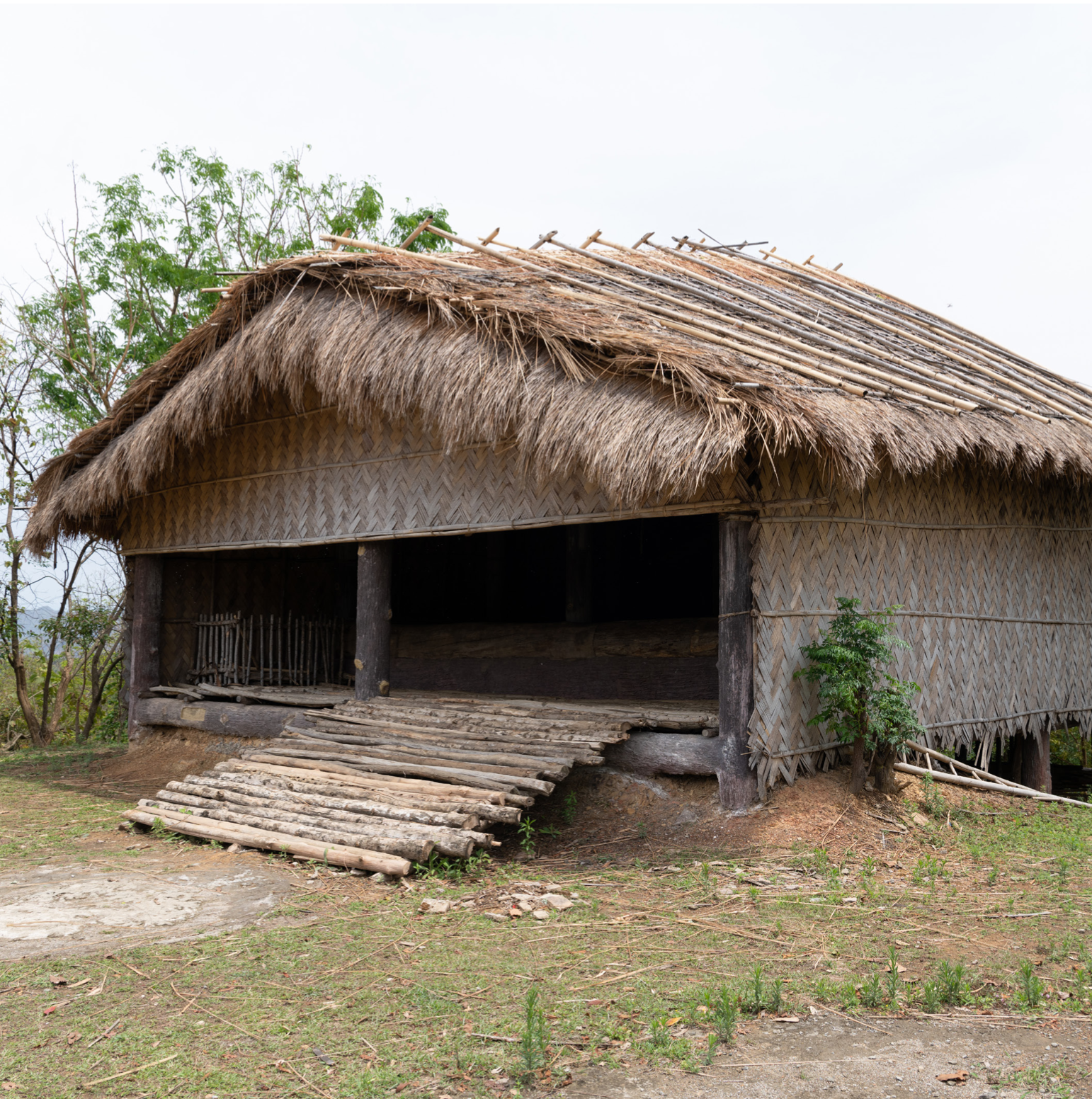
Timber, bamboo and thatch. Inclined log platform entrance. Central hearth with raised sleeping platforms. Storehouse of all tribal knowledge transmitted orally by elders.
Nagaland · Ao | Ariju + Tsuki
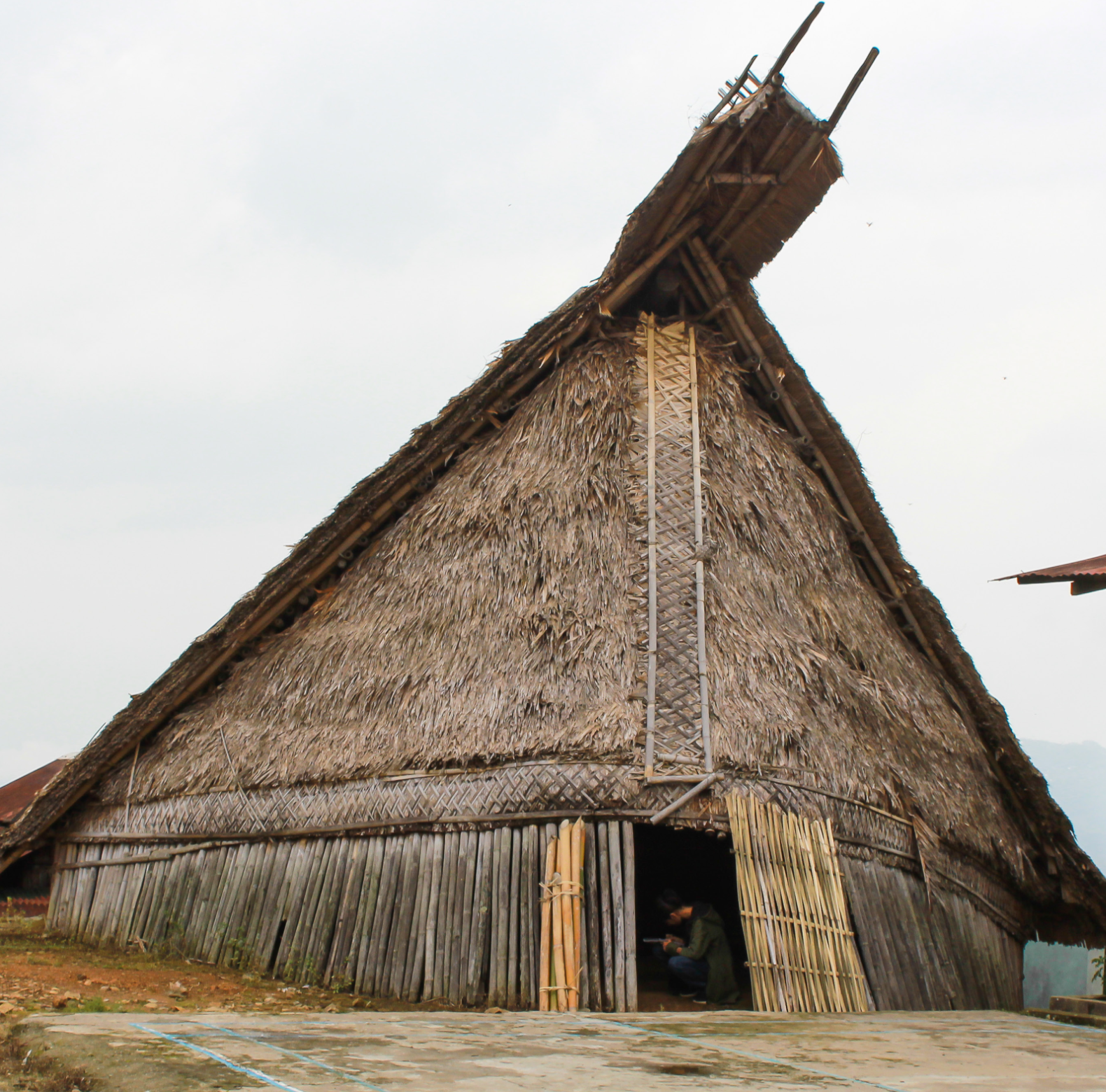
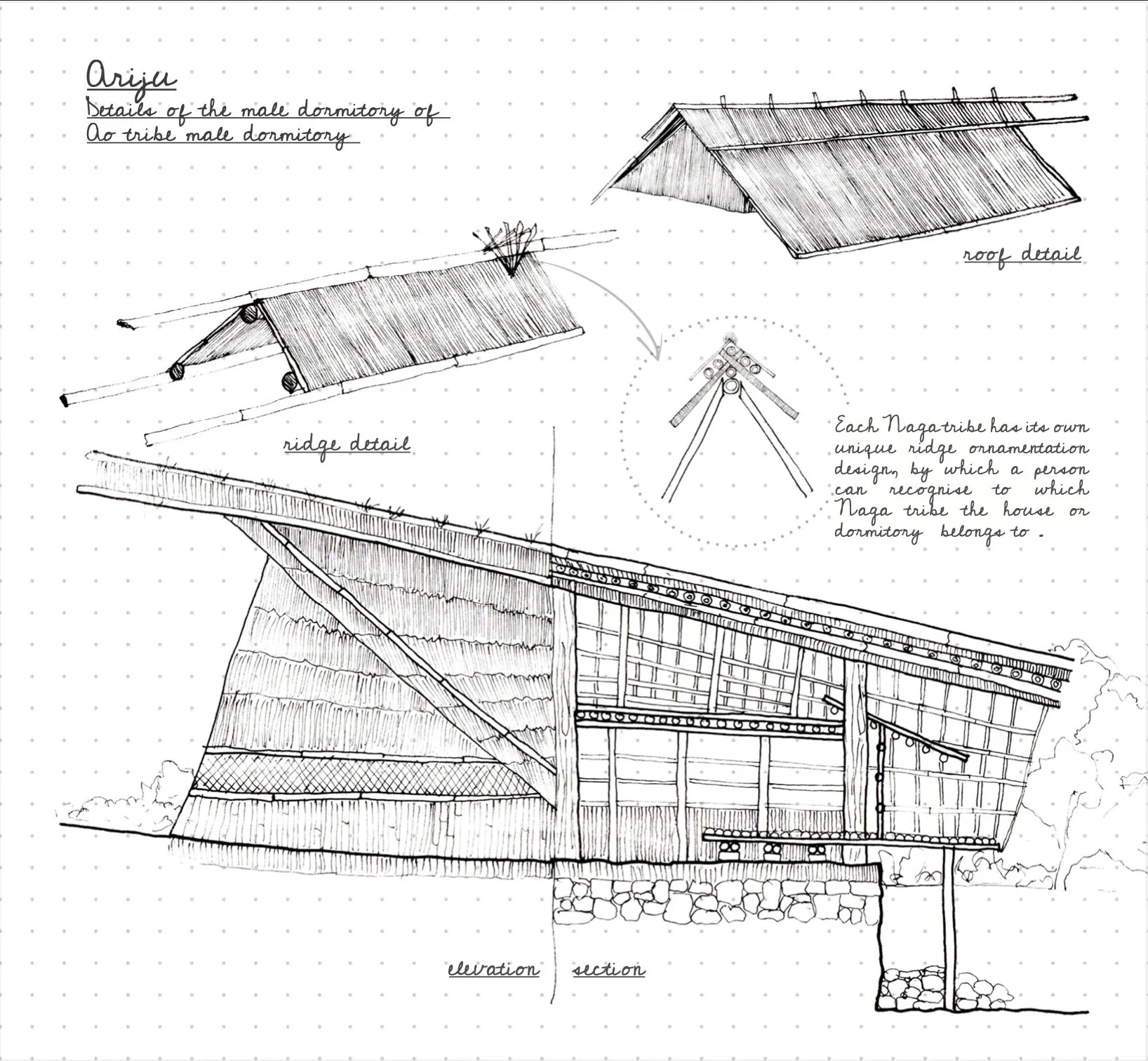
Both male (Ariju) and female (Tsuki) were documented. Ariju has tall, slanting thatched roofs with decorative ridge details, the most architecturally elaborate dormitory in the study.
Assam · Manipur · Tripura | Not documented
No dormitory institution were documented in these three states. Assam's Mising tribe uses long-houses rather than separate dormitory structures.
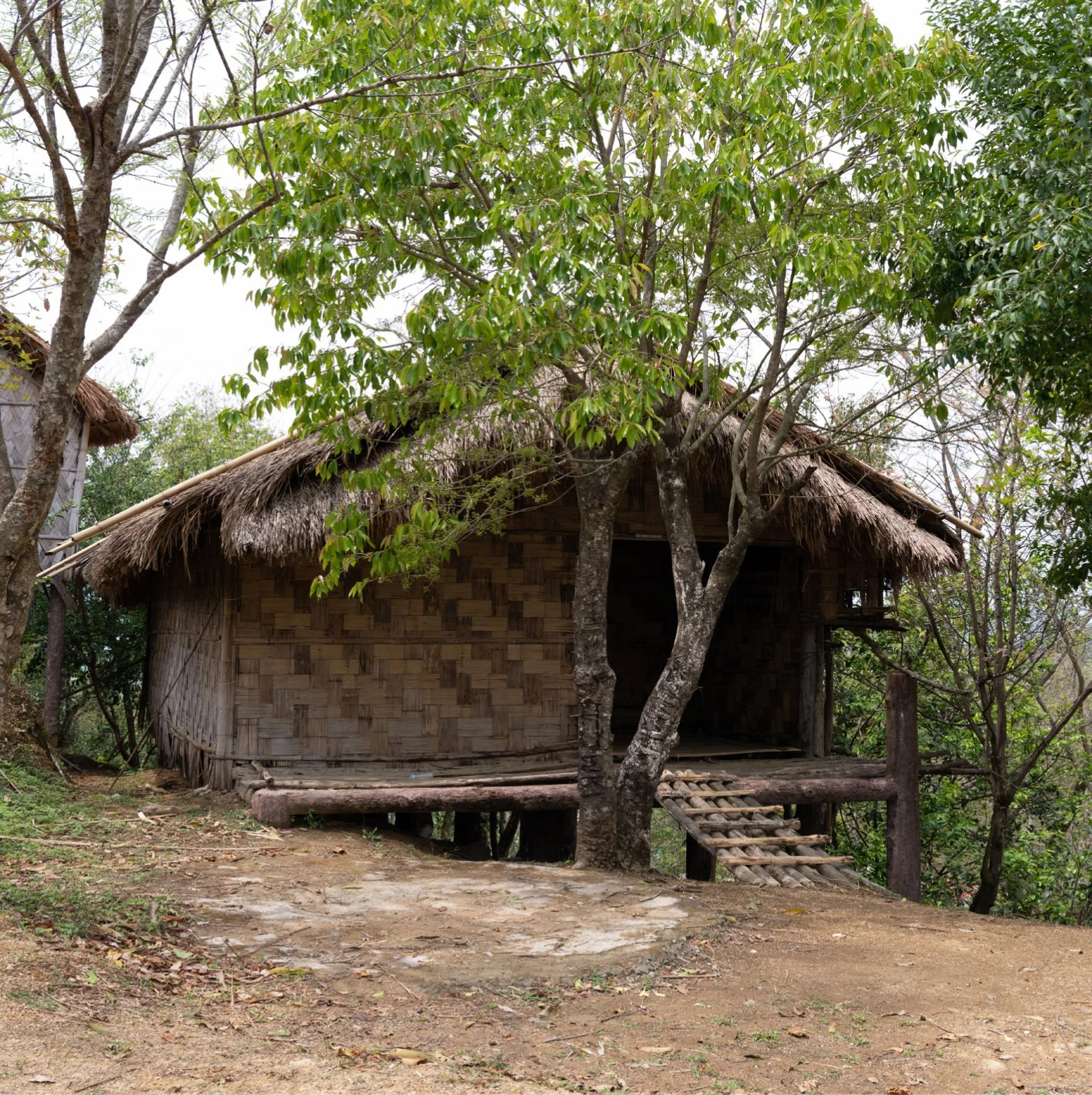
Mizoram - Zokhua Falkawn
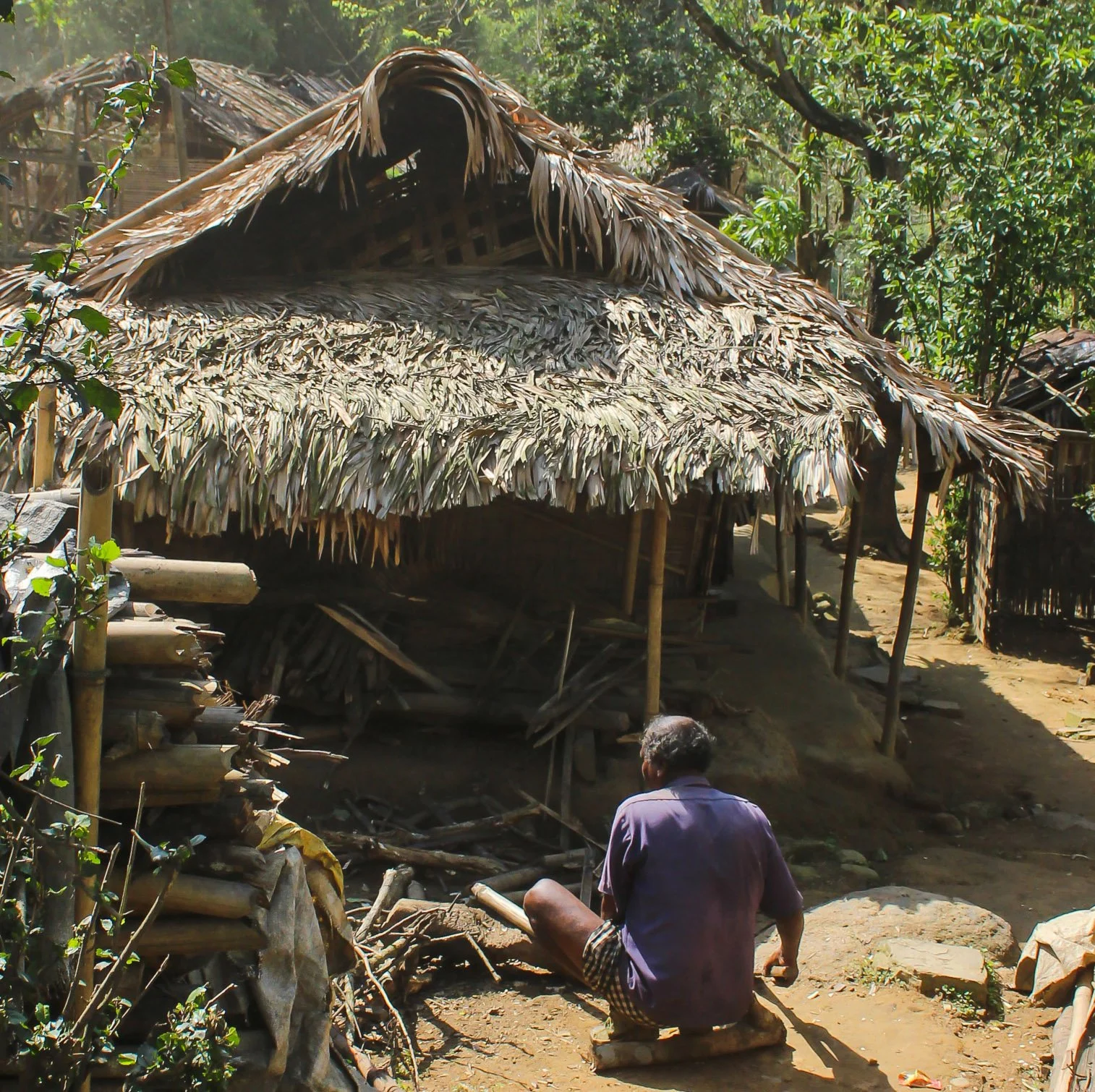
Nagaland - Changki Mokukchung
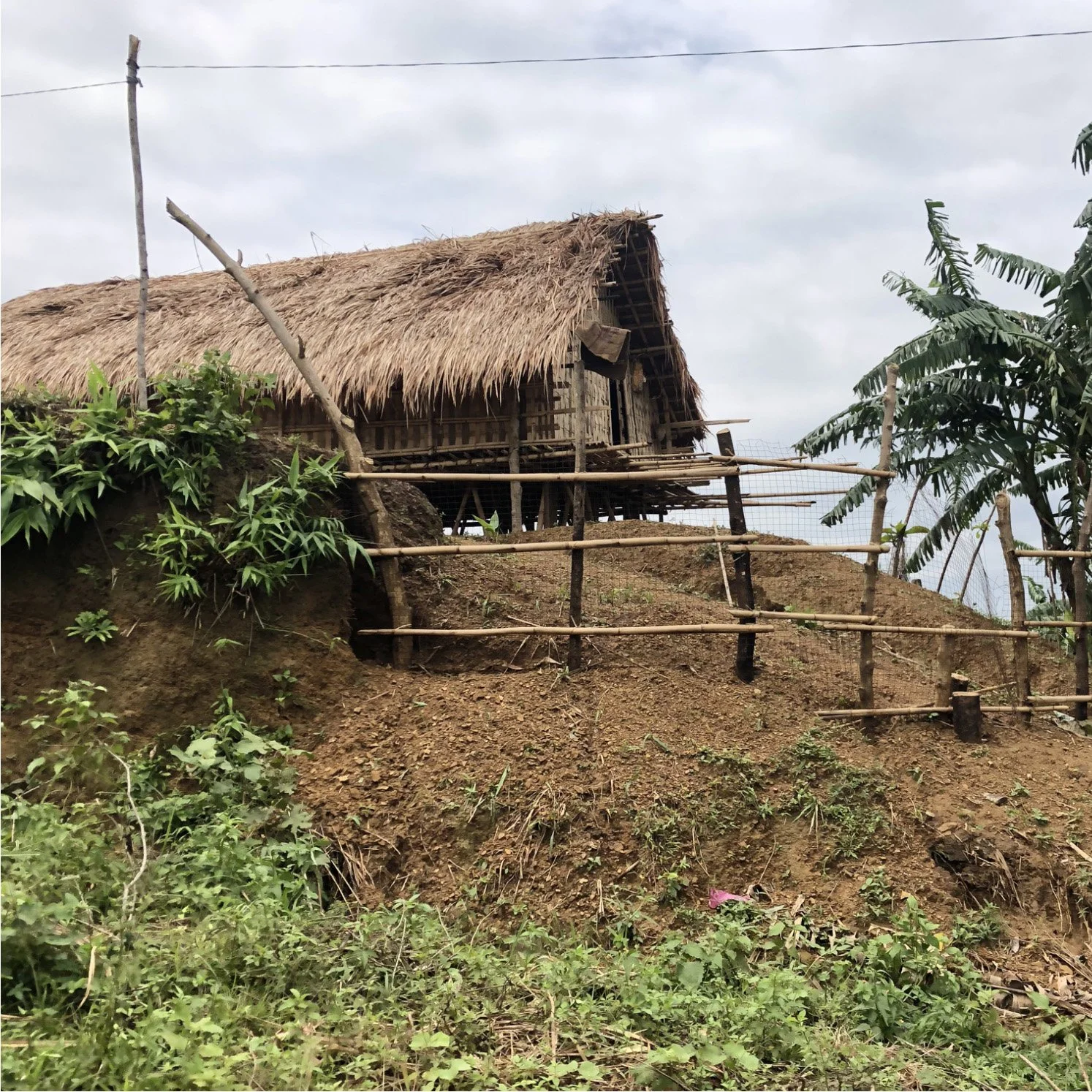
Tripura - Teliamura
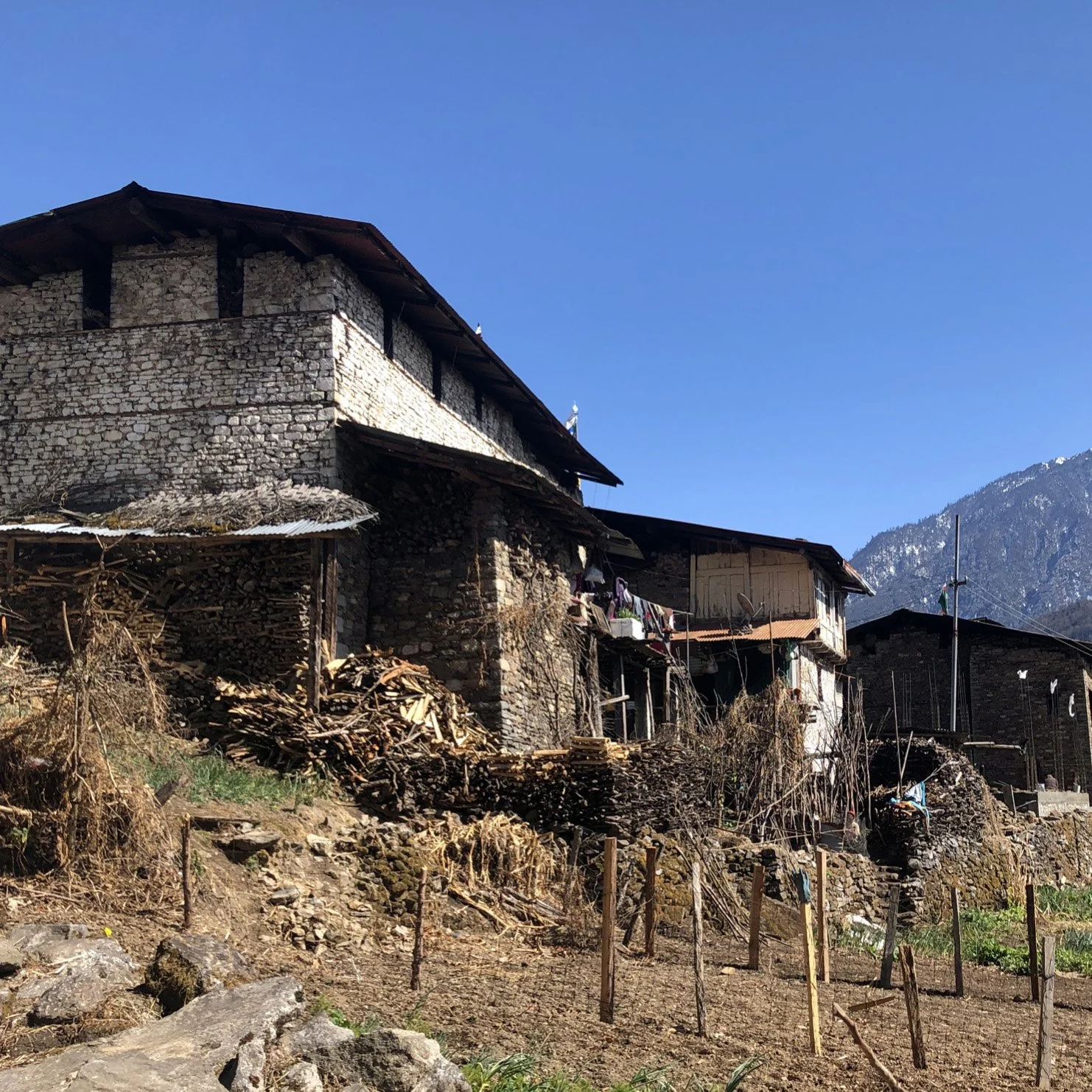
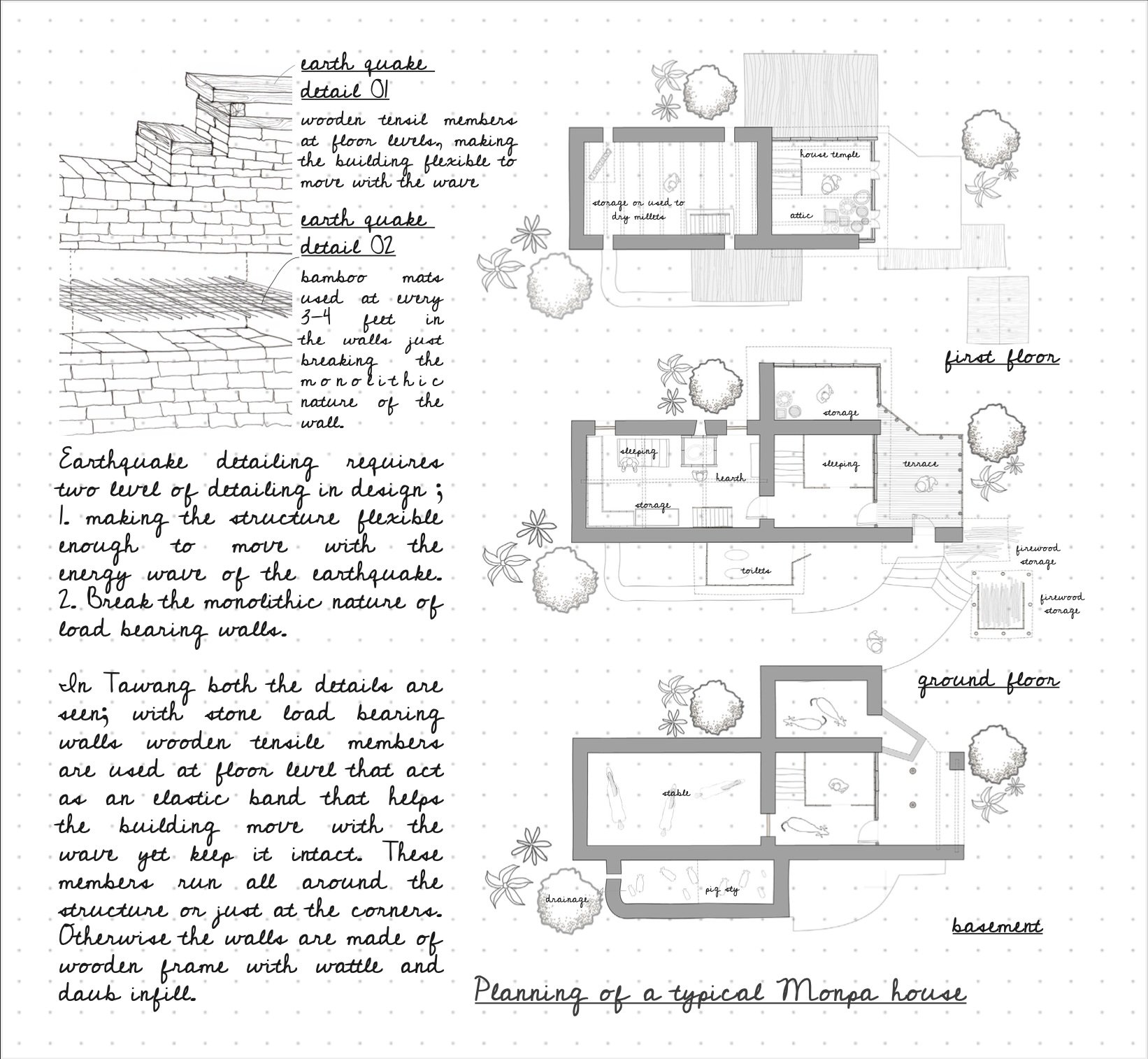
Arunachal Pradesh - Tawang
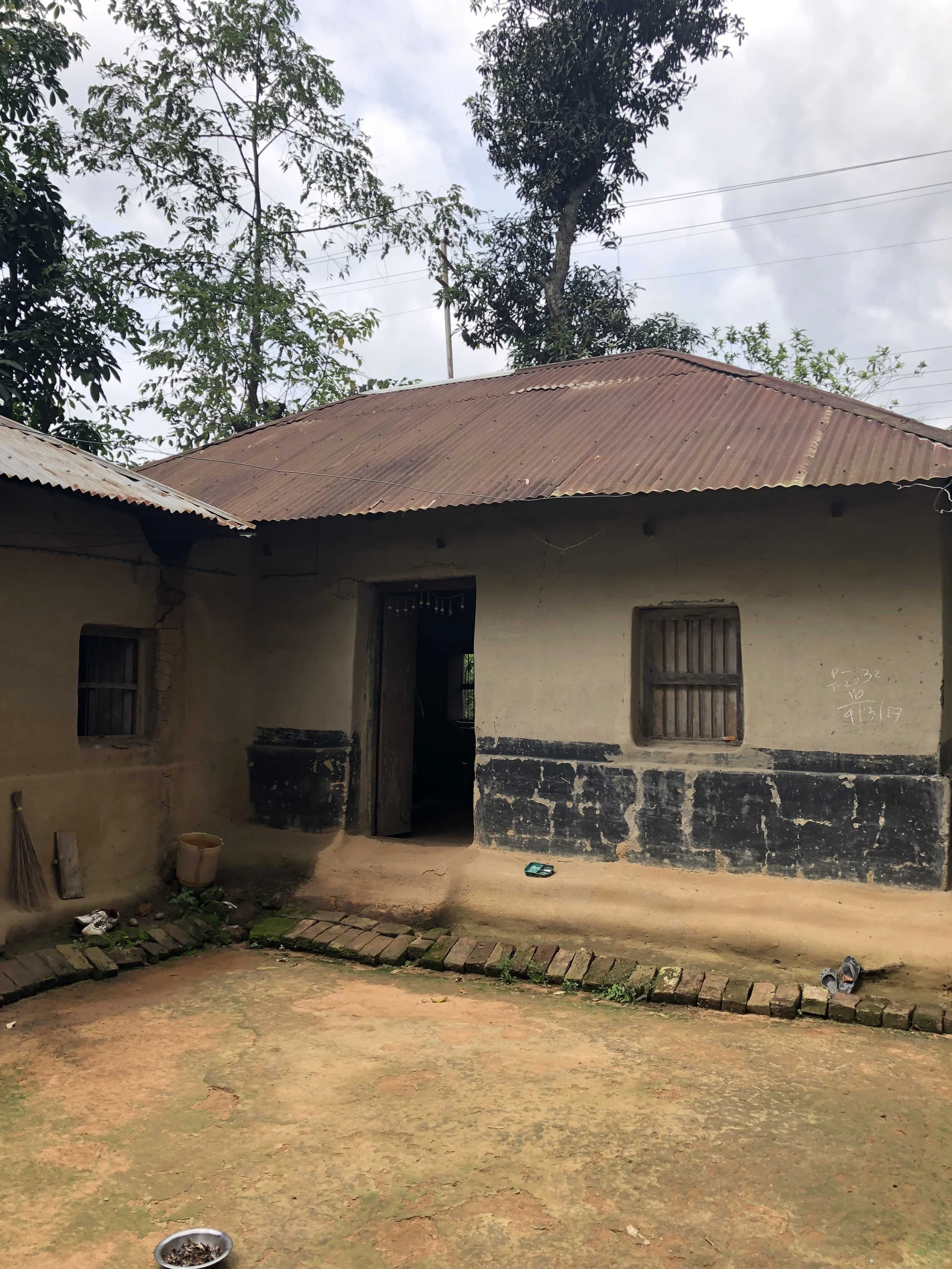
Tripura - Suryamani Nagar
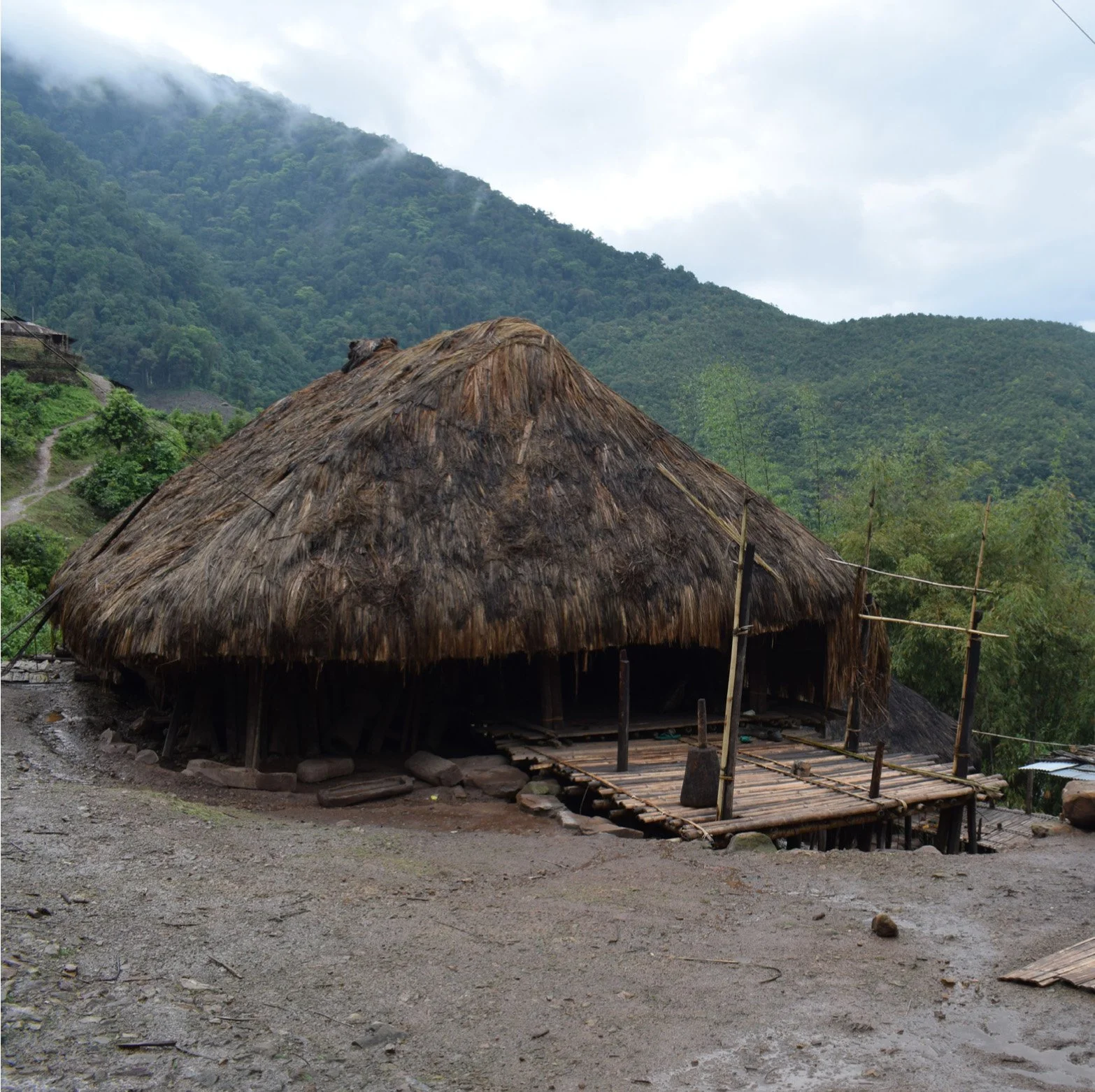
Arunachal Pradesh - Adi Pasi - Sibuk
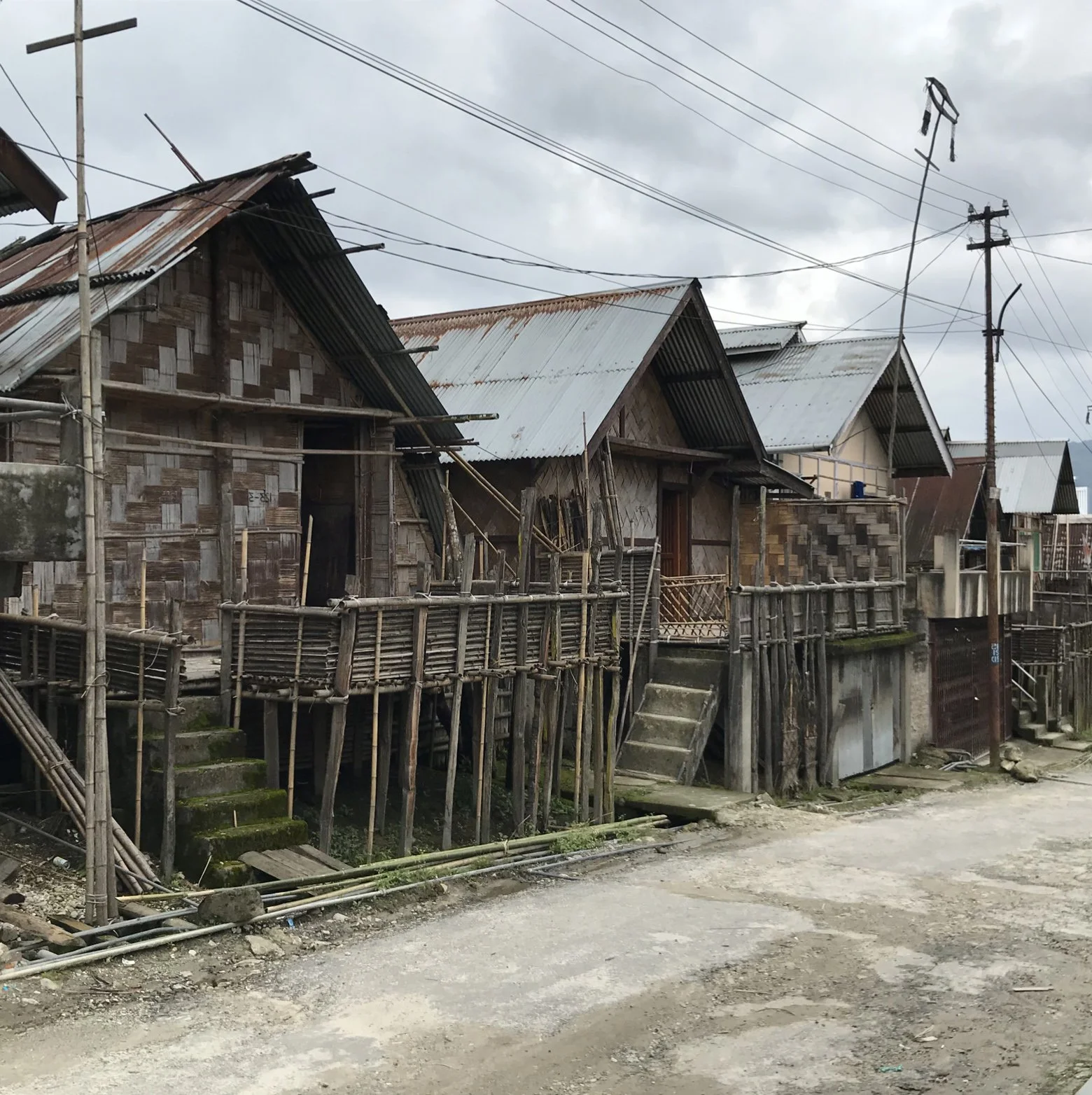
Arunachal Pradesh - Ziro Valley - Lower Subansiri
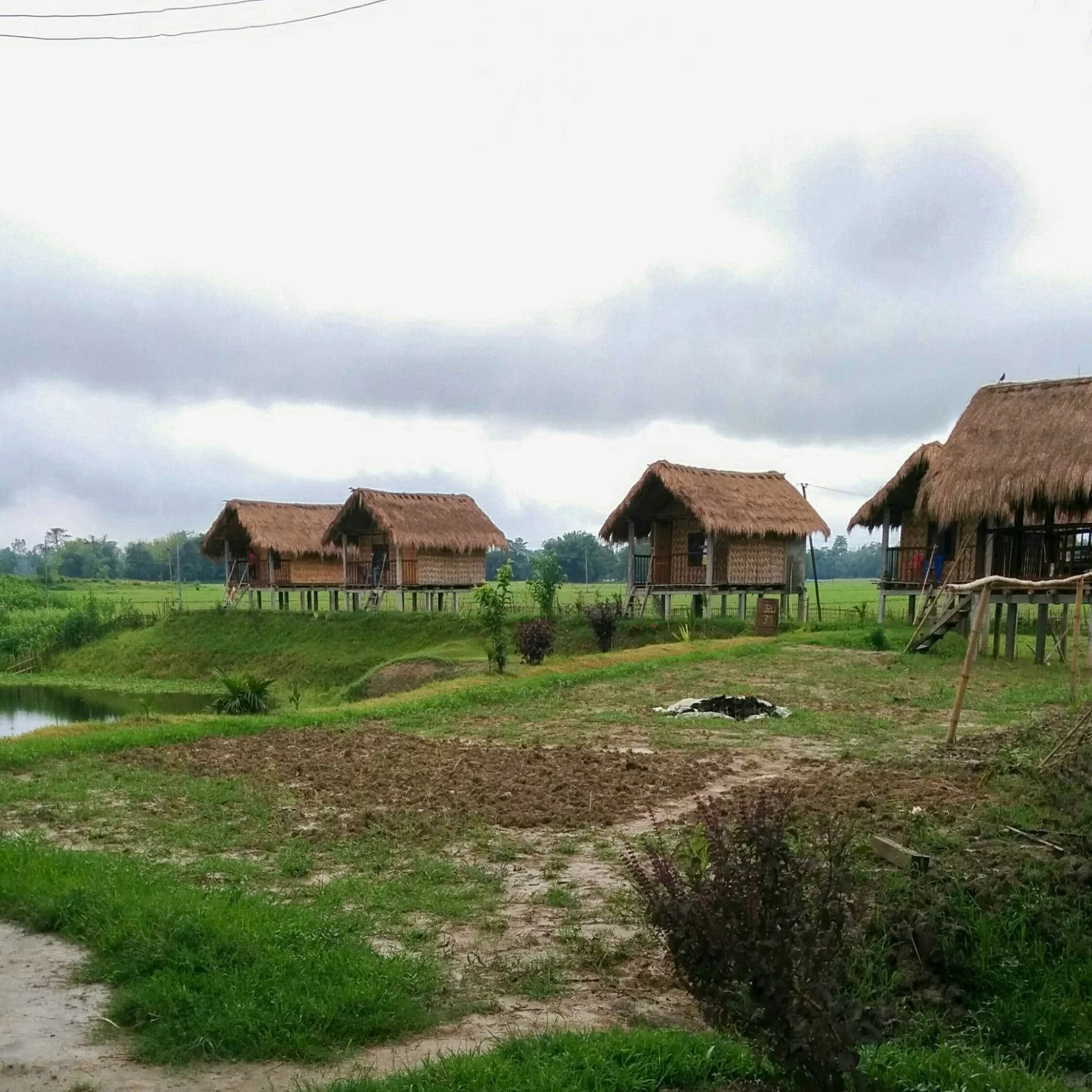
Assam - Salmora - Majuli
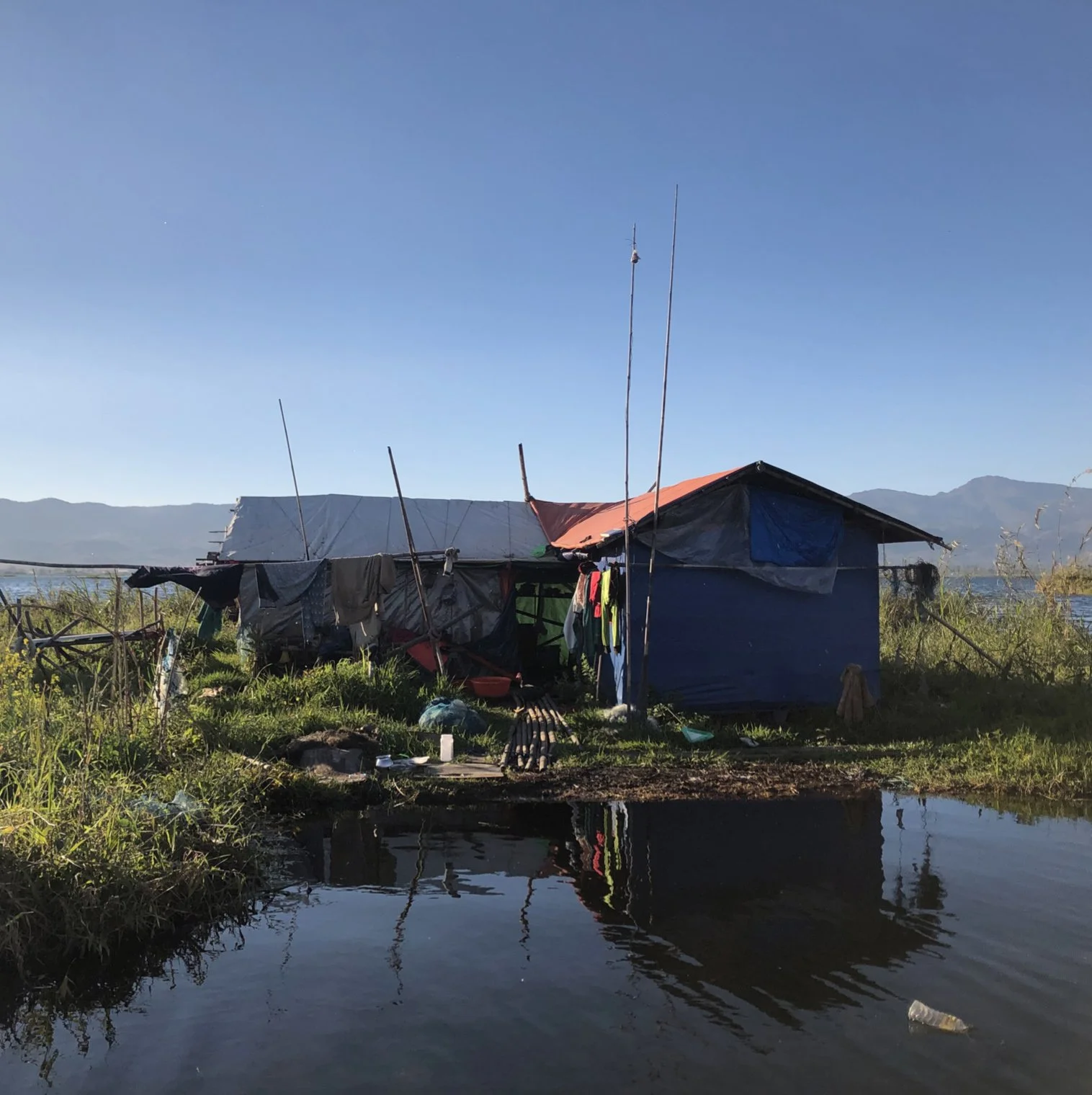
Manipur - Loktak Lake
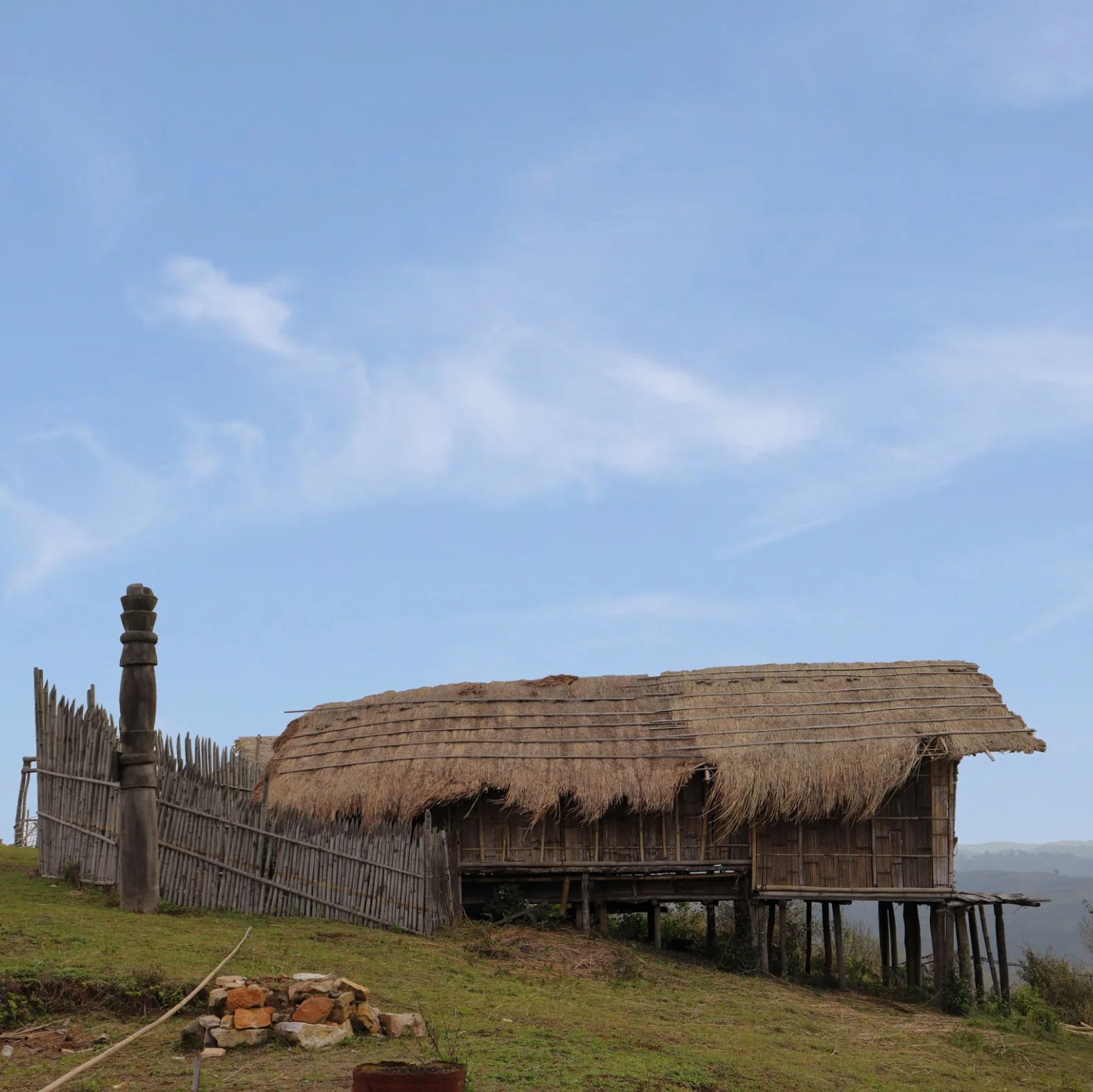
Maghalaya - Mylliem - West Khasi Hills
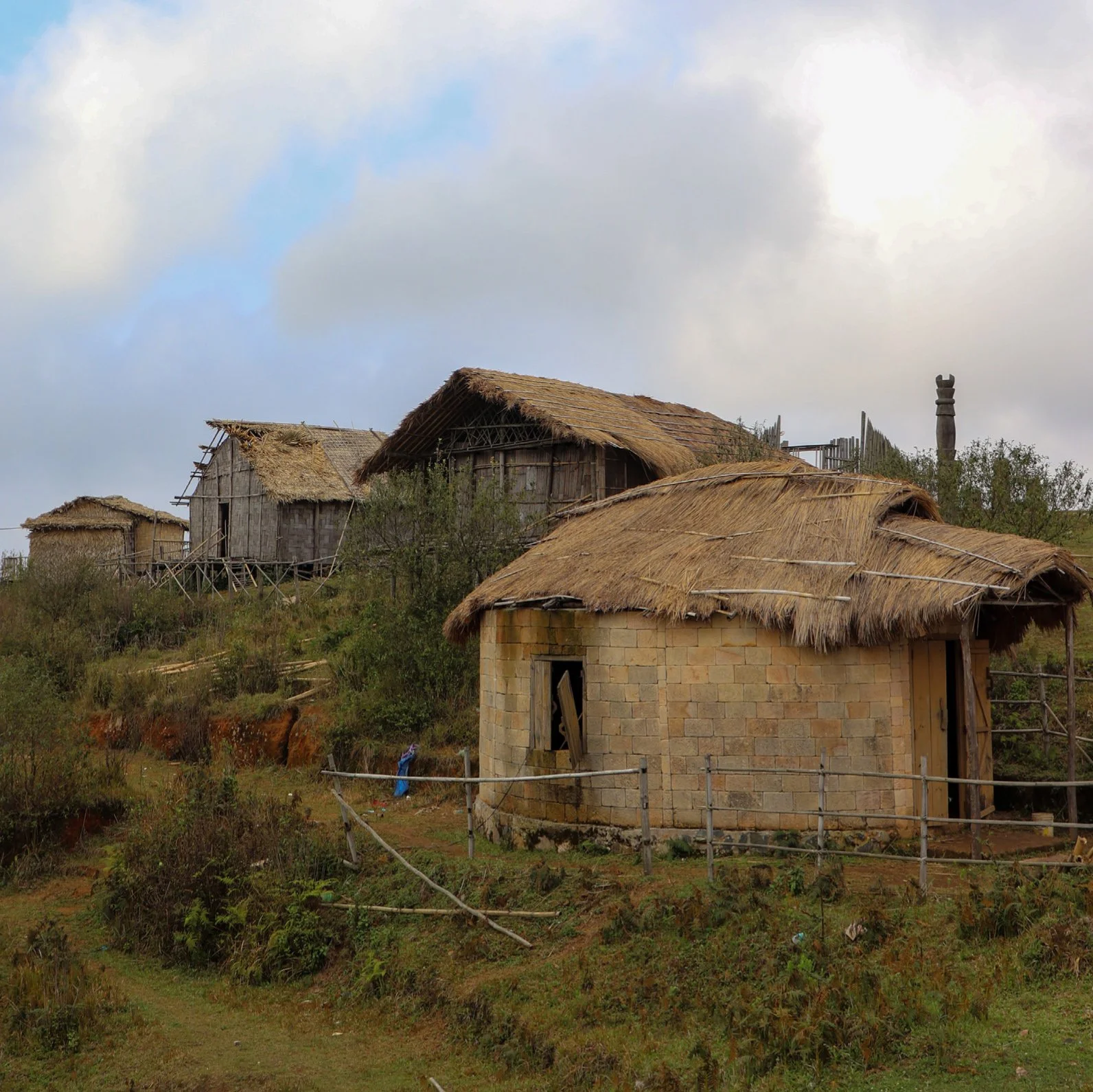
Meghalaya - Garo Hills
Dormitory - Nagaland
Dormitory - Mizoram
Granary - Meghalaya
06 PRE-CONSTRUCTION RITUALS
Asking the land before building
Every state performs a ritual before construction, asking the gods, the land or the spirits for permission to build. The instrument of mediation varies by tribe, but the fundamental act is universal: no house is built without first seeking and receiving permission from a non-human authority.
Arunachal Pradesh · Adi Pasi tribe
Rice Grain Test
Four unbroken rice grains wrapped in a Yogir (Dalhousiea bracteate) leaf with ginger cut into small pieces, covered with Pesak (cast-iron vessel) and buried in the selected land. After a few days, if the grains are broken, the gods have denied permission. If whole, permission is granted. The ritual may yield different results for different people on the same land, individual, not communal, permission.
Meghalaya · Khasi tribe
Egg or Grain Test
Prior to construction, a ritual is performed to ask Mother Nature, 'Mei Ram-ew', for permission. Either grains or an egg is buried in the land and left for a few days. On return: if found in the same way it was left, Mother Nature has granted permission. If it is lost, permission is denied. If permitted, wooden trunks are erected to symbolise that the land has been claimed.
All Seven States
The Universal Pattern
All seven states document a pre-construction ritual: the structure is identical: a material instrument (grain, egg, leaf, sacred plant) is placed in or on the land; time passes; and the condition of the instrument upon retrieval determines whether the spirits have granted permission. Building without this ritual is believed to invite misfortune, illness or structural failure. The ritual is the structural specification before the structural specification.
07 CONSTRUCTION SYSTEMS - SHARED LOGIC
Bamboo built differently for the same climate
Raising the House - Six States, Six Reasons
Stilts appear in six of seven states, but the reason shifts.
In Assam (Majuli), stilts protect against bi-annual Brahmaputra flooding.
In Arunachal (foothills), stilts protect against wild animals and keep livestock below.
In Mizoram, house posts are fixed at the slope so the floor levels horizontally on a steep hillside.
In Tripura (Reang), stilts protect against attacks by forest animals.
In Nagaland, modest stilts.
In Meghalaya (Khasi), bamboo posts are fixed 3 feet below ground with the floor 90cm above, a plinth, not a stilt, but serving the same protective function.
Bamboo stilts | Timber posts | Slope levelling | Flood response | Animal protection
STILTS
ROOF
Pitch, Material and the Tribal Signature
All states use pitched roofs for monsoon runoff, but pitch angle, form and capping technique vary.
The Angami Naga house has a thick thatch secured at the ridge, with a decorative bamboo weave unique to each tribe; the ridge becomes a tribal identity marker.
The Khasi roof resembles an inverted boat.
The Adi house has a slight curve at the verandah eave.
The Ao Naga dormitory (Ariju) has tall slanting roofs with decorative ridge detailing.
Fan Palm leaves are used in Mopungchuket (Nagaland).
The roof is the primary distinguishing feature between tribes, even when the wall material is identical.
Kojina (Arunachal) | Tek Pata (foothills) | Chan grass (Tripura) | Fan Palm (Nagaland) | Inverted-boat (Meghalaya)
FLOOR
Bamboo Strip Platform - Waste, Warmth, Water
The bamboo strip floor serves multiple functions simultaneously in all six stilt-house states. Waste, grain husks and droppings fall through the bamboo flooring gaps to be consumed by livestock below (Arunachal, Assam, Meghalaya).
In Manipur's phumsang, a bamboo or wooden plank platform is laid over the phumdi biomass.
In Meghalaya, a bamboo-woven mat is tied to a bamboo grid framework supported on main bamboo members; the flooring is as engineered as any modern platform.
Weaving looms and pestles are stored on verandah extensions (in Assam and Mizoram).
Bamboo strip platform | Waste passage | Livestock below | Phumdi platform (Manipur)
COMMUNITY BUILD
The House as Village Event
In all seven states, house construction is a communal village event, a reciprocal act, not a transaction.
In Arunachal (Adi), elders segregate materials; youth do construction; women feed, gather firewood, and bind thatch into bundles of 40-50 leaves. On the last day, the Ebor/Borne gathered with Ponung dance.
In Mizoram, labour was traditionally paid in rice grains by the chief. In all states, construction knowledge is transmitted orally at the building event itself, not in any codified manual or specialist trade.
Ebor/Borne (Arunachal) | Gender-specific roles | Oral knowledge transmission | Labour exchange
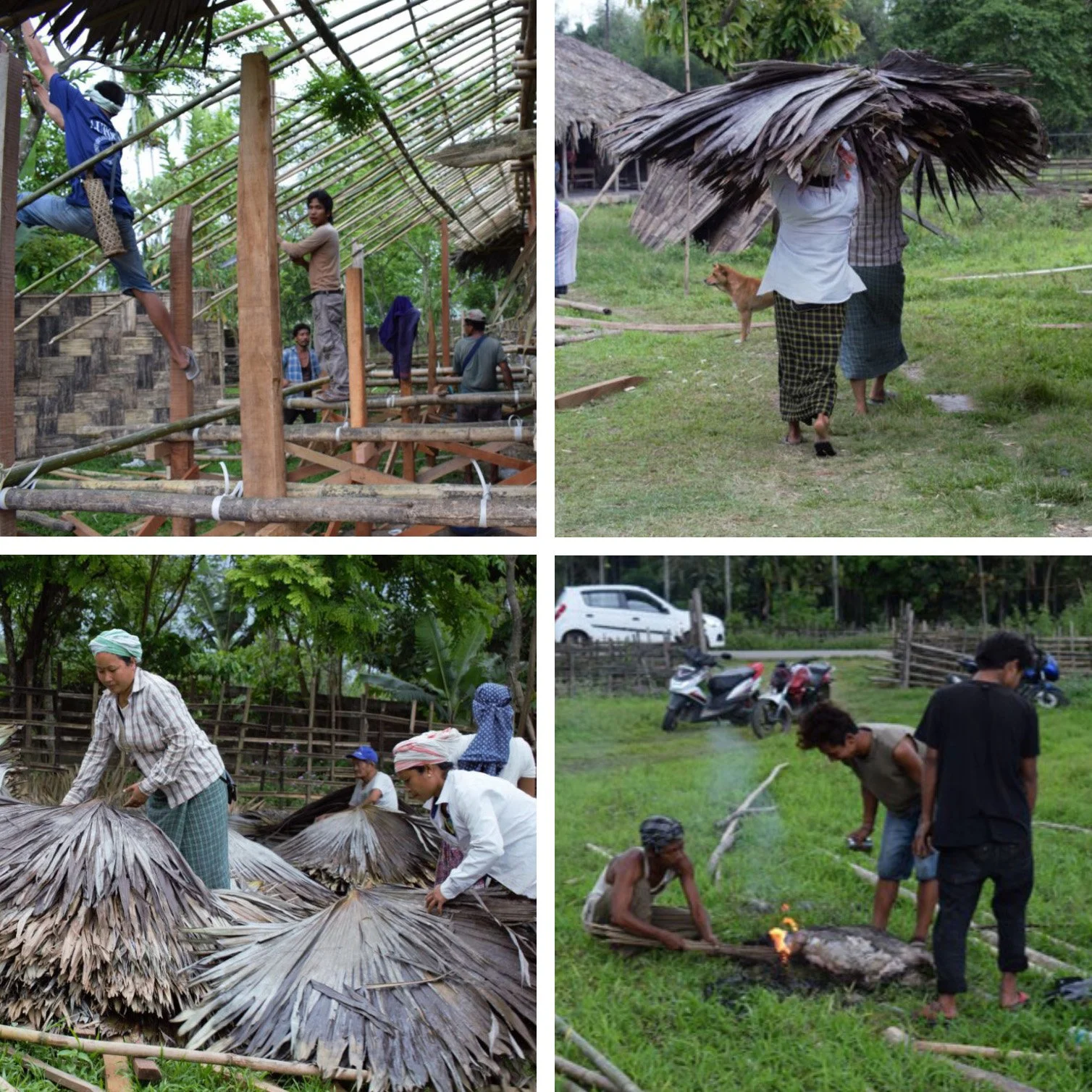
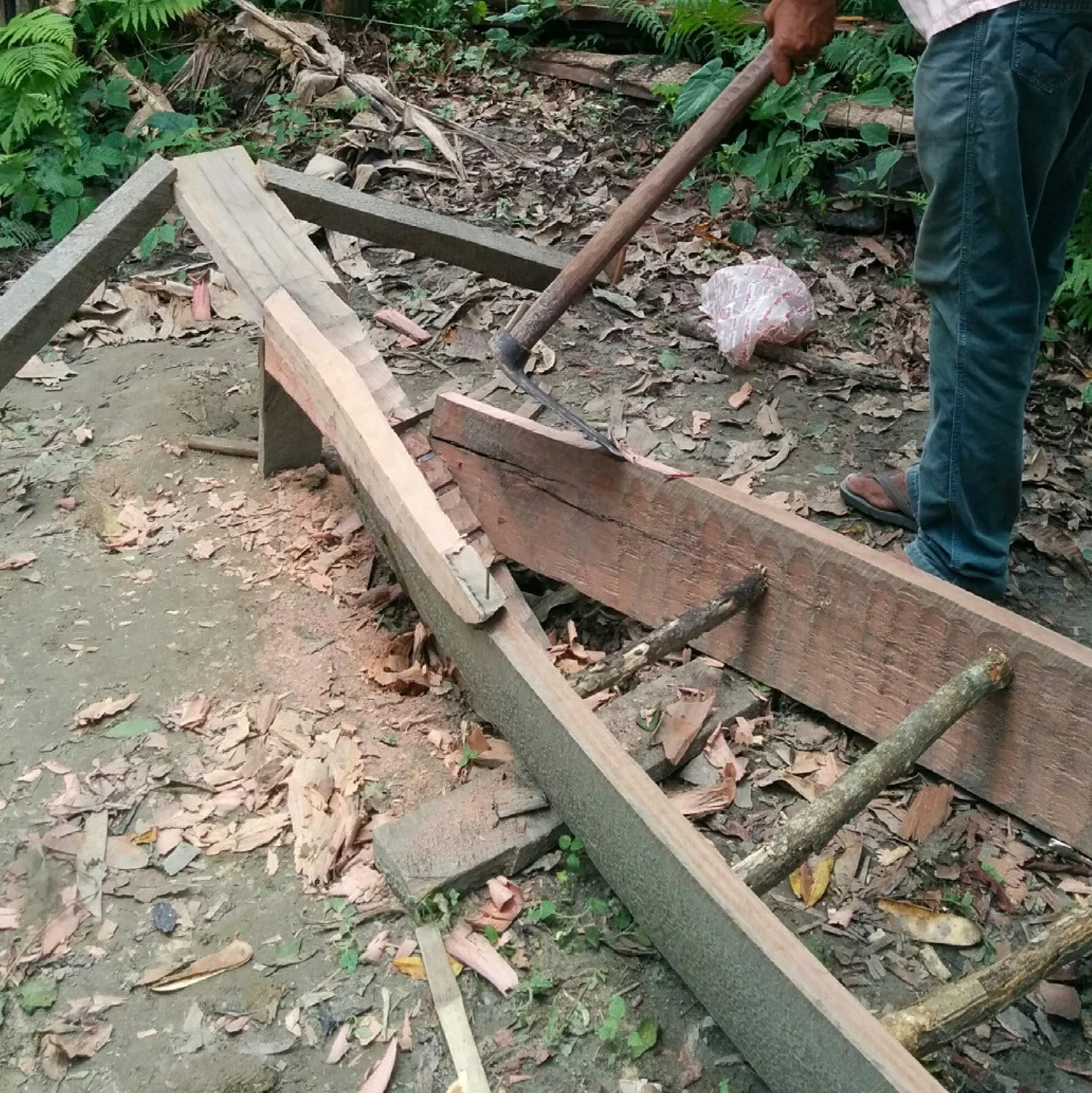
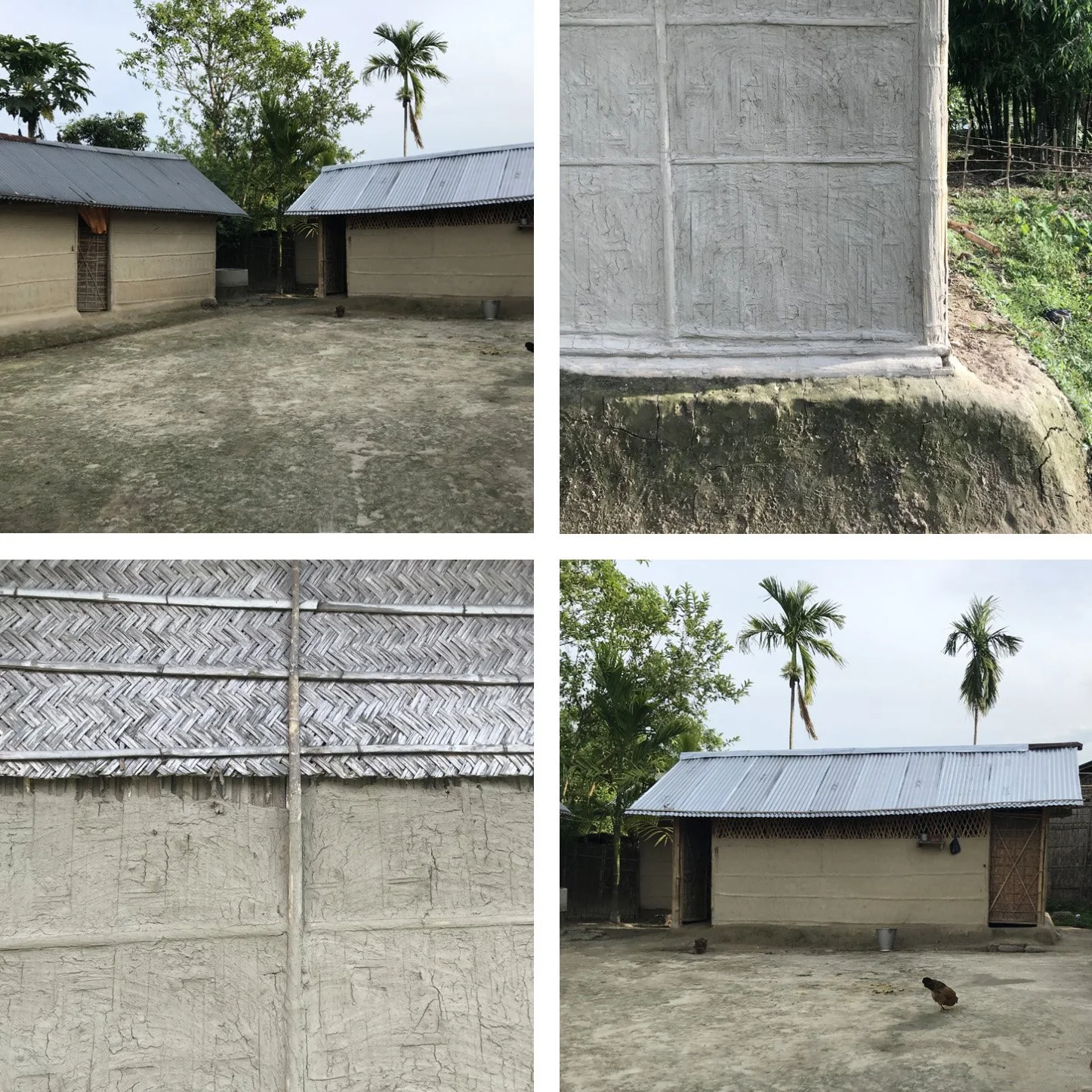
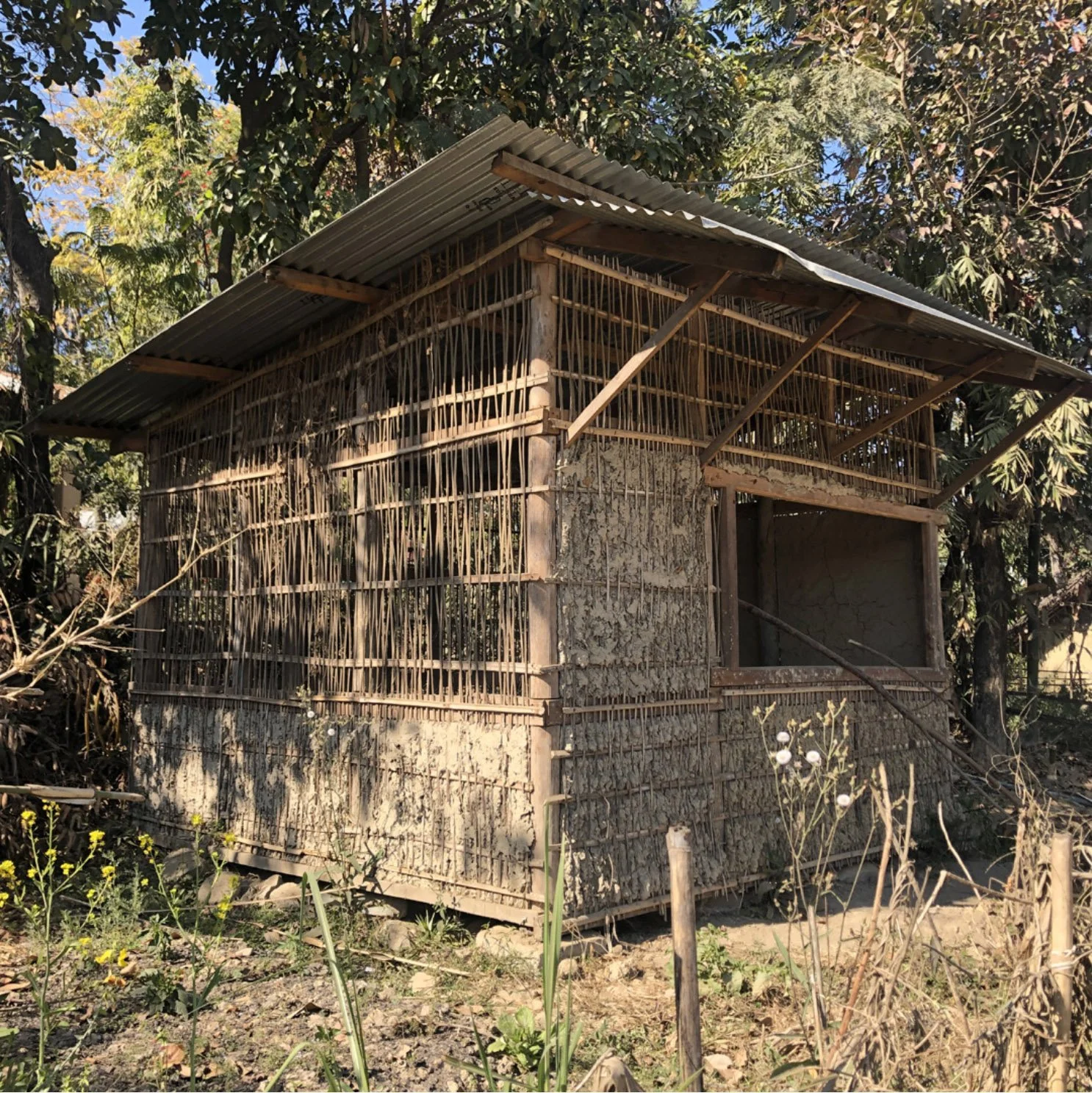
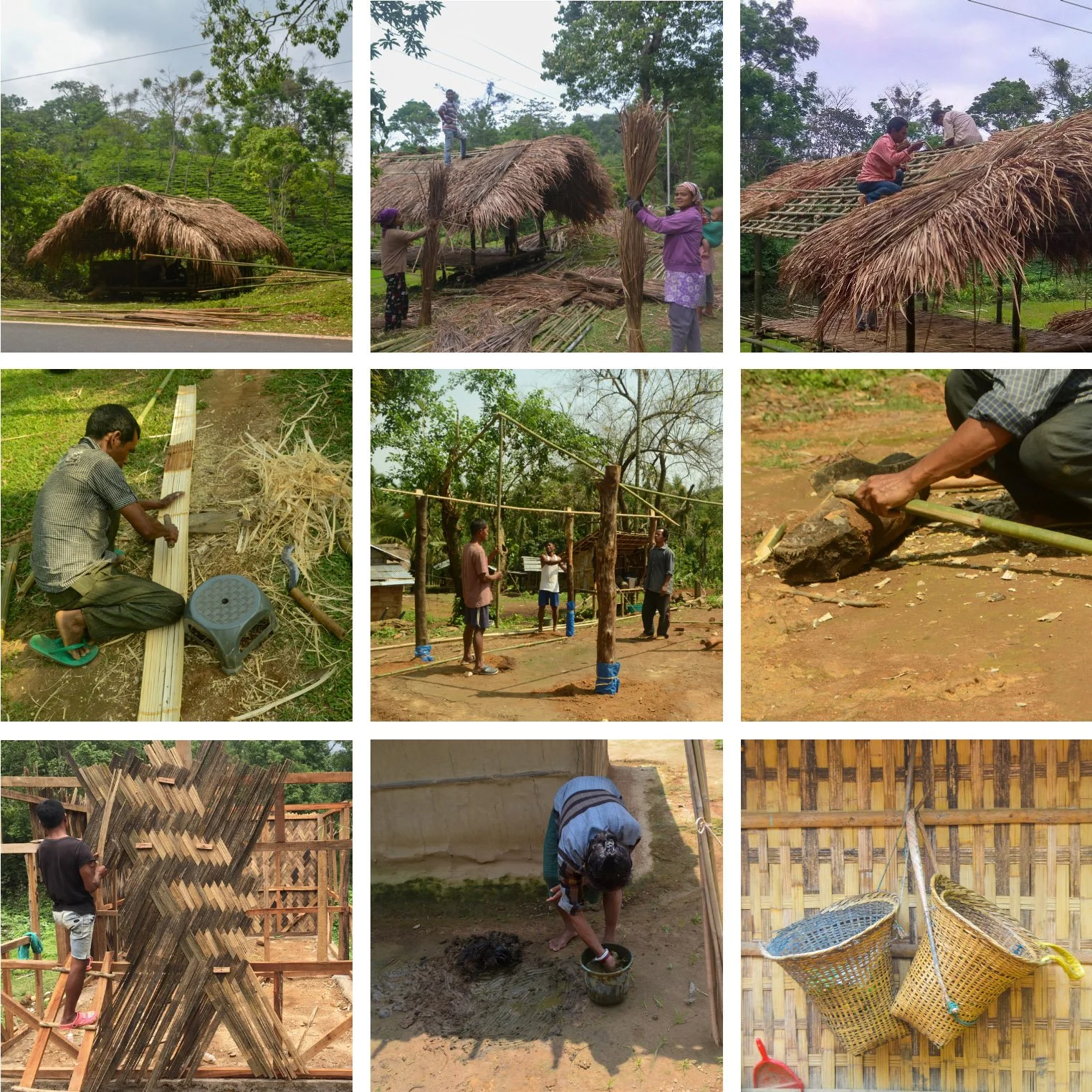
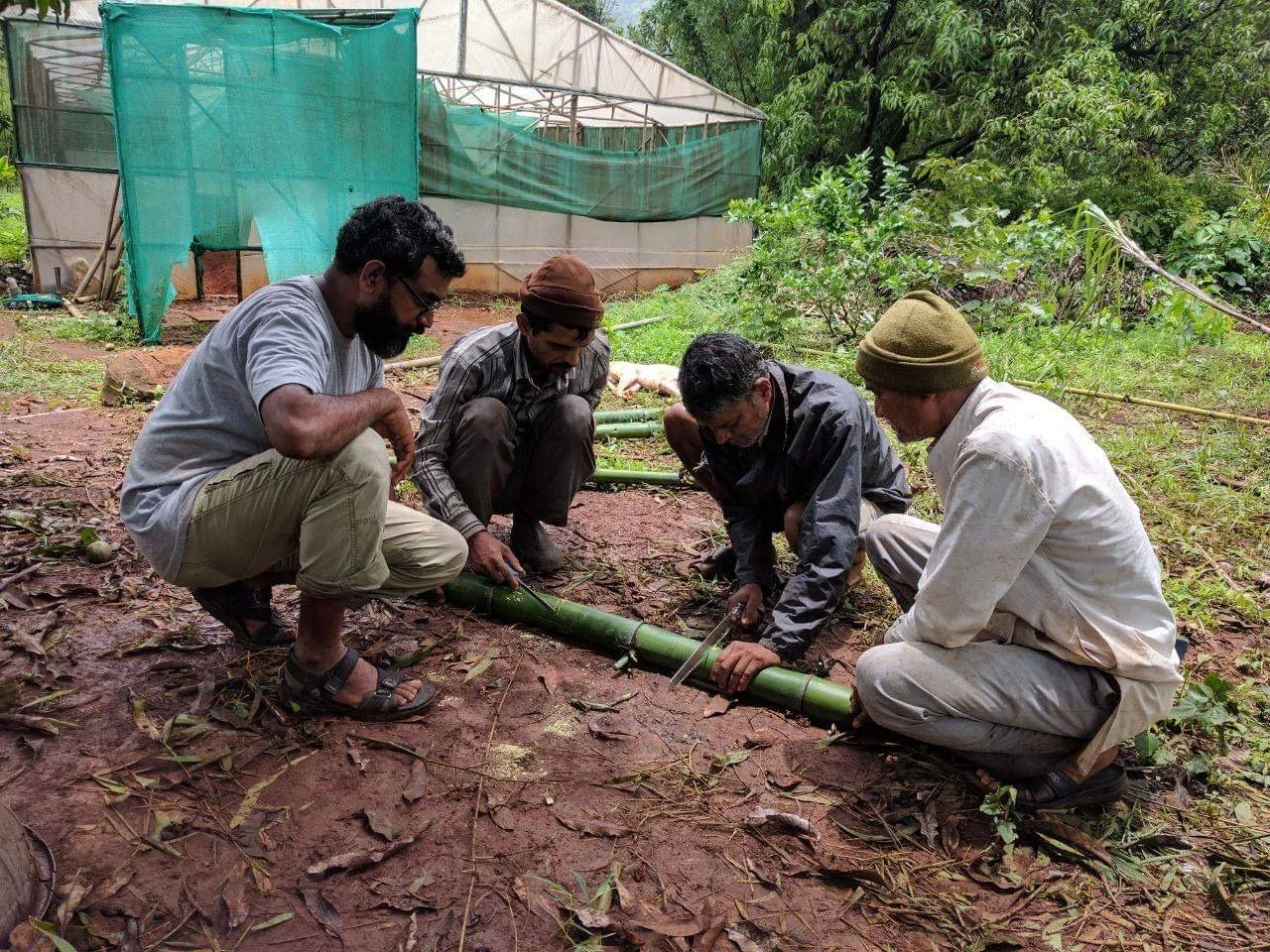
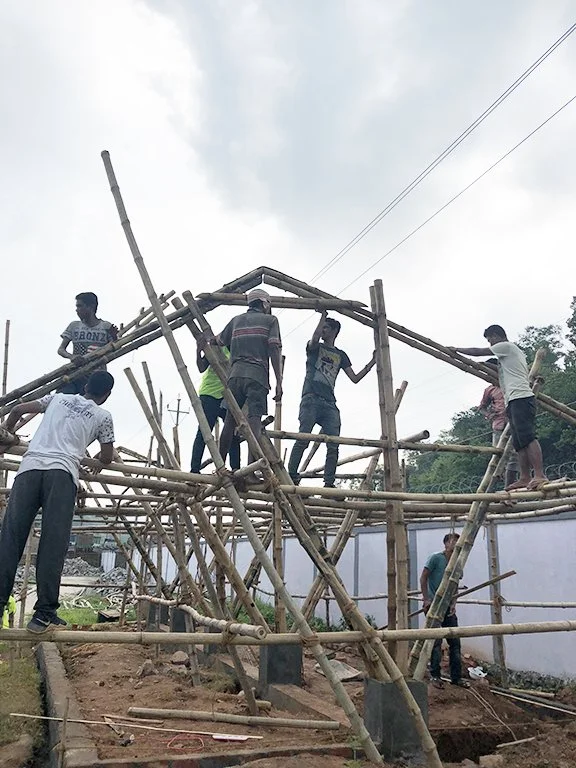
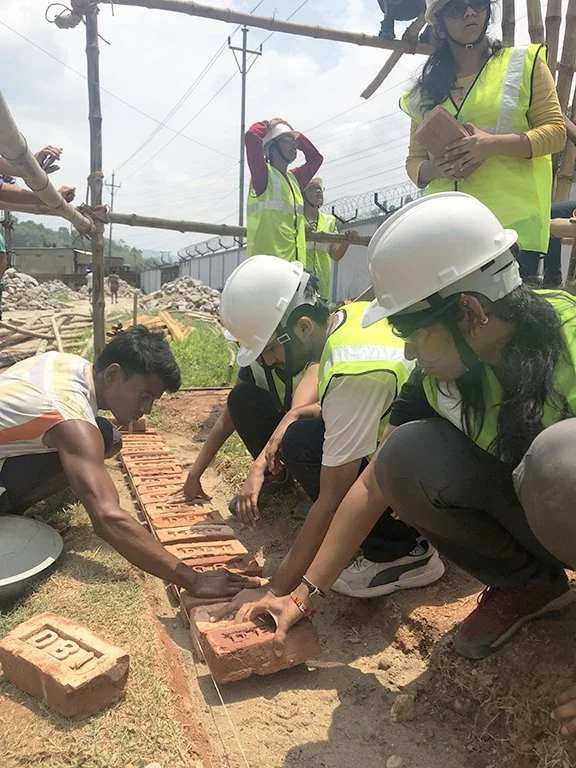
Windows to Vernacular x Cane & Bamboo Training Centre(CBTC), Guwahati
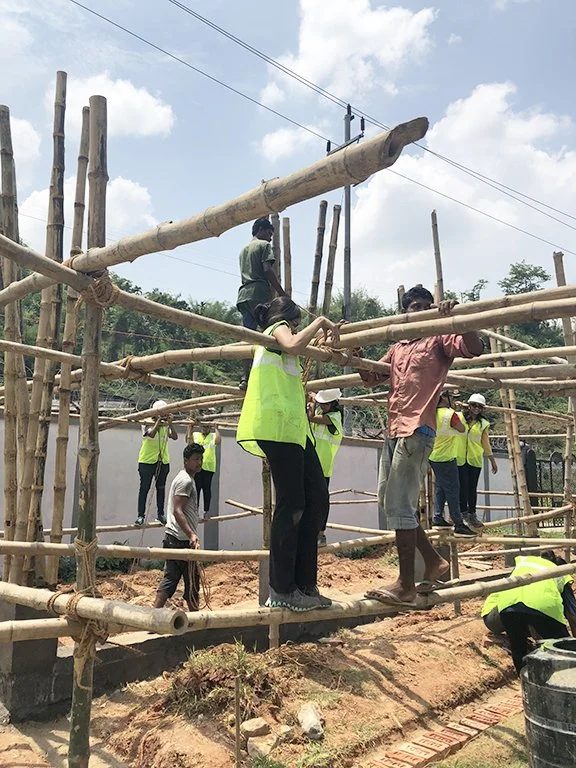
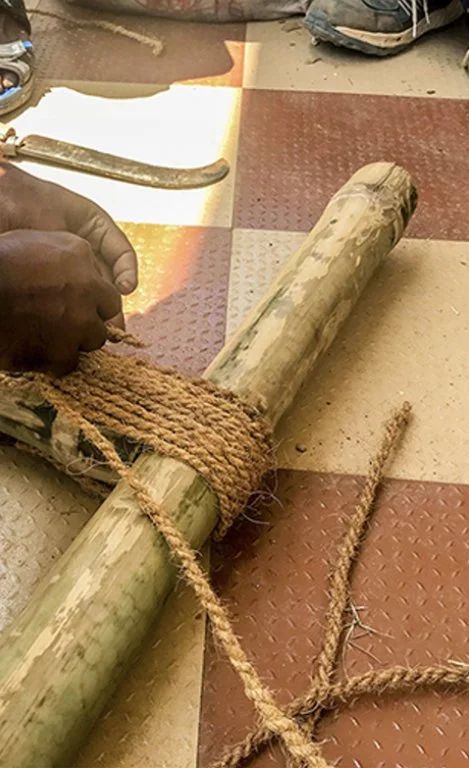
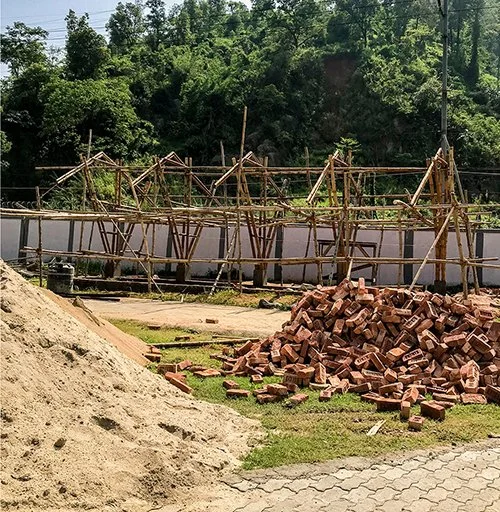
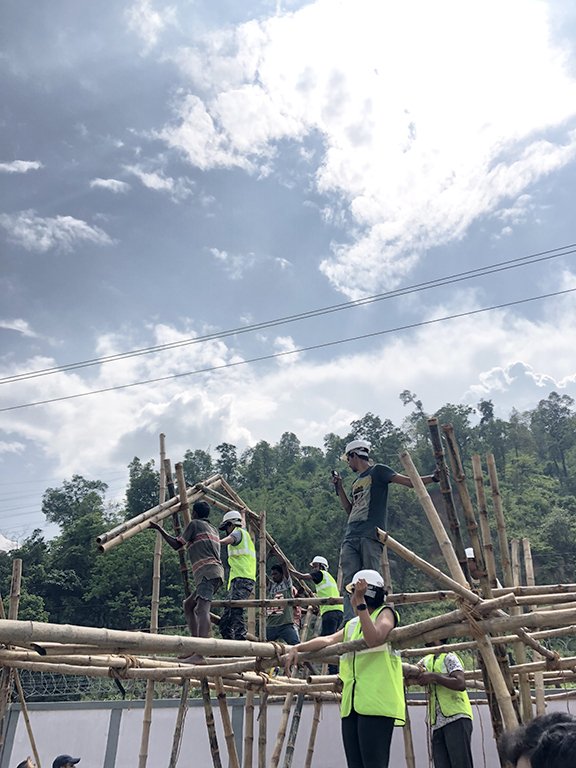
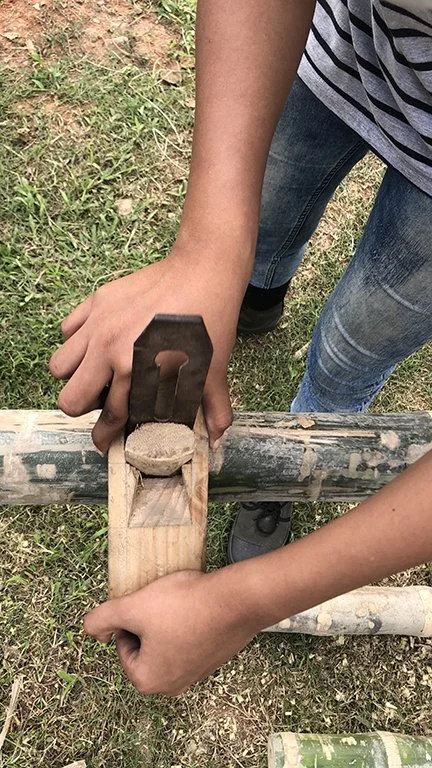
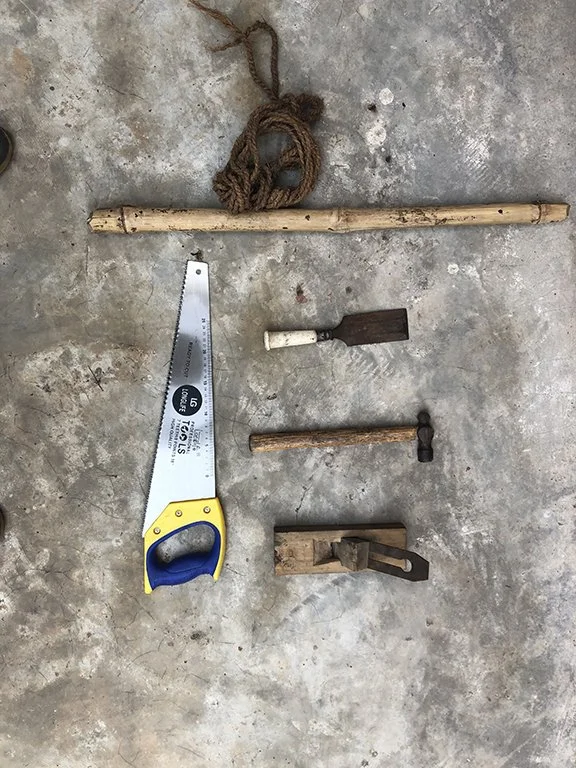
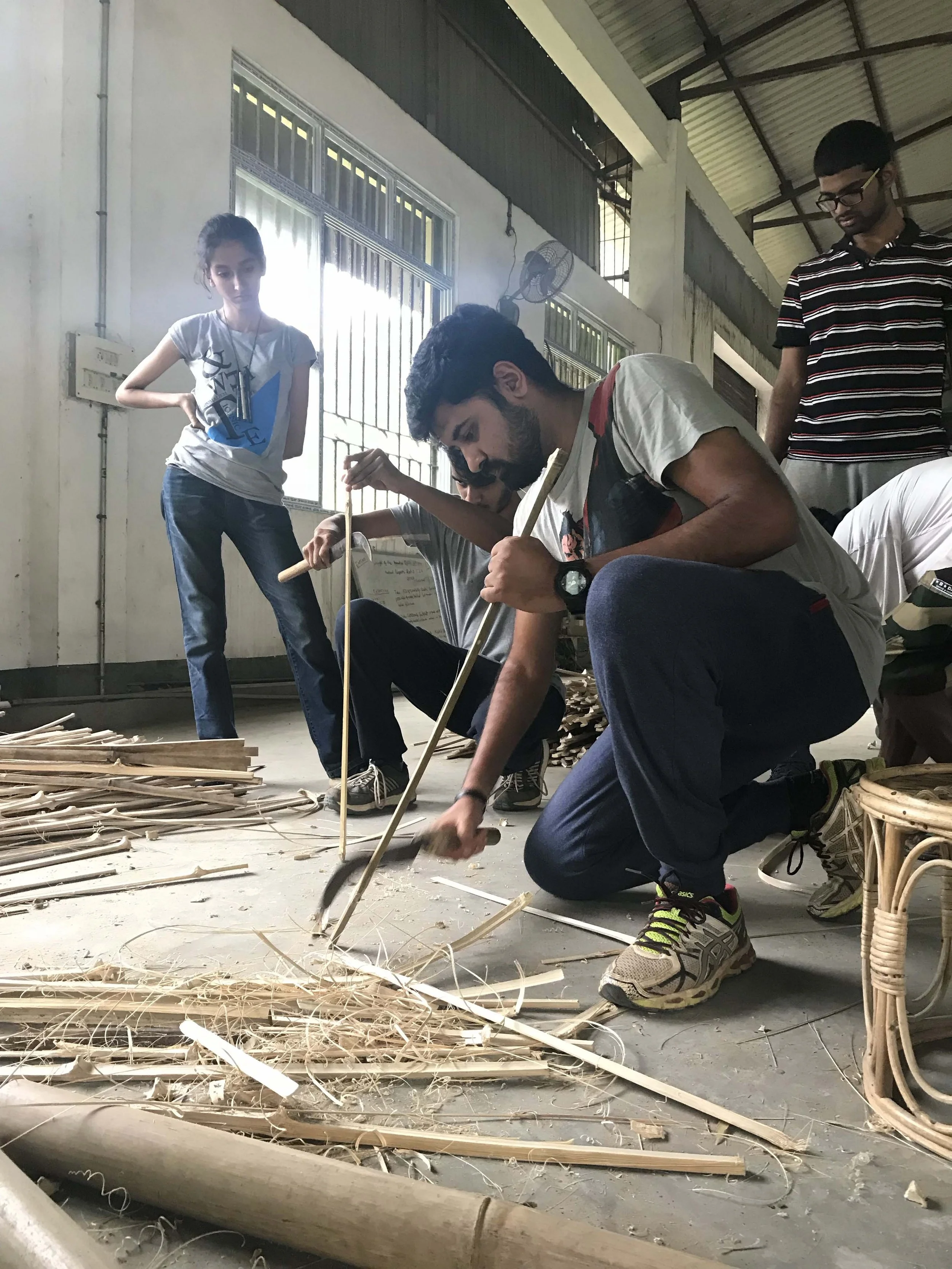
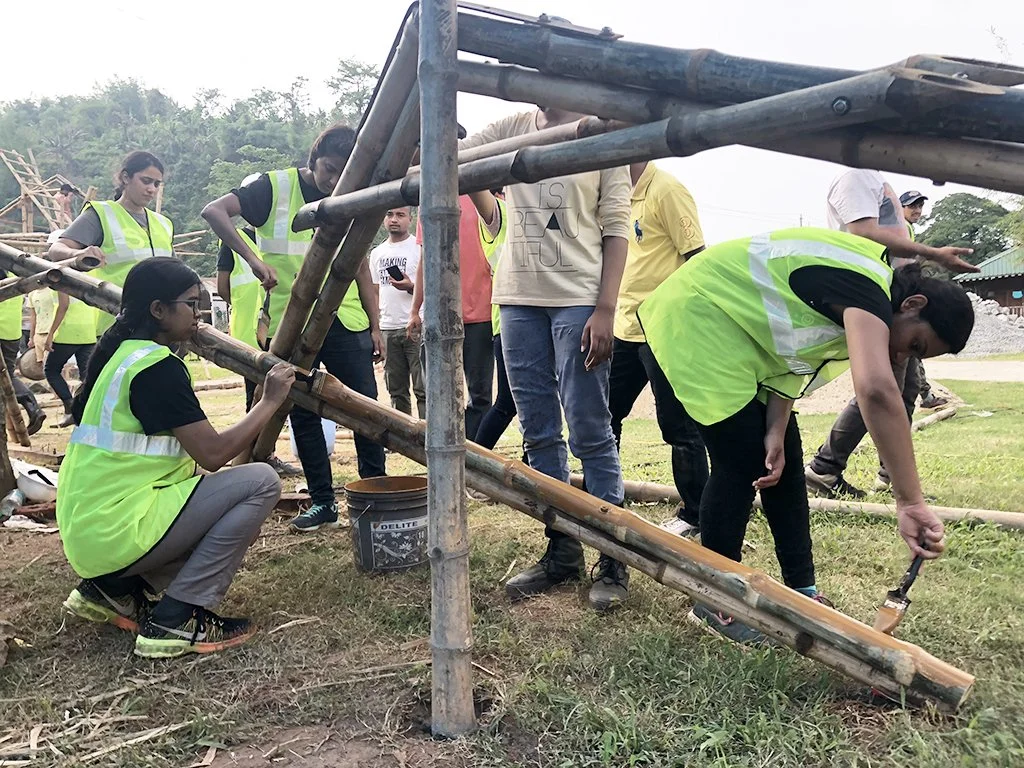
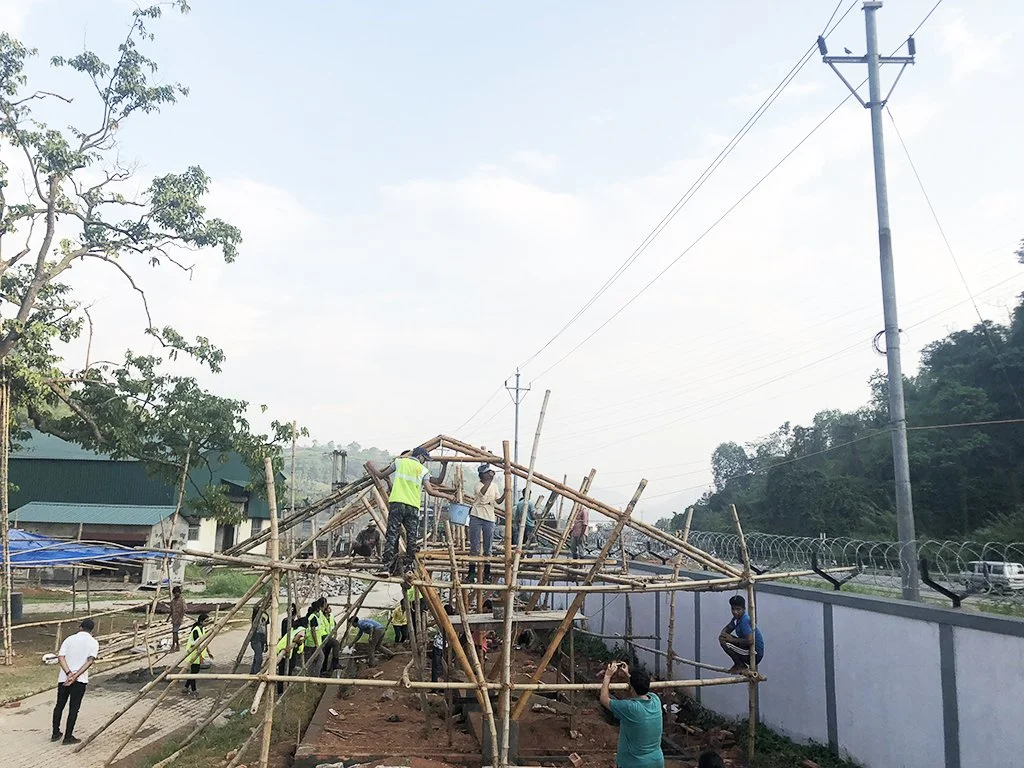
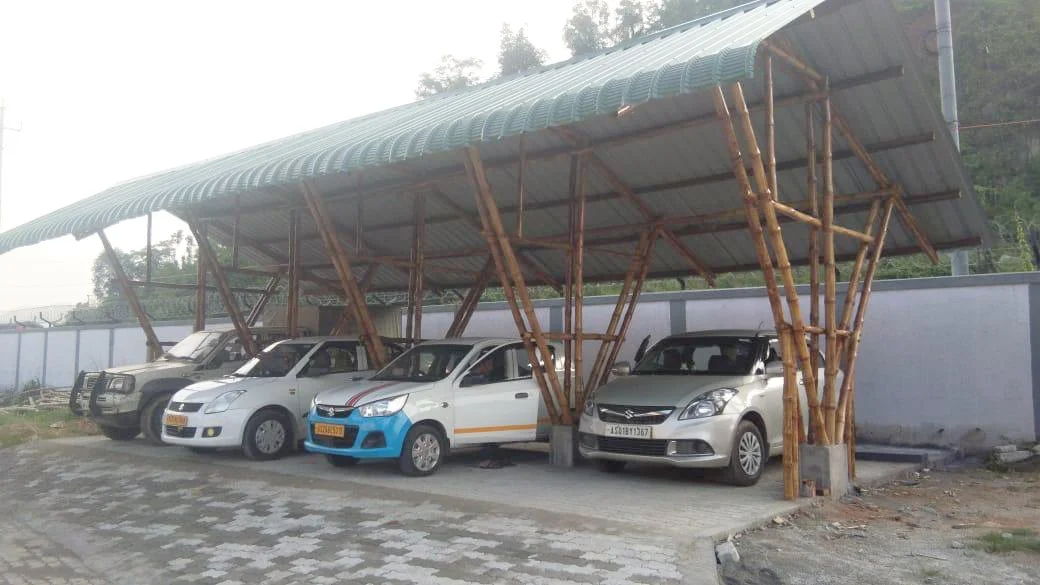
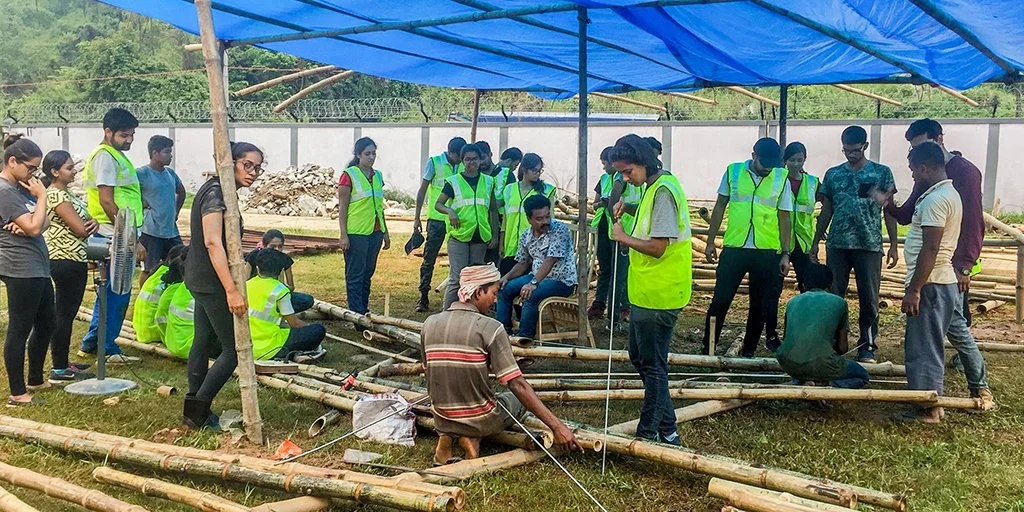
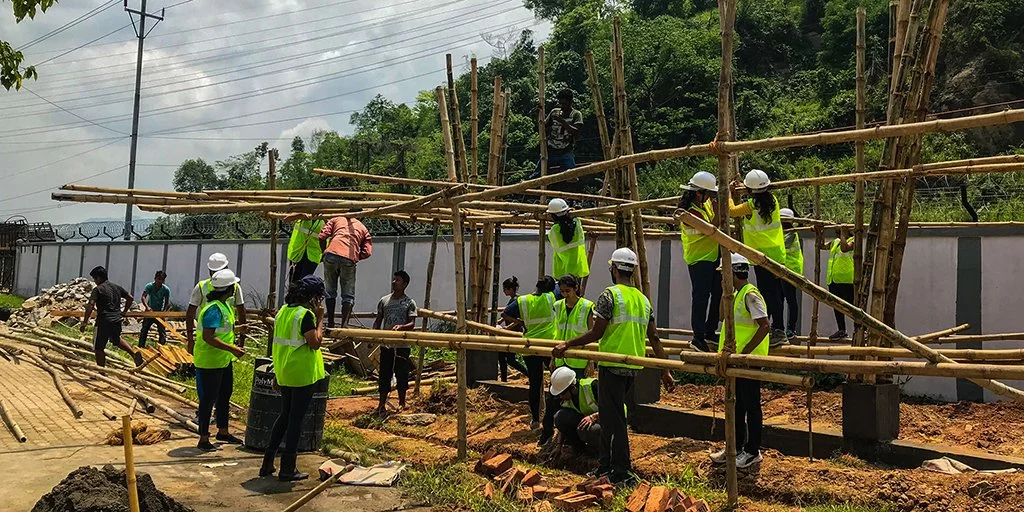
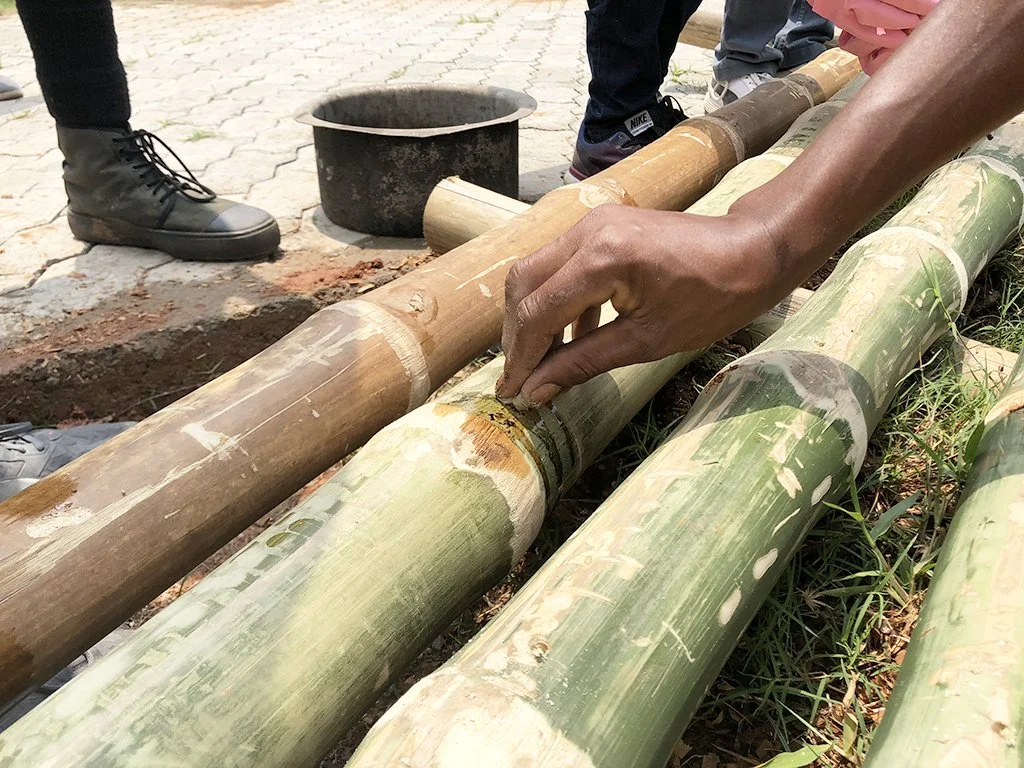
Partnering with the Cane and Bamboo Training Centre (CTBC), Assam, along with students of Academy of Architecture, Mumbai and the Windows to Vernacular team. We explored the use and processes involved with bamboo construction in the 21st century; in one of the extremely heavy rainfall receiving areas the country of India. A step-by-step process involves understanding the details involved at various stages, including identifying, treating, segregating, anchoring and tying. The collaboration outcome was building a two-wheeler parking for the members of the Cane and Bamboo Training Centre.