KUTCH, GUJARAT | WINDOWS TO VERNACULAR
Harmonious Diversification
2017
Art, architecture and geography, co-dependent across Kutch
Crafts as Architecture of Identity
Kutch derives its name from a term meaning a place that alternates between wet and dry conditions; in Sanskrit, it refers to a tortoise. This region is characterised by diverse extremities, where the geography of the Rann, central hills, coastal ports, and Banni grasslands has generated distinct building forms, settlement patterns, and craft traditions within a single district.
This study focuses on the co-dependence of art and architecture, examining how the crafts of the Khatri, Vankar, Rabari, Kumbhar, Lohar, and Meghwal communities are inseparable from the spaces they inhabit, the materials available in their environment, and the building typologies shaped by local geology and climate.
The 2001 earthquake marked a significant rupture, effectively eradicating age-old traditional knowledge systems and vernacular building technologies. This research documents the conditions preceding this event, the elements that survived, and the reconstruction efforts undertaken in its aftermath by institutions such as Hunnarshala and Kala Raksha.
KUTCH - THE PERCEPTION
A land of stark beauty
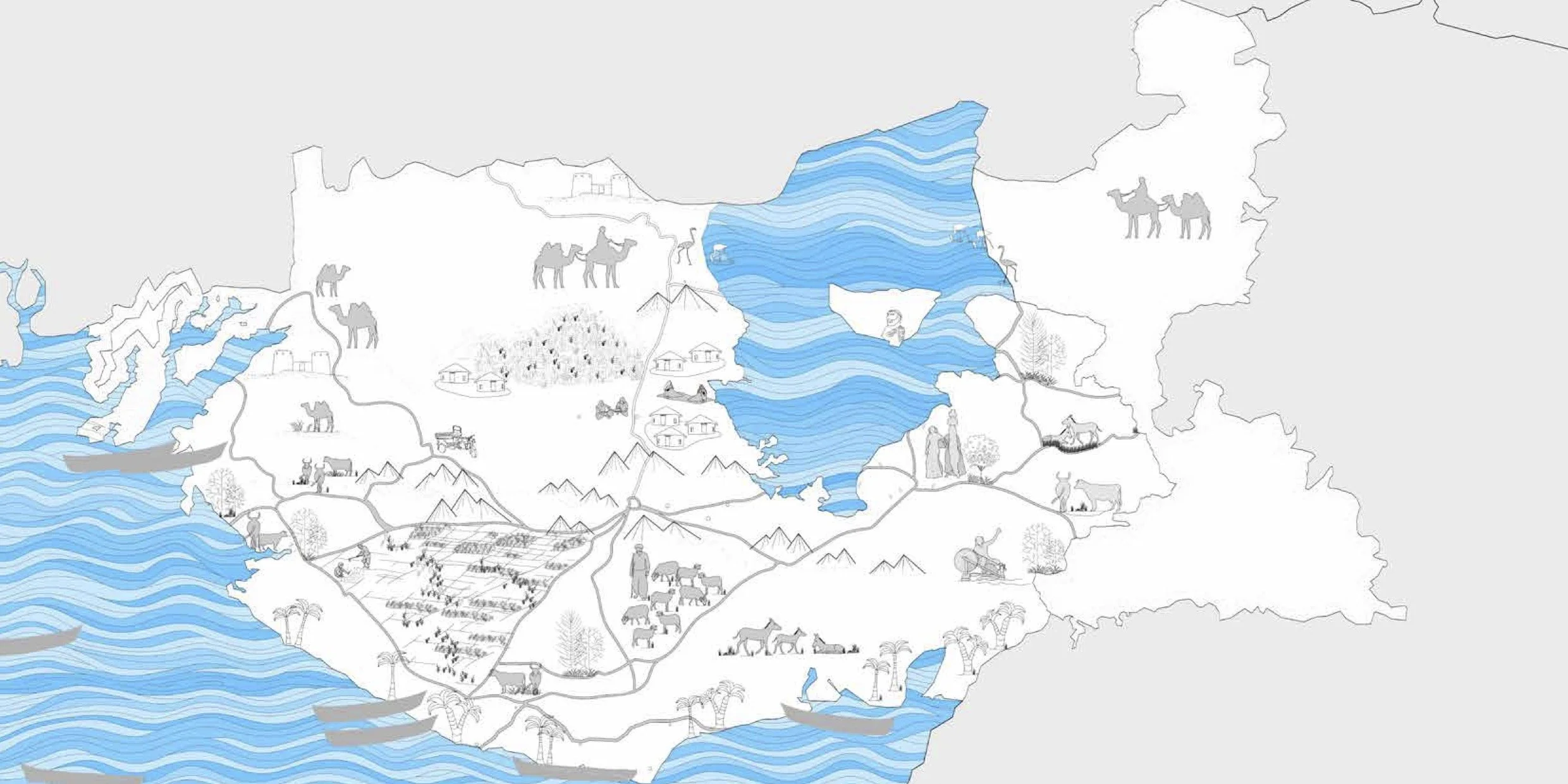
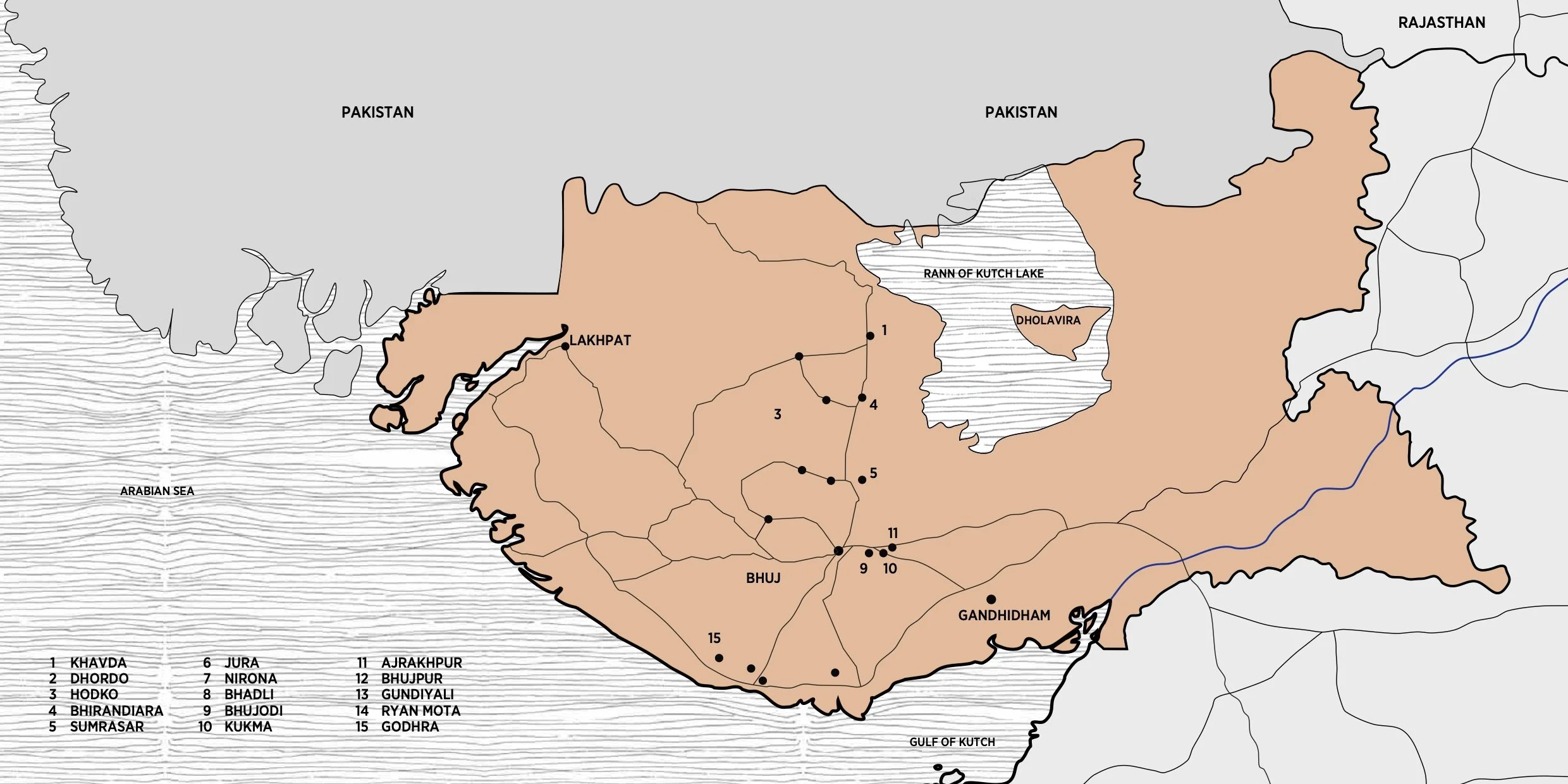
45,674 sq km, the largest district in India. A gradual yet stark graduation from 350 km of coastline to lush fields, central Jurassic hill features, Banni grasslands and the Great Rann, all within approximately 250 km.
Kutch has served as a crossroads of human civilisation since antiquity, featuring one of the oldest known ports, references in Greek texts from the era of Alexander, and over 5,000 years of Harappan civilisation throughout the district. The Mesozoic Jurassic sandstone of the central hills, the tidal mudflats of the Rann, and the ancient seismic fault line are not merely geological features; they directly determine building typology, material selection, structural forms, and settlement patterns across the region.
A critical geographic feature of Kutch is the seismic fault line traversing the district. The 1819 earthquake destroyed numerous towns and villages and altered the course of the Indus River, which now flows through present-day Pakistan. The 2001 earthquake, a more recent catastrophe, nearly erased traditional building knowledge from collective memory. These seismic events have had profound implications for the vernacular and traditional building typologies of the region.
"The crafts became an identity, skills a tool and product a symbol. The skills became a way to express social, cultural and religious beliefs, giving another layer of value, significance and meaning to the built environment."
The imperative to express, arising from both the distinctive landscapes and a sense of separation from the mainland, profoundly influenced the region's skills and utilitarian objects. Expression became a necessity. Crafts functioned as a medium for place-making, enriching the constructed environment's role in daily life through the language and quality of the connections these arts embody and facilitate.
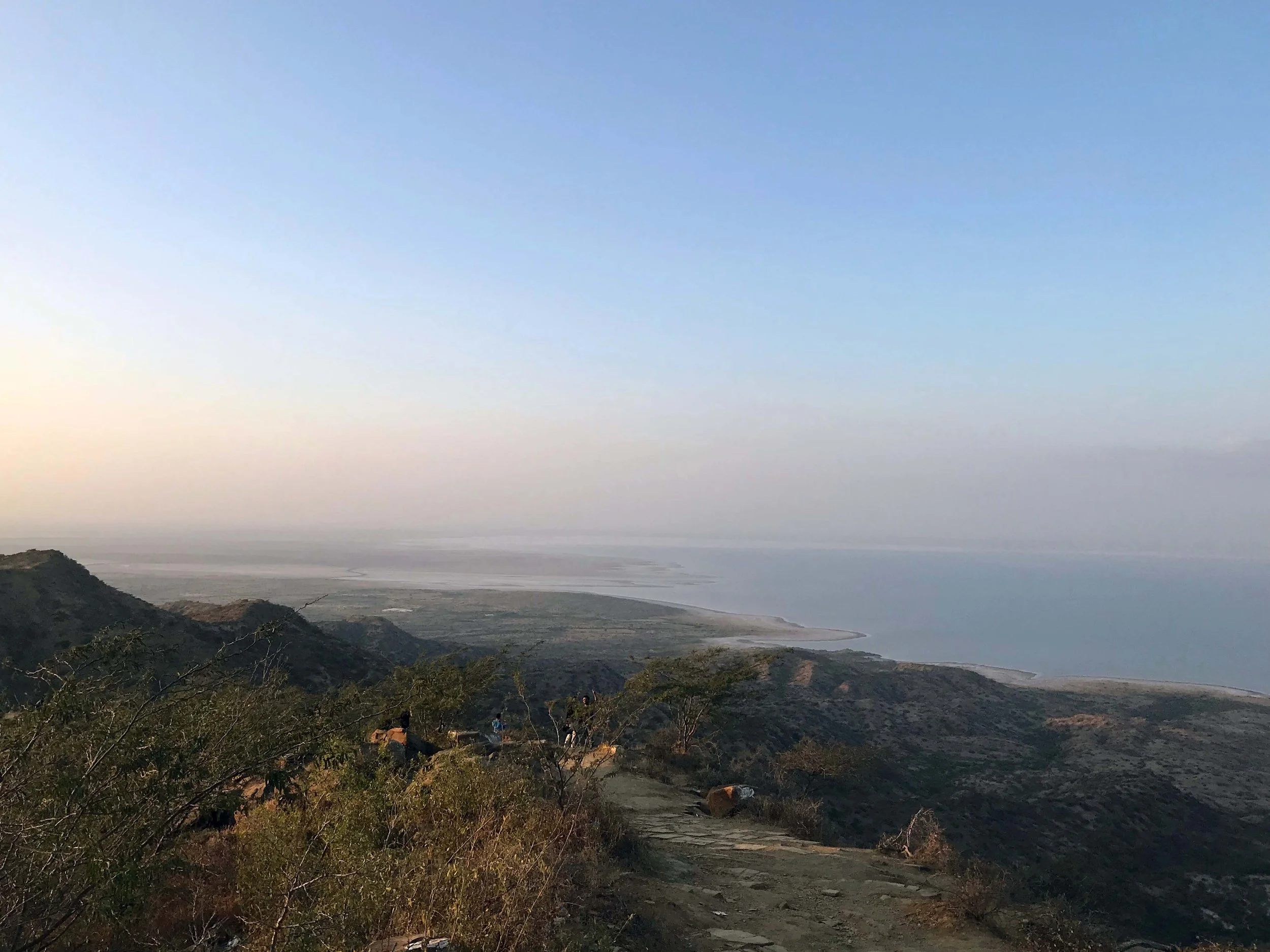
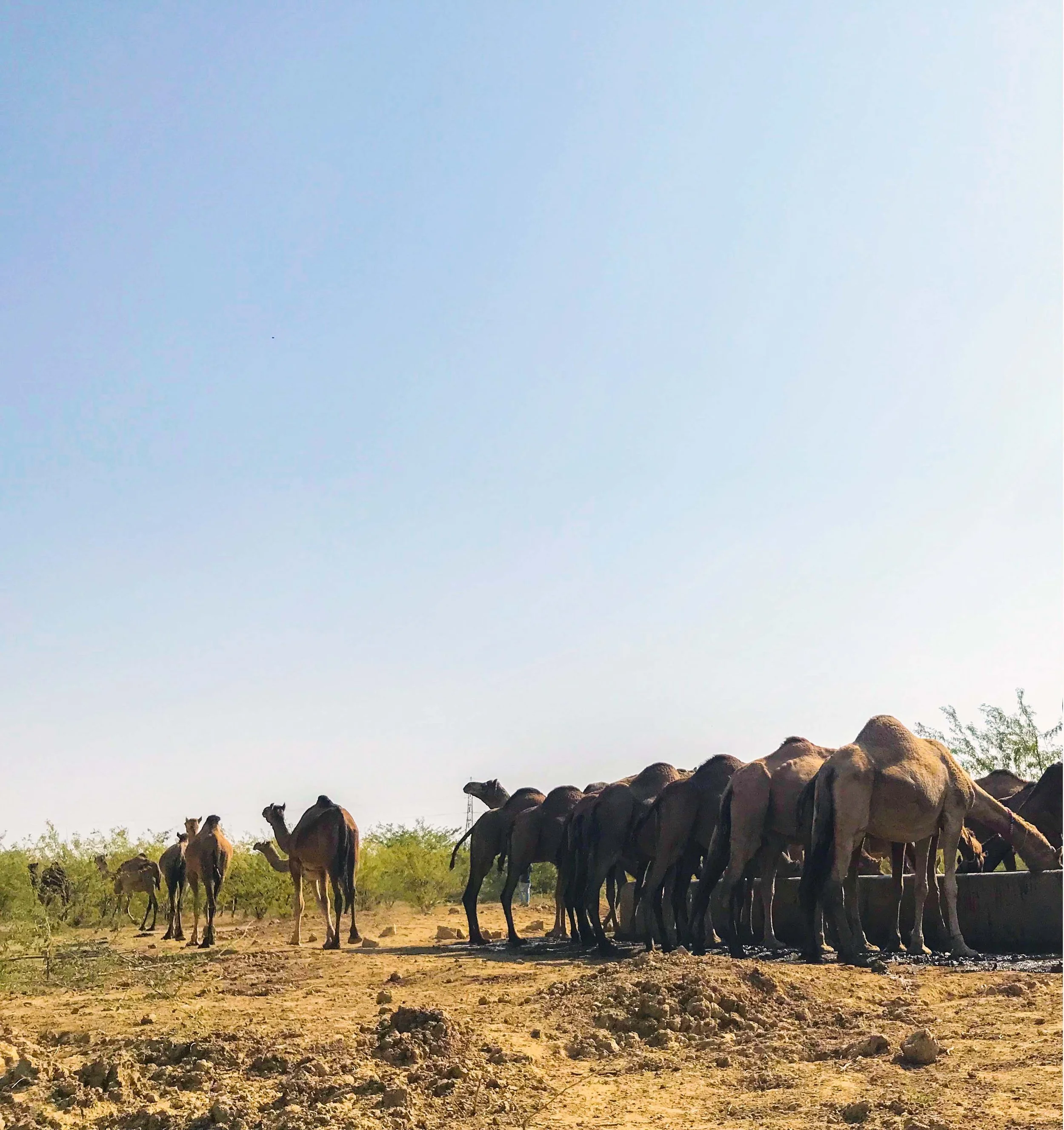
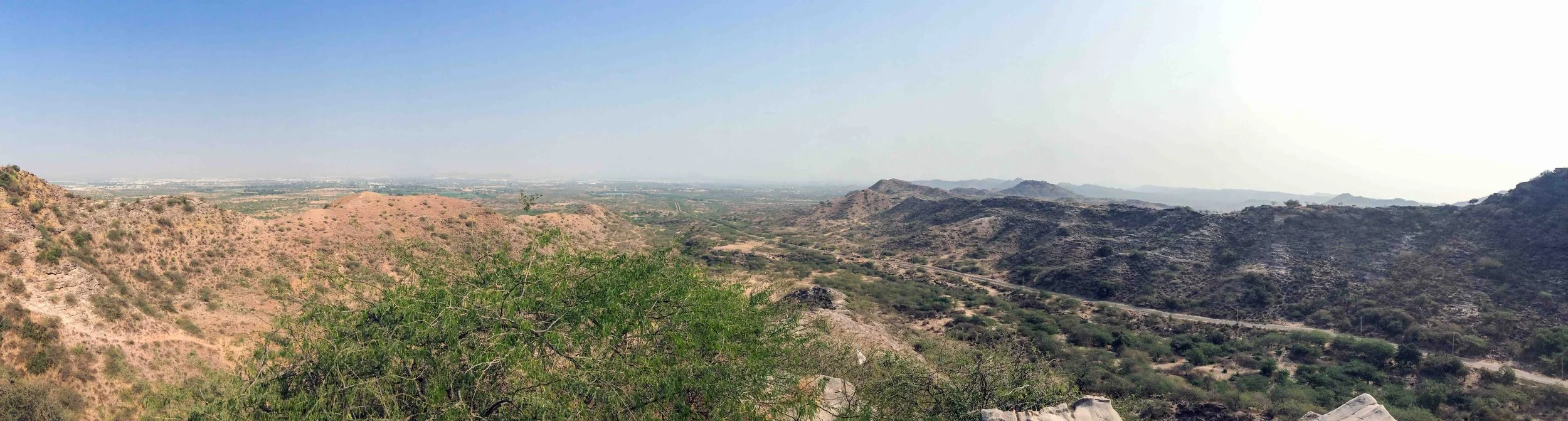
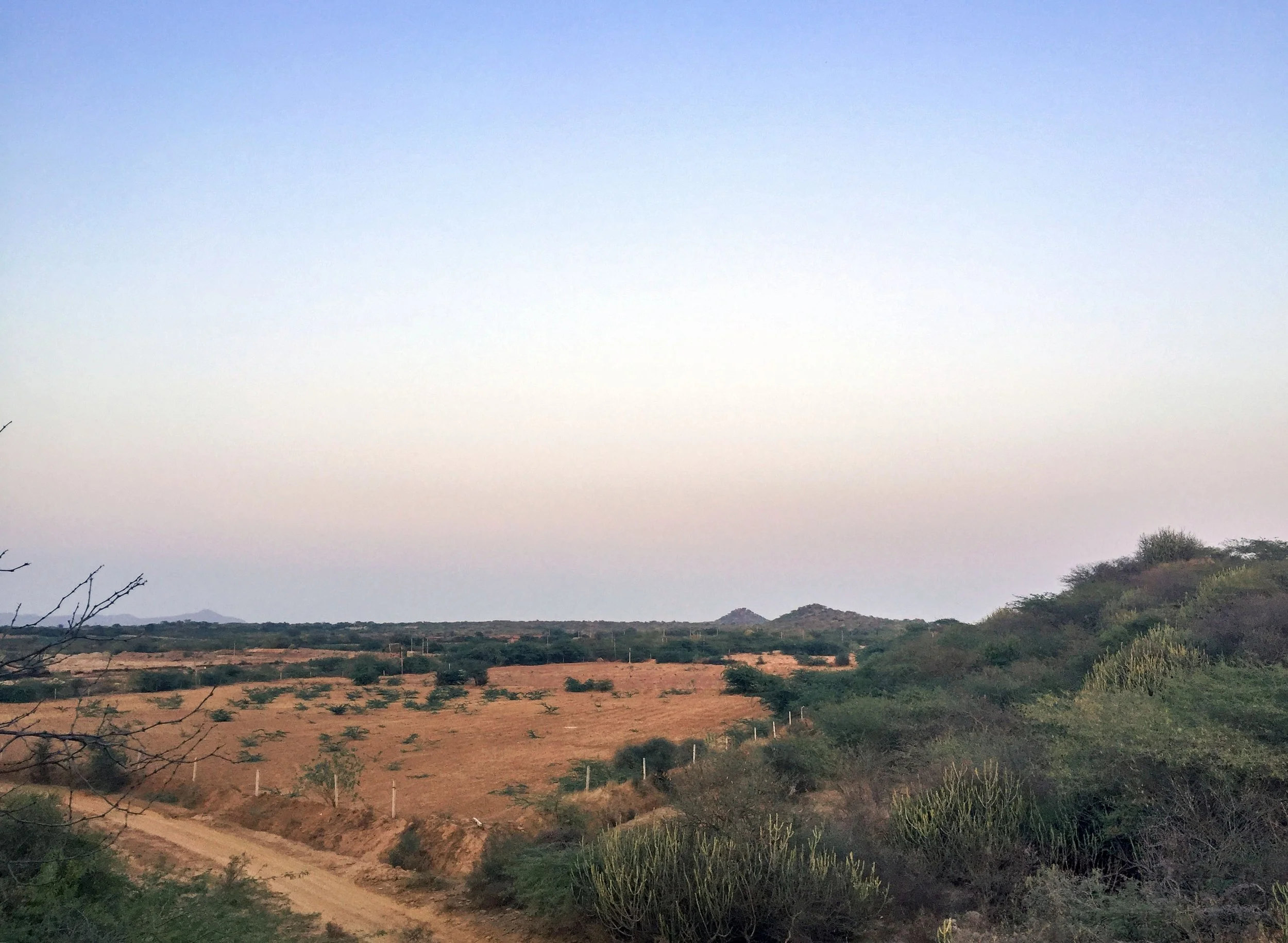
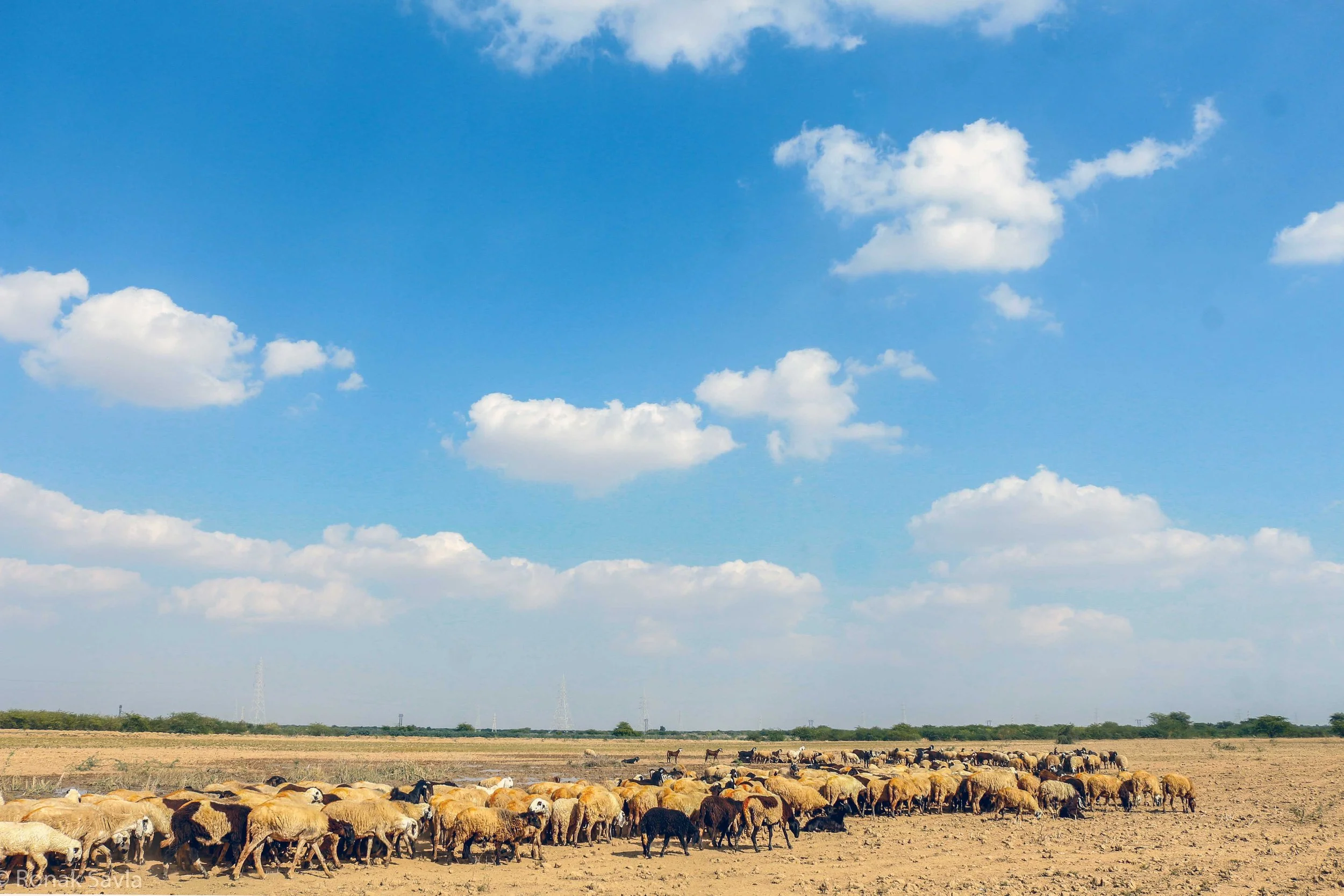
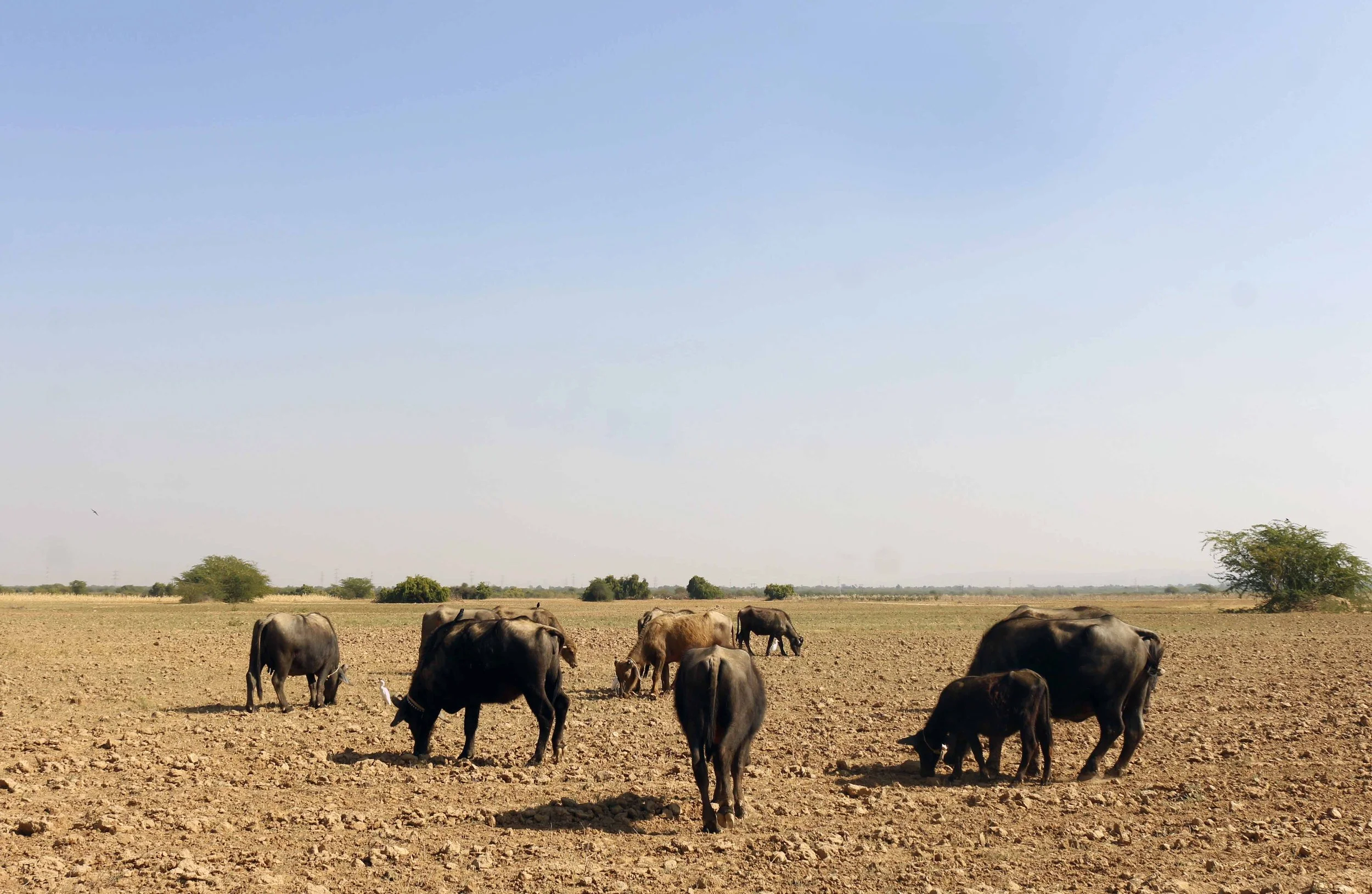
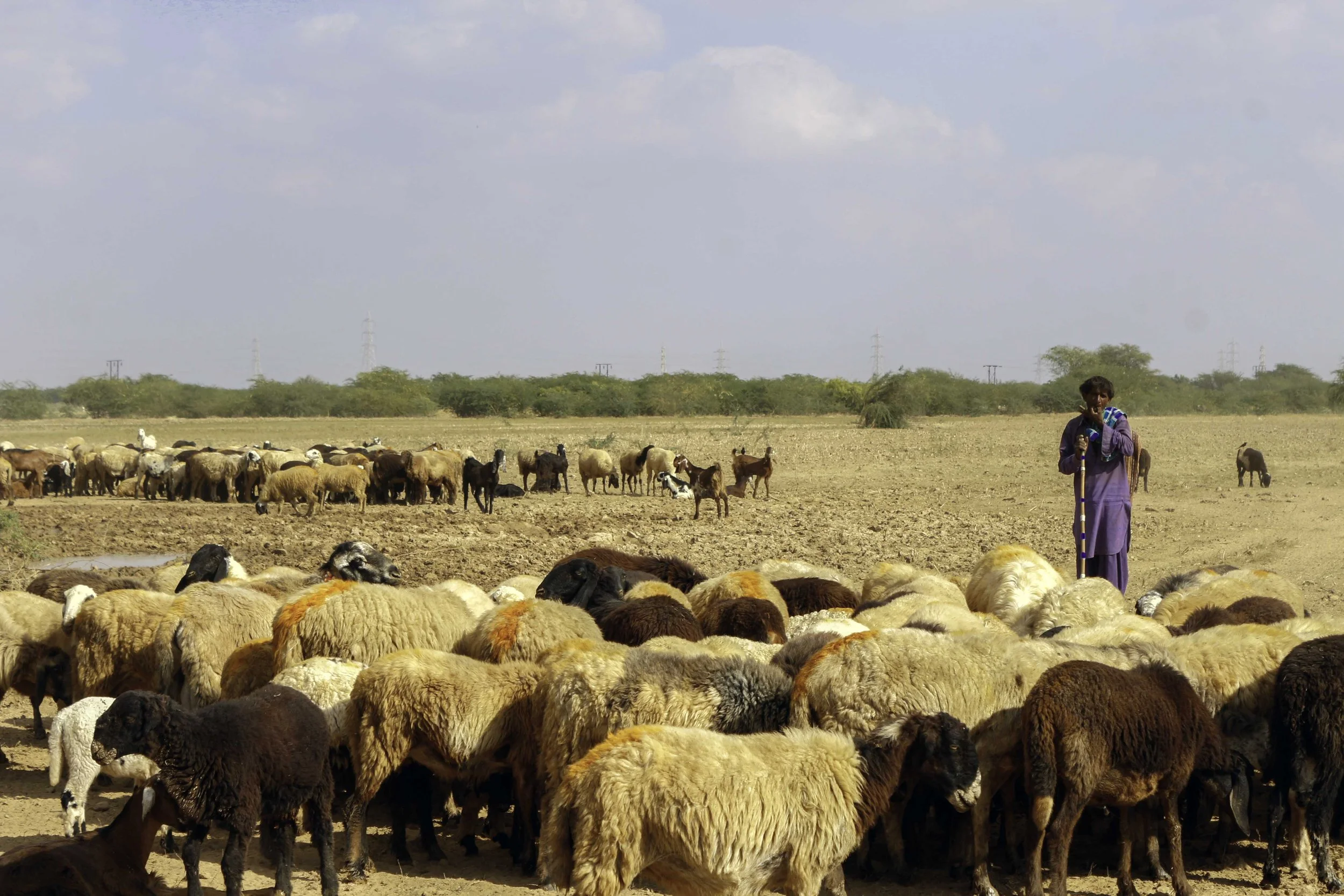
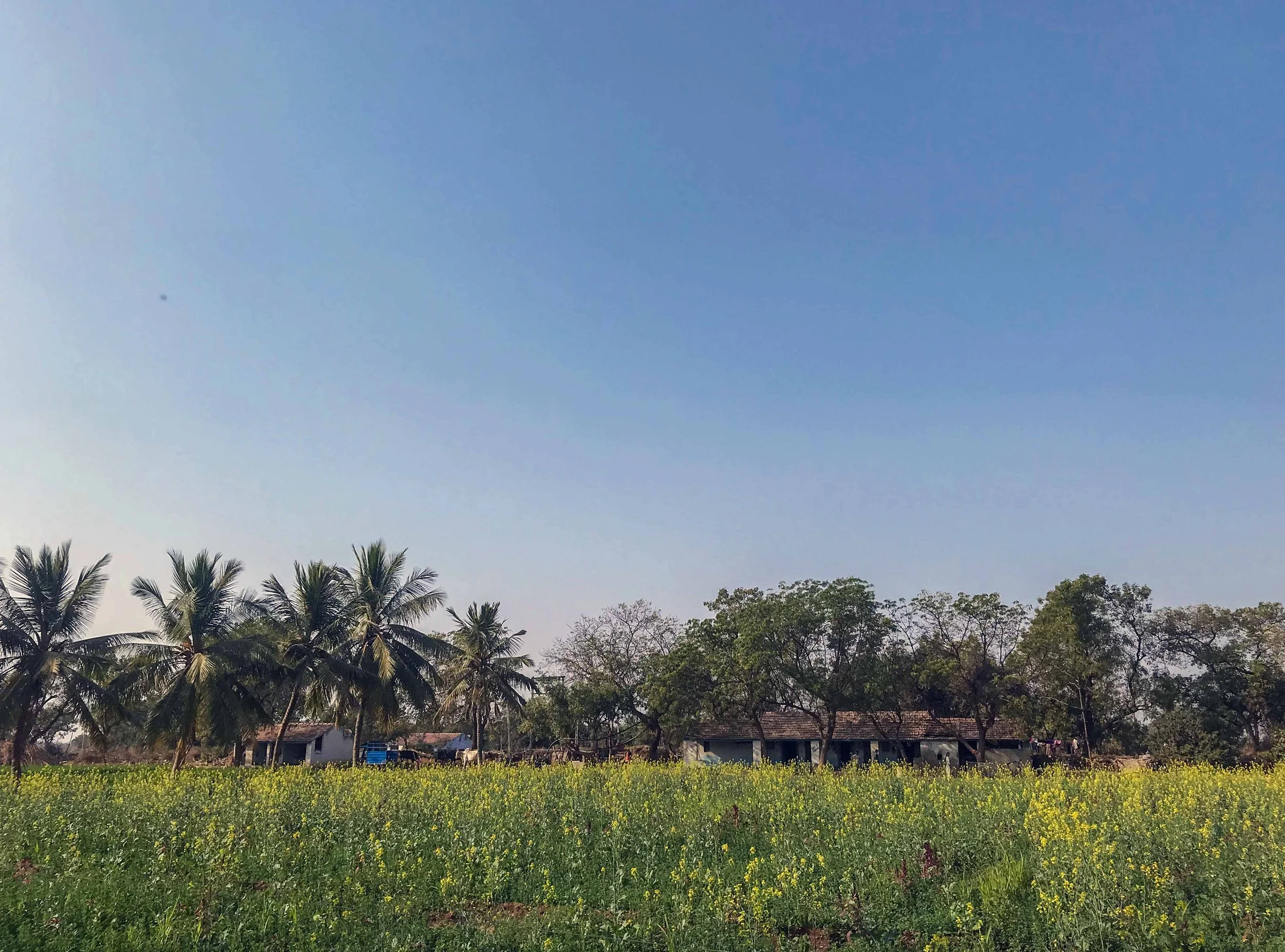
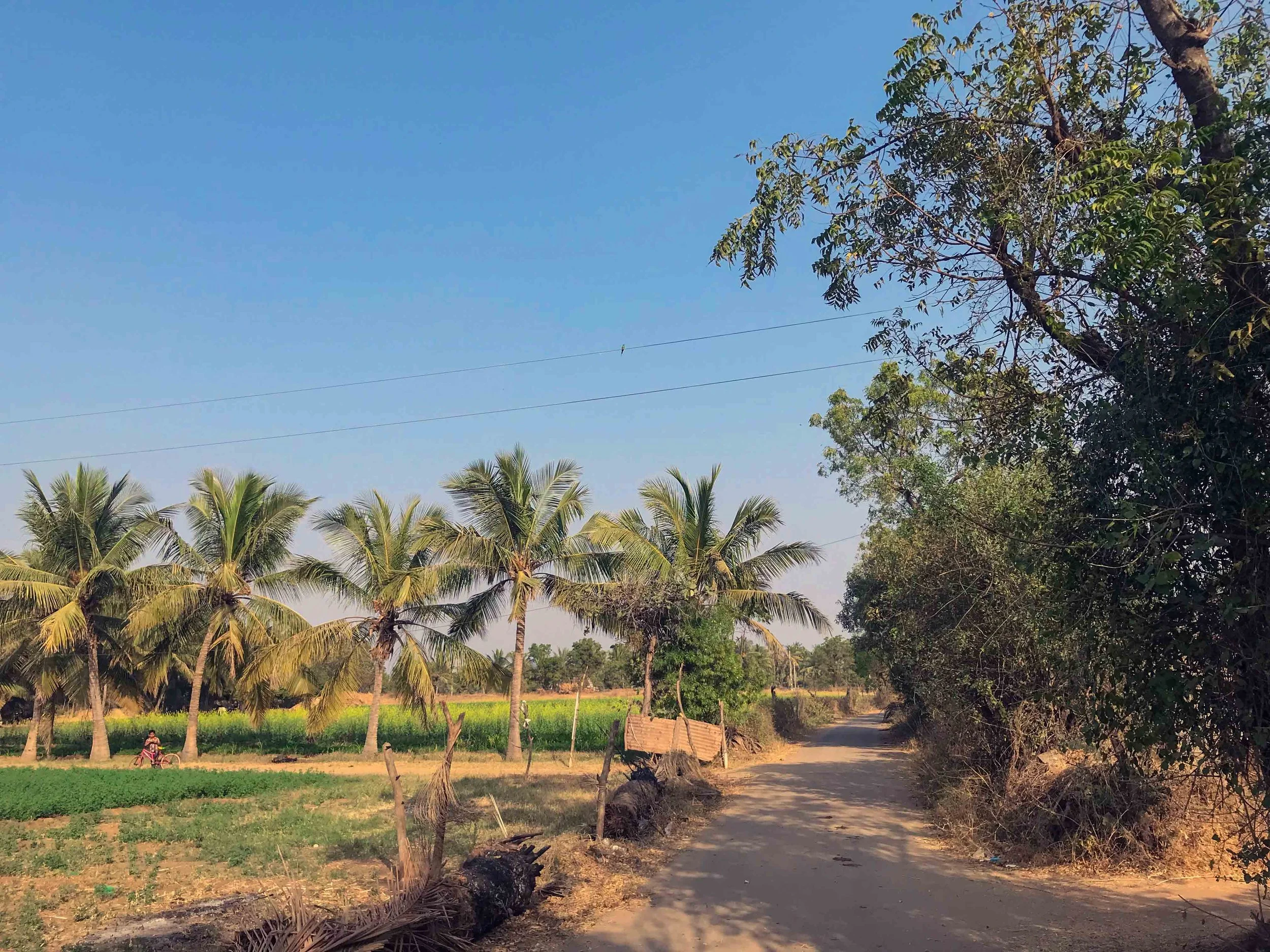
KUTCH LANDSCAPES
Geography as the first architect
A marked transition in building typologies, settlement patterns, and spatial organisation is evident when moving from the affluent coastal towns to the pastoral grazing grounds and deserts. The built environment directly responds to climate, geography, material availability, and the occupants' occupations, resulting in three distinct architectural forms within a single district.
SOUTH : COASTAL REGION
Sea, Trade & Stone
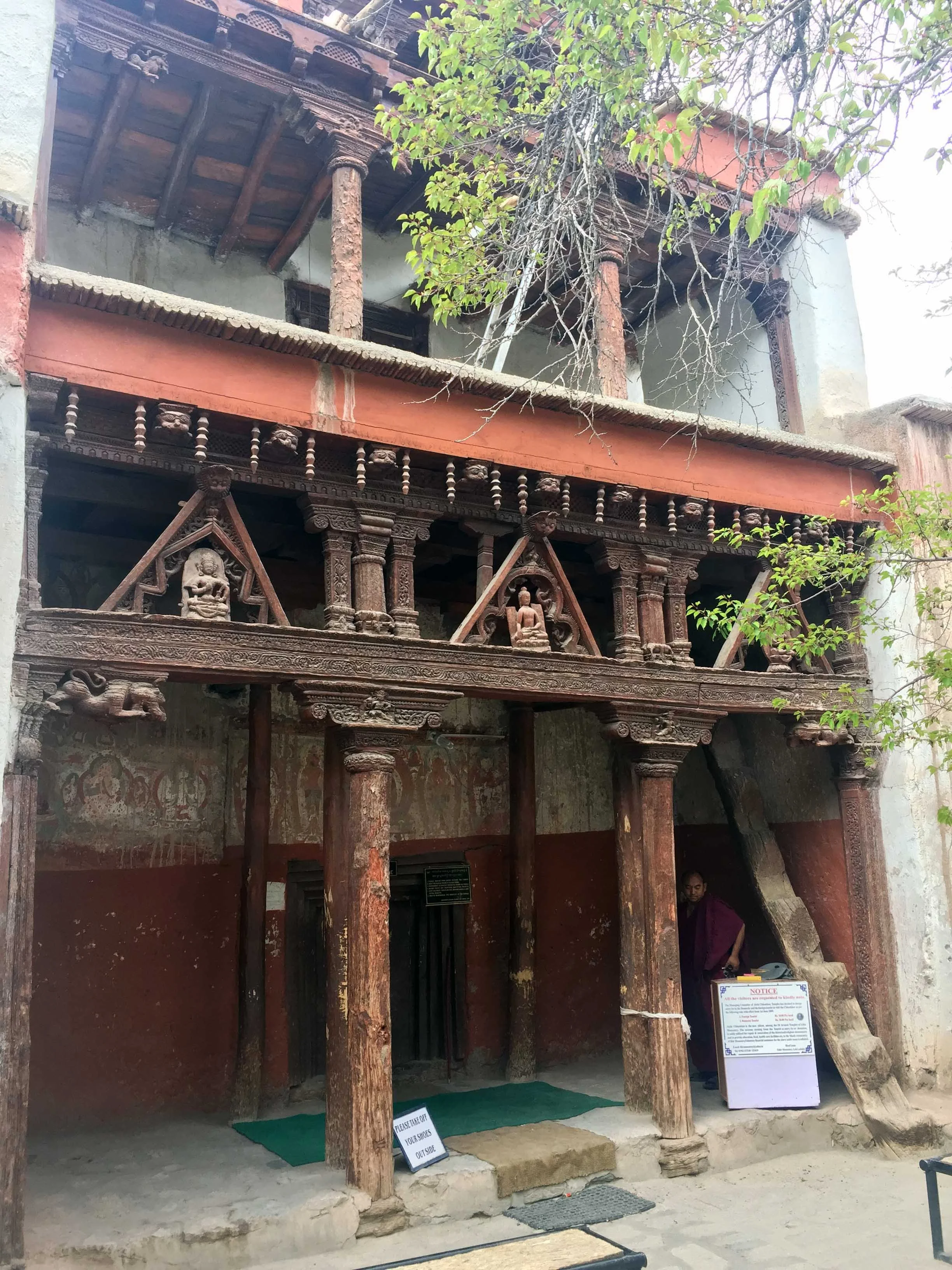
The southern and south-western areas of the district were along archaic trade routes leading to the ancient port towns of Mundra and Mandvi. Interaction with foreign traders, bringing Batik to Indonesia, Ajrakh to the Arab world, left an impression on architecture and lifestyle. Towns have richer architectural detailing: ornamented wooden doors, column brackets, and stone masonry with mud mortar. Musafir Khanas (traveller rest houses) adorned with frescoes and detailed stonework lined the routes. Houses have courtyard plans, upper floors, pitched roofs, and flat terraces.
STONE MASONRY
WOODEN BRACKETS
FRESCO WORK
MUSAFIR KHANA
VAV (STEPWELL)
CENTRAL : HILL REGION
Courtyard, Chowk & Community
The central region of the bowl, created by the Jurassic hill features, features both rectangular tube houses and larger square courtyard houses. Towns and villages have distinct planning patterns. The chowk is a centre of activity, transitioning into a bus stand during the day, a meeting space for village elders in the evening, and a market over the weekend. A small platform called Otla at the entrance allows elder members to converse and observe. The gate leads to the Osari, a raised platform for guests, before the angan opens up. The columnar-jointed Mesozoic Sandstone of Bhadali is used in dry masonry construction here, by craftsmen whose knowledge is nearly extinct.
OTLA
OSARI
CHOWK
MESOZOIC SANDSTONE
COURTYARD HOUSE
NORTH : BANNI + RANN
Bhoonga, Vandh & Lipan
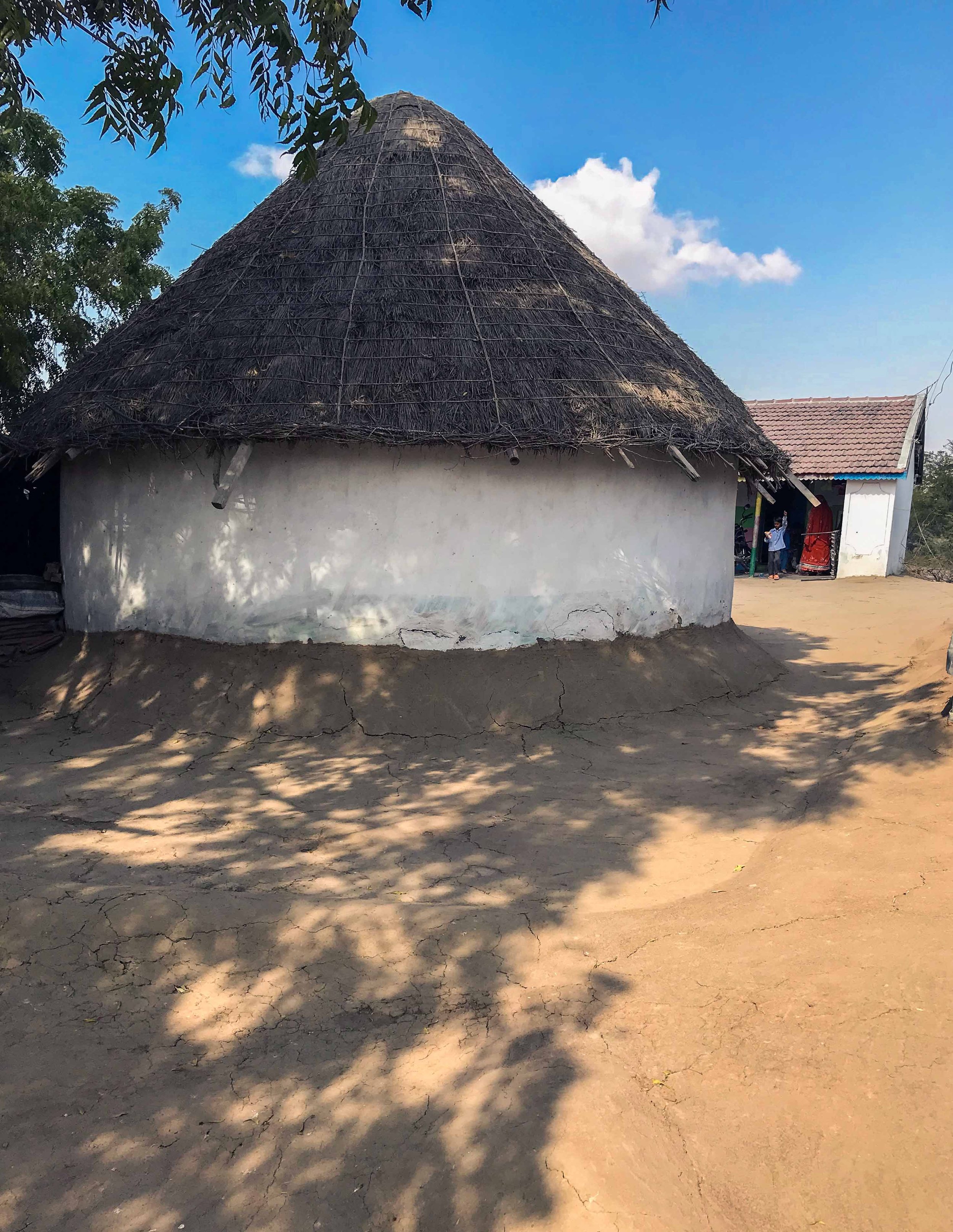
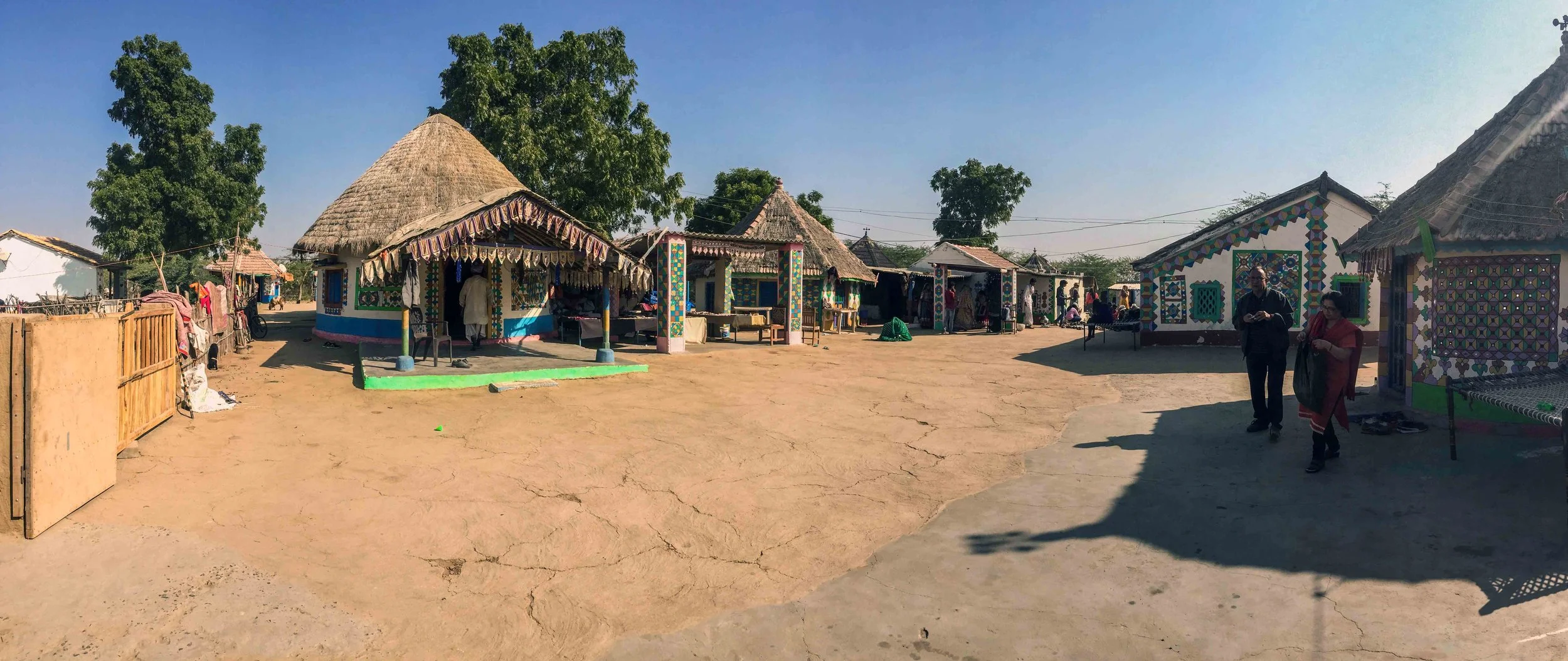
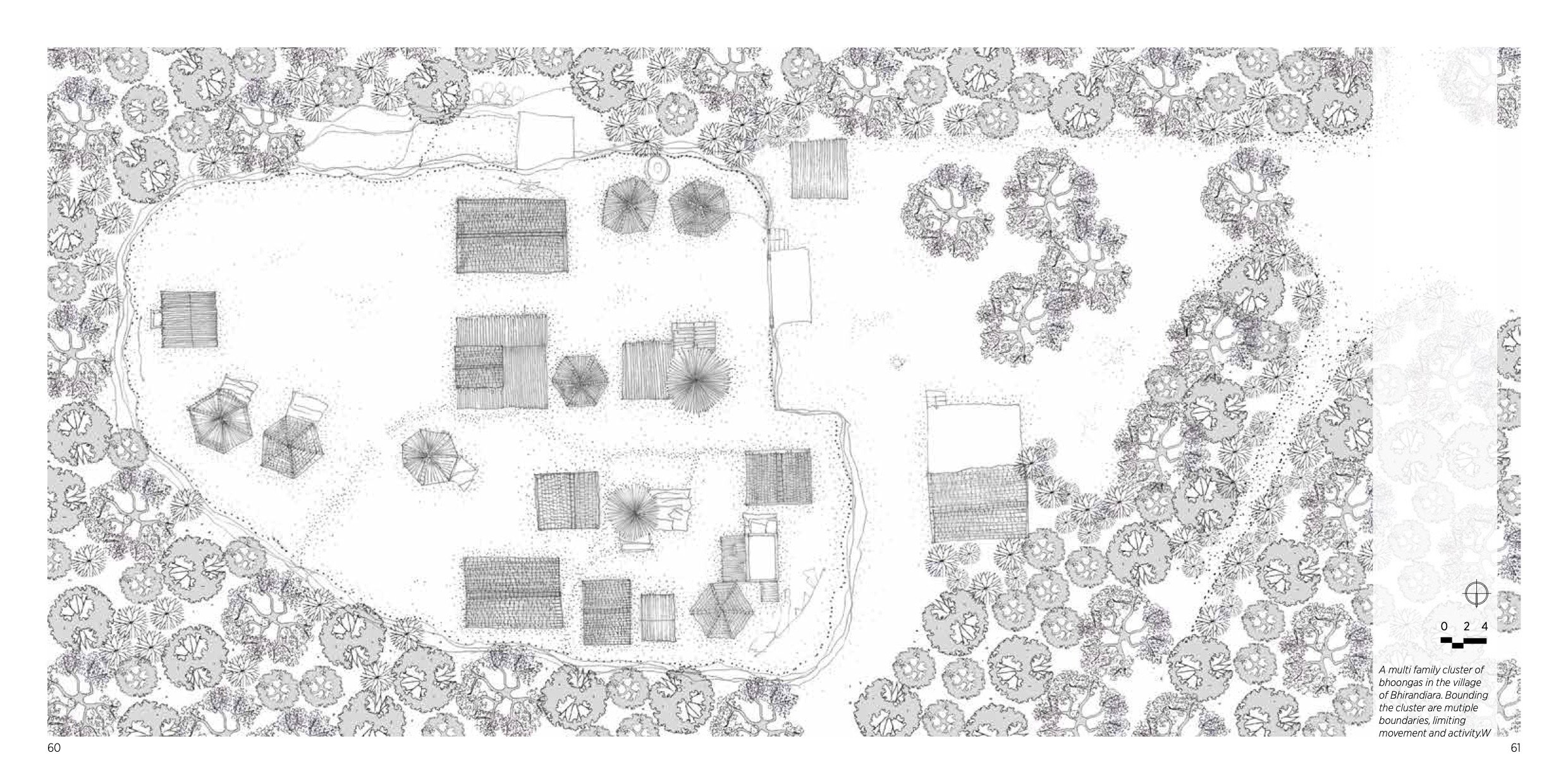
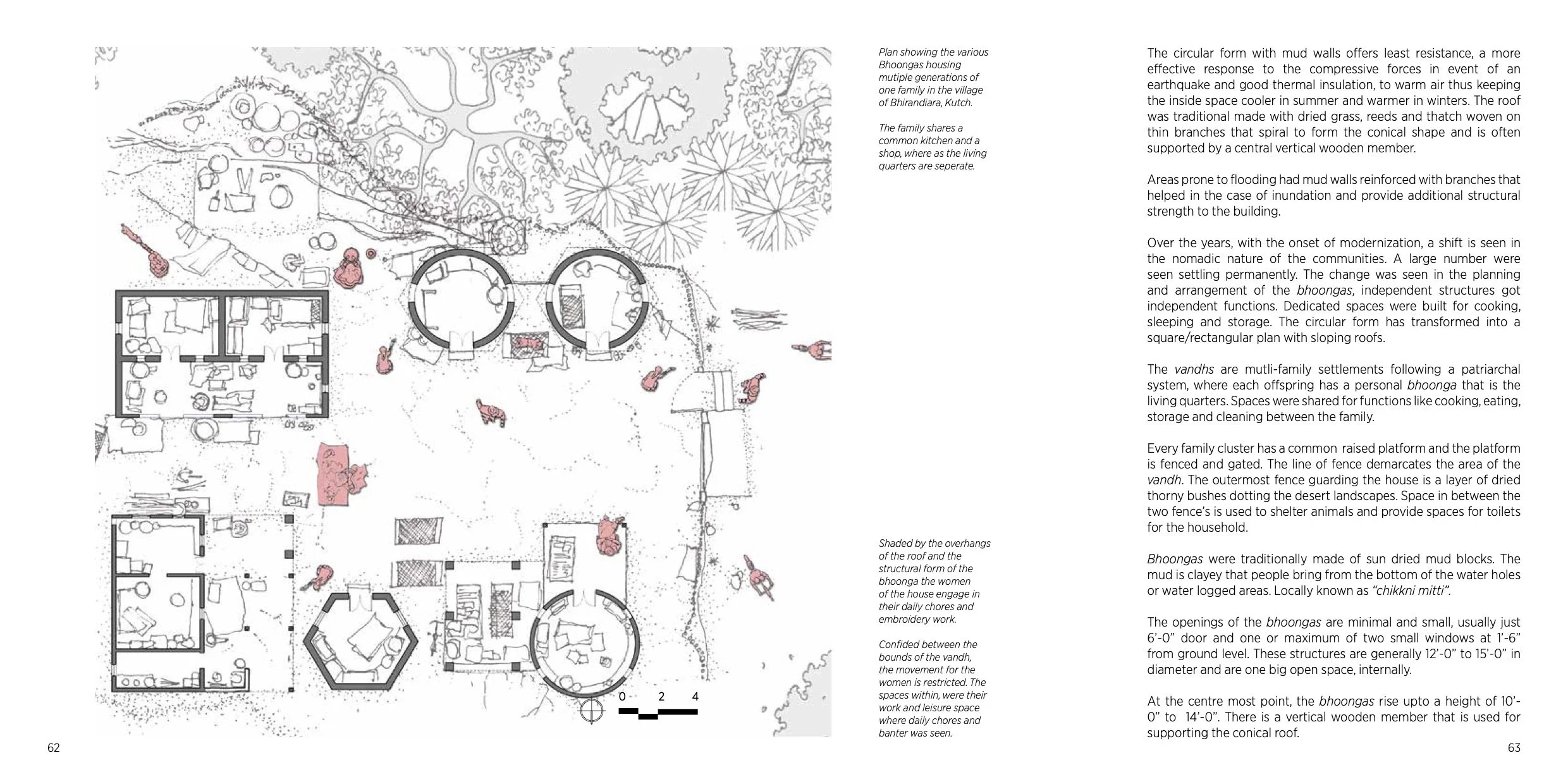
The northern region comprises the Banni grasslands and the Great White Desert, where rainfall occurs only once every three to four years. Due to the scarcity of stone and wood, houses are constructed from mud and thorny bushes. Pastoral communities reside in small settlements known as Vandhs, which consist of clusters of circular mud huts (bhoongas) with conical thatched roofs. The circular mud-walled form provides optimal resistance to earthquake compressive forces and effective thermal insulation. Interiors are adorned with Lipan Kaam, a relief technique using mud, glass, and mirror. Each bhoonga serves as a canvas of colour, complementing the stark landscape and expressing what the environment cannot.
BHOONGA
VANDH
LIPAN KAAM
CONICAL THATCH
CHIKKNI MITTI
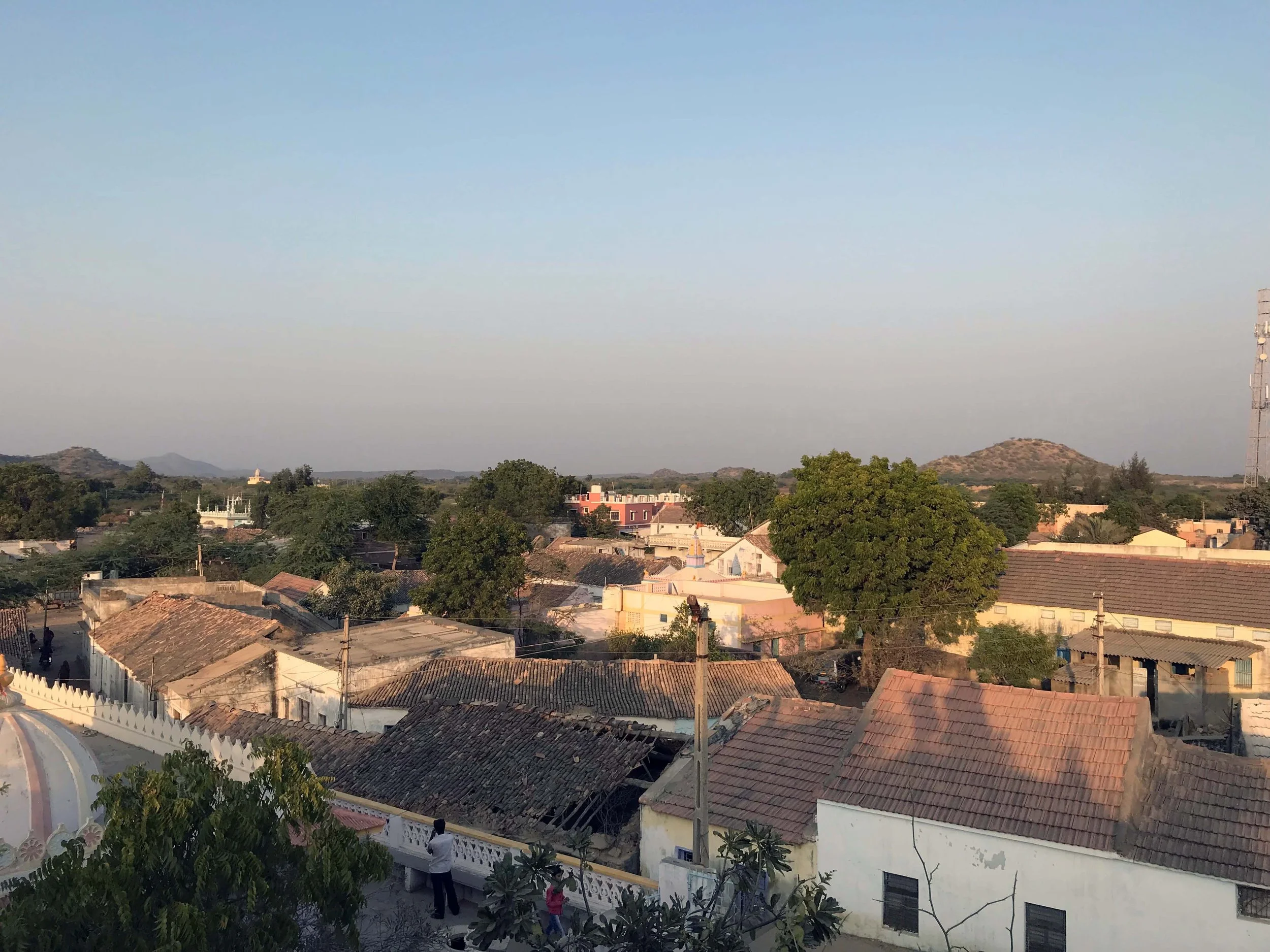
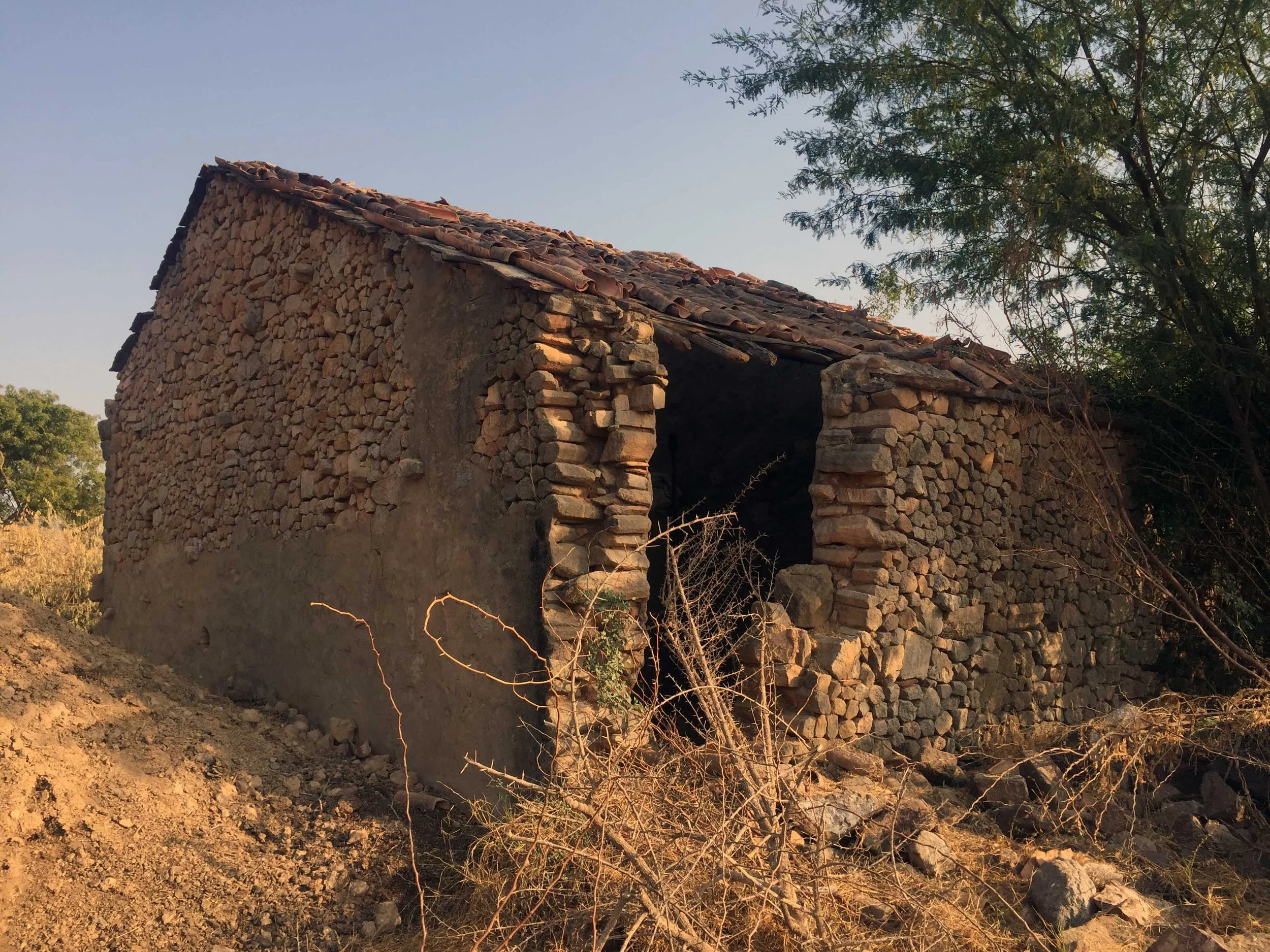
THE BHOONGA : BHIRANDIARA, BANNI
A circle of mud and memory
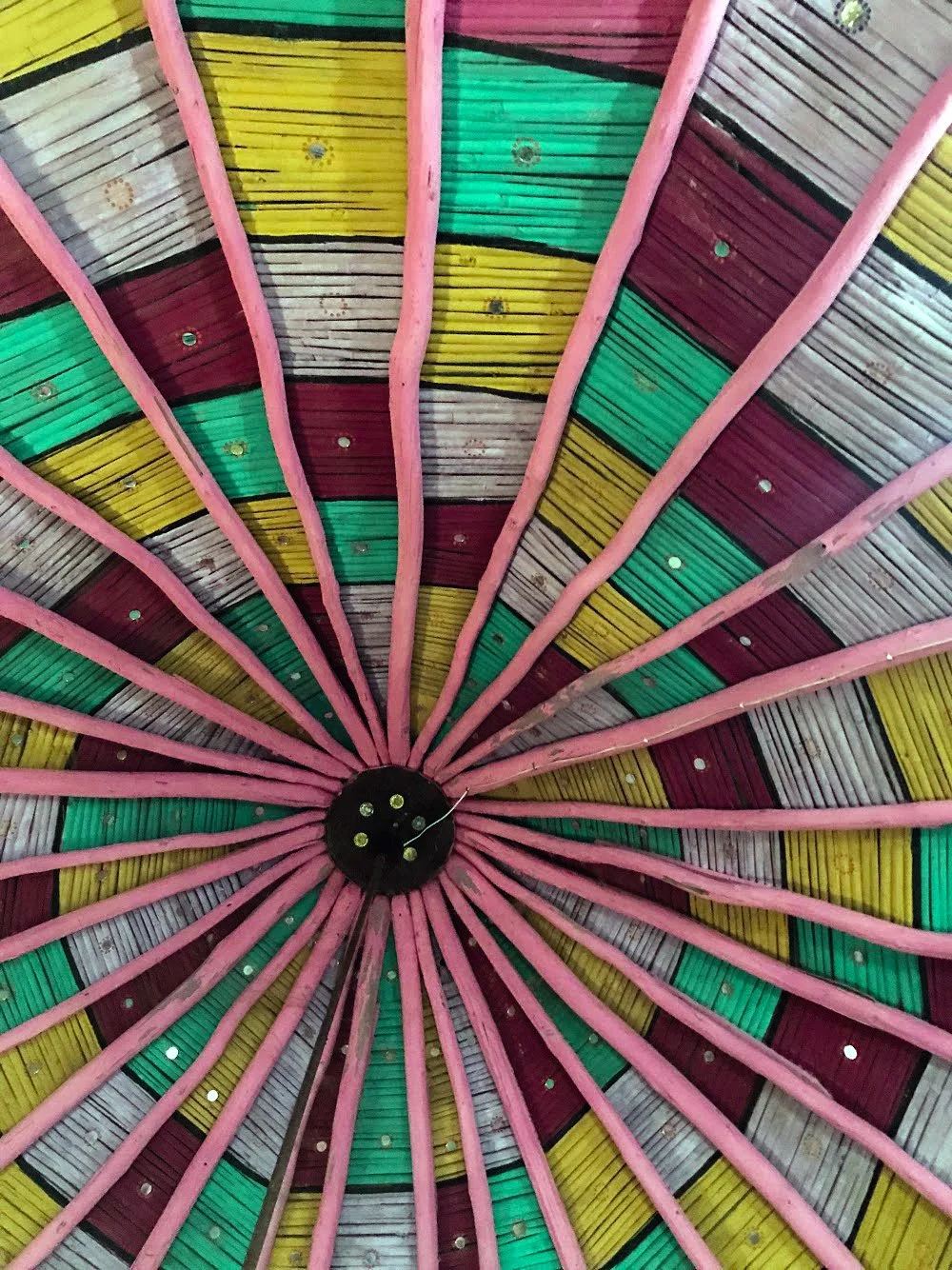
Each bhoonga is constructed on a plinth 1'6" to 2'0" above ground level to prevent rainwater ingress and to delineate family space. The circular form is a functional choice, offering optimal resistance to earthquake compressive forces, superior thermal insulation, and even distribution of the conical roof load. The roof is traditionally crafted from dried grass, reeds, and thatch woven on thin branches that spiral to form the conical shape, supported by a central vertical wooden member.
DIAMETER
12'-15' (3.6-4.6m)
PLINTH HEIGHT
1'6"-2'0" above ground
WALL MATERIAL
Chikkni mitti (clayey mud)
ROOF MATERIAL
Dried grass, reeds, thatch
HEIGHT
10'-14' (3-4.3m) at apex
OPENINGS
1 door 6'0"; 1-2 windows at 1'6"
MUD WALLS
Chikkni Mitti : Clayey Mud
The mud used is "chikkni mitti", a clayey mud brought from the bottom of water holes or water-logged areas. The circular form in mud offers earthquake resistance superior to rectangular forms, and compressive forces are distributed evenly around the curve. In flood-prone areas, mud walls are reinforced with branches for additional structural strength during inundation.
CONICAL ROOF
Thatched Spiral Roof
Dried grass, reeds, and thatch are woven onto thin branches spiraling upward to create the conical roof. A central vertical wooden member supports the apex. The low roof profile reduces wind load, while the thatch provides insulation against both intense summer heat and occasional cold nights. The structure is intentionally designed for deconstruction and reassembly, reflecting nomadic adaptability.
LIPAN KAAM
Mud, Mirror and Expression
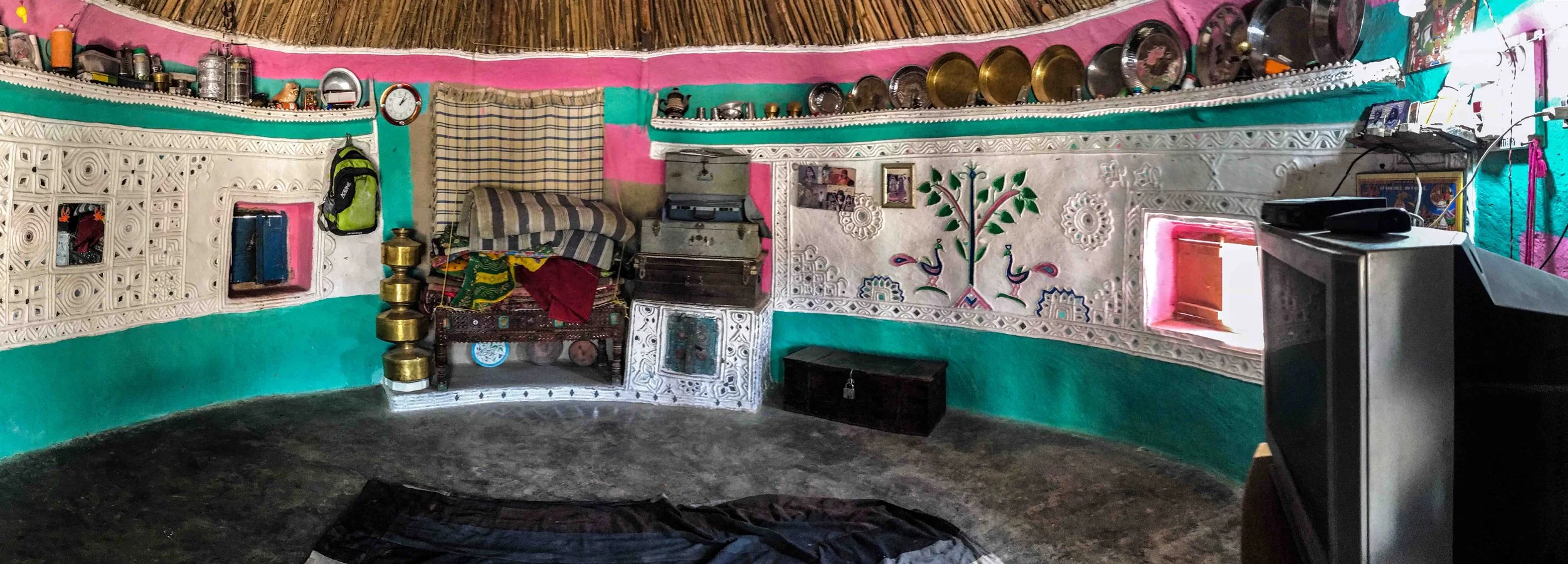
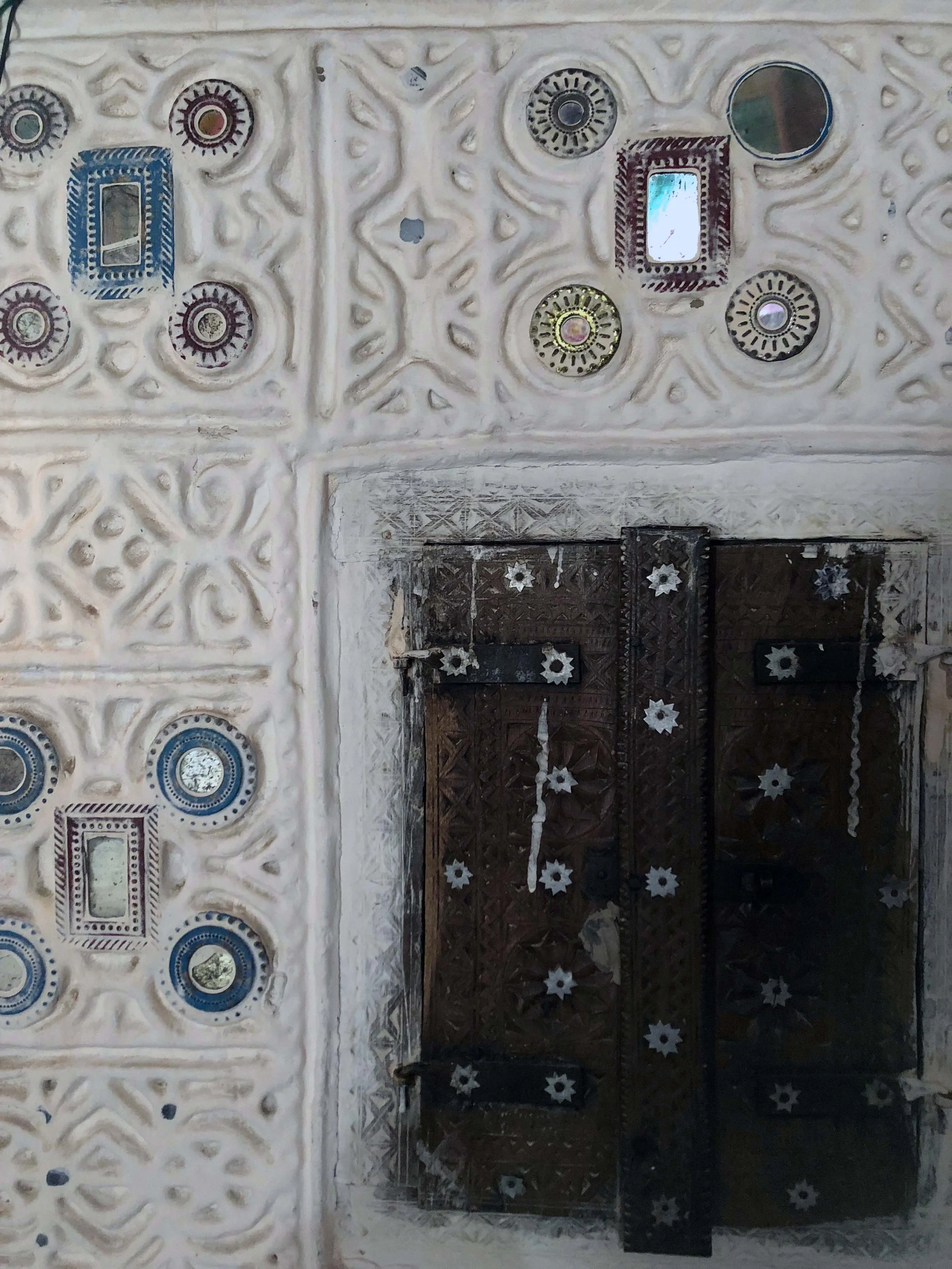
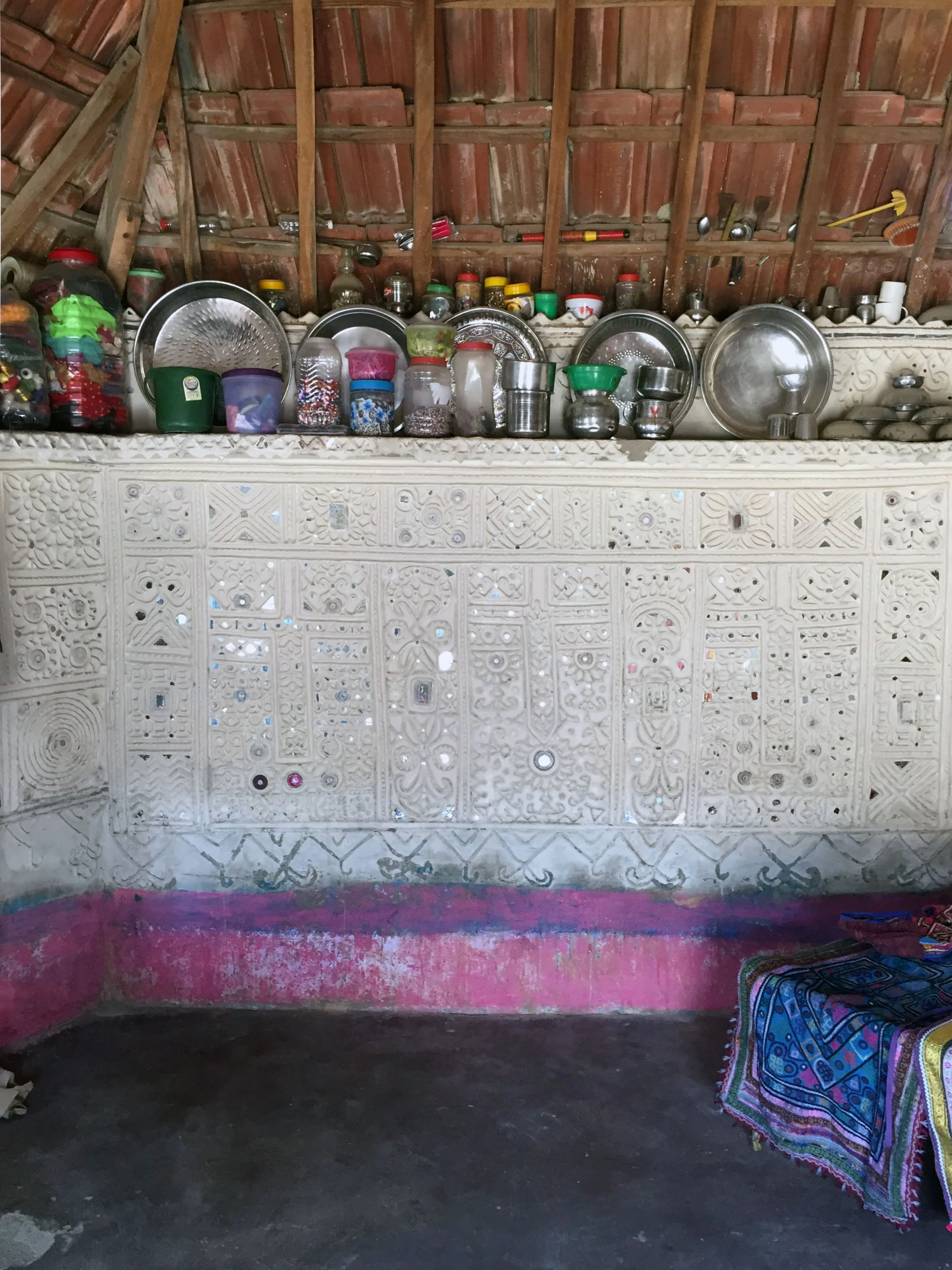
The interior of the bhoonga is the most vivid art space in Kutch, walls articulated with Lipan Kaam, relief work of mud mixed with animal dung and water (with fevicol as binder in recent times), traced in patterns lined with rolls of mud, studded with glass mirrors. The mirrors reflect every entering light, creating a dramatic ambient luminescence. Islamic households use geometric patterns; other communities represent people and nature. The overhangs shade these canvases; walls are adorned in colourful, geometric or floral patterns, earthy yet idiosyncratic.
A web of
co-dependent skill
Historically, the communities of Kutch were interdependent for survival, with each group playing a significant role in the production chain, whether in textiles, leather, metal, or handicrafts. Shared professions and interactions fostered connections across religious, caste, and geographic boundaries. The recent breakdown of this interdependency represents both an architectural and a social loss.
Rabari
Pastoralist community
Supplied raw wool from sheep and goats.
Nomadic herders
↓ yarn to Vankar
Vankar
Weaving community
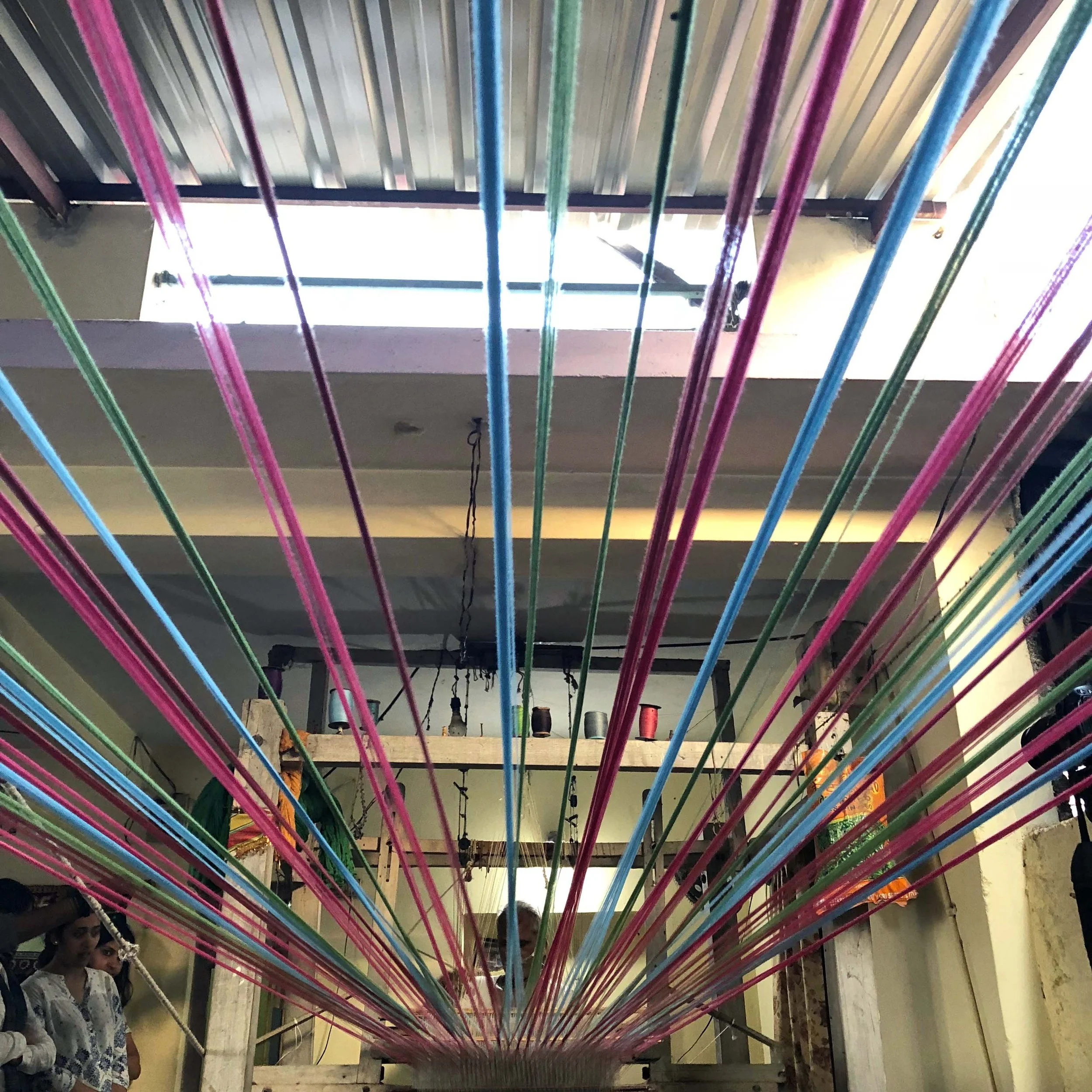
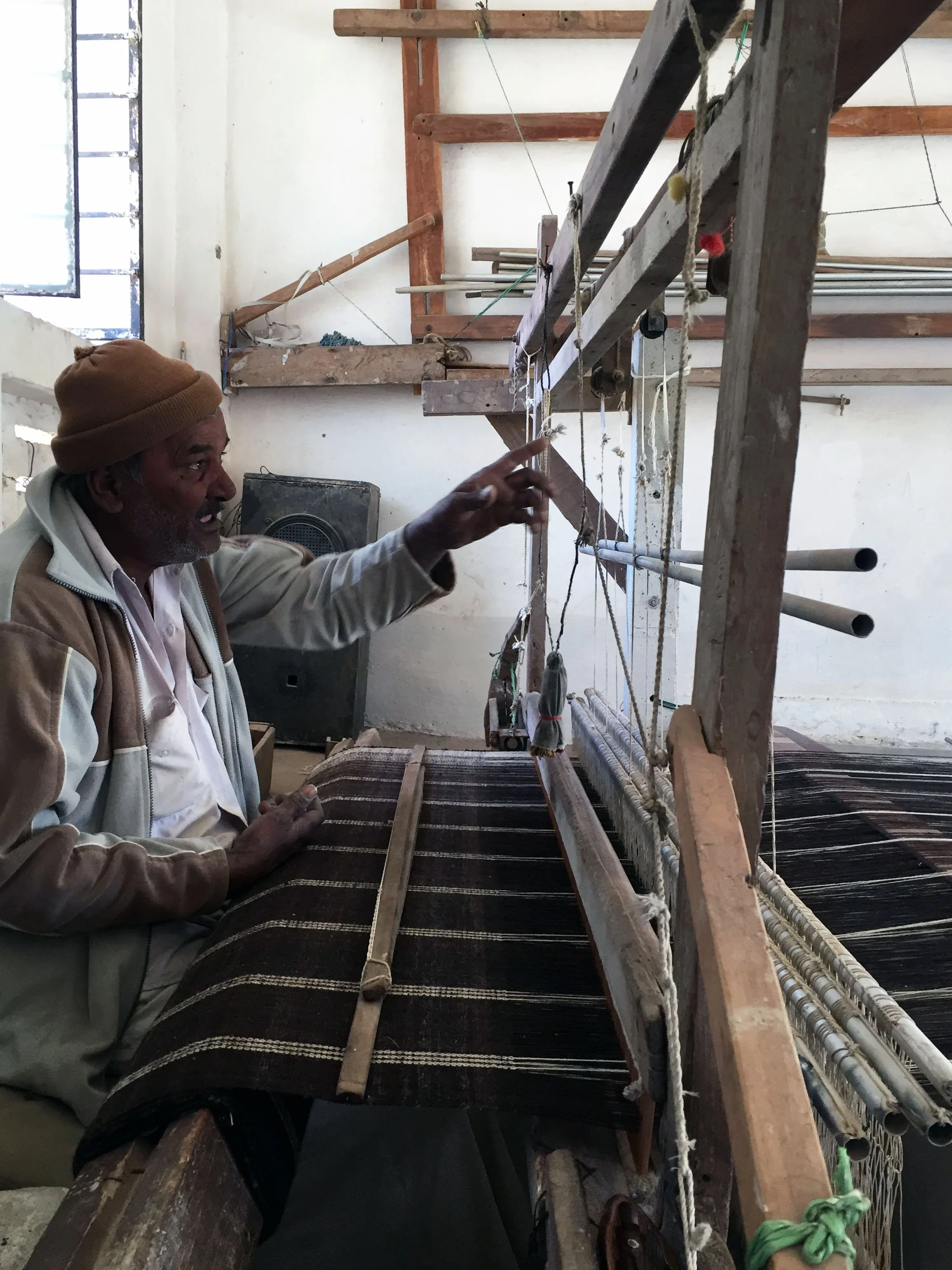
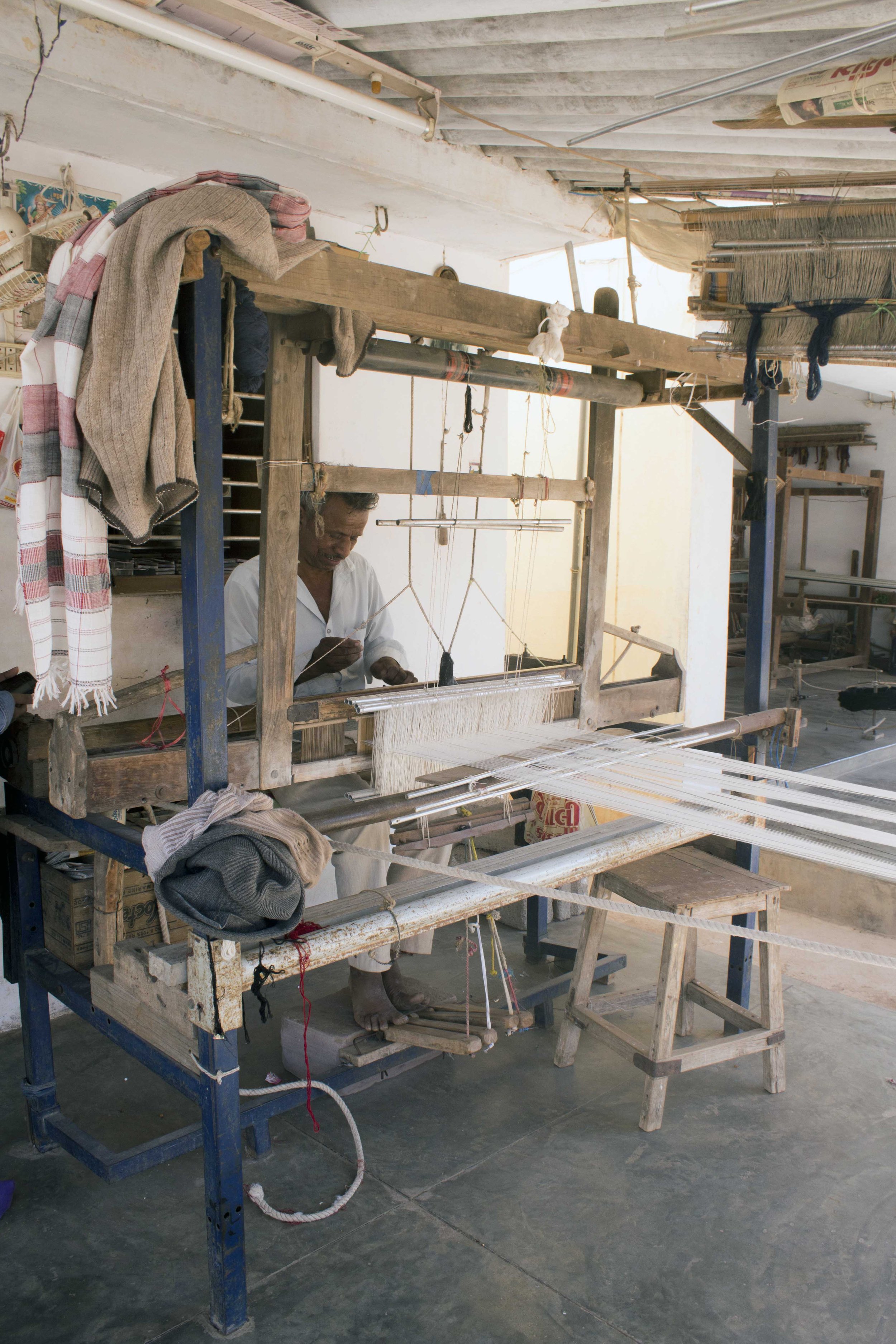
Turned Rabari wool and Ahir cotton into cloth.
Pit loom weavers
↓ cloth to Khatri
Ahir
Farming community
Grew Kala Kapus (local organic cotton)
Agricultural base of the system
↓ cotton to Vankar
Khatri
Dyeing & printing community
Added colour, pattern, identity
Ajrakh - Bandhani - Rogan - Batik
↑ finished cloth to all
The Maldhari (pastoralists) also shared a symbiotic relationship with the Meghwal Marwar, the dead animal was foraged for its hide, which required 18 days of tanning before use. The Lohars (metal smiths) migrated from Sindh, providing bells for the Rabari cattle in exchange for grains. The Kumbhar (potters) made earthenware for storage, used by every community. Every skill, every object, every building space was part of this web, the vandh, the courtyard, the otla, the aangan, all configured around the flow of production and exchange.
SKILLS, TRADITIONS & THE COLOURS
Eight crafts, eight spatial logics
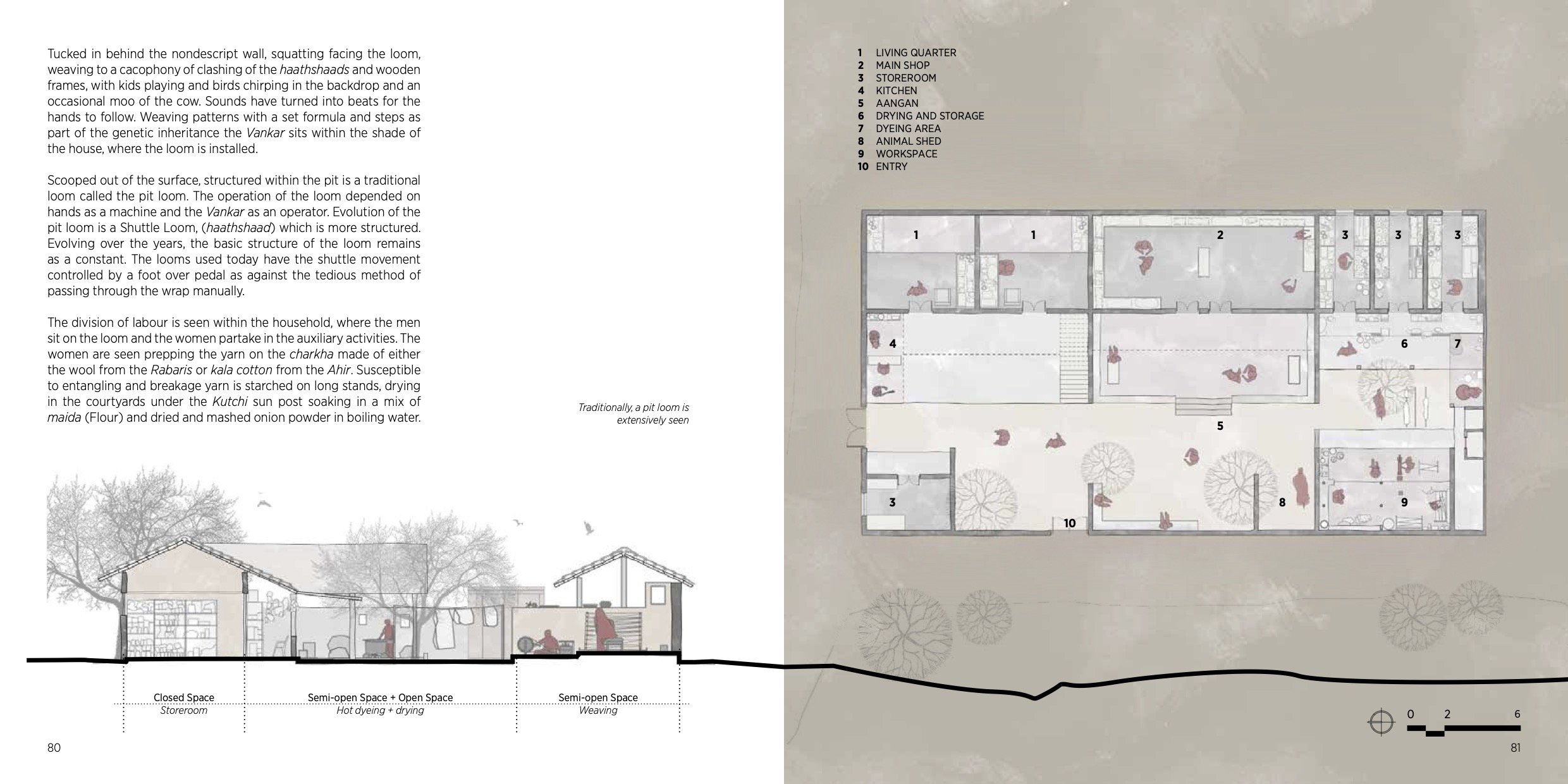
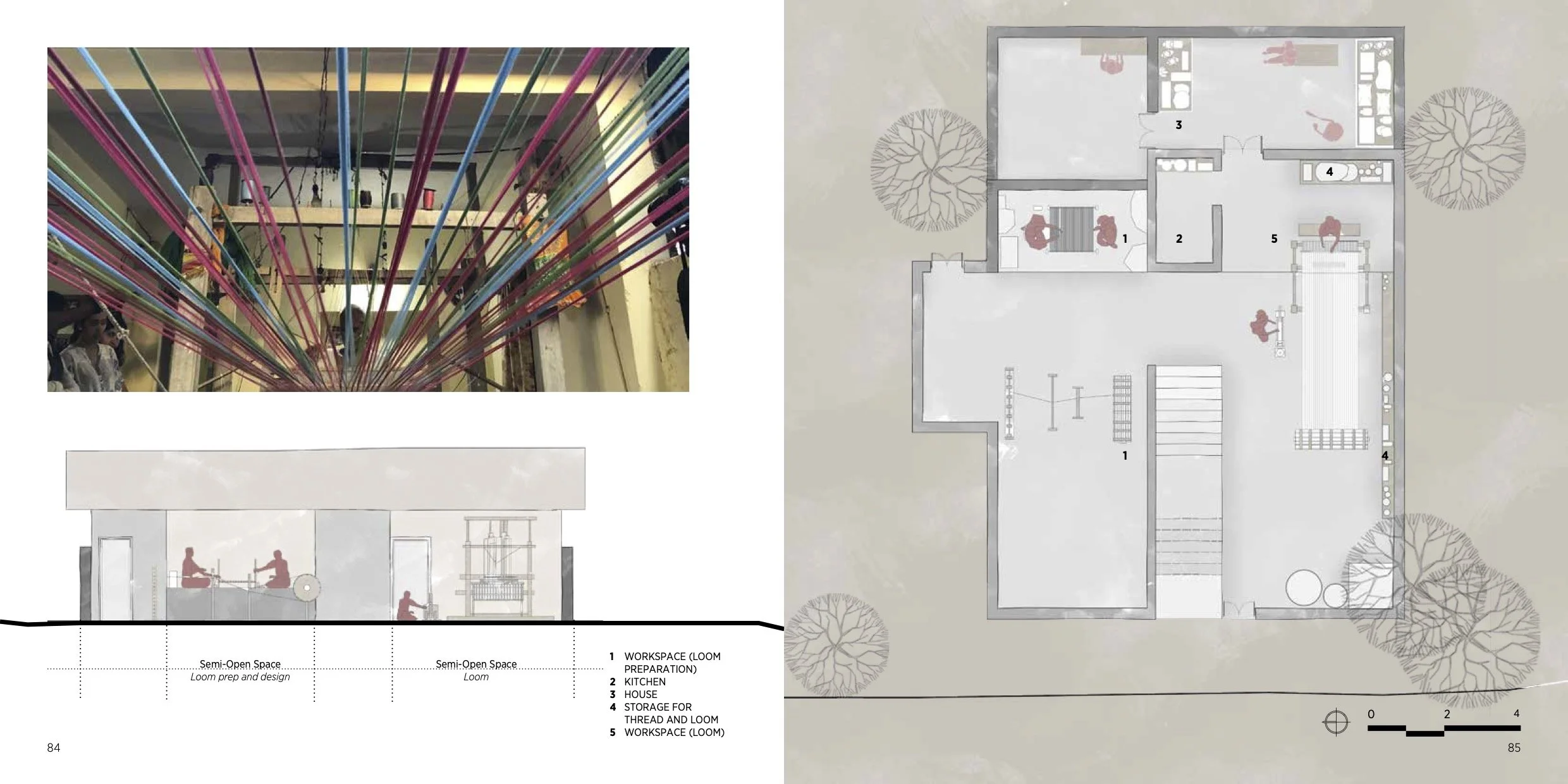
This study emphasises the inseparability of craft and architecture. Each craft in Kutch possesses its own spatial logic, involving a specific organisation of open, semi-open, and closed spaces within the built environment, tailored to the requirements of the craft process. The workspace is both shaped by and shapes the craft itself.
KHATRI COMMUNITY - AJRAKHPUR (FORMERLY DHAMADKA)
Ajrakh Printing
Block resist printing | Red and blue | Migrated from Sindh
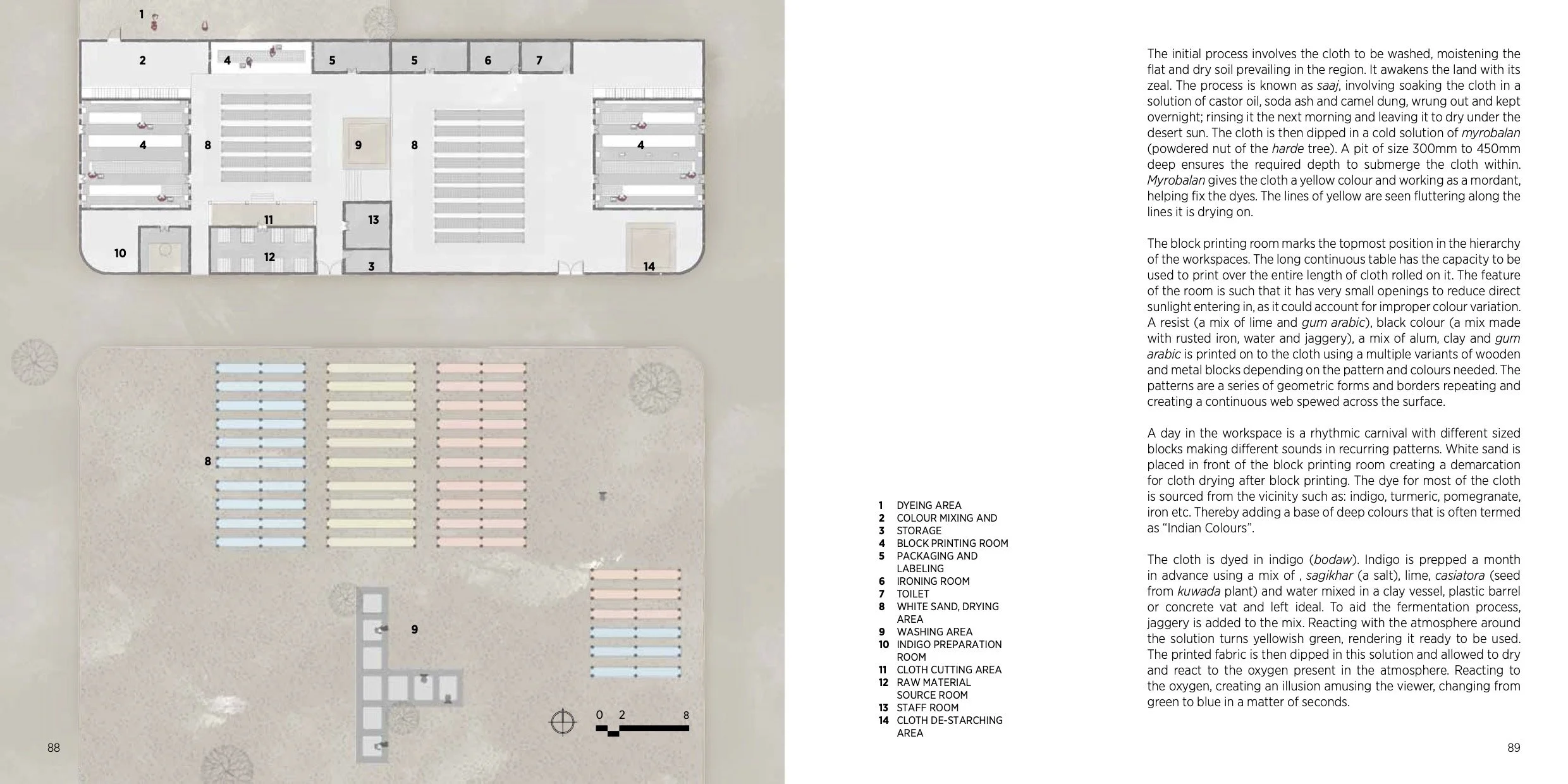
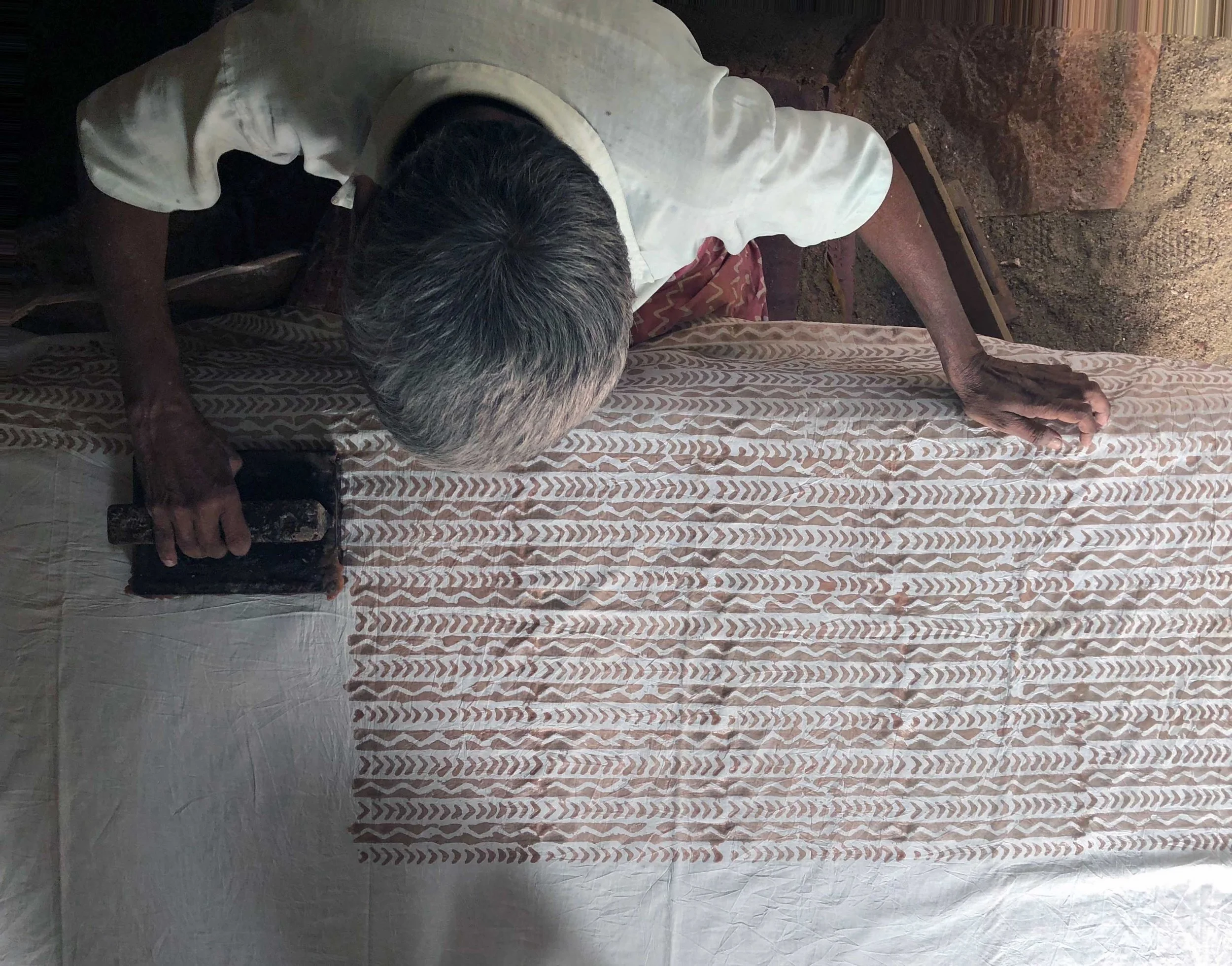
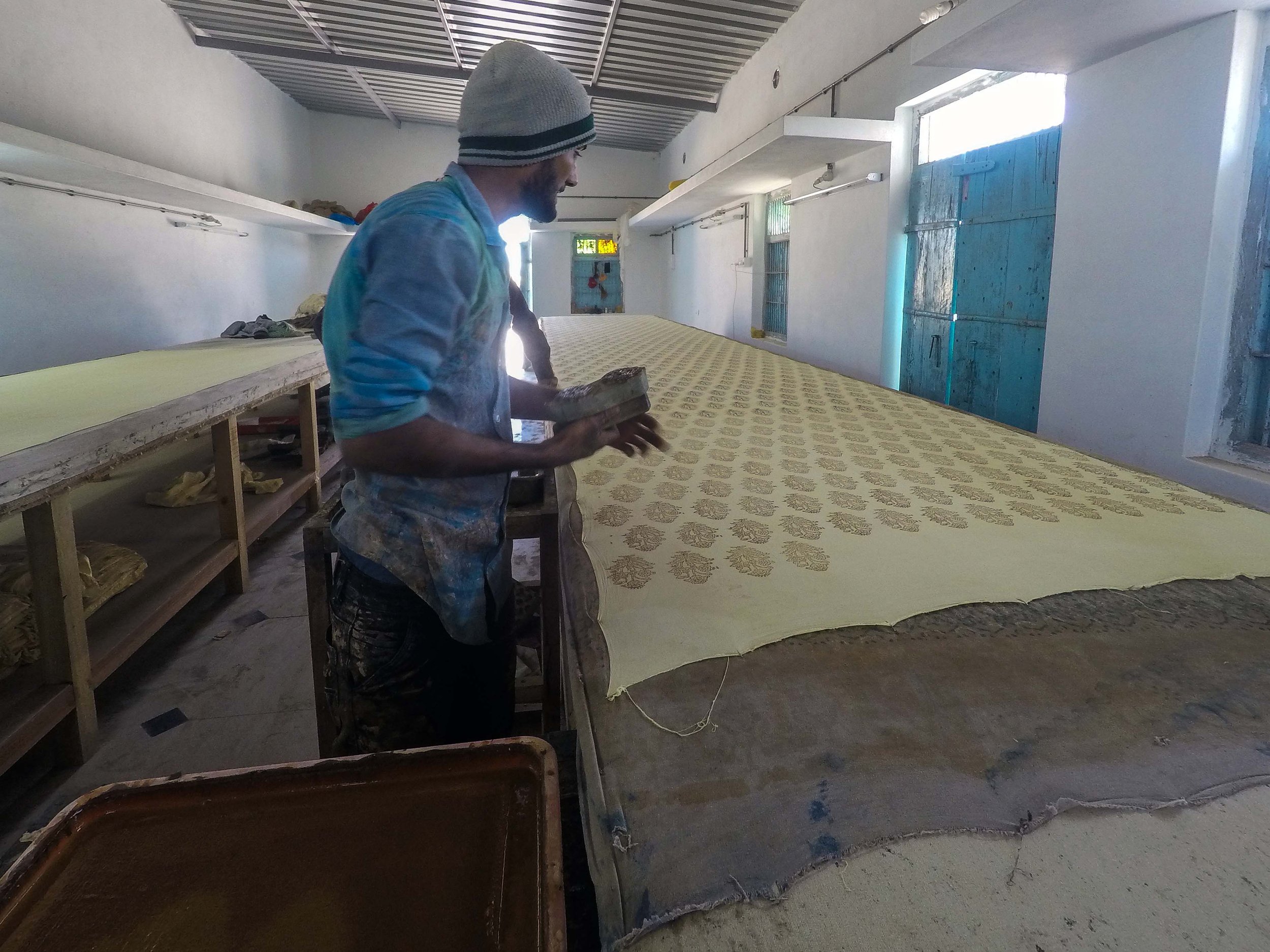
Ajrakh is a form of block printing featuring traditional patterns in red and indigo blue, with occasional white and yellow accents. These fabrics were historically used to clothe Maldhari cattle herders. Following the 2001 earthquake and the drying and pollution of the Dhamadka River, the craft relocated to Ajrakhpur, a village renamed in honour of the tradition. Water quality, particularly neutral pH, is essential for accurate colour imprinting and dyeing. Ajrakh is among the most space-intensive crafts, with its 14-stage process moving from enclosed block-printing rooms to open sand-drying beds and washing areas.
Saaj - soaking in castor oil, soda ash, camel dung overnight
Myrobalan dip - mordant from the harde tree, gives a yellow ground
Block printing - resist of lime + gum arabic; wooden/metal blocks
Indigo dip - bodaw, prepared a month in advance with jaggery + sagikhar
Washing and sand-bed drying - cloth held by stones against desert winds
↳ Workspace: Block printing room (low light) → white sand drying → washing area → indigo pit
KHATRI COMMUNITY - MUNDRA , MANDVI , BHUJ , BHADALI
Bandhani (Tie & Dye)
Tie and dye | Traces to the Indus Valley civilisation
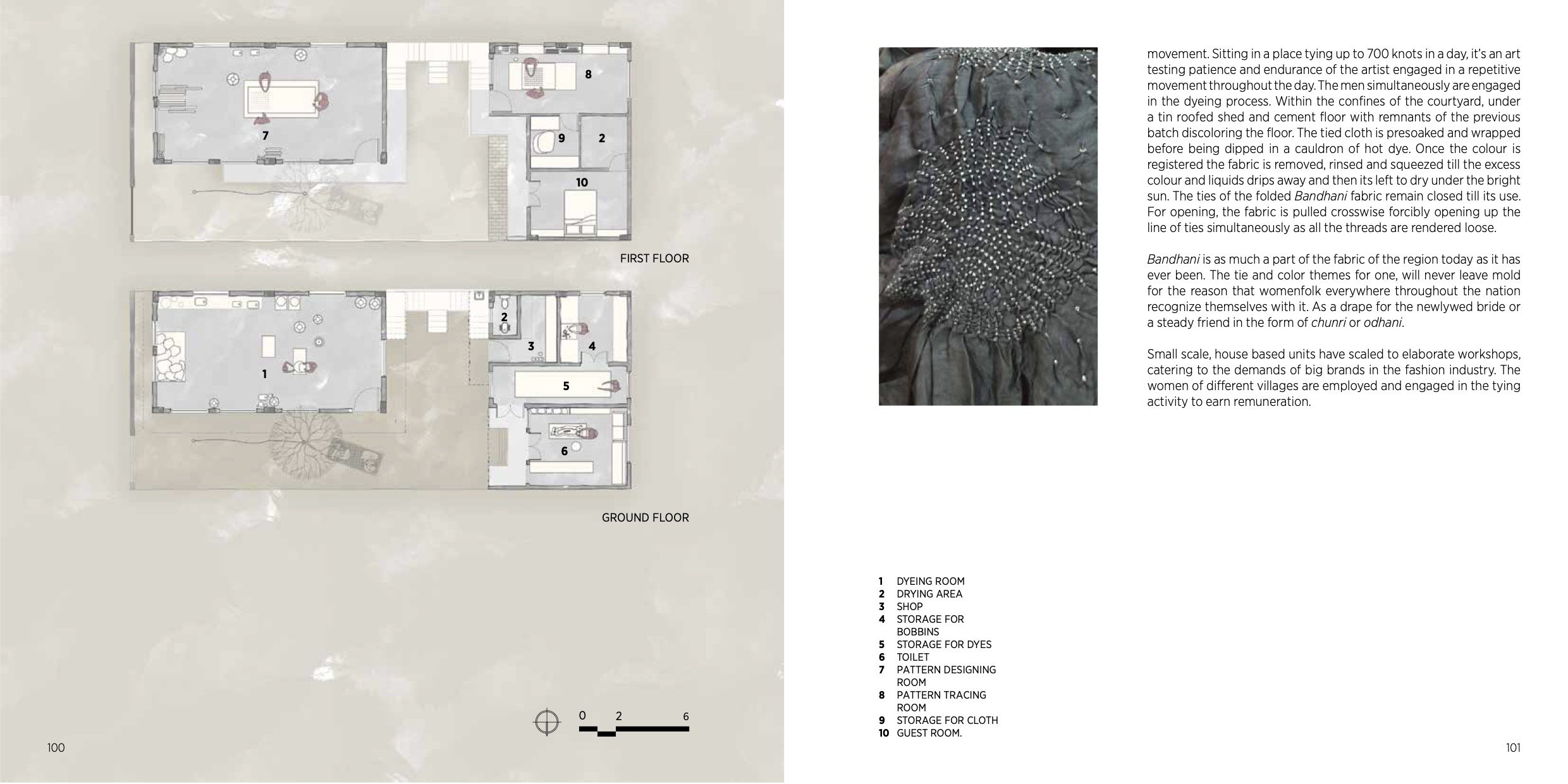
Bandhani involves tying individual knots on cloth to shield specific areas from dye, resulting in patterned fields created by the negative space left by the ties. This practice originated within households, engaging various family members at different stages. Women typically tie up to 700 knots per day, while men handle dyeing. The cloth is pulled crosswise to release all knots simultaneously. Bandhani serves both as a drape for newlywed brides and as a daily chunri. The craft has evolved from small-scale household units to elaborate workshops supplying major fashion labels.
Pattern marking using gheru thread in butter-paper punch design
Tying through a fine millet stem bobbin for smooth thread tension.
Pre-soaking the tied cloth, then dipping it in the hot cauldron dye.
Rinsing and drying; simultaneous dyeing by the male members.
↳ Workspace: Aangan (tying) → dyeing room → drying area → storage for bobbins + dyes
KHATRI COMMUNITY - NIRONA VILLAGE
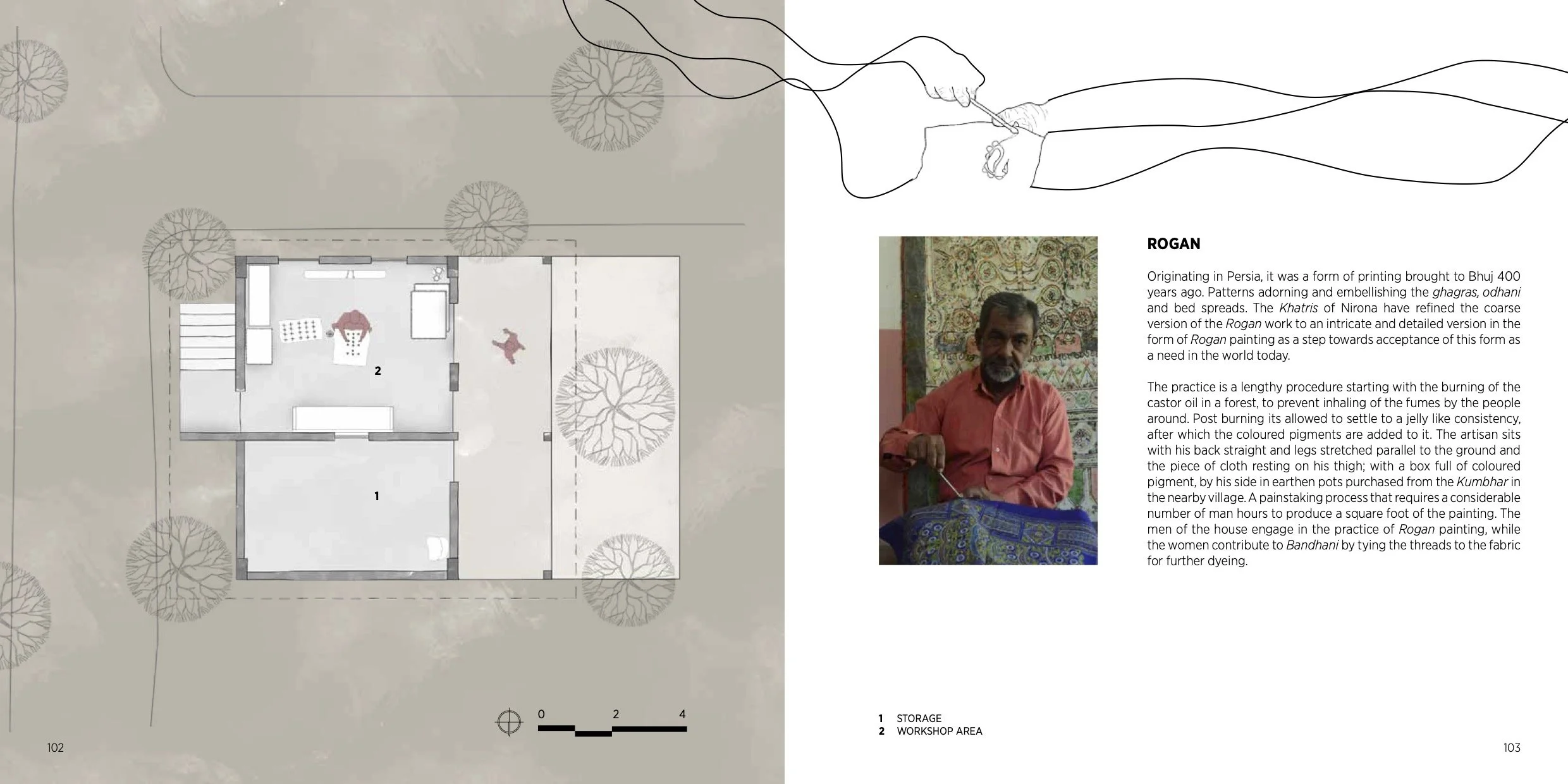
Rogan Painting
Originated in Persia | 400 years in Bhuj | Near-extinct art
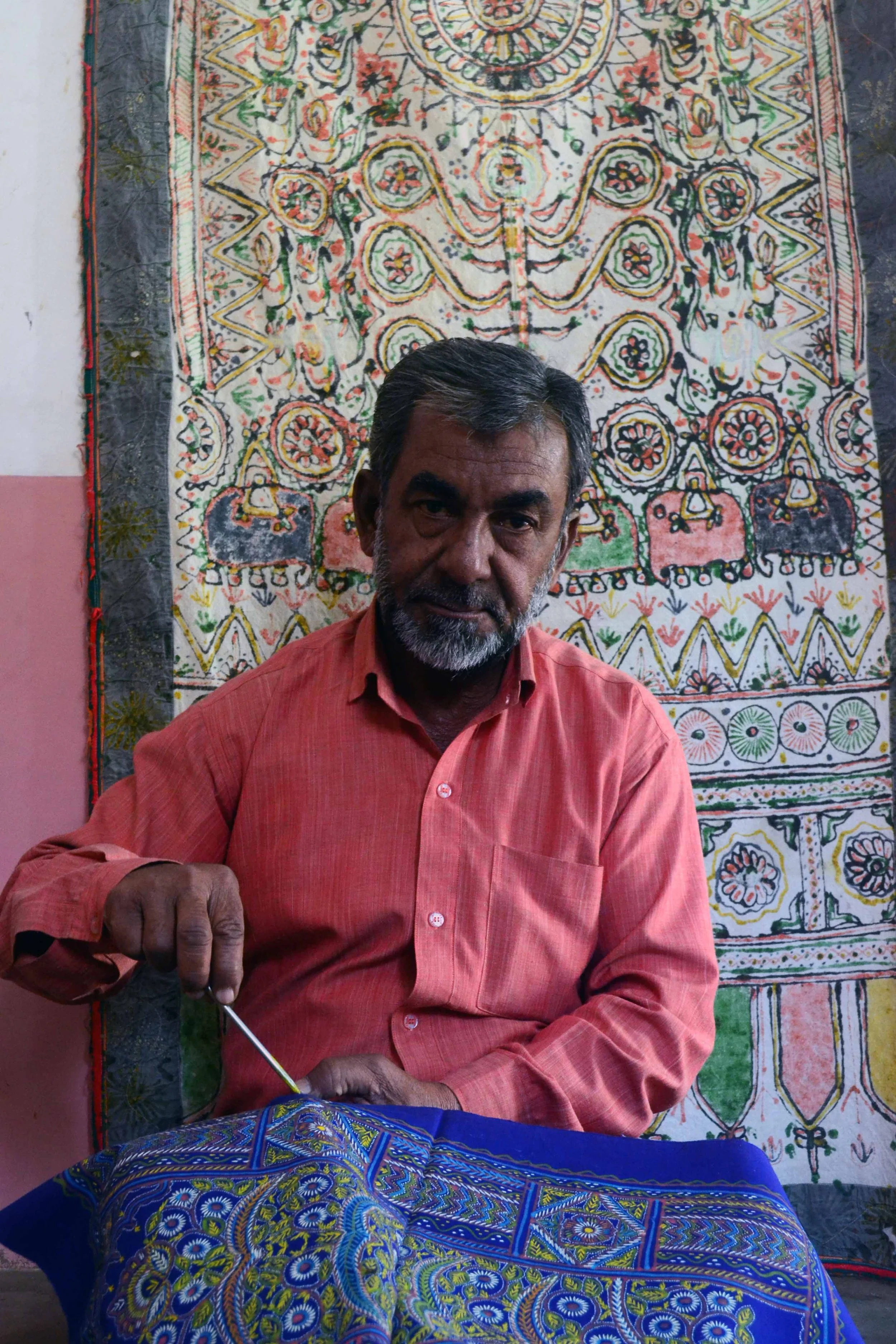
Rogan painting originated in Persia and was introduced to Bhuj approximately 400 years ago. Its patterns adorn garments such as ghagras, odhanis, and bedspreads. The Khatris of Nirona have transformed the craft from a coarse technique into an intricate art form. The process begins by burning castor oil in a forest to avoid inhalation of fumes, allowing it to solidify into a jelly-like consistency before adding coloured pigments. Artisans work with the cloth resting on their thighs, using earthen pigment pots sourced from the Kumbhar. This painstaking process requires significant labour per square foot and remains one of the few craft practices in single-family housing.
Castor oil burned in an open forest; it settled to a jelly consistency.
Coloured pigments added to jelly - stored in earthen Kumbhar pots
Artisan works on cloth resting on thigh - no tools, only fingers.
↳ Workspace: Small workshop area + storage, entirely within the house compound
KHATRI COMMUNITY - MUNDRA , MANDVI
Batik Printing
Wax resist printing | 1000-year practice | Medieval trade route craft
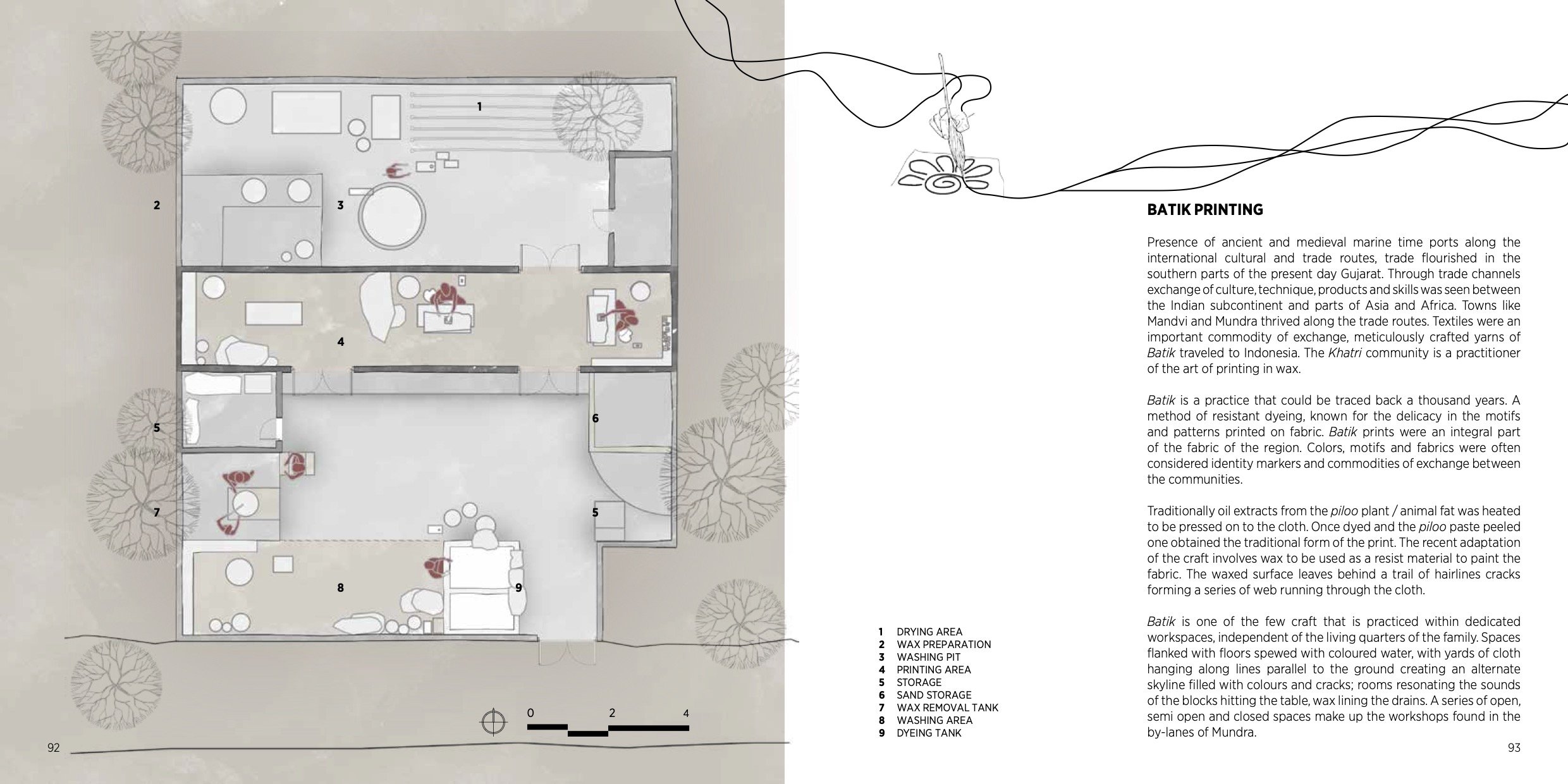
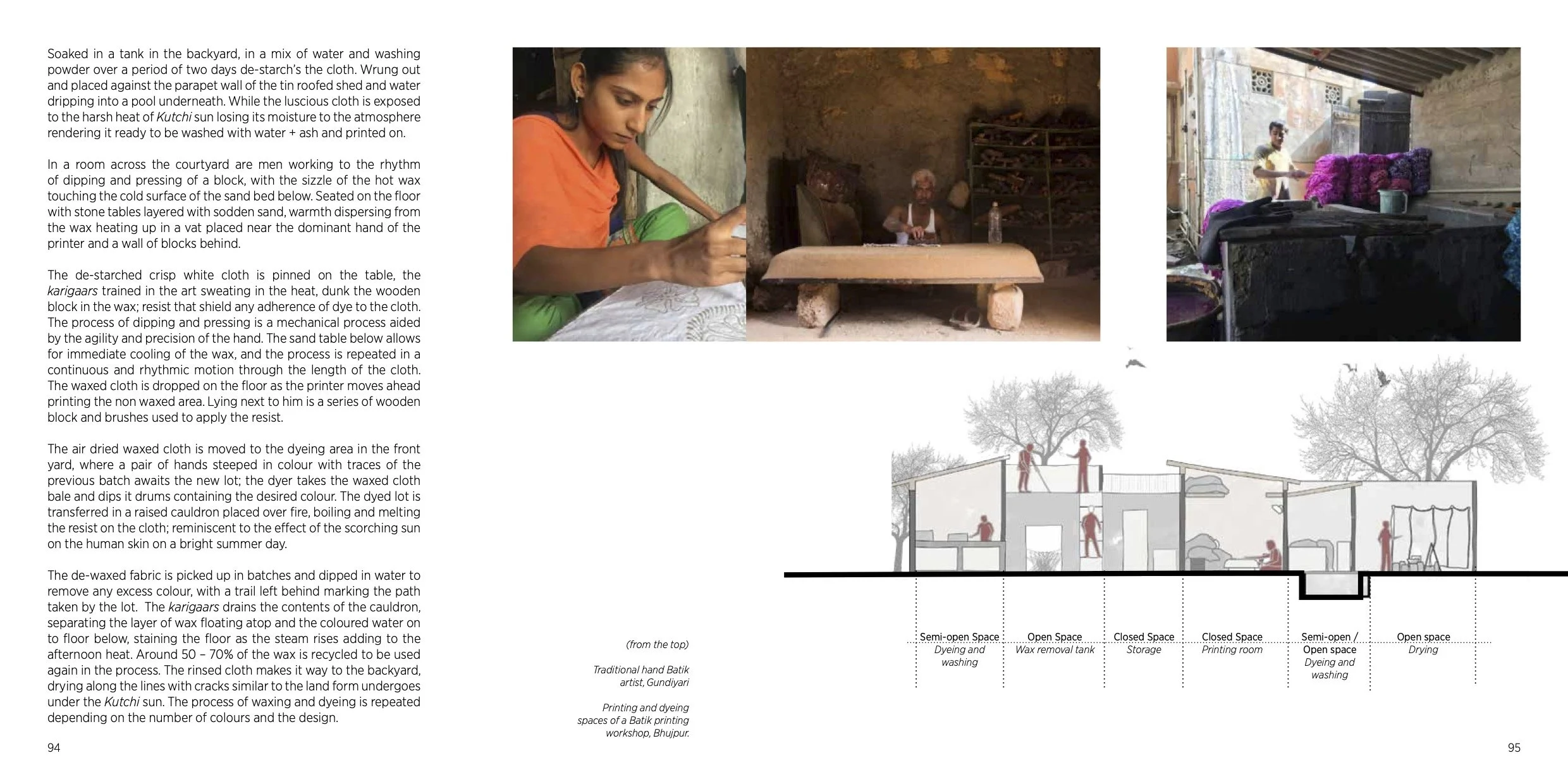
Batik is a resist dyeing technique in which wax is printed or painted onto cloth to shield specific areas from dye. Historically, batik yarns from Kutch travelled to Indonesia via the medieval maritime trade routes of Mundra and Mandvi. Traditionally, piloo plant oil or animal fat was heated and pressed onto the cloth. The waxed surface develops hairline cracks, producing a characteristic web-like aesthetic. In contemporary practice, hand Batik employs a canting, a stylus made of metal and coconut husk, instead of a block. Workshop floors are often covered with colored water, and yards of cloth hang parallel to the ground, creating a vibrant, textured environment.
De-starching in water + washing powder for two days
Block or canting waxing on sand-bed stone table
Air-drying, then dyeing; wax boiled off in a raised cauldron over a fire.
50-70% of wax recycled; cloth dried along lines in the backyard
↳ Workspace: Drying area → wax prep → printing room → dyeing → washing → wax removal tank
KUMBHAR COMMUNITY - KHAVADA , MULTIPLE VILLAGES
Pottery
Dates to the Indus Valley civilisation | same form for 5,000 years
The Kumbhar (potters) of Kutch trace their lineage to Sindh, with Khavada historically recognised as a potters' village. Raw materials are sourced from natural resources, including clay from nearby lakes, donkey or horse dung, water, and kiln wood from local forests. Pottery is a family profession: women beat, sift, and knead the clay, while men throw, shape, and finish the vessels. The wheel, traditionally constructed from wood or stone with a mud layer and placed on an inverted earthen pot, is engineered for optimal momentum and stability. Natural pigments such as gheru (red mud), goru (white mud), and karu (powdered black stone) are used for decoration. Vessels are fired in open kilns using cow dung, hay, and locally sourced wood. This design and form, unchanged for 5,000 years, now faces threats from the introduction of steel and aluminium alternatives.
Clay from the lake, beaten, sifted, kneaded; rested 2 days in the shade
Wheel throwing, walls thinned by beating; smoothened with water
Base wash, then concentric dots / diagonals / zig-zag in gheru + goru + karu
Open-fire kiln with cow dung and hay; shards become tools and bases.
↳ Workspace: Clay prep (aangan) → wheel (semi-open) → drying area → firing pit (independent)
LOHAR COMMUNITY - NIRONA VILLAGE , MIGRATED FROM SINDH
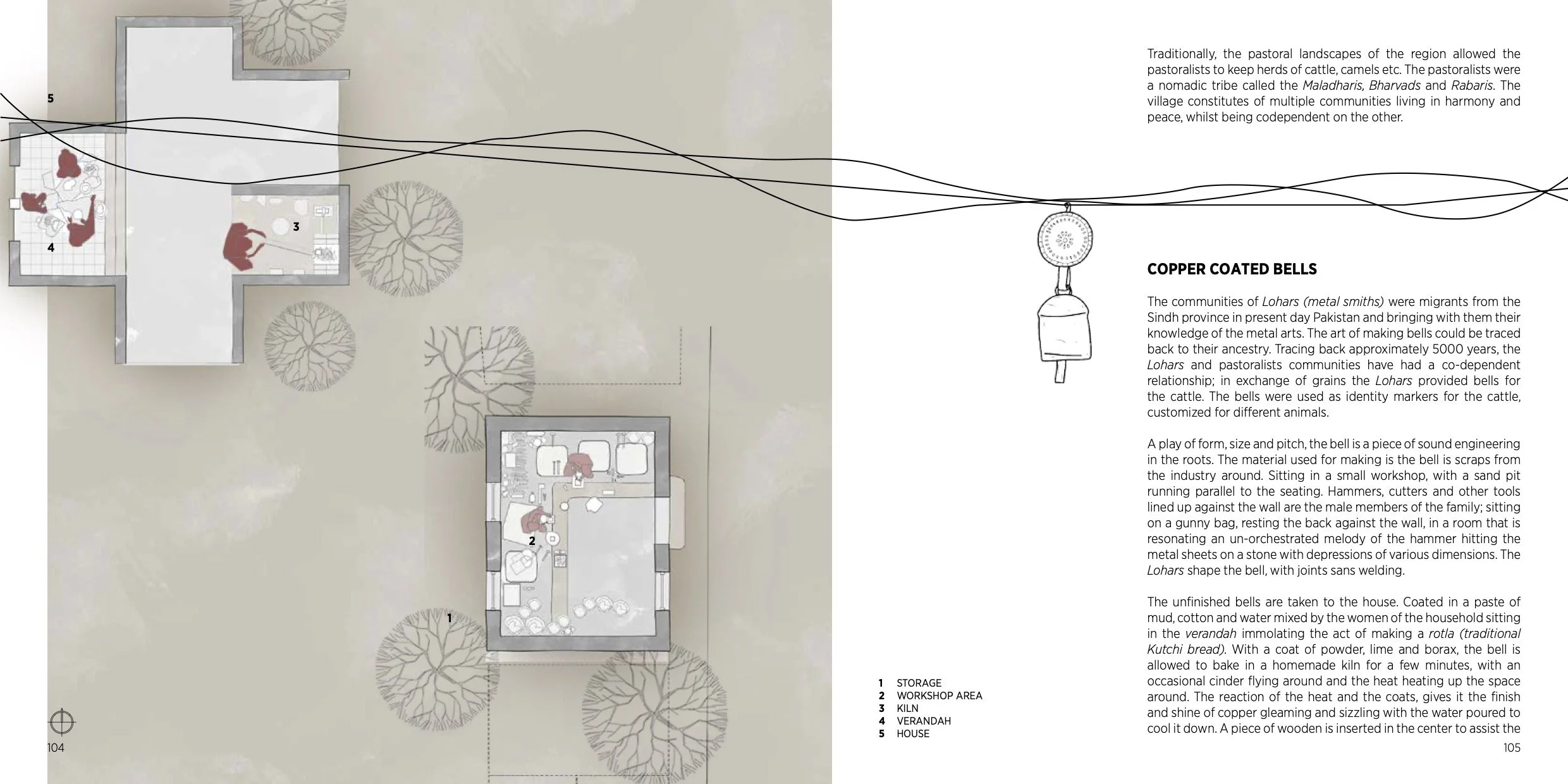
Copper Coated Bells
5,000-year co-dependent relationship with pastoralists
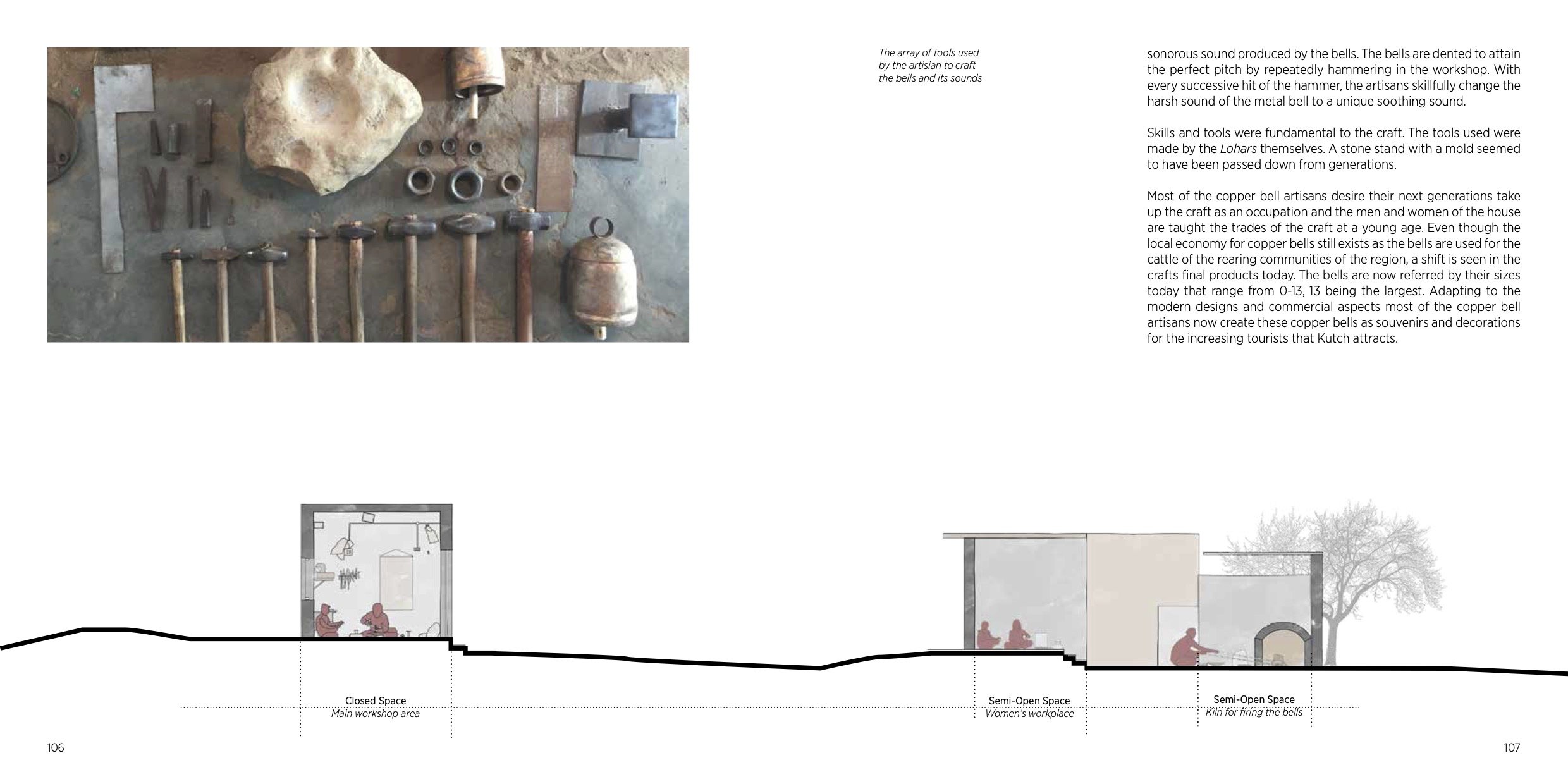
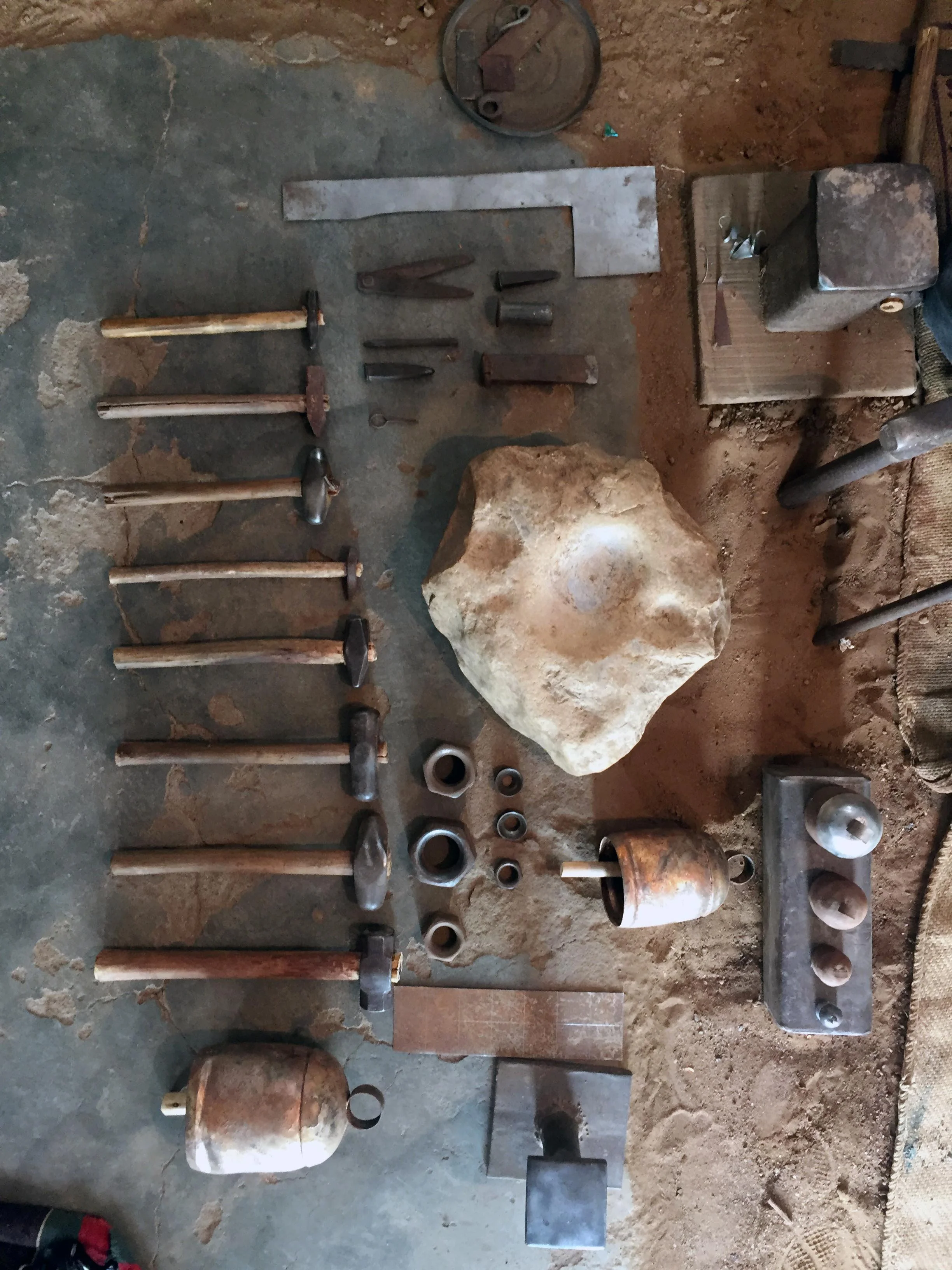
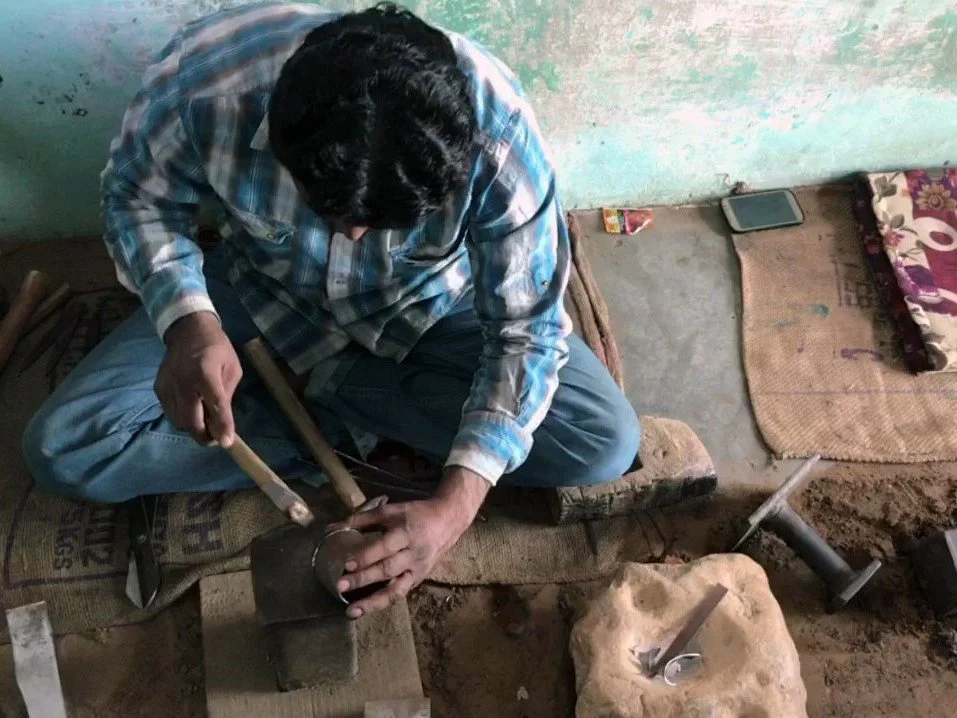
The Lohars (metal smiths) migrated from Sindh, bringing knowledge of metal arts. Their bells were identity markers for cattle, customised in size, form and pitch for different animals. A play of form, size and pitch, sound engineering in its roots. Scraps from the surrounding industry form the raw material. The bell is shaped with joints sans welding. Coated in a paste of mud, cotton, and water, then immolated in rotla-making, then powdered with lime and borax, and baked in a homemade kiln. The reaction of heat and coats gives a copper finish. Dented repeatedly to attain the perfect pitch. The same stone mould has been passed down through generations.
Metal scraps cut, hammered on a stone stand with mould depressions.
Shaped bell coated in mud + cotton + water paste by women
Lime and borax powder coat → baked in a homemade kiln
Hammered repeatedly to attain perfect pitch, each bell is unique.
↳ Workspace: Main workshop (closed) → kiln (semi-open/women's area) → verandah (coating)
MEGHWAL MARWAR COMMUNITY - MIGRATED FROM RAJASTHAN
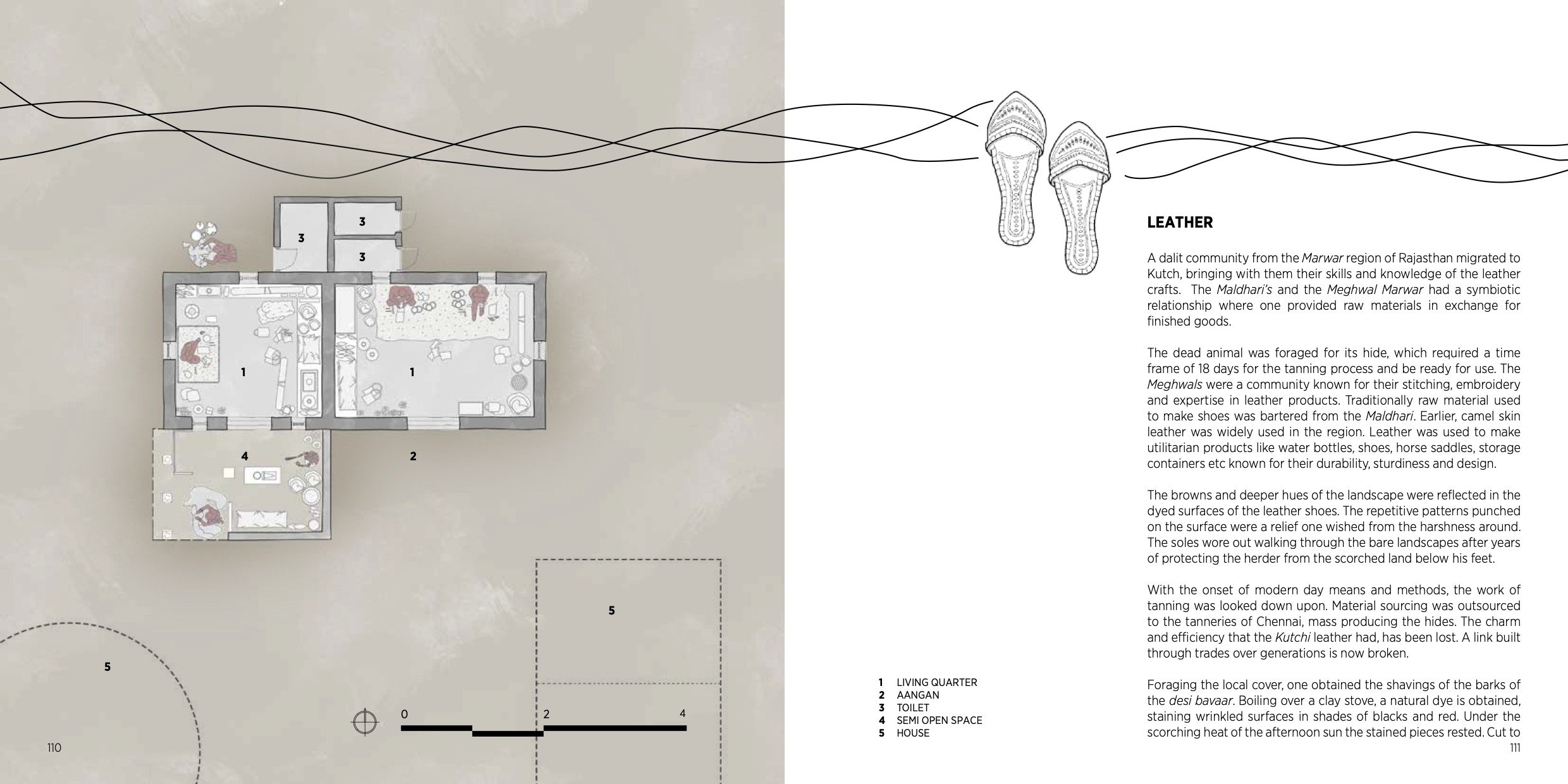
Leather Craft
Symbiotic with Maldhari | camel skin → shoes · saddles · water vessels
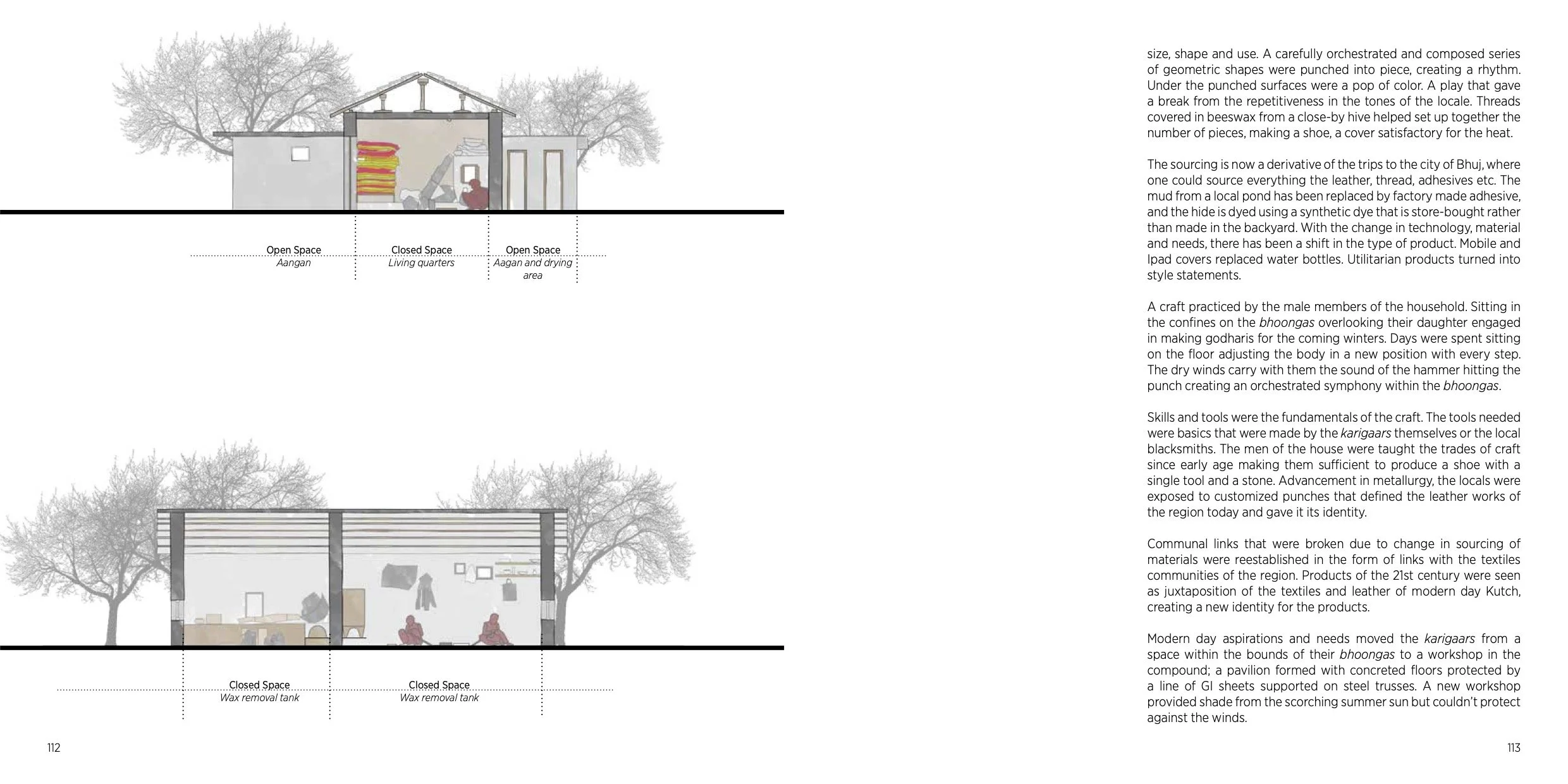
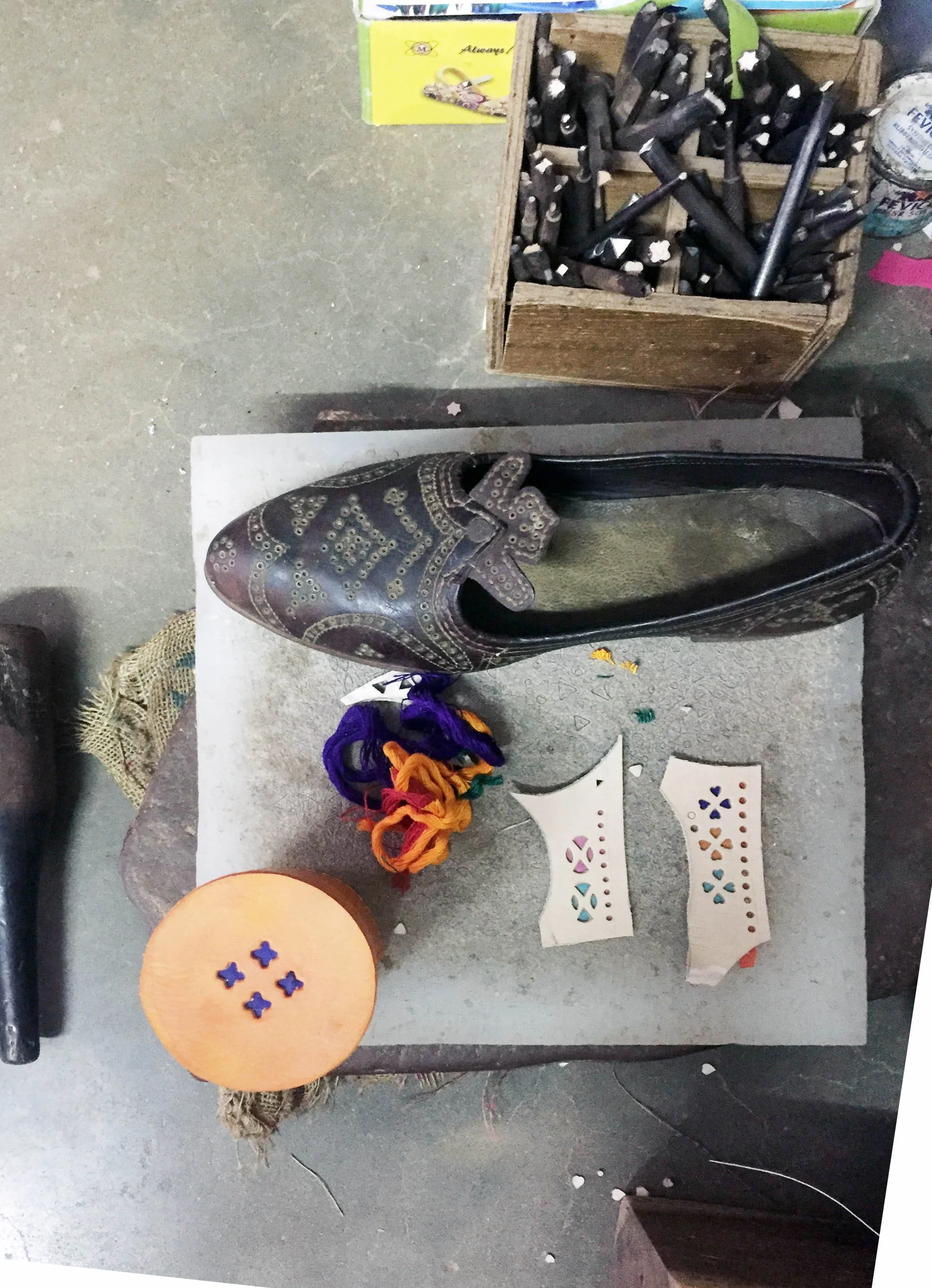
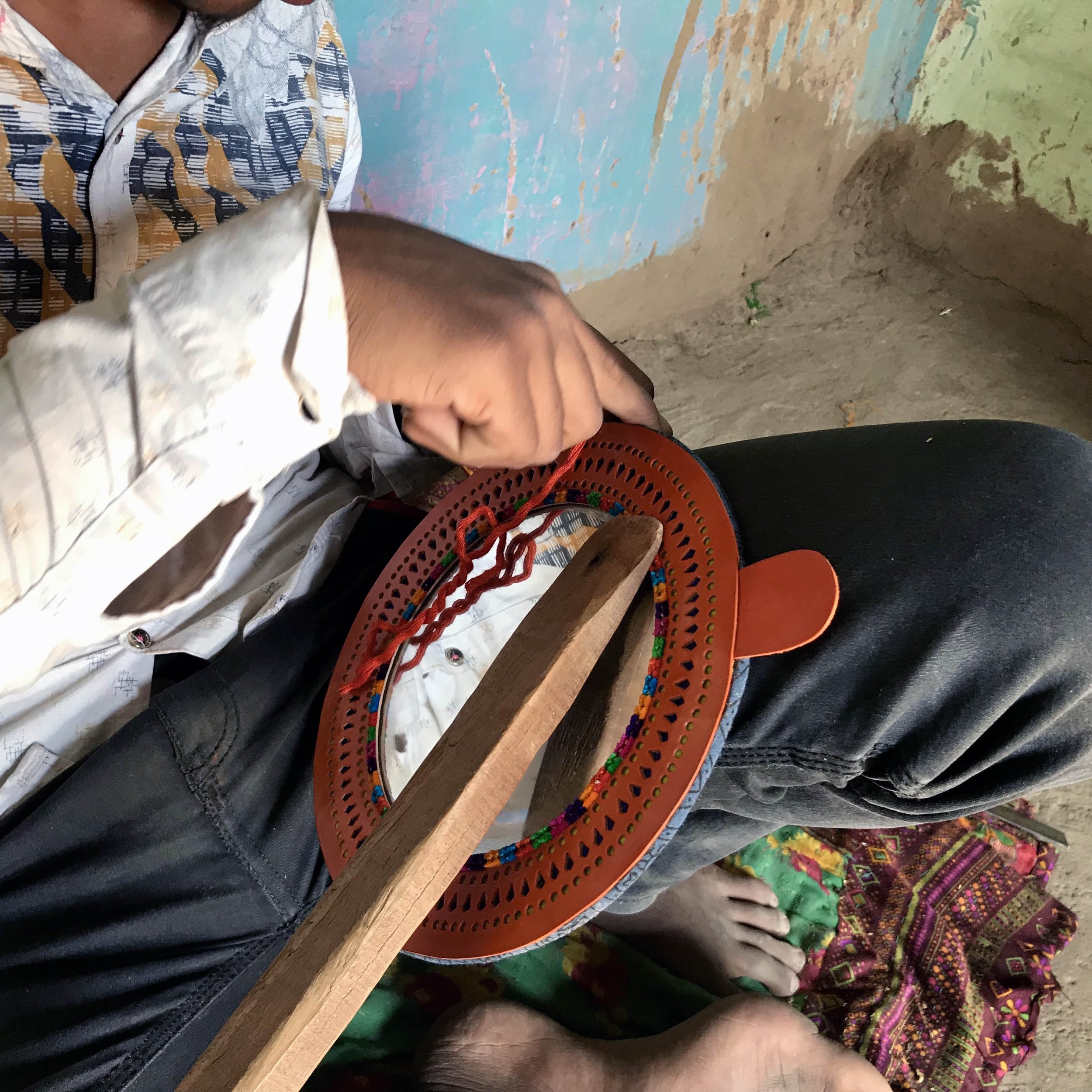
A Dalit community from Marwar introduced their leather-craft expertise to Kutch. The Maldhari community supplied raw animal hides, which required 18 days of tanning using bark from the desi bavaar tree, boiled to produce natural black and red dyes. Artisans punch geometric shapes in rhythmic patterns, with contrasting colours beneath. Thread coated in beeswax from local hives is used to sew the pieces together. In contemporary practice, traditional materials such as pond mud and camel hide have been replaced by factory adhesives and leather from Chennai tanneries. Utilitarian products like water bottles have given way to mobile and iPad cases, reflecting both cultural adaptation and loss.
Hide tanning for 18 days, using desi bavaar bark boiled over a clay stove.
Cutting to size, geometric punching creates rhythmic patterns.
Beeswax-coated thread stitching of multiple pieces
↳ Workspace: Bhoonga (traditional) → open compound pavilion (contemporary)
VADH COMMUNITY - NIRONA VILLAGE , SEMI-NOMADIC
Lacquer Work
7+ generations | manually-powered rope lathe
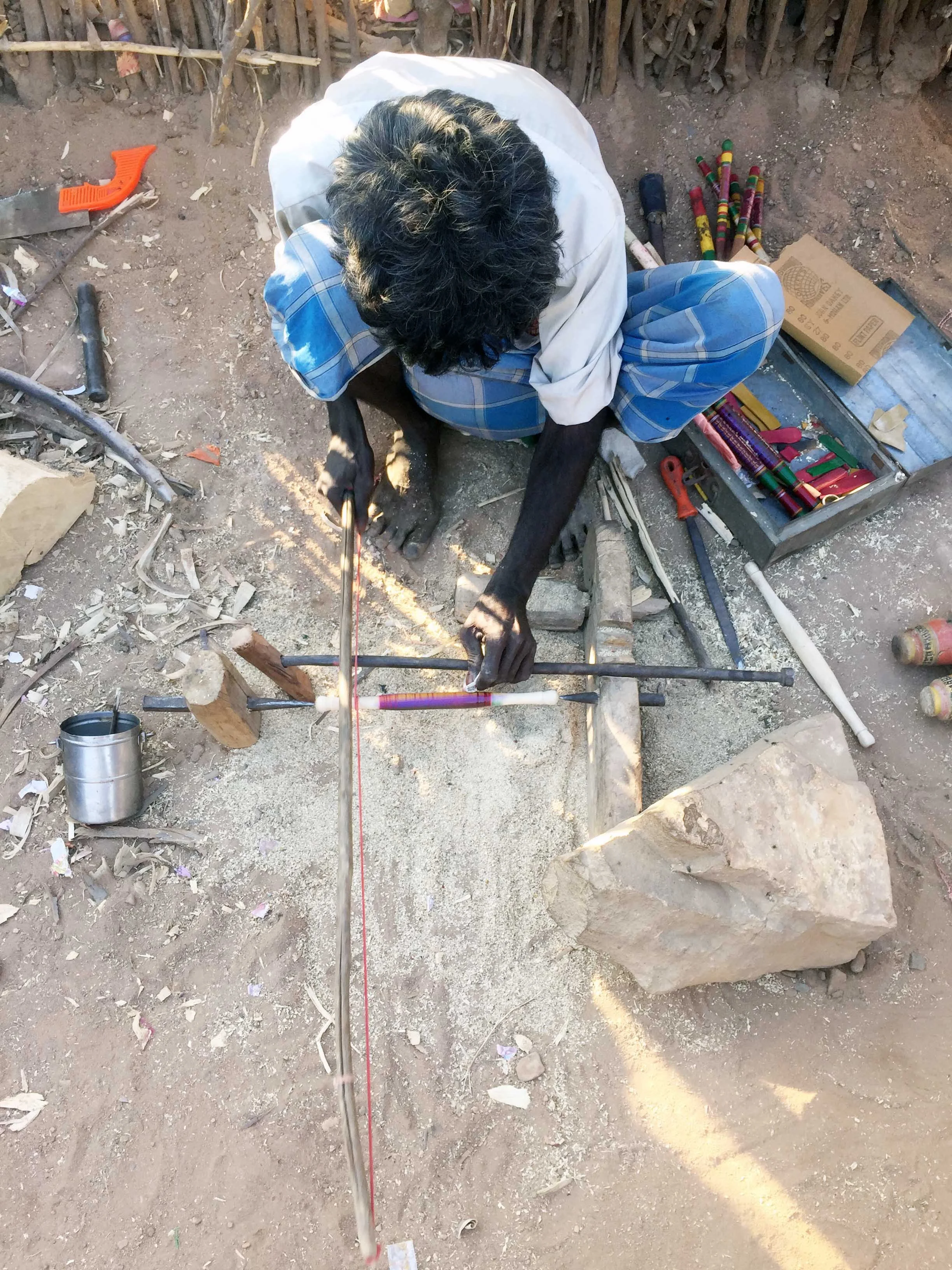
A semi-nomadic tribe, the Vadhs provide life to mundane household items, rolling pins, containers, and furniture. A man seated under a tree, shaping a belan (rolling pin of babool wood) using a manually powered rope-and-stick lathe. A series of synchronised movements pulls the rope fastened around the object. Pigmented lac is rubbed against the rotating object, melting and sticking to the surface. Oil is rubbed onto the lock to fix to provide pigment, and provide sheen and waterproofing. The characteristic psychedelic zigzag patterns emerge from pushing the transferred colour while it is still wet. Over seven generations of this practice in a single family at Nirona.
Babool wood shaped on a rope-and-stick powered lathe
Pigmented lac rubbed onto a rotating surface melts and adheres.
Colours pushed to create a zig-zag medley; oil locked for sheen.
↳ Workspace: Under tree / verandah, entirely outdoor, no dedicated space needed
GEOLOGY & TOPOGRAPHY - THE FIRST ARCHITECT
Stone, sand, fault line -
land that builds itself
Geology is the primary determinant of architecture in Kutch, rather than merely a backdrop. Every building material used across the district directly reflects the underlying geological formations: Jurassic sandstone for dry masonry, clayey chikkni mitti for bhoongas, coastal stone for Mandvi houses, and Mesozoic columnar joints for Bhadali construction. The seismic fault line represents the most influential geological force, having twice transformed the built environment of the entire district.
JURASSIC - CENTRAL
Columnar Mesozoic Sandstone - Bhadali Region
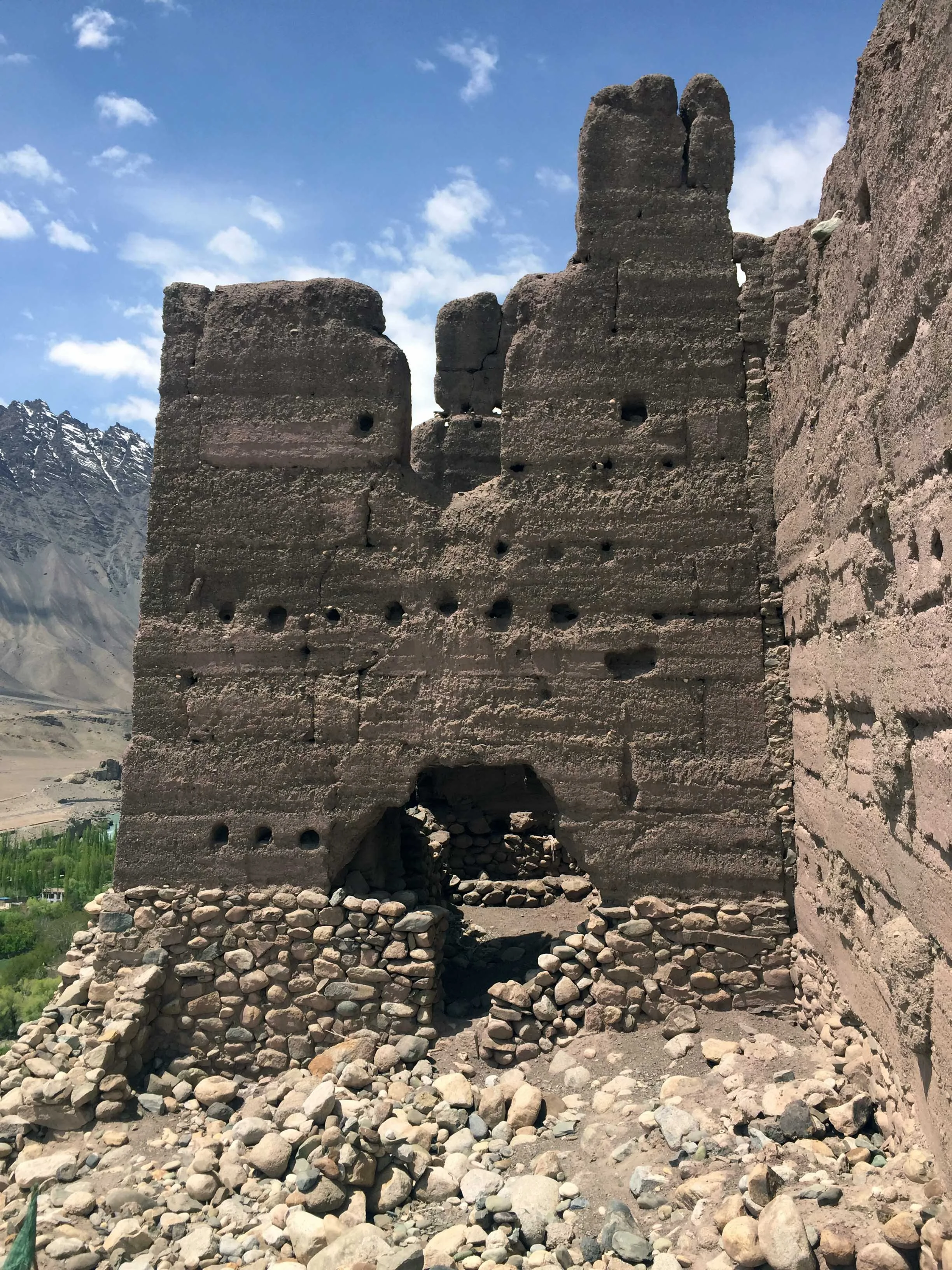
A columnar jointed Mesozoic Sandstone used in construction in the Bhadali region of central Kutch is one of the finest examples of dry masonry construction in India. Very few craftsmen and artisans today know this technique. The joints between columns require no mortar; the stone's natural geometry provides the structural bond. A dying knowledge system.
PLEISTOCENE - NORTH
Chikkni Mitti - Clayey Mud of the Banni Waterholes
The mud of the Banni is not generic soil; it is chikkni mitti, a specific clayey mud collected from the bottoms of waterholes and waterlogged depressions in the grassland. Its clay content gives it cohesion for bhoonga wall construction. The same material, slightly different in composition, makes the Lipan relief work on the interior walls, architecture and art from identical geological material.
FAULT LINE - DISTRICTWIDE
The Seismic Author - 1819 & 2001
A critical geographic feature of Kutch is the seismic fault line that traverses the district. The 1819 earthquake destroyed numerous towns and altered the course of the Indus River. The 2001 earthquake, with a magnitude of 7.7, nearly erased traditional building knowledge from collective memory. The circular bhoonga form is the result of centuries of optimisation for seismic performance, distributing compressive forces evenly and consistently, and outperforming rectangular rooms of the same material in earthquake tests.
TIDAL - COASTAL
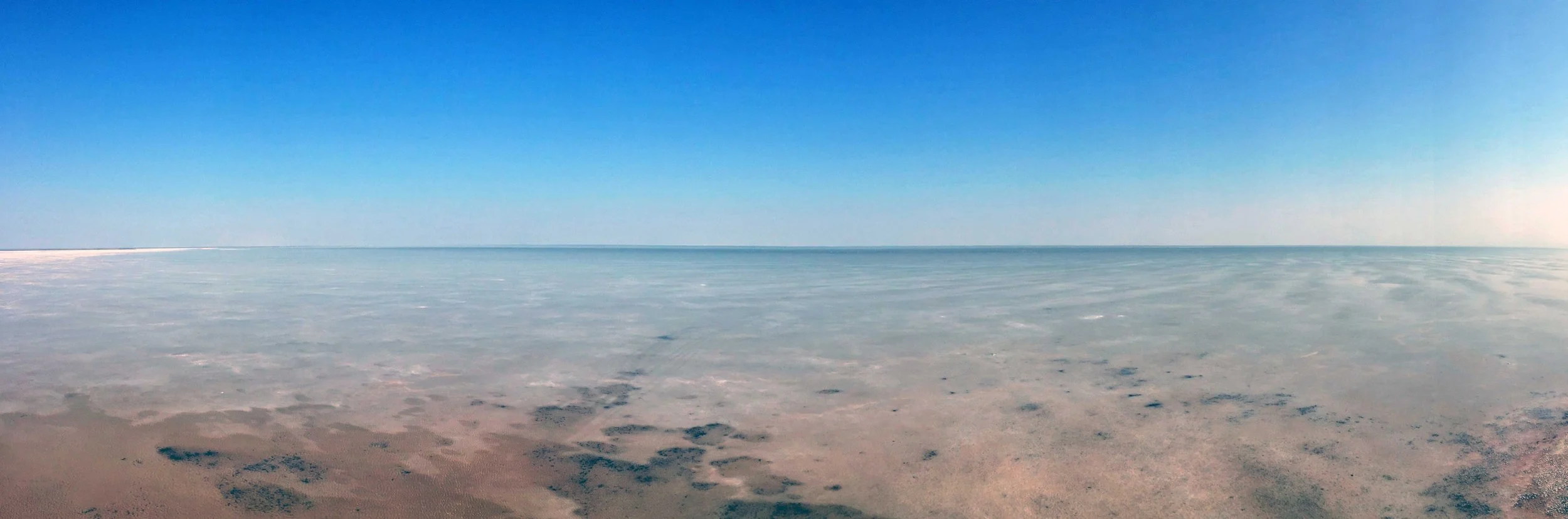
The Rann - Intermittent Sea
Kutch, in Sanskrit, means "a tortoise," and the Rann's seasonal flooding and drying give literal meaning to this name. The tidal mudflats and saline efflorescence of the Great Rann have forced a nomadic or semi-nomadic lifestyle on the communities of the north. The vandh's peripheral fence of dried thorny bushes, the plinth raised 1'6" against flooding, the conical roof's pitch against standing water, all direct architectural responses to the seasonal behaviour of the Rann's geology.
WOMEN & THE ARCHITECTURE OF EXPRESSION
The walls as canvas
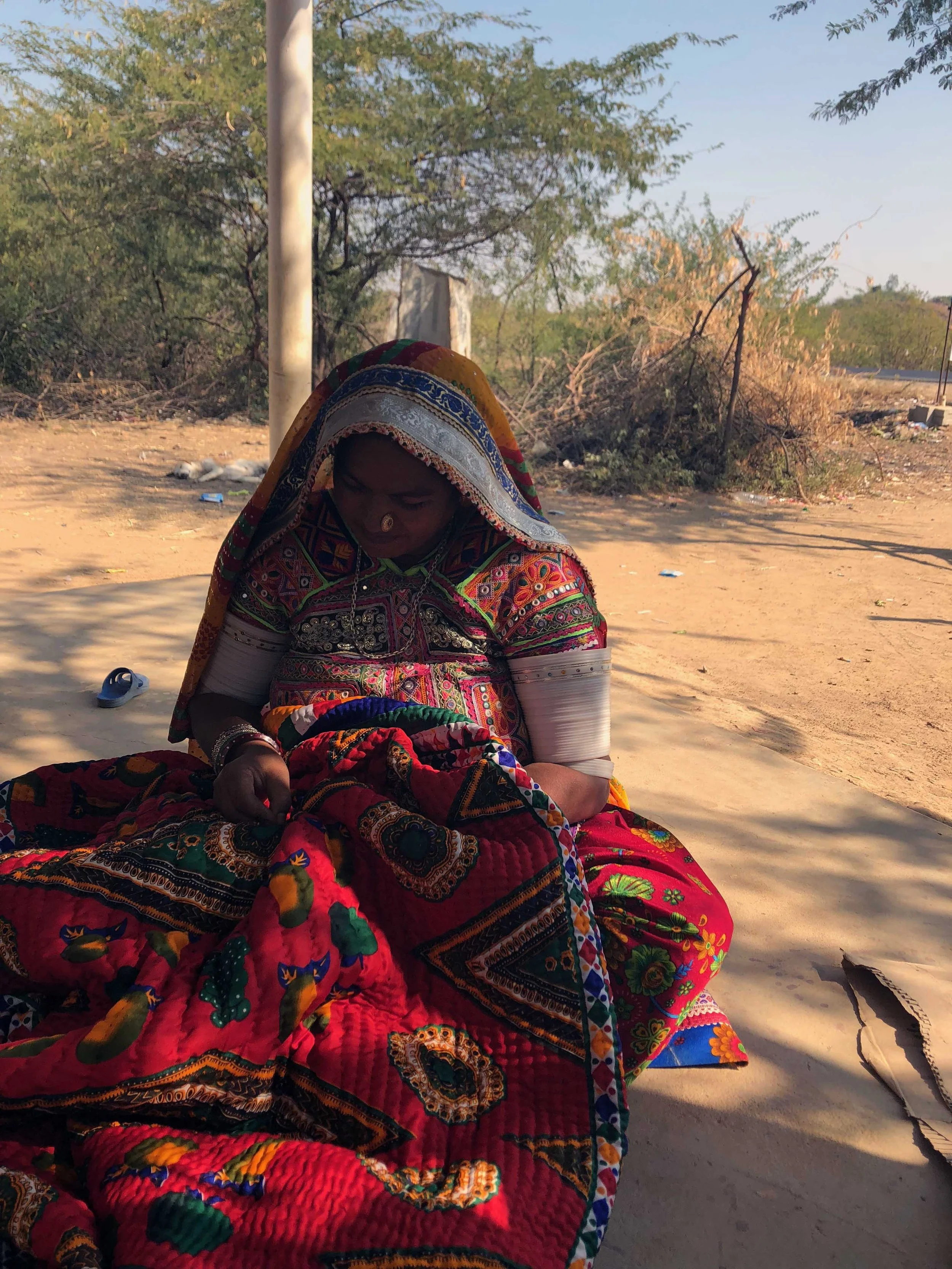
Women in Kutch serve as custodians of surface knowledge, exemplified by Lipan Kaam on bhoonga walls, embroidery on wedding trousseaus, the daily tying of Bandhani knots, and the stitching of godhari quilts for winter. The restricted movement of women within the bounds of the vandh transformed their interior and semi-exterior spaces into some of the most intricately worked surfaces in India's vernacular traditions.
"Shaded by the overhang of the verandah, the air filled with chatter, the ladies of the house busy tying knots in the fabric while the kids are running, playing and enjoying the respite brought by the setting sun."
Reflecting their environment, the walls of bhoongas functioned as canvases for artistic expression. Lipan relief work, composed of mud mixed with animal dung and water, is traced in intricate patterns and studded with mirrors. These mirrors reflect light throughout the interior, transforming even the smallest bhoonga into a luminous space. Islamic households feature geometric patterns, while Rabari and Ahir households depict people, animals, and nature. Stacked godhari quilts introduce rhythmic patterns, and everyday items pinned to the walls become part of the décor. The interior of the bhoonga integrates architecture, art, furniture, and identity into a cohesive whole.
Hunnarshala, Bhuj
Windows to Vernacular x Hunnarshala
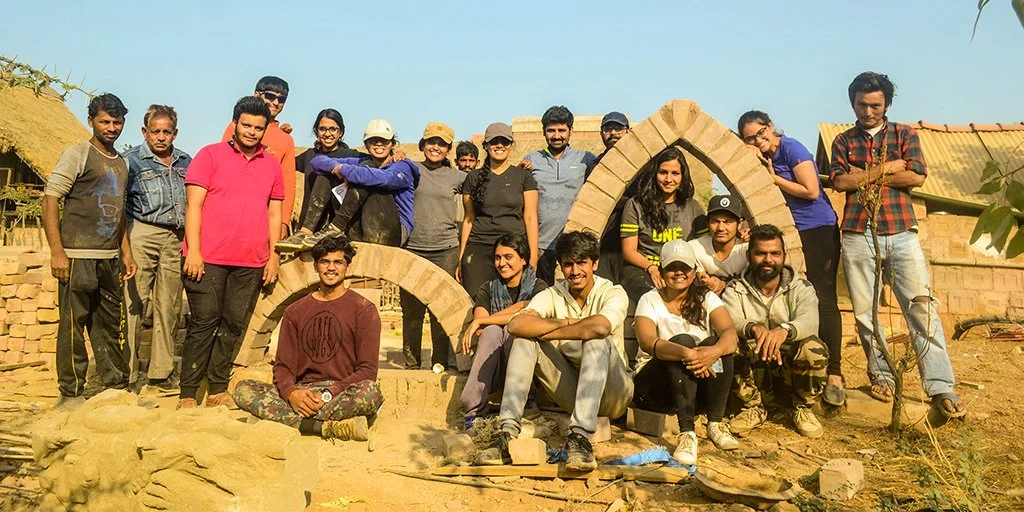
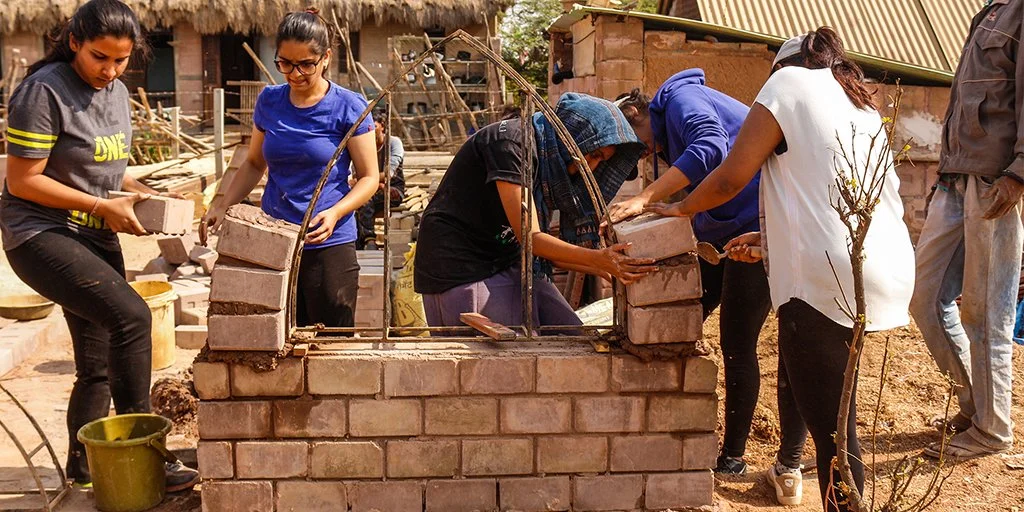
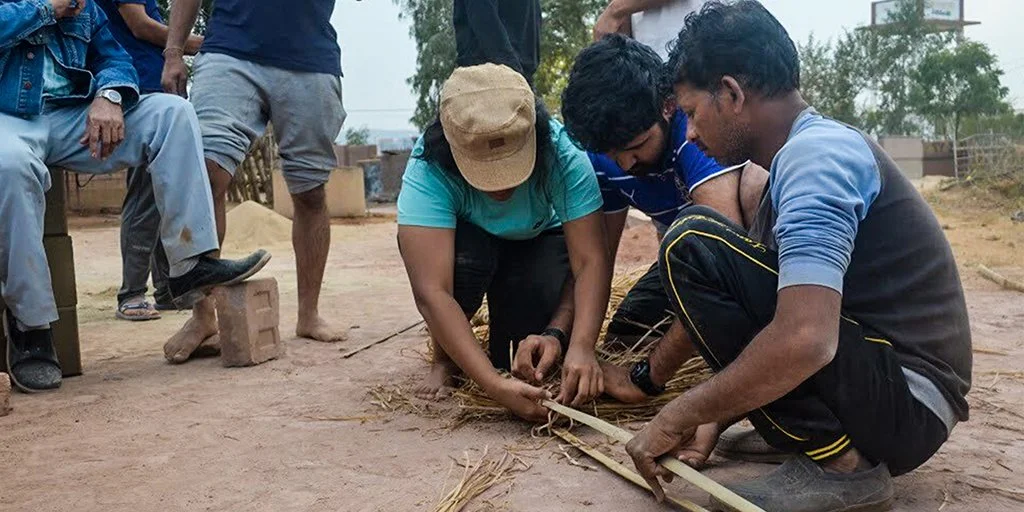
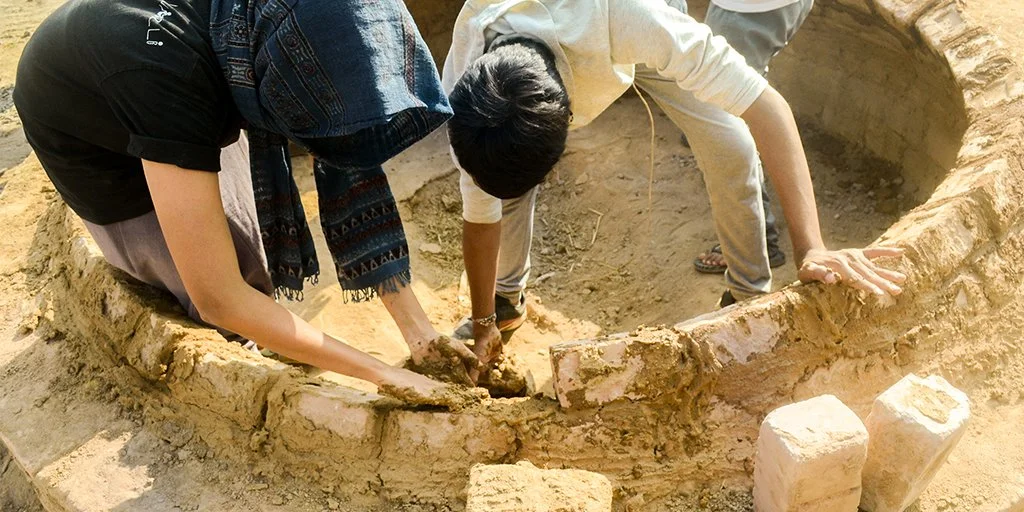
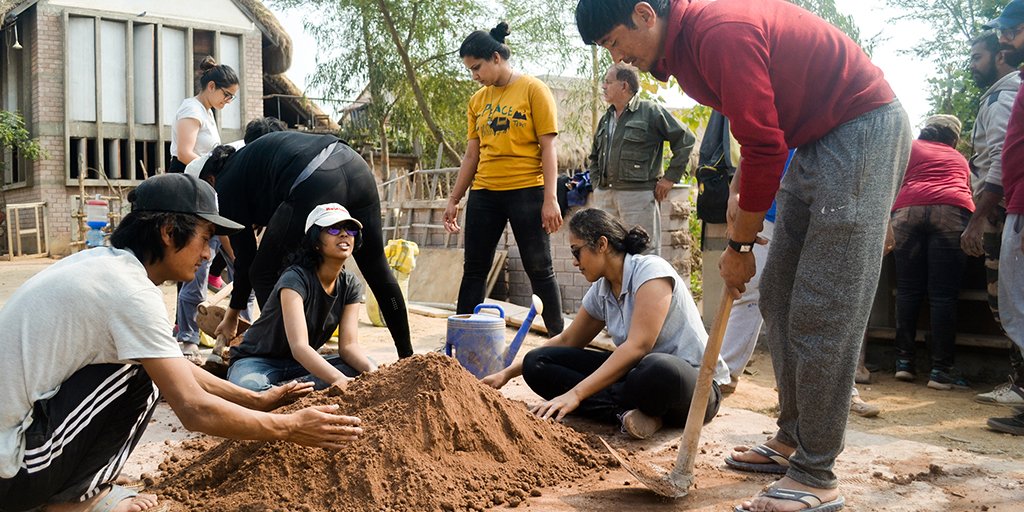
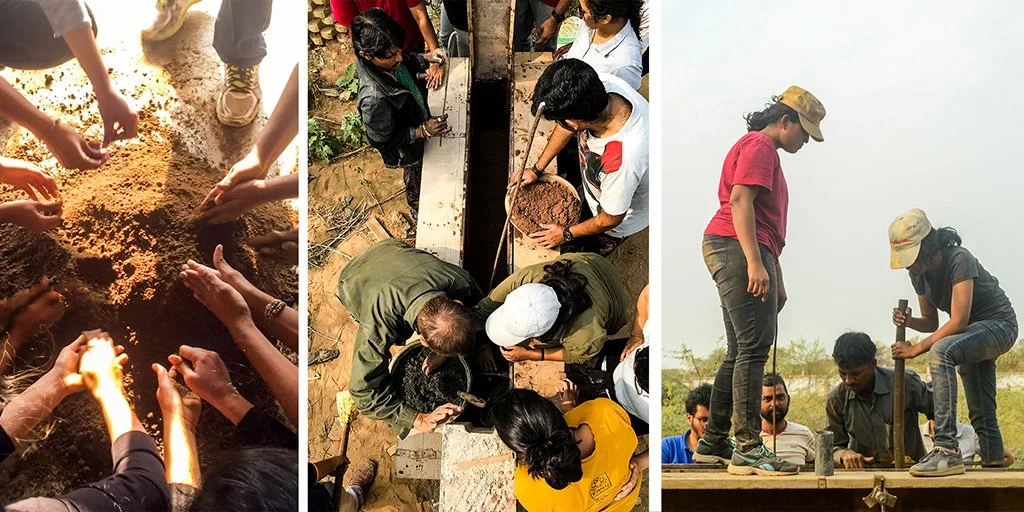
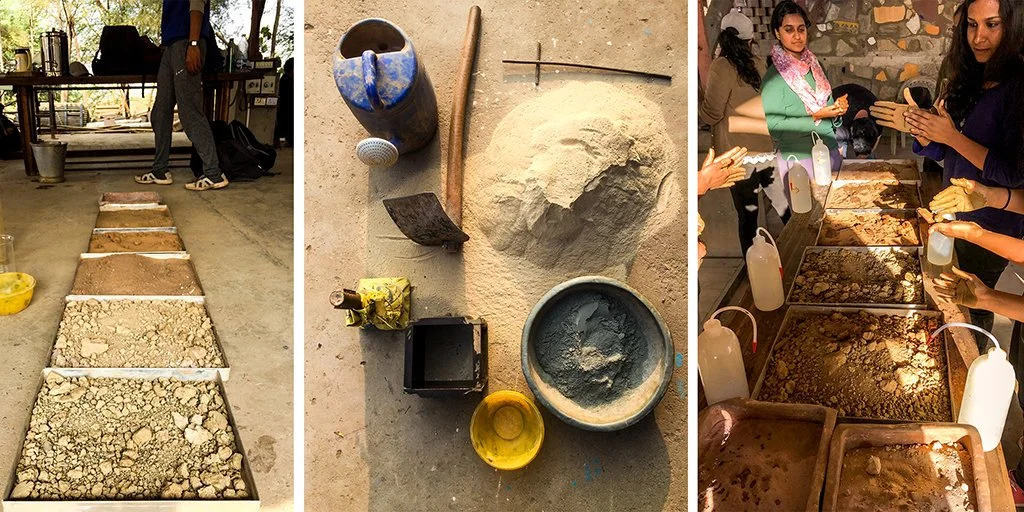
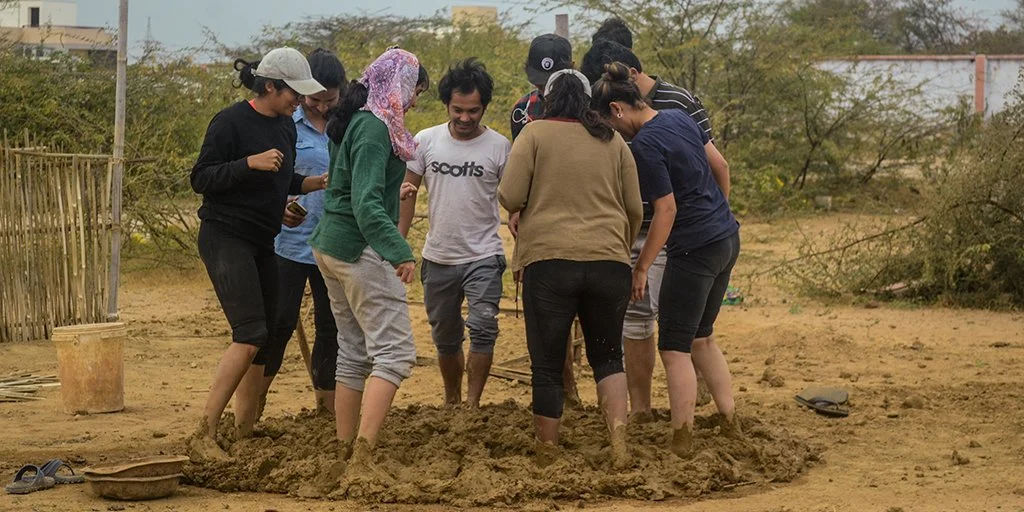
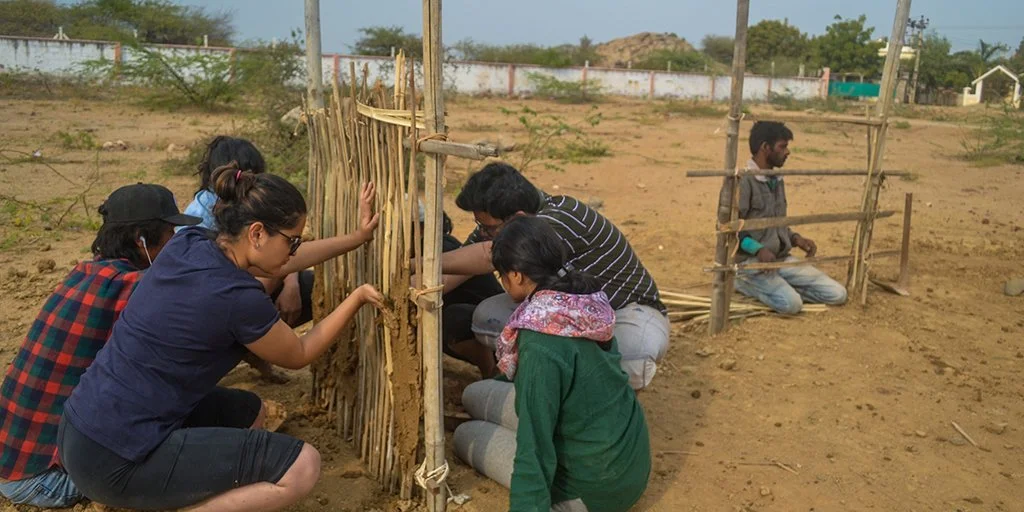
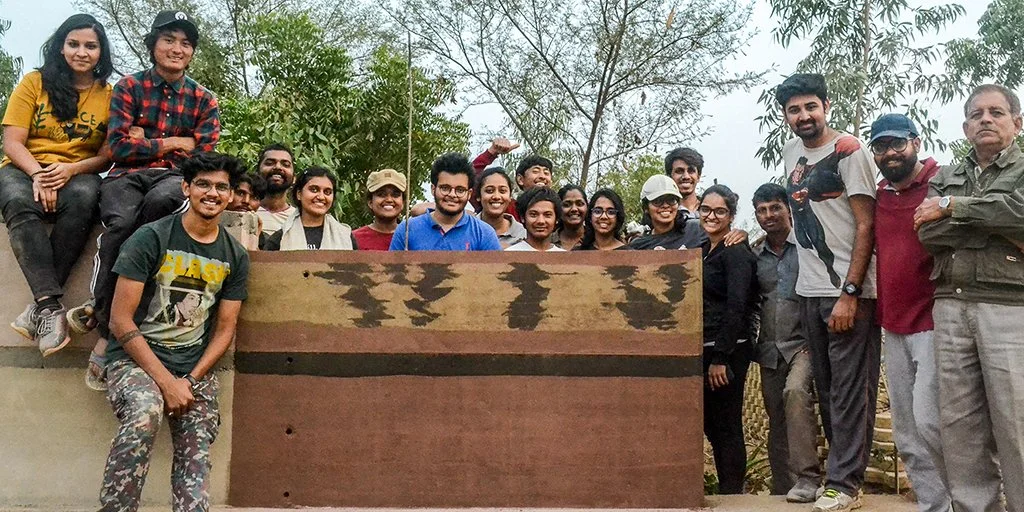
WTV held an Earthen technique Certificate Training workshop in collaboration with Hunnarshala spanning over 6 days. The workshop covered the basics of understanding earth construction techniques including testing, mixtures, formworks and construction techniques such as rammed earth walls, casting and building walls with CSEB, wattle and daub and CSEB arches and domes.